
You can visit the Cotswolds from London without a car by taking a GWR train from Paddington to Moreton-in-Marsh and then the 801 Rail Link bus to Stow-on-the-Wold and Bourton-on-the-Water. It works as a long day trip, but the villages are spread out and rural buses are infrequent, so an organised tour or an overnight stay often gives you a better experience.
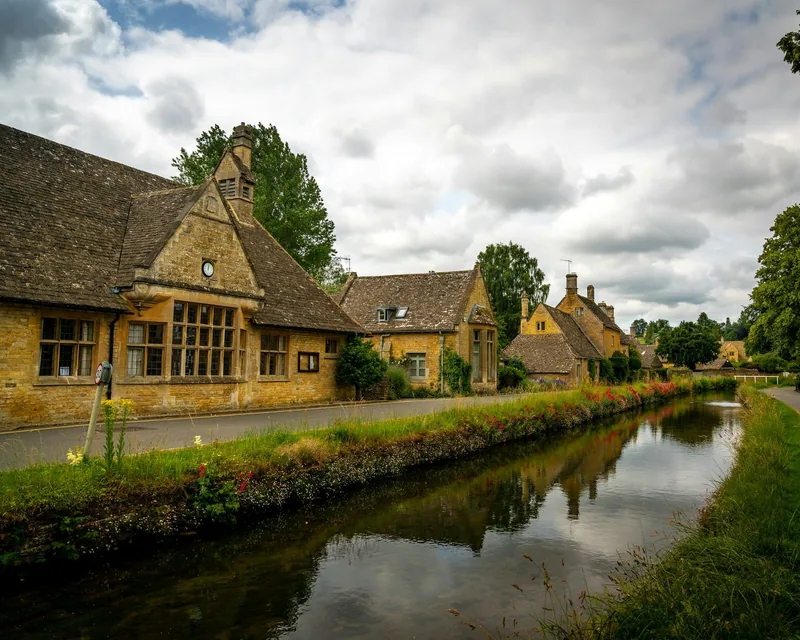
The Cotswolds is a large area of rolling hills, stone villages and market towns about 130-160 km west and north-west of London. It is not one place but a whole region, stretching across several counties, protected as a National Landscape (formerly an Area of Outstanding Natural Beauty). What makes it special is the local limestone: almost every cottage, church and wall is built from the same warm, honey-coloured stone.
That spread is the main thing to understand before you plan. Oxford, Bath and Stratford-upon-Avon sit on the edges of the Cotswolds, but the prettiest villages lie between them, often several kilometres apart and away from the railway. With a car you can see four or five in a day. By public transport, two or three is a realistic target.
The Cotswolds without a car: the basics
- Best rail gateway
- Moreton-in-Marsh, on the GWR line from London Paddington via Oxford
- Bus from the station
- GWR Rail Link 801 from Moreton-in-Marsh to Stow-on-the-Wold, Bourton-on-the-Water and Chipping Norton; combined train and bus tickets available
- Other gateways
- Kingham and Charlbury (same line); Kemble for Cirencester; Cheltenham and Stroud
- Coaches
- National Express from Victoria Coach Station into Gloucestershire
- Oyster or contactless
- Not valid: buy a National Rail ticket
- Time needed
- A very long day; one or two nights is more relaxed
Which Cotswold villages to visit
There are dozens of beautiful villages, and every visitor has favourites. These are the ones most people ask about, grouped by where they are. The northern group is the easiest to reach by train and bus.
| Village or town | Why go | Nearest rail link |
|---|---|---|
| Bourton-on-the-Water | Low stone bridges over a shallow river through the village green; very popular | 801 bus from Moreton-in-Marsh |
| Stow-on-the-Wold | Hilltop market town with a large square, antique shops and old inns | 801 bus from Moreton-in-Marsh |
| Moreton-in-Marsh | Market town with a wide high street; has its own station | Moreton-in-Marsh station |
| Chipping Campden | Elegant high street with a 17th-century market hall; quieter than Bourton | Bus from Moreton-in-Marsh |
| Broadway | Grand high street of golden stone, with a tower on the hill above | Bus from Moreton-in-Marsh |
| Burford | Steep high street running down to the River Windrush | Bus via Witney |
| Bibury | Arlington Row, a famous row of weavers' cottages | Bus from Cirencester or Bourton |
| Castle Combe | Tiny, very photogenic village in the south | Bus from Chippenham |
Bourton-on-the-Water and Bibury are the most famous and the most crowded, especially at weekends and in summer. If you want the look without the crowds, Chipping Campden, Burford or the tiny villages of Upper and Lower Slaughter (a short walk from Bourton) are calmer choices.
By train and bus: the 801 Rail Link route
The most practical car-free route runs from London Paddington along the Cotswold Line, which GWR serves via Oxford, Hanborough, Charlbury and Kingham to Moreton-in-Marsh. Because Moreton lies beyond Oxford, the journey takes longer than the trip to Oxford (around an hour on the fastest trains), and some services need a change, so check the time of your train with GWR or National Rail before you plan the day.
At Moreton-in-Marsh station you can board the Rail Link bus 801, which GWR promotes for a day out to Stow-on-the-Wold, Bourton-on-the-Water and Chipping Norton. GWR sells combined train and bus tickets for it: in its journey planner, enter "Stow on Wold bus", "Bourton on the Water" or "Chipping Norton" as your destination. Details are on GWR's combined train and bus tickets page.
Book the 801 bus and your train as one GWR journey. Entering Bourton on the Water or Stow on Wold bus as the destination in GWR's journey planner gives you the train and the Rail Link bus on a single ticket, and shows you whether the connection at Moreton-in-Marsh works. It saves buying the bus fare separately and helps you plan around the bus timetable.
The local operator Pulhams runs routes linking Chipping Norton, Moreton-in-Marsh, Bourton-on-the-Water and Cheltenham, plus a route from Bourton-on-the-Water to Northleach, Bibury and Cirencester. Stagecoach runs buses 1, 1A, 2 and 2A between Stratford-upon-Avon, Chipping Campden, Broadway and Moreton-in-Marsh. Timetables change, and some rural routes run only a few times a day or not at all on Sundays, so check them the day before on the operators' websites.
For a full route-by-route comparison of trains, coaches and driving from London, the sister site Viamo has a guide to getting from London to the Cotswolds.
Tickets and a sample day
Oyster and contactless are not valid on this route, so buy a National Rail ticket. Off-peak travel generally starts at 09:30 on weekdays in cities, and weekends are generally off-peak all day. Two adults travelling together can save a third with a Two Together Railcard, which overseas visitors can buy online. Our guide to buying UK train tickets explains the fare types.
A realistic car-free day looks like this: an early train from Paddington to Moreton-in-Marsh; a walk along Moreton's high street; the 801 bus to Stow-on-the-Wold for an hour or two; the 801 on to Bourton-on-the-Water for lunch and a walk to Lower Slaughter; then the bus back to Moreton for an evening train. Leave a buffer for the last connection, because missing a rural bus can mean a long wait or an expensive taxi.
Other ways in: Kemble, Cheltenham, the Oxford Tube and coaches
For the southern Cotswolds, GWR trains from Paddington towards Cheltenham call at Kemble, the station for Cirencester, and at Stroud. From Cirencester, the Pulhams bus runs to Bibury. For Castle Combe, the regional tourist board points to Faresaver buses 95 and 95A, which serve the Chippenham area; Chippenham has a station on the line to Bath.
The Oxford Tube coach has also run some weekday journeys beyond Oxford to Witney and Carterton (check its stops page for the current pattern), and from there Stagecoach buses 233 and 234 run to Burford. National Express coaches from Victoria Coach Station serve Gloucestershire, where Cheltenham, Gloucester and Stroud have the main bus stations; coaches are usually cheaper than the train but slower.
The Cotswolds tourist board also lists The Robin, an on-demand minibus run by Gloucestershire County Council that reaches villages without regular buses, including Stow-on-the-Wold, Bourton-on-the-Water and Bibury. You book it by app, website or phone between two weeks and one hour before travel; the listed fares are £3 for adults and £2.50 for children aged 5-15. On weekends and bank holidays from April to October, a vintage open-top Heritage Bus No. 11 runs from Moreton-in-Marsh through Stow, Bourton, Northleach and Burford. Check current details on the Cotswolds tourist board's bus page.
Organised tours compared with doing it yourself
This is the one day trip where an organised tour has a strong case. Many companies run minibus and coach tours from London, often combined with Oxford or Stratford-upon-Avon, and smaller operators run village-hopping, walking and cycling tours from stations such as Moreton-in-Marsh and Kingham. We do not recommend any single company. Compare what is included, how many villages you visit, the group size and how long you get in each place.
Why a tour can work better here
- Several villages in one day, without bus timetables
- Small-group tours reach villages no bus serves
- A guide explains the history and the wool trade
- No risk of missing the last rural bus
Why you might still go independently
- Coach tours from London spend many hours on the motorway
- Popular stops like Bourton are crowded when tour groups arrive
- You cannot linger in a village you love
- A couple can often travel more cheaply by train and bus
A useful middle way is to take the train to Moreton-in-Marsh or Kingham yourself and join a local small-group tour from there. You avoid the long drive out of London and still get a guide and a vehicle for the rural part. If you enjoy guided walks in general, our overview of the best walking tours in London explains what separates good guides from average ones.
Hiring a car for the Cotswolds
A car gives you the most freedom here: narrow lanes lead to villages no bus reaches, and you can stop at viewpoints on a whim. The catch is getting out of London. Driving in the capital is slow and expensive, with the Congestion Charge in central London and the ULEZ across all London boroughs. Our guide to London's Congestion Charge and ULEZ explains who pays.
A good compromise is to take the train to Oxford or Moreton-in-Marsh and collect a hire car there, avoiding London traffic entirely. Before booking, read our advice on whether you need a hire car and on driving in the UK as a visitor. Country lanes are often single-track, with passing places, and parking in the most popular villages fills early on summer weekends.
Staying overnight in the Cotswolds
We think the Cotswolds rewards a night or two more than any other day trip from London. In the early morning and evening, after the day visitors leave, villages like Bourton and Bibury become quiet, and you have time to walk between villages on the footpaths that link them. Many visitors base themselves in a market town with good bus links, such as Moreton-in-Marsh, Stow-on-the-Wold or Cirencester.
Accommodation ranges from village inns and bed-and-breakfasts to country-house hotels, and summer weekends book up early. Before paying a deposit to a small or unfamiliar property, read our tips on booking safely and avoiding accommodation scams. Pubs in the villages are part of the pleasure, and many serve a traditional roast on Sundays; our guide to the Sunday roast explains what to expect.
Rural buses in the Cotswolds thin out on Sundays and in the evening. Many village routes run only a few times a day, and some do not run on Sundays at all. If you are relying on buses, plan your return connection before you set out, keep a local taxi number with you, and do not leave the last bus to chance.
When to go, and how the Cotswolds fits into a London trip
Late spring and early summer bring green hills and long evenings. Autumn is quieter, with good light and fewer crowds after the school holidays end. Summer weekends are the busiest time, especially in Bourton-on-the-Water and Bibury. In winter the villages are peaceful and often pretty in frost, but days are short and some tea rooms and attractions keep reduced hours. Our overview of the best time to visit London covers the seasons in more detail.
If you have a week in London, a two-day trip to the Cotswolds with a night in a village fits well into the middle of it; our one-week London itinerary shows how. You can also combine it with a day in Oxford on the way, since trains to Moreton-in-Marsh pass through Oxford station. For other excursions, see our full list of day trips from London.
Frequently asked questions
Can you visit the Cotswolds from London without a car?
Yes. Take a GWR train from London Paddington to Moreton-in-Marsh, then the 801 Rail Link bus to Stow-on-the-Wold and Bourton-on-the-Water. Buses are infrequent, so you will see two or three villages rather than five, and it is worth staying overnight if you can.
Which is the best Cotswold village to visit by public transport?
Bourton-on-the-Water and Stow-on-the-Wold are the easiest, because the 801 bus runs to both from Moreton-in-Marsh station. Moreton itself is a pleasant market town right by the station. Chipping Campden and Broadway are reachable by Stagecoach buses from Moreton.
Is a day trip to the Cotswolds from London worth it?
It can be, if you accept that you will see only part of a large region. An organised tour covers more villages in a day, while the train and bus route is more relaxed but slower. Staying one or two nights gives the best experience.
How far are the Cotswolds from London?
The nearest parts are around 130 km from central London, and the main villages lie further west. By train, Moreton-in-Marsh is beyond Oxford on the line from Paddington, so allow more than the roughly one-hour journey to Oxford, plus bus connections.
Do Cotswold buses run on Sundays?
Some do, but many rural routes run less often on Sundays or not at all. Check each operator's timetable before you travel, and plan your return connection carefully. The Heritage Bus No. 11 runs only on weekends and bank holidays between April and October.
Sources
- GWR - Combined train and bus tickets, Rail Link service 801 (Internet Archive copy of 25 August 2026)
- Cotswolds Tourism - Getting to the Cotswolds (checked September 2026)
- Cotswolds Tourism - Exploring the Cotswolds by bus (checked September 2026)
- Pulhams - Bus timetables (checked September 2026)
- Oxford Tube - Coach stops (Internet Archive copy of 3 August 2025)
- GWR - London to Oxford trains (checked September 2026)
- Transport for London - Ultra Low Emission Zone (checked September 2026)