
A week in London is enough to see the major sights without rushing, spend proper time in two or three neighbourhoods and still take a full day out of the city. The trick is to group each day by area, so you spend your time looking at London rather than sitting on the Tube between opposite ends of it.
Most first-time visitors try to fit too much into each day. With seven days you do not have to. This itinerary gives each day one part of town: Westminster, the Tower and the City, the South Bank, the South Kensington museums, Greenwich and a free-choice day of markets and neighbourhoods. One day goes to a trip outside London, with Windsor as our main suggestion.
The days are numbered, but they are not fixed. Several attractions close on particular weekdays, and some markets only really come alive at weekends, so read the section on shuffling the days before you book anything. If you have less time, our itineraries for five days in London and the guide to how many days you need will help you cut this plan down.
The week at a glance
- Day 1
- Westminster, Whitehall and the royal parks
- Day 2
- The Tower of London, Tower Bridge and the City
- Day 3
- The South Bank, Southwark and Borough Market
- Day 4
- South Kensington museums and Hyde Park
- Day 5
- Day trip: Windsor (or Oxford, Bath or Stonehenge)
- Day 6
- Greenwich, reached by river boat
- Day 7
- Markets and a neighbourhood of your choice
- Transport
- Contactless or Oyster; weekly cap for Zones 1-2 is £44.70 (Monday to Sunday)
Why an area-by-area plan works better
London is large, and the famous sights are spread across several districts. A day that starts at the Tower of London, jumps to the Natural History Museum and ends at Camden spends well over an hour underground. A day that stays in one area lets you walk between sights, which is often quicker than the Tube over short distances and far more interesting.
Each day below has a morning anchor (usually the sight with the longest queue or a fixed time), an afternoon with more flexibility and an idea for the evening. You will not manage everything on every list, and that is fine. Pick what matters to you and leave gaps for rest, meals and the unplanned things that make a trip memorable.
Where you sleep makes a difference. A hotel in or near Zone 1, close to a Tube line that reaches several of these areas, saves a lot of time over a week. Our overview of the best areas to stay in London compares the main options.
Day 1: Westminster, Whitehall and St James's Park
Start with the classic postcard view: Big Ben and the Houses of Parliament from Westminster Bridge. Then cross the road to Westminster Abbey, where monarchs have been crowned for centuries. Arrive early, as queues build through the morning. Check the Abbey's website for current prices and opening days, because services sometimes close it to sightseers.
If your first day falls on a Monday, Wednesday or Friday, walk through St James's Park to Buckingham Palace for the Guard Change at 11:00. It does not happen on every one of those days (no ceremony was listed for Friday 25 September 2026, for example), so check the Household Division's official calendar the evening before. Our guide to watching the Changing of the Guard explains where to stand.
The State Rooms of Buckingham Palace are open to visitors only in summer: from 9 July to 27 September in 2026, and in September they are closed on Tuesdays and Wednesdays. Adult tickets cost £33.00 in advance or £37.00 on the day. Outside the summer season the palace offers only a few expensive guided tours.
In the afternoon, go underground into the Churchill War Rooms, the bunker from which Britain's wartime government worked. Adult tickets are £34 (September 2026 to March 2027), and it opens 09:30 to 18:00 with last entry at 17:00. There is no cloakroom and suitcases are not allowed. Finish in Trafalgar Square and, on a Friday, inside the National Gallery, which stays open until 21:00 that day and is free.
Day 2: The Tower of London, Tower Bridge and the City
Be at the Tower of London when it opens, and head for the Crown Jewels first. The Tower recommends at least three hours, and your ticket allows one entry only, so eat before you go in or plan to eat inside. An adult ticket costs £37.00 without the donation (£40.70 with it). Children aged 5 to 15 pay £18.50. Booking is not required, but it is advised at busy times. Some rooms and routes may be closed for conservation work.
Next door, Tower Bridge is open daily from 09:30 to 18:00, with last entry at 17:00. The ticket includes the high-level walkways with their glass floors and the Victorian engine rooms. The bridge still lifts for tall ships around 800 times a year, and the official lift schedule is on the Tower Bridge website.
In the afternoon, walk west into the City of London, the old financial district. Leadenhall Market, with its painted Victorian roof, is a short walk away and its public areas are open around the clock. Continue to St Paul's Cathedral. An adult sightseeing ticket costs £27 (£29.70 with donation) and includes the cathedral floor, the crypt and the dome galleries. Sightseeing is Monday to Saturday only.
Book the Sky Garden three weeks ahead for Day 2. The Sky Garden sits on top of a City office tower and entry is free. Free tickets are released every Monday morning, three weeks in advance, for the whole week, and slots last one hour. It is open 10:00 to 18:00 on weekdays and 11:00 to 21:00 at weekends, so a weekend evening slot makes a good end to this day.
Day 3: The South Bank, Southwark and the river
This is the easiest day of the week, and it is almost entirely on foot. Start at the London Eye, where a rotation in one of the 32 pods takes about 30 minutes. Standard tickets cost from £29 online, and the walk-up price is £39, so book ahead. Then follow the riverside path east along the South Bank, past the Southbank Centre, the book stalls and the National Theatre.
Tate Modern, in a former power station, is free apart from its paid exhibitions. It is open until 18:00 from Sunday to Thursday and until 21:00 on Fridays and Saturdays. From there it is a few minutes to Shakespeare's Globe. Standing tickets in the yard cost £10 or £5 for the 2026 summer productions, and the season runs until 24 or 25 October 2026. Our guide to seeing a play at the Globe explains the £5 Rush tickets released on Friday mornings.
Plan lunch at Borough Market, beside London Bridge station. It is closed on Mondays and open 10:00 to 17:00 Tuesday to Friday, 09:00 to 17:00 on Saturday and 10:00 to 16:00 on Sunday. Go early in the day if you dislike crowds.
Day 4: The museums of South Kensington and Hyde Park
Three of London's great museums stand within a few minutes of South Kensington station, and the main collections of all three are free. The Natural History Museum opens daily from 10:00 to 17:50, and a free ticket guarantees entry, which helps at weekends and in school holidays. Hope, the blue whale skeleton, still hangs in Hintze Hall. Note that the museum is closed on Friday 9 October 2026.
The Science Museum is free, but you need to pre-book a free ticket, and an average visit lasts around two hours. It is closed all day on Wednesday 11 November 2026. The V&A is free without booking and open until 17:45, or 22:00 on Fridays (some galleries close earlier). Pick two museums at most: trying to do all three in one day leaves you tired and seeing little.
Spend the late afternoon in Hyde Park and Kensington Gardens. Walk past the Serpentine lake towards Kensington Palace, or, if you prefer shops, head to Knightsbridge and Harrods instead.
Day 5: A day out of London
After four busy city days, a change of pace helps. Windsor is the easiest royal day trip. Direct trains from Waterloo to Windsor & Eton Riverside take under an hour and usually run every 30 minutes; from Paddington, trains to Windsor & Eton Central take around 35 minutes with a change at Slough. Oyster and contactless are not valid to Windsor, so buy a train ticket.
Windsor Castle is closed on Tuesdays and Wednesdays, which is the most important point to plan around. Adult tickets cost £32.00 in advance or £36.00 on the day (2026 prices), and from March to October the castle opens 10:00 to 17:15, with last admission at 16:00. Our Windsor Castle day trip guide covers the Changing of the Guard there, which in September 2026 took place on Thursdays and Saturdays.
Other good choices for this day:
- Oxford: GWR's fastest trains from Paddington take 52 minutes, and a college-and-library day fits easily.
- Bath: around 1 hour 20 minutes from Paddington, with the Roman Baths (from £26.50 on a weekday in September and October 2026, booked ahead).
- Stonehenge: a longer day, as the stones stand on Salisbury Plain well outside London. Adult tickets booked by midnight the day before cost less than on the day.
Windsor shuts on Tuesdays and Wednesdays, so move this day if needed. If your fifth day lands on either, swap it with Day 6 or Day 7. Oxford and Bath do not have this problem, so they make a good alternative if you cannot rearrange.
Day 6: Greenwich by river boat
Go to Greenwich the scenic way, on the Uber Boat river bus. Route RB1 runs daily from the London Eye and Westminster area via Tower to Greenwich. You can pay with contactless or Oyster, but river bus fares do not count towards the daily or weekly caps. An adult fare across the Central and East zones is £11.40 off-peak or £13.70 peak with pay as you go (fares valid until 31 October 2026). The peak and off-peak times shown on the operator's website look unusual, so check the ticket page before you travel.
In Greenwich, the National Maritime Museum and the Queen's House are free, open daily 10:00 to 17:00, with booking recommended. The Royal Observatory, where you can stand on the Prime Meridian, opens 10:00 to 18:00 (last entry 17:00), and the tea clipper Cutty Sark opens 10:00 to 17:00. Both charge admission, so check prices on the Royal Museums Greenwich website. The Observatory closes after 2 November 2026 for a major transformation, with the Meridian Courtyard due to reopen in summer 2027, so on a later trip spend longer in the two free museums. Walk up through Greenwich Park to the Observatory for one of the best views back towards Canary Wharf and the City.
For the return, the DLR from Cutty Sark station is quicker than the boat. If you want something different, the IFS Cloud Cable Car (London Cable Car) crosses the river from North Greenwich for £7.00 one way.
Day 7: Markets and a neighbourhood of your own
Keep the last day loose. By now you will know which side of London you like best. Some suggestions:
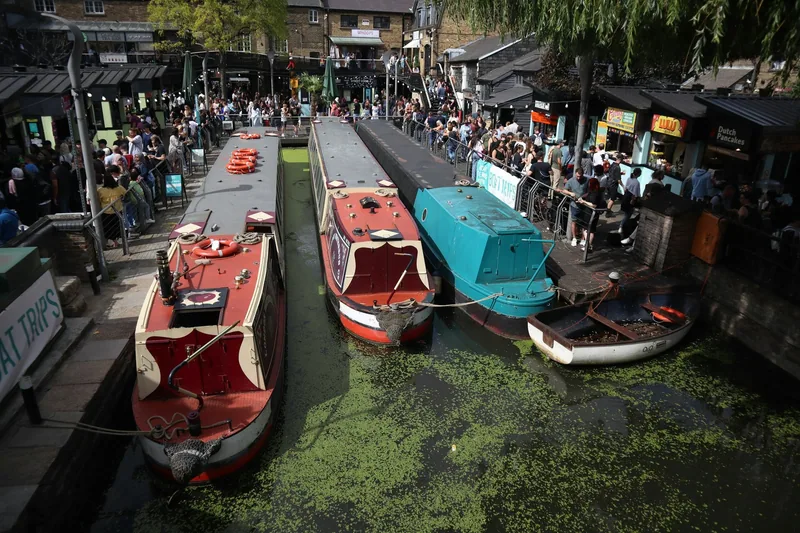
- Camden Town for its market, the canal and a lively, slightly scruffy atmosphere.
- Shoreditch and Spitalfields for street art, independent shops, the covered Old Spitalfields Market and curry on Brick Lane.
- Notting Hill for pastel houses and Portobello Road Market, which is at its busiest on Saturdays.
- Hampstead for village streets, Hampstead Heath and the free Kenwood house (open daily 10:00 to 17:00).
Market days vary, so check the market's own website before you plan the day around one. If you have saved a big purchase for the end, remember that visitors can no longer claim VAT back on shopping in Great Britain.
Shuffling the days: weekday closures to plan around
Before you fix the order of your week, check it against this list. These are the weekday patterns that most often catch visitors out.
| Place or event | Watch out for |
|---|---|
| Windsor Castle | Closed Tuesdays and Wednesdays |
| Buckingham Palace State Rooms | Summer only (9 July to 27 September 2026); closed Tuesdays and Wednesdays in September |
| Royal Mews | Closed Tuesdays and Wednesdays |
| Changing the Guard, Buckingham Palace | 11:00 on Mondays, Wednesdays and Fridays, but not every such day |
| Borough Market | Closed Mondays |
| St Paul's Cathedral | No sightseeing on Sundays |
| Sir John Soane's Museum | Closed Mondays and Tuesdays (open on bank holidays) |
| Large shops | Six hours only on Sundays, between 10:00 and 18:00 |
Late openings can also shape the order. The National Gallery stays open until 21:00 on Fridays, the V&A until 22:00 on Fridays and Tate Modern until 21:00 on Fridays and Saturdays. Our guide to evenings in London has more ideas for filling the hours after dark.
What a week of transport costs
Use a contactless bank card or phone, or an Oyster card, for every journey, and always the same one. Pay as you go fares are capped: once you reach the daily cap, further journeys in the same zones that day are free. For Zones 1-2, where almost all of this itinerary takes place, the daily cap is £8.90.
Over a full week the weekly cap helps even more. It runs from Monday to Sunday and is £44.70 for Zones 1-2, only 20p more than five daily caps. If your week runs from Monday to Sunday, days six and seven of Tube travel are almost free. If your week starts on a Thursday, it spans two capping weeks, and the daily cap is what protects you. Our comparison of Oyster and contactless explains both caps in detail.
Some parts of this plan sit outside the caps. The train to Windsor needs its own ticket, and the river boat to Greenwich and the Cable Car are charged on top of your capped fares. Bus fares are £1.75 per journey, rising to £1.85 on 1 November 2026.
Frequently asked questions
Is one week in London too long?
No. A week lets you see the main sights at a comfortable pace, visit two or three neighbourhoods properly and take a day trip. Many visitors find they still have a list of places left for next time. Only people who dislike cities and museums are likely to feel a week is too much.
Should I buy a 7 Day Travelcard for a week in London?
Usually not. With contactless or Oyster, the weekly cap for Zones 1-2 is £44.70, the same as a 7 Day Travelcard. The cap only works over a fixed Monday to Sunday week, though, so TfL suggests a 7 Day Travelcard on an Oyster card if your week starts mid-week and you travel a lot every day.
Which day trip from London is best for a one-week visit?
Windsor is the easiest, at under an hour by direct train from Waterloo, and the castle is one of the royal highlights. Oxford is a good choice if you prefer architecture and colleges, and Bath if you want Roman history. Avoid Windsor on a Tuesday or Wednesday, when the castle is closed.
What is the best order for the days in a week in London?
Put the day trip on a day when your chosen destination is open, the Borough Market day on any day except Monday, and Westminster on a Monday, Wednesday or Friday if you want to see the Changing of the Guard. Keep a free-choice day at the end for anything you missed or want to see again.
Sources
- Historic Royal Palaces - Tower of London tickets and prices (checked September 2026)
- Royal Collection Trust - Windsor Castle (checked September 2026)
- Royal Collection Trust - Buckingham Palace (checked September 2026)
- Household Division - Changing the Guard calendar (checked September 2026)
- Transport for London - Fare capping (checked September 2026)
- Uber Boat by Thames Clippers - Ticket information (checked September 2026)
- Borough Market - Visit us (checked September 2026)
- South Western Railway - Trains to Windsor Castle (checked September 2026)