
Bath works well as a day trip from London: direct trains from Paddington take around 1 hour 20 minutes, and in one day you can tour the Roman Baths, look inside Bath Abbey and walk up to the Royal Crescent. Adding Stonehenge on the same day is possible on an organised tour, but it makes for a long, rushed day.
Bath is a small city in Somerset, in the south-west of England, about 160 km west of London. It grew up around natural hot springs, which the Romans turned into a bathing complex and temple nearly 2,000 years ago. In the 18th century it became a fashionable spa resort, and the honey-coloured stone terraces built in that period still shape the city today.
The whole city is a UNESCO World Heritage Site, and its centre is compact. The Roman Baths, the Abbey and the shopping streets sit close together near the station, while the famous Georgian crescents are a 15-20 minute walk uphill. That makes Bath one of the easiest longer day trips from the capital, provided you leave early.
Bath from London: key facts
- Train
- GWR from London Paddington to Bath Spa, around 1 hour 20 minutes; usually every 30 minutes on weekdays
- Tickets
- National Rail ticket needed; Oyster and contactless are not valid
- Roman Baths (adult, 19+)
- £26.50 weekdays, £29.00 weekends when booked in advance (September-October 2026); £2 more on the day
- Roman Baths hours
- 9am-6pm daily, last admission 5pm (1 September-31 October 2026)
- No. 1 Royal Crescent
- Adult £16.00; under-18s free with an adult
- Station to Roman Baths
- Less than 10 minutes on foot
Getting to Bath Spa from Paddington
Great Western Railway (GWR) runs direct trains from London Paddington to Bath Spa. GWR says the journey takes around 1 hour 20 minutes, and its fastest service takes 1 hour 19 minutes. On an average weekday about 72 trains run between the two stations, so services usually leave every 30 minutes. Direct trains call at Reading, Didcot Parkway, Swindon and Chippenham, and some journeys need a change, so check before you board. Weekend and bank holiday journeys can take longer because of engineering work.
Paddington is on the Elizabeth line and on four Tube lines (Bakerloo, Circle, District and Hammersmith & City). If you are staying in the West End or the City, the Elizabeth line is usually the quickest way to reach it, and our guide to staying near Paddington covers hotels close to the station if you want an early start.
Choosing the right rail ticket
Bath is well outside the London fare area, so Oyster and contactless do not work. For a day trip, compare an Off-Peak or Super Off-Peak return with two Advance singles. Advance tickets are cheapest but only valid on the trains you choose and non-refundable. Off-peak travel generally starts at 9.30am on weekdays in cities, and weekends are generally off-peak all day. Children aged 5-15 get 50% off Advance and Off-Peak fares, and railcards take a third off most fares. Our explainer on buying UK train tickets walks through the options.
Two travellers can cut the Bath fare by a third. The Two Together Railcard gives two named adults travelling together a third off most off-peak fares, and overseas visitors can buy it online as a digital card. It costs £35 for a year, so on a longer train trip like Bath it can pay for itself on the first return journey for a couple. Check the conditions before you buy.
Coaches also run to Bath from London Victoria. The Roman Baths website notes that they stop at Bath bus station, five minutes' walk from the baths. Coaches are usually cheaper but take considerably longer than the train, so they suit travellers on a tight budget who can leave early. They leave from Victoria Coach Station, where you should arrive at least 30 minutes before departure.
For a detailed comparison of trains, coaches and driving between the two cities, the sister site Viamo has a full guide to the London to Bath route.
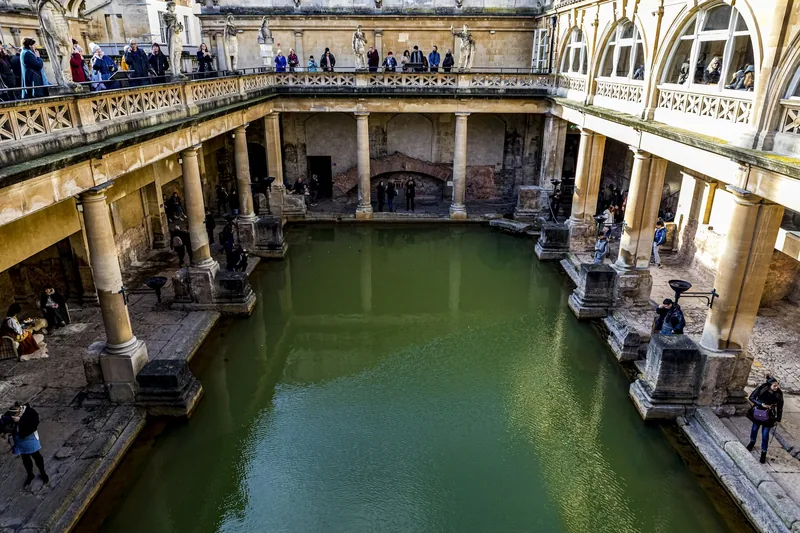
Inside the Roman Baths
The Roman Baths are the reason most people come. Hot water still rises from the ground here at the same spring the Romans used, and you walk around the Great Bath, a large open-air pool lined with later columns and statues, then down to the original Roman level. Below street level you see the remains of the temple of Sulis Minerva, the changing rooms, plunge pools and heated rooms, together with the museum's collection of Roman finds, including the gilded bronze head of the goddess Minerva.
Allow about two hours. An audioguide in 13 languages is included in the ticket, and there is a separate children's audioguide. The water in the Great Bath is green and steaming, and you should not touch it. The elegant Pump Room next door is a separate restaurant, popular for afternoon tea.
Roman Baths prices and hours
Prices depend on the date and whether you visit on a weekday or at the weekend. The figures below are advance prices for 1 September to 31 October 2026; tickets bought on the day cost £2 more each.
| Ticket | Weekday | Weekend or bank holiday |
|---|---|---|
| Adult (19+) | £26.50 | £29.00 |
| Student or senior (65+) | £25.50 | £28.00 |
| Child (6-18) | £19.50 | £22.00 |
| Family (2 adults + 2-4 children) | £69.00 | £77.00 |
From 1 November to 18 December 2026, the advance adult price falls to £23.50 on weekdays and £26.50 at weekends. A couple visiting on a weekday in October pays £53.00 booked ahead, and a family of four £69.00. Note that the Roman Baths count 18-year-olds as children, which is unusual. Check the current price on the official Roman Baths tickets page.
From 1 September to 31 October 2026, the Roman Baths open daily from 9am to 6pm, with last admission at 5pm. They are open every day except Christmas Day and Boxing Day.
The Roman Baths have airport-style security at the door. Every visitor walks single file through a threat detection system, and bags may be searched. Only backpacks up to 30 litres are allowed, and large items such as wheeled shopping trolleys and sports equipment are refused. Allow up to 15 minutes from your booked time slot to get in, and leave big luggage elsewhere.
Bath Abbey and the old centre
Bath Abbey stands right next to the Roman Baths. The present church was begun in 1499 on the site of a ruined Norman cathedral, and its fan-vaulted stone ceiling and huge windows make it one of the brightest church interiors in England. Look at the west front, where carved angels climb stone ladders up the walls.
The Abbey is a working church, and it closes for services and special events. Its published visiting hours for 2026 were 10am to 5.30pm Monday to Friday, 10am to 6pm on Saturday and 1pm to 3.30pm on Sunday, with last entry 30 minutes before closing. An audio tour costs £3.50. Guided tower tours climb the Abbey tower and need a separate ticket. Check the latest times and prices on the Bath Abbey visiting page.
Around the Abbey, the pedestrian streets of the old centre are good for browsing. Walk to Pulteney Bridge, an 18th-century bridge lined with small shops on both sides, and look down at the curved weir on the River Avon below. The riverside paths around it are free and quieter than the main streets.
The Royal Crescent, the Circus and Georgian Bath
The Georgian terraces are Bath's other great sight, and they cost nothing to see from outside. From the Abbey, walk north up Milsom Street or Gay Street to the Circus, a perfect ring of townhouses built in the 1750s and 1760s. Continue west along Brock Street to the Royal Crescent, a sweeping curve of 30 houses facing a wide lawn. The walk is uphill but short, around 15-20 minutes from the Abbey.
No. 1 Royal Crescent, the first house built on the Crescent, is now a museum run by the Bath Preservation Trust. Its rooms are furnished as they would have been in the late 18th century, with an immersive experience that follows a Georgian family and their servants. Adult admission is £16.00, concessions £14.50, and under-18s enter free with a paying adult (up to four children per adult). The museum suggests allowing 1 to 1.5 hours, and a ticket lets you return free for a year. See the No. 1 Royal Crescent tickets page for current programmes.
Jane Austen lived in Bath for several years and set parts of two novels here, so literary visitors often combine the Crescent with a walk past her former homes. Behind the Crescent, Royal Victoria Park is a good place to rest on a sunny day.
A day in Bath, hour by hour
- 8.30am Leave London Paddington.
- 10am Arrive at Bath Spa and walk to the Roman Baths (under 10 minutes). Book a slot around 10.15am.
- 12.15pm Visit Bath Abbey next door.
- 1pm Lunch in the old centre, or afternoon tea if you prefer a longer break.
- 2.15pm Walk to Pulteney Bridge and along the river.
- 3pm Walk up to the Circus and the Royal Crescent; visit No. 1 Royal Crescent.
- 5pm Stroll back down through the shopping streets.
- 6pm Dinner, then an evening train back to London.
If you enjoy a proper tea break, Bath is known for its tea rooms. Our guide to afternoon tea in London explains the tradition, so you know what you are ordering.
Thermae Bath Spa, a modern spa that uses the city's natural hot water and has an open-air rooftop pool, is the one place where you can actually bathe in it. It needs time, so it suits an overnight stay better than a day trip. Check prices and age rules on its official website before you go.
Bath and Stonehenge in one day
Many visitors ask whether they can see Bath and Stonehenge on the same day. Stonehenge lies on Salisbury Plain, and it has no railway station of its own. Doing both independently by public transport means a string of connections and very little time at either place, so we do not recommend it.
The realistic ways to combine them are an organised coach tour from London, which typically visits Stonehenge in the morning and Bath in the afternoon, or two separate days. A tour saves planning, but expect a long day on the coach and only a few hours in Bath, often without time for the Roman Baths and the Crescent. Our Stonehenge day trip guide explains how to reach the stones on your own.
If you do go to Stonehenge, English Heritage prices depend on the date. Booked online by midnight the day before, an adult ticket costs £27.03 on standard days and £29.32 on peak days until 27 September 2026 (weekdays are standard and weekends peak); from 28 September, weekdays are off-peak at £24.65. On-the-day prices are higher. Stonehenge opens 9.30am to 5pm from September 2026 to March 2027, with last admission two hours before closing.
Bath by train on its own
- Full day in the city: baths, Abbey and the Crescent
- Trains every 30 minutes on weekdays
- Choose your own lunch and pace
- Evening return possible
A combined Stonehenge and Bath tour
- Two famous sights in one day, no connections to plan
- Only a few hours in Bath
- Long hours on the coach, starting early
- Check whether entry tickets are included
Other trips from Paddington, and when to go
Paddington is also the starting point for a day trip to Oxford, and GWR trains serve the Cotswold towns too. If you like Bath's golden stone, our guide to visiting the Cotswolds from London shows how to reach villages built in the same style. For a royal day out closer to London, Windsor Castle is under an hour away.
Bath is busiest on summer weekends and during the pre-Christmas season. Weekdays in spring and autumn are calmer and slightly cheaper at the Roman Baths. The city is hilly away from the centre, which is worth knowing if you use a wheelchair or have limited mobility; the Roman Baths publish detailed accessibility information. For the rest of our excursions, see our day trips from London page, and our breakdown of what a London trip costs helps you budget for extras like this.
Frequently asked questions
How long is the train from London to Bath?
GWR says trains from London Paddington to Bath Spa take around 1 hour 20 minutes, with the fastest at 1 hour 19 minutes. On weekdays trains usually run every 30 minutes. Journeys can take longer at weekends and on public holidays.
Is Bath worth a day trip from London?
Yes, if you leave early. The Roman Baths, the Abbey and the Royal Crescent all fit into one day because the centre is compact and the station is close to the baths. Stay overnight only if you also want the spa or a slower pace.
Do I need to book the Roman Baths in advance?
It is not compulsory, but booking ahead is £2 cheaper per ticket and secures your entry time. On summer weekends and in school holidays, time slots can sell out, so book as soon as your date is fixed.
Can you do Bath and Stonehenge in one day from London?
Yes, on an organised coach tour, but it is a long day with limited time at each place. By public transport it is impractical because Stonehenge has no station. Most independent travellers do them on separate days.
How long should I spend at the Roman Baths?
Plan on about two hours to see the Great Bath, the temple remains and the museum with the included audio guide. Add time if you want to visit the Pump Room or the shop next door.
Sources
- GWR - London to Bath trains (checked September 2026)
- The Roman Baths - Advance ticket prices, September-October 2026 (checked September 2026)
- The Roman Baths - Plan your visit (checked September 2026)
- Bath Abbey - Opening times, getting here and tickets (Internet Archive copy of 7 January 2026)
- No. 1 Royal Crescent - Book tickets (checked September 2026)
- English Heritage - Stonehenge prices and opening times (checked September 2026)
- National Rail - Railcards (checked September 2026)