
Sleeping in a commuter town and travelling in each day can save money, but far less than the room prices suggest. A couple staying five nights in St Albans pays about £195 more in fares than the same couple staying in Zone 2, so the room has to be at least £39 a night cheaper before they are a penny better off. In Epsom the same sum is about £18 a night. Work out your own figure before you book, because for most short trips the maths does not work.
The idea is straightforward. Rooms in the towns around London cost less than rooms in the middle of it, the trains are fast, and a room in a quiet town with a garden sounds pleasant after a day of crowds. Plenty of visitors do it happily, especially on longer trips and in the busiest weeks of summer when central London is full.
What the idea leaves out is that the train replaces a fare you would have paid anyway with a much larger one, every day, for every adult. This page puts real numbers on that exchange using Transport for London and National Rail's own published caps, so you can see at a glance how much cheaper the room has to be. Our guide to seeing London on a budget covers the other ways to spend less; this page is only about the room-versus-fare trade.
The numbers you are comparing
- Daily cap, staying in Zones 1 to 2
- £8.90 an adult (2026), covering Tube, bus, DLR, Overground and rail in those zones
- Weekly cap, Zones 1 to 2
- £44.70 an adult, over a fixed Monday to Sunday week
- Daily cap from a commuter town
- £18.00 to £37.20 an adult off-peak, depending on the town
- Payment
- Contactless only at many outer stations. Oyster is not accepted at all of them
- Children
- Contactless carries no child discount. Children need separate tickets for the train
- Last trains
- Between about 23:40 and 00:40, depending on the line
Why the fare cap is the whole argument
Inside London, contactless and Oyster protect you with a cap. Once your fares in a day reach £8.90 for Zones 1 and 2, everything else that day is free, and once they reach £44.70 in a Monday-to-Sunday week, the rest of the week is free. That is the cost of getting about from a central base, however much you move around.
Travel in from outside the zones and you get a cap too, but a much higher one, set for each station. That single figure replaces the London cap; it does not sit on top of it. So the comparison is clean: your daily cap from the town against £8.90, multiplied by the number of adults and the number of days you go in.
If you are not yet sure how the zone system works, read our explainer on London's travel zones and our comparison of Oyster and contactless first. Everything below assumes you are paying as you go with one contactless card or device per adult and touching in and out every time.
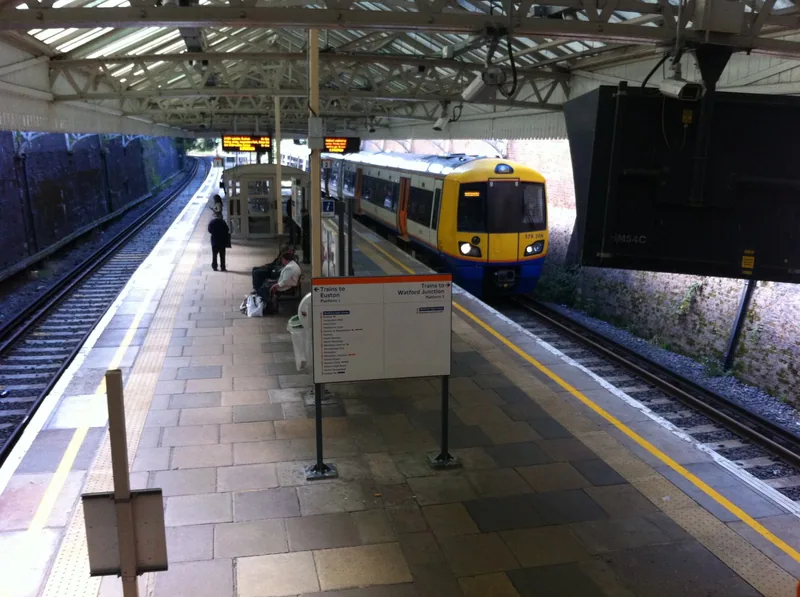
What it costs from each town
These are the published adult caps for travel into and within London from a selection of towns, taken from Transport for London's beyond-Zone-9 price list and National Rail's contactless caps table (both valid September 2026). The last two columns do the arithmetic for a couple travelling into London on five days, against the same couple based in Zones 1 to 2.
| Town | Fastest train in | Daily off-peak cap | Monday to Sunday cap | Extra for two adults over five days | Room must be cheaper by |
|---|---|---|---|---|---|
| Epsom | 37 min to Waterloo | £18.00 | £92.60 | £91.00 | £18.20 a night |
| Slough | 18 min to Paddington | £22.40 | £113.40 | £135.00 | £27.00 a night |
| Welwyn Garden City | About 30 min to King's Cross | £23.50 | £137.00 | £146.00 | £29.20 a night |
| Watford Junction | 17 min to Euston | £24.10 | £117.00 | £152.00 | £30.40 a night |
| Windsor & Eton Central | 32 min to Paddington, change at Slough | £24.10 | £121.40 | £152.00 | £30.40 a night |
| St Albans City | About 25 min to St Pancras | £28.40 | £144.10 | £195.00 | £39.00 a night |
| Luton | About 30 min to St Pancras | £29.20 | £172.50 | £203.00 | £40.60 a night |
| Chelmsford | 33 min to Liverpool Street | £33.20 | £164.30 | £243.00 | £48.60 a night |
| Reading | 24 min to Paddington | £37.20 | £177.80 | £283.00 | £56.60 a night |
Read the last column as a threshold, not a saving. If a room in St Albans is £30 a night less than an equivalent room in Zone 2, you are losing money by staying there. If it is £60 less, you are gaining about £21 a night, before you count the time.
Three things make the real picture slightly worse than the table. The off-peak cap only applies if you are not starting your journey in the weekday morning peak; the peak caps are considerably higher, reaching £71.30 from Reading. A visitor based centrally often does not reach the £8.90 cap every day, because London is a walkable city and some days are spent in one district. And the table counts nothing for the walk to the station at each end.
The Monday-to-Sunday cap almost never helps a visitor. The weekly cap runs over a fixed Monday-to-Sunday period, so a stay running Thursday to Wednesday is split across two weeks and reaches the cap in neither. Unless your trip happens to start on a Monday, use the daily figures and ignore the weekly column.
Contactless is the only sensible way to pay, and it has one hole
Many of the stations in the table accept contactless but not Oyster, and the caps at those stations apply to contactless only. A physical card or a phone works; a Visitor Oyster card will not get you through the gates at St Albans, Luton, Reading or Chelmsford.
The hole is children. National Rail states plainly that discounts cannot currently be applied to pay as you go with contactless, so every tap is an adult fare. Inside London this barely matters, because under-11s travel free with a fare-paying adult on the Tube, DLR, Overground and Elizabeth line, and 11 to 15s can have a Young Visitor discount added. On a train from outside the zones, none of that applies automatically, and a child needs a separate ticket bought from the machine or the train company, at the child rate of 50% off Off-Peak and Advance fares.
For a family of four this changes the sum badly. Two adults at, say, the St Albans daily cap plus two child returns quickly exceeds what the same family would have paid in London, where the two children would have travelled free. Our page on children's fares on London transport explains exactly who travels free and where, and buying UK train tickets covers Advance and Off-Peak fares on the national network.
A worked example: two adults, five nights
Take a couple who want five nights in late June, going into central London every day and coming back each evening, using contactless off-peak.
- Based in Zone 2: five days at the £8.90 cap for two people is £89.00 in fares. Journey to the centre: 10 to 20 minutes.
- Based in St Albans: five days at the £28.40 cap for two people is £284.00. Journey: roughly 25 minutes to St Pancras, which in practice means about half an hour from the hotel door to a Tube platform, plus waiting for a train that runs a few times an hour rather than every three minutes.
- The gap: £195.00 over five nights, or £39.00 a night. Add roughly 40 minutes a day of extra travelling for the two of them combined.
Now do the same for Epsom. Five days at £18.00 for two is £180.00, a gap of £91.00, or £18.20 a night, for a 37-minute train to Waterloo. That is a much more realistic threshold, and it is why the useful question is not "should I stay outside London" but "which town, and how far out".
The evening is where it actually goes wrong
Money is the easy part. The thing that spoils commuter-town stays is the last train, because it changes what you can do with your evenings.
A West End play ends around 22:00 and a concert later. From Waterloo on a weekday night, the last direct train to Epsom leaves at about 23:42, and after that the journey turns into a chain of night buses that takes hours. Thameslink is kinder: on the same weeknight there was still a train from St Pancras to St Albans leaving after midnight. Slough and Watford Junction also had departures after midnight, at about 00:30 and 00:40. Those times were checked for a weeknight in September 2026 and change with the timetable, so look up the last departure for your own station and date.
The practical effects are the same everywhere. You will look at your watch during dinner. You will skip the second half of a long evening. And if you miss the train, a taxi from central London to a town 30 kilometres away costs more than the whole week's saving. London's own Night Tube on Friday and Saturday nights does not reach any of these towns.
The towns where it can work, and the ones where it rarely does
Better candidates
- Towns with a cap under about £25 a day and a train under 30 minutes: Epsom, Slough, Watford Junction, Windsor
- Stays of a week or more, where the fixed cost of getting there matters less
- Trips where you also want day trips out of London rather than only into it
- Travellers with a car who need parking, which is far cheaper and simpler outside the charging zones
Rarely worth it
- Short stays of two or three nights, when the fare gap is spread over very few room nights
- Families with children, who lose free travel and pay separate rail fares
- Anyone planning theatre, late dinners or nightlife
- Towns beyond about 40 minutes, where the cap climbs and the day shortens at both ends
Two towns deserve a note of their own. Windsor works for people who want to see Windsor Castle properly and treat London as the day trip rather than the base, and it is close to Heathrow. St Albans is a genuinely attractive small city with a Norman cathedral and a Roman site, so a night or two there can be a proper part of the holiday rather than a compromise, even though the daily fare is high.
Brighton, Cambridge, Oxford and Canterbury come up in this conversation and should not. They are an hour or more away, contactless does not run that far, and the rail fares are on a different scale entirely. They are excellent for a day out, not for sleeping.
If you are flying in and out of Luton or Gatwick
An airport arrival sometimes tips the sum. A night near the airport at each end of a trip, with the middle spent in London, can work better than trying to live in a commuter town for the whole stay: the travel cost falls on two days instead of six.
The fares are not small either way. Contactless from Luton Airport Parkway into Zone 1 has a daily cap of £29.20 off-peak, and the airport shuttle is charged separately unless your ticket is booked to Luton Airport rather than the Parkway station. Our guides to Luton to central London and Gatwick to central London compare the routes, and staying overnight at a London airport explains when an airport hotel earns its keep.
A tidier alternative: stay in London, just further out
Before you look at a town, look at the outer London boroughs, which most visitors ignore. The daily cap for Zones 1 to 4 is £12.80 and for Zones 1 to 6 it is £16.30, against £8.90 for Zones 1 and 2. That is a rise of £3.90 or £7.40 an adult a day, not £20 or £30, and a room out there can be a good deal cheaper than one in the middle.
Places such as Greenwich, Stratford, Richmond, Wimbledon and Ealing have their own centres, their own restaurants and a fast line in, and they are inside the system, so children travel free and Oyster works. Our guide to staying in Greenwich shows what that looks like in practice, and our comparison of the main areas covers the rest. If it is simply the room price that is the problem, budget hotels in London and our advice on when to book will usually get you further than a train timetable will.
A railcard turns the sum around for some travellers. A 16-25 or 26-30 Railcard can be loaded onto an Oyster card for a third off off-peak fares, and national railcards give a third off Off-Peak paper tickets from these towns. Two people travelling together can buy a Two Together Railcard as visitors. Over a week of commuting that can be worth more than the cost of the card itself: see our guide to railcards below.
The railcard detail matters enough to read in full before you commit: which railcards are worth buying as a visitor sets out which can be added to Oyster and which cannot. Note that a railcard discount cannot be applied to contactless, so a commuter-town stay and a railcard together mean buying paper tickets and losing the cap.
Frequently asked questions
Is it cheaper to stay outside London?
Only if the room is a great deal cheaper. The extra fares run from about £18 a night for a couple staying in Epsom to more than £55 a night for a couple staying in Reading. Compare the difference in room price with the figure for your town before booking, and add something for the time lost each day.
Can I use contactless from commuter towns into London?
At many of them, yes, and it is the simplest way to pay because daily caps then apply. Oyster is not accepted at all of these stations, and several accept contactless only, so check your destination station before you touch in. Always use the same card or device for every journey.
How far out is too far?
As a rule of thumb, more than about 40 minutes each way stops being worth it for a sightseeing trip. Beyond that the daily cap climbs steeply, the trains become less frequent, and the two hours a day you spend travelling are hours you came to London to use.
Do children pay on the train from outside London?
Yes. Contactless pay as you go carries no child discount, so children need their own tickets for the journey in, normally at half the adult Off-Peak or Advance fare. Inside London under-11s travel free with a fare-paying adult on the Tube and similar services, which is a large part of why families are usually better off staying in the city.
What time is the last train back from central London?
It depends on the line, and typically falls between about 23:40 and 00:40 on a weeknight. Some routes, including Thameslink, run later or through the night; others stop early enough to rule out a West End evening. Check the last departure for your own station and date before you book theatre tickets.
Is a season ticket cheaper than paying as you go?
For a visitor, usually not. A 7 Day Travelcard season from one of these stations costs the same as the Monday-to-Sunday contactless cap, and only pays for itself if your stay happens to run Monday to Sunday. Paying as you go charges you only for the days you actually travel.
Sources
- National Rail - Pay as you go with contactless caps (checked September 2026)
- National Rail - Pay as you go with contactless (checked September 2026)
- Transport for London - Fares beyond Zone 9 (checked September 2026)
- Transport for London - Adult rate prices beyond Zone 9, 2026 (PDF) (checked September 2026)
- Transport for London - Fare capping (checked September 2026)
- Transport for London - Single fare finder (checked September 2026)
- National Rail - Season ticket calculator (checked September 2026)