
Afternoon tea is a light meal of tea, small sandwiches, scones with clotted cream and jam, and cakes, served on a tiered stand in the afternoon. In London's grand hotels it costs from about £95 per adult (September 2026) and needs booking, but there are much cheaper ways to try it.
The idea is simple. You sit down in the middle of the afternoon, order a pot of tea, and work your way up a stand of three plates: savoury sandwiches at the bottom, scones in the middle and sweet pastries at the top. In most places the tea is refilled and the sandwiches are topped up if you ask, so it is more filling than it looks. Many visitors treat it as a late lunch and skip dinner.
For many first-time visitors, afternoon tea at a famous hotel is a highlight of the trip. It is also one of the easiest ways to overspend in London. This guide explains what you get, what it costs, how to book, what to wear and how to enjoy the ritual without paying five-star prices.
Afternoon tea in brief
- What you get
- Tea (or coffee), finger sandwiches, scones with clotted cream and jam, pastries and cakes
- Grand hotel price
- From £95 per adult at The Ritz and at Claridge's (September 2026)
- Time needed
- Allow up to two hours for a hotel tea; The Ritz runs its sittings two hours apart
- Booking
- Essential for the famous hotels; book weeks ahead for weekends
- Dress code
- Varies: The Ritz requires a jacket and tie for men; others ask for smart dress
- Cheaper option
- A cream tea (scones and tea only) in a café or tea room
What is on the tiered stand
The format is fairly fixed, although every hotel adds its own twist. You choose a tea from a menu, often with a dozen or more options, from strong breakfast blends to Earl Grey, green tea and herbal infusions. Coffee and hot chocolate are usually available too, and many places offer a glass of Champagne for an extra charge.
- Sandwiches: small, crustless and cut into fingers. Classic fillings are cucumber, egg mayonnaise with cress, smoked salmon, and ham with mustard.
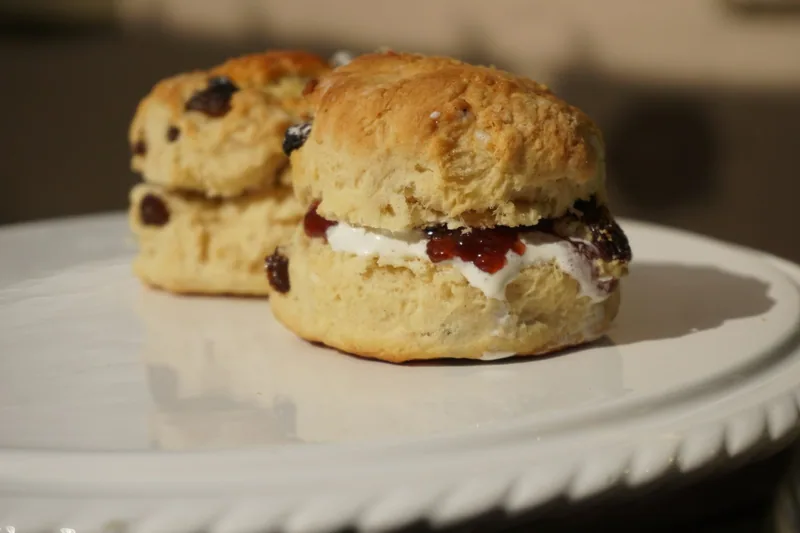
- Scones: plain or with raisins, served warm with clotted cream (a very thick cream) and strawberry jam.
- Pastries and cakes: small tarts, éclairs, slices of fruit cake or Victoria sponge, often changing with the seasons.
Eat from the bottom up: sandwiches first, then scones, then cakes. Nobody will scold you if you do it differently, but that is the order the kitchen expects, and it is why the scones are brought warm.
Cream first or jam first is a friendly regional argument. In Devon people tend to spread clotted cream on the scone and add jam on top; in Cornwall it is usually jam first, then cream. Either way is correct in London. Split the scone with your hands or a knife rather than cutting it like a sandwich.
A short history of the afternoon ritual
Tea became fashionable in Britain in the 17th and 18th centuries, but afternoon tea as a meal is younger. It is usually traced to the 1840s, when the upper classes ate dinner late in the evening. Anna, Duchess of Bedford, is traditionally credited with asking for tea, bread and butter and cake in the late afternoon to fill the gap, and inviting friends to join her. The habit spread through society and into the new grand hotels.
The Savoy says afternoon tea has been part of the hotel since 1889, when fashionable Londoners gathered there for sandwiches, pastries and tea dances. That mix of food, music and people-watching is still what the hotel teas sell today.
Afternoon tea is not high tea
Visitors often use the two terms as if they meant the same thing. Traditionally they did not. Afternoon tea was the light, elegant meal of the wealthy. High tea was the main evening meal of working families, eaten at a table after work, with hot food such as meat, pies or eggs alongside the tea. Today some places sell a "high tea" menu that adds savoury dishes, so read what is included before you book.
The grand hotel teas: what they cost
The famous hotel teas are expensive, and prices rise for Champagne versions and at Christmas. These are the prices published by the hotels in September 2026. Always check the current price on the hotel's own website, because menus and prices change several times a year.
| Hotel | Price (September 2026) | Good to know |
|---|---|---|
| The Ritz, Piccadilly | From £95 per adult; from £73 per child | Sittings at 11:30, 13:30, 15:30, 17:30 and 19:30, every day; live music; strict dress code |
| Claridge's, Mayfair | Traditional from £95; with Champagne from £110; with rosé Champagne from £125 (per person) | Festive afternoon tea only from 3 November to 3 January (not 25 December), from £120 on weekdays and £130 at weekends |
| The Savoy, Strand | Not published on the page we checked; see the hotel's website | No formal dress code, but guests are asked to dress elegantly |
For a couple, a basic tea at The Ritz or Claridge's starts at £190 before any extras. A family of two adults and two children at The Ritz pays from £336. Some restaurants add a discretionary service charge to the bill, so check the menu or ask when you book. Our guide to tipping and service charges in London explains how this works.
Other long-established names include Fortnum & Mason, the Piccadilly grocer famous for its teas, which runs a tea salon in its store, and several of the hotels in our guide to London's grand hotels. We do not list their prices here because we could not confirm them on an official page; check their websites before you go.
Book the earliest sitting and skip lunch. A hotel afternoon tea is a large meal once the sandwiches and scones are refilled. Booking a late-morning or early-afternoon slot and treating it as lunch means one expensive meal instead of two, and the room is often calmer than at 15:30.
How to book and what to expect on the day
For the well-known hotels, book as early as you can, especially for Saturdays, Sundays, school holidays and the weeks before Christmas. Most take bookings online through their own websites. Use the official site rather than a reseller, so that you see the real price, the dress code and the cancellation terms.
When you book, look for these details:
- The sitting time and length. Many hotels run fixed sittings, and your table may be needed for the next group.
- Dietary menus. The Ritz says vegan, vegetarian and gluten-free afternoon tea menus are available on request, but it cannot make extra allergy adjustments on the day. Tell the hotel in advance.
- Deposits and cancellation rules. Some hotels take card details or a deposit and charge for late cancellations or no-shows.
- Children's menus. Several hotels have a children's tea at a lower price.
Arrive a few minutes early. Coats and large bags are usually taken at a cloakroom. If you need more sandwiches or scones, ask; at most hotel teas they are part of the price.
If you have coeliac disease or another allergy, our guides to gluten-free eating and vegan and vegetarian food in London have more practical tips. Food businesses must be able to tell you about the 14 regulated allergens in their dishes, including gluten, milk and eggs, which are in almost everything on a tea stand.
Dress codes, from jacket and tie to smart casual
Dress codes are one of the most common worries, and they differ from hotel to hotel. The Ritz is the strictest of the well-known names: men must wear a jacket and tie for afternoon tea, and jeans and sportswear are not allowed for anyone. Children under 16 are exempt from the dress code. The Savoy has no formal dress code but asks guests to dress elegantly, and it does not allow sports shirts or offensive clothing.
Elsewhere, "smart casual" is the usual rule: no sportswear, no beachwear, clean shoes. If you are travelling light, a shirt with a collar and a pair of smart trousers will get you into most places. Check the dress code on the booking page, because being turned away at the door means losing your slot. Our guide to British etiquette for visitors covers other unwritten rules.
At The Ritz, a tie is part of the ticket. The hotel says a jacket and tie are required for men at afternoon tea, not merely recommended. If you did not pack a tie, choose a hotel with a smart-casual code instead of hoping for an exception.
Cheaper ways to have afternoon tea
You do not need to spend £95 to enjoy tea and scones. Many visitors are just as happy with a simpler version, and it fits better into a day of sightseeing.
- A cream tea: just tea with scones, clotted cream and jam, and no sandwiches or cakes. Many cafés and tea rooms serve one for a fraction of the price of a full afternoon tea.
- Department stores and museum cafés: several of the big stores and museums serve afternoon tea or tea and cake in attractive rooms, at lower prices than the grand hotels. The main café at the Victoria and Albert Museum serves scones, cakes and speciality teas all day in rooms decorated by William Morris, James Gamble and Edward Poynter.
- Four-star hotels and independent tea rooms: plenty of smaller hotels and tea rooms serve a full tiered tea. Compare menus online, because quality and price vary widely.
- A picnic version: buy scones, clotted cream and jam from a bakery or supermarket and take them to a park. It is the cheapest option of all on a dry day.
For more ways to keep costs down, see our guide to London on a budget. If you are simply looking for a good cup, our guide to coffee in London covers the city's cafés.
Planning afternoon tea into your day
Most of the famous hotel teas are in the West End. The Ritz is on Piccadilly, overlooking Green Park, so a walk through the park before or after tea works well. Claridge's is in Mayfair, and The Savoy is on the Strand, a few minutes from Covent Garden.
Because it takes up to two hours and happens indoors, afternoon tea is a good plan for a wet afternoon; our list of rainy-day ideas has more. In December, many hotels switch to festive menus at higher prices, which is worth knowing if you plan a trip around Christmas in London.
Afternoon tea with children
Children usually love the tiered stands and the cakes, and several hotels offer a children's tea. The Ritz lists a children's price from £73, and Claridge's has a children's menu. For younger children, a relaxed café tea is often more fun than two hours in a formal room. Our guide to London with kids has more family ideas, and the wider picture of British dishes is in our guide to traditional British food.
Frequently asked questions
How much does afternoon tea cost in London?
At the best-known hotels, expect to pay from about £95 per adult: The Ritz and Claridge's both start at £95 (September 2026). Champagne and festive menus cost more. Cafés and tea rooms are much cheaper, and a simple cream tea costs a fraction of the hotel price.
Do I need to book afternoon tea in advance?
For the famous hotels, yes. Popular sittings, especially at weekends and in December, can be fully booked weeks ahead. Book on the hotel's own website so you see the real price, dress code and cancellation rules. Smaller cafés and tea rooms often accept walk-ins.
What should I wear for afternoon tea in London?
It depends on the venue. The Ritz requires men to wear a jacket and tie, and does not allow jeans or sportswear for anyone. Most other places ask for smart casual clothes. Check the dress code on the booking page before you go.
What is the difference between afternoon tea and a cream tea?
A full afternoon tea includes sandwiches, scones and cakes with your tea. A cream tea is simply tea with scones, clotted cream and jam. A cream tea is lighter, quicker and much cheaper, and a good choice if you only want a taste of the tradition.
Is afternoon tea the same as high tea?
Traditionally, no. Afternoon tea was a light meal of the upper classes, while high tea was a hearty evening meal eaten by working families. Some London venues now use "high tea" for a menu with extra savoury dishes, so check what is included.
Sources
- The Ritz London - Afternoon Tea (checked September 2026)
- Claridge's - Afternoon Tea (checked September 2026)
- The Savoy - Afternoon Tea (checked September 2026)
- Food Standards Agency - Food allergy and intolerance advice for consumers (checked September 2026)
- Victoria and Albert Museum - V&A Café (checked September 2026)
- GOV.UK - Tips at work (checked September 2026)