
Most first-time visitors need four or five full days in London to see the main sights at a comfortable pace, with time for a museum or two and one neighbourhood beyond the centre. Two days gives you a good taste of the highlights, and a week lets you add day trips and slow down.
The honest answer depends on what you want to do. London's biggest attractions each take hours rather than minutes: the Tower of London alone needs at least three. The city is also large, so moving between areas eats into your day. A trip that looks relaxed on paper can turn into a rush once you add queues, lunch and journeys.
This guide explains what fits realistically into different lengths of stay, how long the main sights take, and when it is worth adding extra days. For day-by-day plans, follow the links to our itineraries.
How long to stay: our short answer
- 1 day
- A fast walk past Westminster, the river and one sight
- 2 days
- The classic highlights, without much depth
- 3-4 days
- Highlights plus museums and a neighbourhood or two
- 5 days
- Our recommendation for a first visit
- 7 days
- The main sights, plus one or two day trips
- Transport
- Zones 1-2 capped at £8.90 a day and £44.70 a week (Monday to Sunday)
How long London's main sights really take
Before choosing a trip length, it helps to know how much time the big attractions need. The figures below come from the attractions themselves where they publish them. They do not include queuing, security checks or travel, which can add half an hour or more at busy times.
| Attraction | Time to allow | Notes |
|---|---|---|
| Tower of London | At least 3 hours | One entry per ticket, no re-entry |
| Warner Bros. Studio Tour | About 3.5 hours, plus travel | Half a day or more with the trip from Euston |
| Science Museum | Around 2 hours | Free, but pre-book a ticket |
| Madame Tussauds | 1.5 to 2 hours | Next to Baker Street station |
| SEA LIFE London Aquarium | 1.5 to 2 hours | Near the London Eye |
| London Eye | 30 minutes for one rotation | Plus queuing time |
The big free museums (the Natural History Museum, the V&A and the National Gallery, for example) could each fill a whole day. In practice, most visitors choose two or three galleries and leave after two to three hours, which is the sensible approach. Two large museums in one day is about the limit before everything starts to blur.
One day in London: a sample, not a visit
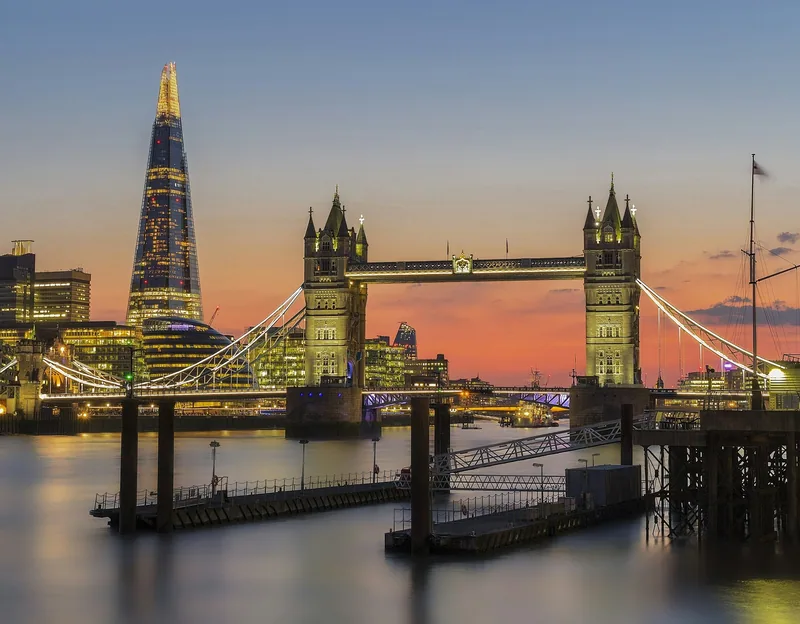
With a single day, you can see the outside of many famous buildings, but you will only have time to go inside one or two. The classic route is a walk from Westminster past Big Ben and the Houses of Parliament, across the river to the London Eye and along the South Bank, then over to St Paul's or the Tower.
One day works well for people on a long layover, cruise passengers, or visitors making a day trip from elsewhere in Britain. It does not work well if you want to understand the city. Our realistic one-day itinerary shows how to make the most of it without spending the day underground.
If you are coming in from Heathrow for the day, remember to leave enough time to get back. The Elizabeth line takes 28 minutes from Paddington, and the Piccadilly line about 50 minutes from the West End, before any time at the airport.
Two days: the headline sights
Two days is enough to see London's best-known places and get a real feel for the centre. A typical plan puts Westminster, Buckingham Palace, the parks and the West End on the first day, and the Tower, Tower Bridge, St Paul's and the South Bank on the second.
What you lose is choice. You will probably manage only one paid attraction per day and one museum in total, and you will not see much beyond the centre. For many weekend visitors that is fine. If a weekend is all you have, our two-day weekend plan shows how to pace it.
If you arrive on a Friday evening and leave on Sunday afternoon, you really have about a day and a half. Keep Sunday light, because large shops open for only six hours and some attractions keep shorter hours.
Three or four days: time for museums and a neighbourhood
With three or four days, London starts to open up. You can see the headline sights and still spend a morning in the South Kensington museums, an afternoon in Camden or Notting Hill, and an evening at a West End show.
Three days is a popular length for a first city break, and it works if you plan carefully. Four days gives you a buffer for bad weather, a slow morning, or a sight you want to see again. This is also where the free museums really pay off: you can walk into the Natural History Museum or Tate Modern for an hour without feeling you have to get your money's worth.
Our three-day itinerary for first-timers gives a day-by-day plan. If you want more museum time, our guide to London's museums and galleries helps you choose between them.
Three to four days suits pay as you go perfectly. Tapping a contactless card caps your Zones 1-2 travel at £8.90 a day, so four days of unlimited Tube and bus travel costs no more than £35.60. You do not need a travel pass or any advance purchase for a stay this length.
Five days: our recommendation for a first visit
Five days is the length we suggest for most first-time visitors. It gives you three days for the classic sights, one day for something further out (Greenwich, Kew Gardens or Hampstead Heath, for example), and one day to follow your own interests: more museums, shopping, markets or a football stadium tour.
Five days also leaves room for the unexpected. Rain, a closed Tube line or a tired child will not wreck the plan. You can go to the theatre one evening, try a proper afternoon tea, and still have time to sit in a park.
Our five-day itinerary goes beyond the obvious sights. For the day further out, Greenwich and its maritime museums are easy to reach and make a very different day from the West End.
A week or more: day trips and a slower pace
With seven days or more, you can see London properly and still get out of the city. Several famous places are close enough for a comfortable day trip by train:
- Windsor Castle: around 35 minutes from Paddington with a change at Slough, or under an hour direct from Waterloo. The castle is closed on Tuesdays and Wednesdays.
- Oxford: around an hour from Paddington, fastest 52 minutes.
- Canterbury: about 54 minutes from St Pancras on the high-speed line.
- Bath: around 1 hour 20 minutes from Paddington.
Our collection of day trips from London explains how to reach each one and what it costs. Train tickets for longer journeys are often much cheaper if you book in advance.
A week-long stay also changes the transport maths. The weekly cap for Zones 1-2 is £44.70, only 20p more than five daily caps, so from Monday to Sunday your sixth and seventh days of travel are almost free. The weekly cap runs over a fixed Monday to Sunday period, though, so a stay from Thursday to Wednesday does not benefit in the same way. For a full seven-day plan, see our one-week itinerary.
Oyster and contactless are not valid on the Waterloo trains to Windsor. South Western Railway says pay as you go does not work to Windsor, so you need a normal train ticket for the journey. Buy it before you board, or at the station, to avoid a penalty.
What makes you need more days
Some trips need more time than the averages suggest. Add a day or two if any of these apply to you:
- You are travelling with young children. Children tire faster, and you will need breaks, playgrounds and earlier evenings. Our guide to London with children has ideas that work at a gentler pace.
- You have a long flight. Jet lag can take a day away from a trip from North America, Asia or Australia. Plan something easy for the first afternoon.
- You want to see inside the major paid attractions. The Tower, the palaces, the Warner Bros. Studio Tour and Westminster Abbey each need a large part of a day.
- You use a wheelchair or have limited mobility. Step-free routes are sometimes longer. See our guide to accessible London.
- You are visiting in winter. In December and January, daylight ends in the late afternoon and outdoor sights close early, so each day holds less.
When a shorter trip is the right choice
A short trip is not a bad trip. If you have been to London before, two or three days focused on one area, such as a museum quarter or a group of markets, can be more satisfying than a rushed tour of everything.
Short trips also make sense for specific events: a concert, a football match, the theatre or an exhibition. In that case, choose a hotel close to the event and use the rest of the time for sights nearby.
Cost matters too. Accommodation is the biggest expense in London, so each extra night adds noticeably to the budget. Our guide to what a London trip costs helps you compare. If you are unsure, it is usually better to stay one day longer and do less each day than to try to fit everything into a short trip.
Planning your days so they work
However long you stay, group sights by area. Westminster, Buckingham Palace and the parks sit together; the Tower, Tower Bridge and St Paul's are at the eastern end of the centre; South Kensington has the three big museums side by side. Moving between clusters once a day, rather than zigzagging, saves a lot of time.
Check days and opening hours before you fix the plan. The Changing of the Guard at Buckingham Palace does not take place every day, the Buckingham Palace State Rooms open only in summer, and some smaller museums close on Mondays and Tuesdays. Our guide to opening hours and bank holidays explains the patterns.
Finally, book the attractions that need it, especially the Warner Bros. Studio Tour, which sells no tickets on the day, and then leave the rest of the day loose. The best moments of a London trip are often unplanned: a pub you walk past, a street market, a view from a bridge.
Frequently asked questions
Is 3 days enough for London?
Three days is enough to see the main sights and one or two museums, as long as you plan by area and start each day early. You will not see much beyond central London. If you can add a fourth or fifth day, the trip becomes much more relaxed.
Is a week in London too long?
Not at all. A week lets you see the main sights without rushing, explore several neighbourhoods, and take one or two day trips to places such as Windsor, Oxford or Canterbury. Many visitors find there is still plenty left to see after seven days.
Can you see London in one day?
You can see the outside of the most famous buildings in one long day by walking from Westminster along the river to the Tower. You will only have time to go inside one or two attractions, so choose them in advance and book tickets if needed.
How many days do you need for London with kids?
Plan on at least four or five days, because children need a slower pace and more breaks. Mix one big attraction a day with parks and playgrounds. Children aged 5 to 10 travel free on the Tube with a paying adult, which keeps transport costs down.
Should I add day trips to a London visit?
If you are staying five days or more, one day trip is a good idea. Windsor, Oxford, Canterbury and Bath can all be reached by train in about an hour or a little more. On a shorter trip, London itself has more than enough to fill your time.
Sources
- Historic Royal Palaces - Tower of London tickets and prices (checked September 2026)
- Science Museum - Plan your visit (checked September 2026)
- Warner Bros. Studio Tour London - Tour experience FAQs (checked September 2026)
- Transport for London - Capping (checked September 2026)
- GWR - London to Oxford (checked September 2026)
- South Western Railway - Trains to Windsor Castle (checked September 2026)
- Royal Collection Trust - Windsor Castle (checked September 2026)