
Three days is the right length for a first visit to London. Spend day one inside Westminster Abbey and Parliament and along the river, day two at the Tower of London, the City and St Paul's Cathedral, and day three on the British Museum followed by a slower afternoon along the canal to Camden and Primrose Hill.
With three days you no longer have to choose between seeing the famous places and going inside them. You can give the Tower of London the three hours it deserves, climb to the Dome Galleries at St Paul's and spend a whole morning in one of the world's great museums. You also have time for something a shorter trip never allows: an afternoon that is not planned to the minute.
This itinerary is built for first-time visitors. Each day stays in one part of London, so you spend your time walking between sights rather than on the Tube. It suits a Friday-to-Sunday trip as well as a midweek stay, as long as you put the days in the right order.
Three days in London: the shape of the trip
- Day 1
- Westminster Abbey, Parliament, the London Eye, the South Bank, Covent Garden
- Day 2
- Tower of London, Leadenhall Market, Sky Garden, St Paul's Cathedral
- Day 3
- British Museum, King's Cross, Regent's Canal, Camden Market, Primrose Hill
- Put on Monday–Saturday
- Days 1 and 2 (the Abbey and St Paul's do not open for sightseeing on Sundays)
- Book before you travel
- Sky Garden (free, released three weeks ahead), London Eye
- Transport
- Contactless or Oyster; adult daily cap £8.90 in Zones 1-2
Which day goes where in your week
The order in this plan is not fixed, but the days of the week matter. Westminster Abbey and St Paul's Cathedral are churches first: both open for sightseeing from Monday to Saturday, not on Sundays. The British Museum and Camden, on the other hand, are open every day. So if your trip runs Friday to Sunday, do the days in the order below and save day three for Sunday.
Two more timings are worth checking. Parliament's guided tours run on Saturdays all year, and from Monday to Saturday only when Parliament is in recess. The Changing the Guard at Buckingham Palace is not daily either: in September 2026 it was scheduled at 11:00 on Mondays, Wednesdays and Fridays, with some exceptions, so check the official Changing the Guard calendar if you want to fit it into day one.
| Day | Morning | Afternoon | Evening |
|---|---|---|---|
| 1: Westminster and the river | Westminster Abbey; Parliament | London Eye; South Bank walk | Covent Garden |
| 2: The Tower and the City | Tower of London | Leadenhall Market; Sky Garden; St Paul's | An old City pub or the Millennium Bridge at dusk |
| 3: A museum and a slower afternoon | British Museum | King's Cross; canal walk to Camden | Sunset on Primrose Hill |
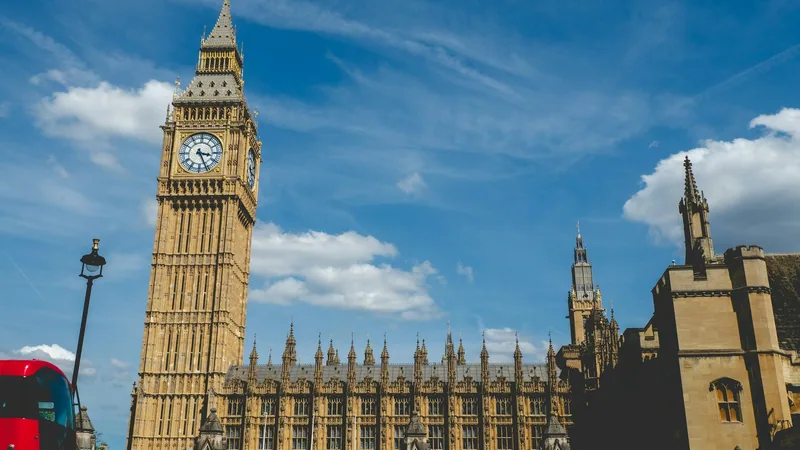
Day 1 morning: inside Westminster Abbey and Parliament
Start the trip where English history is most concentrated. Aim to be at Westminster Abbey when it opens, before the tour groups. This is where monarchs have been crowned since 1066, and where many are buried, along with poets, scientists and statesmen. Do not rush it: this is one of the few places on the trip that deserves a slow visit. Prices and opening times change during the year, so check them on the Abbey's own website; our Westminster Abbey guide explains what to see inside.
Across the road stands the Palace of Westminster, home of the Houses of Parliament. How you see it depends on the day:
- Watching a debate in the House of Commons or the House of Lords is free, and Parliament welcomes overseas visitors to the public galleries. Prime Minister's Questions is on Wednesdays at 12 noon when the Commons sits.
- A guided tour (90 minutes, in English) costs £40 for an adult booked ahead, or £43 on the day. The self-guided audio tour costs £31 (£34 on the day), with one child free per adult. Guided tours run on Saturdays and, during recess, Monday to Saturday.
- The Big Ben tour up the Elizabeth Tower is now open to any visitor aged 11 or over. It costs £55 for an adult, involves 334 steps, and tickets are released three months ahead, on the second Wednesday of each month at 10:00. They go quickly.
Expect airport-style security for all of them, and arrive 20 minutes early for a tour. Our page on touring the Houses of Parliament compares the options.
Day 1 afternoon and evening: the London Eye, the South Bank and Covent Garden
After lunch, cross Westminster Bridge to the London Eye. A rotation lasts 30 minutes. Standard tickets start at £29 when booked online (prices vary with demand), against £39 at the ticket desk, so book a time slot the evening before. On a first visit, the view is the best way to understand how the city fits together: Parliament below you, the parks to the west, the City towers to the east.
Then walk east along the river path. Past the Southbank Centre and the National Theatre, take the steps up onto Waterloo Bridge for the view in both directions, and cross to the north bank. From the Strand it is a few minutes to Covent Garden, with its covered market building, street performers and restaurants. Our guide to the Covent Garden area has suggestions for dinner, and many West End theatres are within walking distance if you want to book a show for this evening.
Day 2 morning: three hours at the Tower of London
The Tower of London is a medieval fortress, a royal palace, a former prison and the home of the Crown Jewels. It opens at 09:00 from Tuesday to Saturday and at 10:00 on Sundays and Mondays, with last entry at 16:30. An adult ticket costs £37 (£40.70 with a donation), a child aged 5 to 15 costs £18.50, and under-5s are free. You can buy on the day, but the Tower advises booking online during holidays.
The Tower recommends at least three hours. Join a Yeoman Warder tour (included in the ticket; the last one starts at 15:15) to hear the stories, then see the Crown Jewels and the White Tower at your own pace. Your ticket is valid for one entry only. Some rooms and routes may be closed during conservation work.
Book the Sky Garden before you even pack. Free Sky Garden tickets are released every Monday morning, three weeks ahead, for the whole week, and each slot lasts one hour. Choose a slot for the early afternoon of day two, straight after the Tower. Children under 16 cannot enter after 18:00 on weekdays.
Day 2 afternoon: Leadenhall Market, the Sky Garden and St Paul's
From the Tower, walk into the City of London, the financial district that grew on the site of Roman Londinium. Ten minutes brings you to Leadenhall Market, a Victorian covered market with a painted roof. Its public areas are open around the clock, though shop hours vary, and it was partly under scaffolding for maintenance in September 2026, while remaining fully open.
Nearby, the Sky Garden sits at the top of the tower known as the Walkie-Talkie. Entry is free with your booked ticket, on weekdays 10:00–18:00 and at weekends 11:00–21:00. Walk-ins are possible when there is space, but not after 17:00 on weekdays.
Finish the afternoon at St Paul's Cathedral, about 20 minutes west on foot. Sightseeing is from Monday to Saturday, and an adult ticket costs £27 (£29.70 with a donation), with children aged 6 to 17 at £10.50. That includes the cathedral floor, the crypt and the Dome Galleries, plus multimedia guides. Children must be with an adult aged 18 or over in the galleries. The climb is long, so check the last entry time and leave yourself enough time before closing.
For the evening, cross the Millennium Bridge to the south bank for the view back to the dome, or stay in the City for a drink in one of its old pubs, many of which date back centuries. Our guide to London's historic pubs lists the best.
Day 3 morning: one great museum, done properly
Day three starts at the British Museum, which is free for its permanent collection. Rather than wandering, go for the famous objects first. The Rosetta Stone is in Room 4 and the Parthenon sculptures are in Room 18, both on the ground floor. If you want the Assyrian reliefs, note that Rooms 7, 9, 10, 19 and 20 are open only from 11:00 to 15:00 each day, as are Rooms 57 and 58. Some galleries can close at short notice.
Two to three hours is enough for a first visit. Afterwards, walk through the garden squares of Bloomsbury, the literary neighbourhood around the museum, for lunch.
Families can swap Bloomsbury for South Kensington. If your children would rather see dinosaurs than Egyptian sculpture, spend this morning at the Natural History Museum instead. It is free, opens daily 10:00–17:50, and Hope the blue whale still hangs in the main hall. It is closed on Friday 9 October 2026.
Day 3 afternoon: King's Cross, the canal and Camden
This is the part of the trip with room to breathe. From Bloomsbury it is a 15-minute walk north to King's Cross, where the old railway lands have been turned into squares, shops and restaurants. Harry Potter fans can find the Platform 9¾ trolley photo spot outside the Harry Potter Shop in the station. Staff sell photos, but you are welcome to take your own. The shop opens Monday to Saturday 08:00–22:00 and Sunday 09:00–20:00.
Behind the station, join the towpath of Regent's Canal and follow it west towards Camden. It is a quiet, flat walk past narrowboats and locks, and it takes roughly 40 minutes at an easy pace. You come out at Camden Lock, in the middle of Camden Market, with its food stalls, vintage clothes and alternative fashion. Spend as long as you like here; this is your unplanned afternoon.
Day 3 evening: the skyline from Primrose Hill
From Camden, walk about 20 minutes west to Primrose Hill, on the northern edge of Regent's Park. The top of the hill looks south over the whole of central London, and at sunset it is one of the finest free views you can get. Bring something to sit on. Our guide to Regent's Park and Primrose Hill covers the park, the zoo on its edge and the nearest stations for getting back.
Getting around, and where to base yourself
Each day in this plan needs only two or three Tube rides. With a contactless card, phone or Oyster card, adult fares in Zones 1-2 are capped at £8.90 a day, so three days of travel cost at most £26.70 per adult. Every adult needs their own card or device, and children aged 5 to 10 travel free on the Tube with a fare-paying adult. Peak fares apply on weekdays from 06:30 to 09:30 and 16:00 to 19:00, so a start after 09:30 is slightly cheaper for single journeys.
A central base makes a three-day trip much easier, because you can drop back to the hotel between the morning and the evening. Our guide to the best areas to stay in London compares the options by budget.
What we left out, and how to add it
Every first-time plan involves choices. This one leaves out Buckingham Palace's interior, the South Kensington museums, Greenwich and the royal palaces outside the centre.
- Buckingham Palace State Rooms: open only in summer (9 July to 27 September in 2026), closed on Tuesdays and Wednesdays in September, from £33 for an adult in advance. It could replace the London Eye on day one.
- The Changing the Guard: on scheduled days, add it to day one between the Abbey and Parliament. It starts at 11:00.
- A West End show: fits easily into the evening of day one or day two.
If you are still planning, our complete guide for first-time visitors to London covers money, safety and transport before you arrive. And if you can extend the trip, our five-day itinerary adds Greenwich, a royal palace, East London and a day out of the city.
Frequently asked questions
Is three days enough for London?
Three days is enough for a good first visit. You can see the main landmarks, go inside the Tower of London, Westminster Abbey and St Paul's, spend a morning in a major museum and still have one relaxed afternoon. Greenwich, the palaces outside the centre and day trips need more time.
What order should I see London's sights in over three days?
Group the sights by area: Westminster and the South Bank on one day, the Tower and the City on another, and a museum plus a neighbourhood on the third. Put the days with Westminster Abbey and St Paul's between Monday and Saturday, because neither opens for sightseeing on Sundays.
Can overseas visitors go inside the Houses of Parliament?
Yes. Anyone can watch debates in the Commons and Lords free of charge. Paid guided tours (£40 for an adult in advance) are open to all visitors on Saturdays, and Monday to Saturday during parliamentary recess. The Big Ben tour is also open to visitors aged 11 and over.
How much does transport cost for three days in London?
With contactless or Oyster, an adult pays no more than £8.90 a day for Tube and bus travel in Zones 1-2, so at most £26.70 for three days. Children aged 5 to 10 travel free on buses, and free on the Tube with a fare-paying adult.
Sources
- UK Parliament - Tour prices (checked September 2026)
- UK Parliament - Big Ben tour (checked September 2026)
- Historic Royal Palaces - Tower of London opening times (checked September 2026)
- St Paul's Cathedral - Ticket types and prices (checked September 2026)
- Sky Garden - Booking (checked September 2026)
- British Museum - Museum map (PDF) (checked September 2026)
- Harry Potter Shop King's Cross - Visit us (checked September 2026)
- Transport for London - Fare capping (checked September 2026)