
London is one of the easiest big cities to visit with children: the major museums are free, children under 11 travel free on buses, trams and (with a paying adult) the Tube, and the parks are full of playgrounds. The costs come from paid attractions and accommodation, so plan a mix of free and paid days and book the big-ticket sights ahead.
Travelling with children changes how you plan a city break. Distances matter more, meals come at fixed times, and one long queue can spoil a whole afternoon. The good news is that London was built for visitors of all ages: the Natural History Museum's dinosaurs, the Tower of London's armour and the boats on the Thames work as well for a six-year-old as for their grandparents.
This guide covers what families need to know before they go: transport fares by age, pushchairs on buses and the Tube, the best free and paid attractions for different ages, entry paperwork for children, and how to keep costs under control.
Family travel in London at a glance
- Under 11s on buses and trams
- Free
- Under 11s on Tube, DLR, Overground, Elizabeth line
- Free with a fare-paying adult (up to 4 children per adult)
- Ages 11-15
- Young Visitor discount on Oyster: 50% off adult pay as you go fares and caps for up to 14 days
- Big free museums
- Natural History Museum, Science Museum, V&A, IWM London, National Maritime Museum
- Entry to the UK
- Every child needs their own ETA or visa, including babies
- Buggies on buses
- Welcome; wheelchair users have priority in the wheelchair space
What children pay on London transport
Children's fares are one of the best reasons to use public transport rather than taxis. TfL's rules are generous for younger children and a little more complicated for teenagers.
| Age | Buses and trams | Tube, DLR, Overground, Elizabeth line | What you need |
|---|---|---|---|
| Under 11 | Free | Free with a fare-paying adult (max 4 per adult) | No ticket; older-looking 10-year-olds may be asked for proof |
| 11-15 | 50% off with the Young Visitor discount; free with an 11-15 Zip photocard | 50% off adult pay as you go with the Young Visitor discount | An Oyster or Visitor Oyster with the discount added by staff |
| 16 and over | Adult fare (unless they hold a 16+ Zip card) | Adult fare | Contactless card or Oyster |
The Young Visitor discount is the key tip for families with 11- to 15-year-olds. Staff add it to an Oyster or Visitor Oyster card at any Tube or Overground station, some Elizabeth line stations or a Visitor Centre, and the child must be present. It gives 50% off adult pay as you go fares and daily caps for up to 14 days. A child using a parent's contactless bank card would pay the full adult fare.
National Rail trains in London are less predictable: TfL says children under 11 travel free on "some" National Rail services, so check before a trip to places like Hampton Court. Our full guide to children's fares on London transport explains the Zip cards and the rules for teenagers.
A family of four can ride the Tube all day for the price of two adult caps. Two adults paying by contactless in Zones 1-2 are capped at £8.90 each, and up to four children under 11 travel free with them. That is £17.80 for unlimited Tube, bus and train travel in central London for the whole family.
Buggies and pushchairs on buses and the Tube
All London bus routes use low-floor buses, and the driver can lower the bus to kerb level. You can board with a buggy unless the driver thinks the bus is too crowded. If a double buggy will not fit through the front door, TfL says you may board at the back doors after checking with the driver.
Every bus has a wheelchair space, and by law wheelchair users have priority over it. If a wheelchair user needs the space, you should share it, fold your buggy or move. You will not be asked to leave the bus, but if you choose to, the Hopper fare lets you take the next bus without paying again.
The Tube is harder. Only some stations are step-free, and many central stations have long escalators and stairs. TfL advises using lifts where available and taking extra care on escalators. Most Tube trains have multi-purpose areas suitable for buggies, but not on the Central, Waterloo & City and Bakerloo lines. Staff at some stations may help carry a buggy on stairs, but they are not always able to.
The Elizabeth line, the DLR and the river buses are the most buggy-friendly options. All 41 Elizabeth line stations are step-free from street to platform, all DLR stations are step-free, and Thames Clippers boats are boarded by ramp. Plan step-free routes in TfL Go or Journey Planner, and see our guide to step-free travel for more.
A compact folding buggy saves you on the Tube. Where there are stairs and no lift, TfL staff who help will ask you to carry your child and fold the buggy. A light buggy that folds with one hand makes stations like these far less stressful than a large travel system.
Free museums that children love
London's national museums are free for their permanent collections, which means you can visit for an hour, leave when the children are tired and come back another day. The best for families are close together.
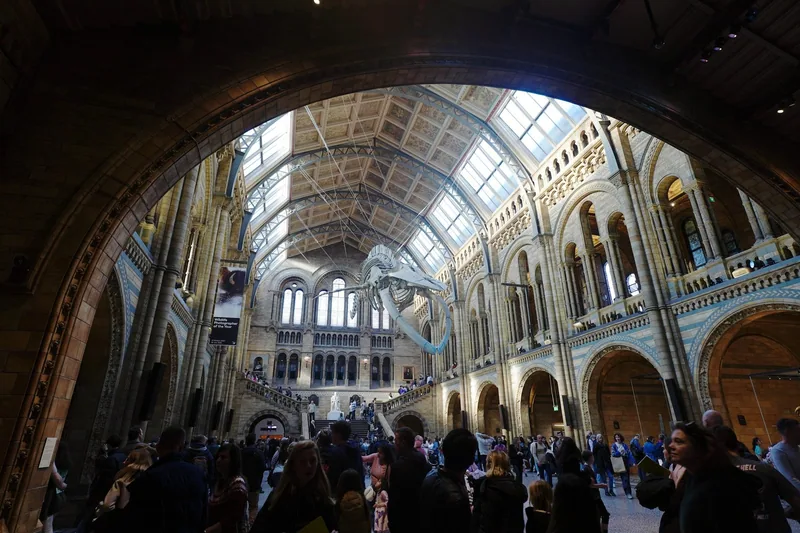
- The Natural History Museum in South Kensington is free and open daily 10:00-17:50. Hope the blue whale still hangs in Hintze Hall. Booking is not required, but a free ticket guarantees entry, which helps at weekends and in school holidays. Note that it is closed on Friday 9 October 2026.
- The Science Museum next door is free, but you need to pre-book a free ticket. Its interactive gallery, Wonderlab, is paid: day passes start from £13.50, with one price for all ages and under-3s free. The museum is closed on Wednesday 11 November 2026.
- The V&A is free with no booking, and a good choice for older children interested in design and fashion.
- IWM London (Imperial War Museum) is free and works well for older children studying history. Some exhibits deal with difficult subjects, so read the gallery descriptions first.
- The National Maritime Museum in Greenwich is free, with booking recommended, and pairs with a walk in Greenwich Park.
- London Museum Docklands is free, open daily 10:00-17:00, near West India Quay DLR.
For a full list, see our guide to free museums in London. They are also your best bet on a wet day; our ideas for rainy days in London include more indoor options.
Paid attractions: what to book and what it costs
The famous paid attractions add up quickly for a family, so pick two or three rather than trying to do them all. Most are cheaper online, and several vary their prices with demand.
| Attraction | Adult | Child | Good to know |
|---|---|---|---|
| Tower of London | £37.00 (without donation) | £18.50 (5-15); under-5s free | Allow at least three hours; Yeoman Warder tours included |
| ZSL London Zoo | From £27.70 online (off-peak weekday, without donation) | See official site | Four price tiers; cheapest booked before 10:00 on the day |
| SEA LIFE London Aquarium | Online from £28; £39 on the day | See official site | About 1.5-2 hours; near Waterloo |
| The London Dungeon | Online from £27; £35 on the day | See official site | Recommended age 12+; under-5s not admitted |
| Warner Bros. Studio Tour | £58.50 (2026) | £47 (5-15, 2026) | Must be pre-booked; shuttle from Watford Junction included |
| Buckingham Palace State Rooms | £33.00 in advance | £16.50 (5-17); under-5s free | Summer opening ends 27 September 2026 |
Prices checked September 2026; always confirm on the official sites before you book. The Tower of London is usually the favourite with primary-school children, thanks to the Crown Jewels and the Yeoman Warders. The London Zoo fills a whole day in Regent's Park. The Harry Potter studio tour takes about three and a half hours and sells out, so book it first if it is on your list.
Take the age guidance seriously. The London Dungeon uses actors, darkness and jump scares, and the attraction itself recommends it for ages 12 and over.
Parks, playgrounds and letting off steam
Children need breaks from queues and galleries, and London's parks provide them for free. The Diana Memorial Playground in Kensington Gardens reopened on 5 August 2026 after a £3 million renewal that included a new galleon. It is free, and only adults supervising children up to the age of 12 are admitted. In September it is open 10:00-18:45, with shorter hours through the autumn and winter. The water play was switched off during the hosepipe ban, so check before promising a splash.
The big royal parks, such as Hyde Park, Regent's Park and Greenwich Park, have cafés and plenty of space to run. Our guides to Hyde Park and Kensington Gardens and to city farms and the best playgrounds list more ideas, including farms where children can see animals for free.
Boats and the cable car
A boat trip is a cheap way to see the sights from a child's height. On the Uber Boat by Thames Clippers river buses, children aged 4 and under travel free (up to two per ticket holder), and 5- to 15-year-olds pay half fare. To get the child rate with pay as you go, the child needs a Zip Oyster or an Oyster with the Young Visitor discount. All boats are wheelchair accessible, and buggies are welcome. Our guide to the Thames river bus explains routes and fares.
The IFS Cloud Cable Car (London Cable Car) across the Thames at Greenwich costs £7.00 one-way for adults and £3.50 for children. The ride takes up to 10 minutes, up to 90 metres above the river, and folding buggies are allowed.
Where families like to stay
Location matters more with children than it does for couples. A hotel near a step-free station saves time and tempers, and a family room or apartment with a kitchen can save a lot on breakfasts and early dinners.
South Kensington suits families who plan several museum days, and areas near the big stations such as King's Cross and Paddington make airport and day-trip travel easier. Our guide to family-friendly areas and hotels compares neighbourhoods and room types.
Passports, ETAs and airport arrival with children
Every traveller needs permission to enter the UK, and this includes children. GOV.UK is clear that each person needs an ETA, "including babies and children", if their nationality requires one. The ETA costs £20 per person, so a family of four pays £80. You can apply for your children, in the app if they are with you or online if they are not. Our guide to UK entry requirements and the ETA explains who needs one.
At the airport, eGates can be used by children aged 8 and over who are at least 120 cm tall, with 8- to 17-year-olds accompanied by an adult. Heathrow opened its eGates to children aged 8 and 9 from 8 July 2026. Younger children go through a staffed desk with their family.
For the trip into town, note that on the Heathrow Express children aged 15 and under travel free with a paying adult, which can make it cheaper for families than the Elizabeth line. Compare all options in our guide to getting from Heathrow to central London.
Eating out and daily rhythm
Most London restaurants welcome children at lunchtime and early evening, and many chains have children's menus. Many pubs that serve food admit children with an adult during the day, though policies vary; the law allows 16- and 17-year-olds to drink beer, wine or cider with a meal when an adult buys it, but no under-18 may buy alcohol. Food markets and casual cafés are easier with small children than formal restaurants. Our guide to cheap eats suggests budget-friendly places.
Plan one main activity per morning and one per afternoon, with a park or a snack in between. Know where the toilets are, as there are none on the Tube or London buses; our guide to finding a toilet in London helps with that.
Frequently asked questions
Do children travel free on the London Underground?
Children under 11 travel free on the Tube, DLR, London Overground and Elizabeth line when they are with a fare-paying adult, up to four children per adult. They also travel free on buses and trams. Children aged 11-15 can get 50% off with the Young Visitor discount on an Oyster card.
Do babies and children need an ETA to visit London?
Yes, if their nationality needs an ETA. GOV.UK says every person needs one, including babies and children. It costs £20 per person. Children from countries that need a visa must have their own visa instead.
Can I take a pushchair on London buses?
Yes. All London buses are low-floor and can be lowered to the kerb. You can board unless the driver judges the bus too crowded. Wheelchair users have priority in the wheelchair space, so you may need to fold your buggy or move if one boards.
What are the best free things to do in London with kids?
The Natural History Museum, the Science Museum (free ticket required), the V&A and the National Maritime Museum are all free, as are the royal parks and the Diana Memorial Playground in Kensington Gardens. Watching the Changing of the Guard is free too.
Is the London Dungeon suitable for young children?
The London Dungeon recommends a minimum age of 12, does not admit under-5s, and requires under-16s to be with an adult. Its scenes use darkness, actors and sudden scares, so it is better suited to older children and teenagers.
Sources
- Transport for London - Visitor Oyster card and travelling with children (checked September 2026)
- Transport for London - Getting around with your buggy (checked September 2026)
- Transport for London - 5-10 Zip Oyster photocard (checked September 2026)
- GOV.UK - Get an electronic travel authorisation (ETA) (checked September 2026)
- Natural History Museum - Visit (checked September 2026)
- The Royal Parks - Diana Memorial Playground (checked September 2026)
- Historic Royal Palaces - Tower of London tickets and prices (checked September 2026)