
The cheapest full day out of London costs £16.30, and you do not have to buy anything to get it: that is the off-peak daily cap on contactless and Oyster, and it stretches as far as Epping Forest, Hampton Court, Chesham and the edge of Essex. Beyond the cap, the cheapest trips are the ones with advance singles from around £5.40, not the ones that are closest.
Distance has surprisingly little to do with the price of a British train ticket. Oxford is 60 miles away and can cost £10.80 return. Brighton is closer, and bought at the wrong moment on the wrong day it can cost several times as much. What decides it is which fare you are allowed to use, and that depends on the day of the week, the time you leave and how many of you there are.
Our guide to buying UK train tickets explains the ticket types themselves. This page is the shopping list: which destinations are genuinely cheap, what the mechanism is in each case, and what a family of four actually hands over.
The numbers that set the price
- Off-peak daily cap, Zones 1-6
- £16.30 on contactless or Oyster
- Off-peak daily cap, Zones 1-9
- £16.30 (£23.30 if you travel in the peak)
- Peak times
- Monday to Friday 06:30-09:30 and 16:00-19:00, excluding public holidays
- National Rail off-peak
- Generally from 09:30 Monday to Friday; all day at weekends and on bank holidays
- Cheapest verified advance single
- London Marylebone to Oxford, from £5.40 (Chiltern Railways)
- Children 5-15 on National Rail
- 50% off Advance and Off-Peak fares
- Discounts on contactless
- None. No child, railcard or concession rate exists on contactless
The cap is the cheapest ticket in Britain, and most visitors already have it
Transport for London caps what a contactless card or Oyster can be charged in a day. Tap in and out all day between Zone 1 and Zone 6 and you will never pay more than £16.30. What almost nobody realises is that the off-peak cap for Zones 1 to 9 is the same £16.30. Travelling twice as far costs nothing extra, as long as you avoid the peak.
That single fact turns a set of genuine countryside and riverside destinations into a day that costs less than two London cocktails, with no booking, no ticket and no decision to make in advance. Our explainer on Oyster, contactless and how capping works has the mechanics; what follows is where it reaches.
| Destination | Line and zone | What you get |
|---|---|---|
| Hampton Court | South Western Railway, Zone 6 | Henry VIII's palace, the gardens and Bushy Park across the road; about half an hour from Waterloo |
| Epping | Central line, Zone 6 | The northern end of Epping Forest, and about ten minutes' walk from the station to the trees |
| Amersham and Chesham | Metropolitan line, Zone 9 | Two old Chiltern market towns and the start of proper hill walking |
| Brentwood | Elizabeth line, Zone 9 | Essex countryside and country parks on the edge of town, with a fast direct train from the middle of London |
| Upminster | District line and c2c, Zone 6 | A preserved windmill, and the start of the walk down towards the Thames marshes |
| Chessington South | South Western Railway, Zone 6 | The cheapest way to reach the theme park, though the ticket inside is not cheap |
Hampton Court is the best value of the six. An off-peak pay as you go single from Waterloo is £5.20, so the return is £10.40, under the cap; the palace ticket is where the money goes, and our page on the palace covers that. Epping is the cheapest genuinely rural day: the Central line runs to it and Epping Forest starts at the end of the road.
Zone 9 costs the same as Zone 6 once the morning peak is over. The off-peak Zones 1-9 cap and the Zones 1-6 cap are both £16.30, so a trip out to Chesham or Amersham on the Metropolitan line is priced like a trip to Zone 6. Leave after 09:30 and this holds; leave at 08:45 and the Zones 1-9 cap jumps to £23.30.
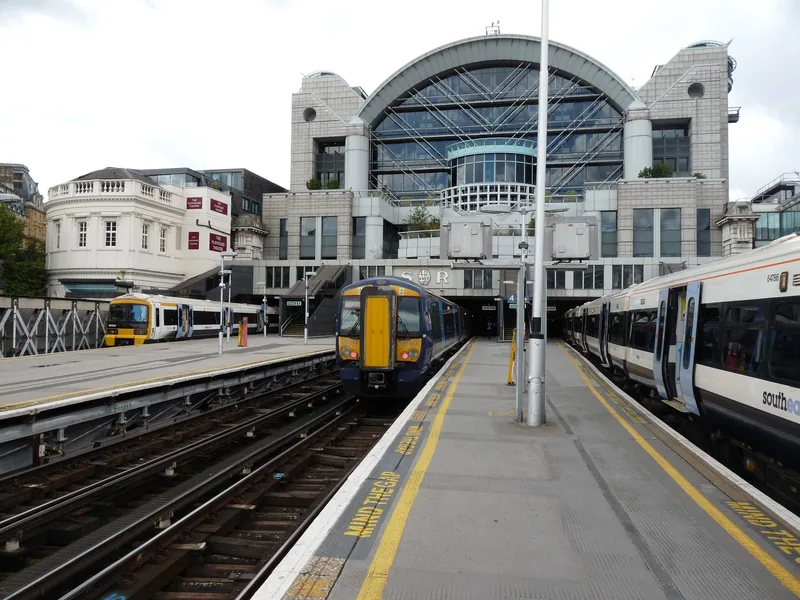
Photo: Smiley.toerist · CC BY-SA 4.0 · Wikimedia Commons · resized
Where the cap stops dead
The cap is generous but it has hard edges, and stepping over one of them without a ticket is expensive. Pay as you go does not cover Windsor, Brighton, Cambridge, Oxford, Canterbury or anywhere south of Gatwick, and an incomplete contactless journey on National Rail is charged at a maximum fare of £30.40.
Two edges are worth knowing precisely:
- Gatwick is included, but not capped. Contactless and Oyster work between London and Gatwick, at £10.70 off-peak and £19.20 peak from Victoria, London Bridge or St Pancras. The peak fare is nearly double, which is unusual, and neither counts towards the daily cap.
- Twenty more stations joined the scheme in March 2026. Contactless pay as you go now works at Stansted Airport, Stansted Mountfitchet, Bishop's Stortford, Harlow, Chelmsford, Southend Victoria and Southend Airport, among others, with published caps. Oyster is still not valid at any of them. That makes Southend reachable on a tap, which it was not before.
Windsor is the classic trap, because it feels like a London destination and is not: neither Oyster nor contactless is valid there and you need a ticket from Waterloo or Paddington. Doing Windsor in half a day sets out the options. If you are unsure what happens when a tap goes wrong, the rules on incomplete journeys are worth two minutes.
The £5 advance single, and where to find one
Past the cap, the cheapest fares are Advance singles: fixed to one named train, sold in limited numbers, non-refundable. The headline prices that operators publish are real, and they are far lower than most visitors expect.
| Route | Cheapest advance single | Fastest journey | What is there |
|---|---|---|---|
| Marylebone to Oxford | From £5.40 | 1 hour 12 minutes | Colleges, three free museums, the Bodleian |
| Marylebone to Banbury | From £6.40 | 51 minutes | A Cotswold-edge market town, and a change point for the villages |
| Marylebone to Warwick | From £6.40 | 1 hour 16 minutes | Warwick Castle and a small medieval centre |
| Marylebone to Birmingham | From £6.40 | 1 hour 47 minutes | A second city, at a price that makes the journey time bearable |
Those are Chiltern Railways' own published figures, and the pattern is the point: one operator's slower route can be a third of the price of the fast one. Two Advance singles to Oxford and back come to £10.80, for an extra twenty minutes on the train.
Other operators publish the same kind of "from" price on their route pages, and National Rail says half a million Advance tickets under £10 are released every week. The cheapest ones go first, and they appear up to twelve weeks ahead. For which train actually gets you there, our comparison of Oxford and Cambridge covers both universities in detail.
Children change the answer completely
This is where most families lose money without noticing. There is no child rate on contactless, and there never has been. If two adults and two eleven-year-olds all tap in, the family is charged four adult fares.
The fixes are different depending on whether you are inside London or leaving it.
- Inside London: children aged 5 to 10 travel free on the Tube, DLR, Overground and Elizabeth line with a fare-paying adult, up to four children per adult. For 11 to 15-year-olds, station staff will add a Young Visitor discount to an Oyster or Visitor Oyster card, giving 50% off adult fares and caps for up to fourteen days. The child has to be present. Children's fares on London transport has the full rules.
- On Southeastern, out of London: Kids for a Quid. Buy one valid adult off-peak ticket and up to four children aged 5 to 15 travel for £1 each, all year round. Under-5s are free. It does not apply to journeys wholly inside Zones 1 to 9, and it cannot be stacked with a railcard child discount, so it is a Kent and Sussex offer: Canterbury, Whitstable, Margate, Dover.
- On c2c, out to Essex: Kids for £2, which is £2 return per child at weekends all year and during school holidays, up to four children with each adult. c2c also sells a Family Travelcard for off-peak same-day returns with one or two adults and one to four children, which bundles Zones 1-6 travel in London with the outward journey and, the operator says, saves up to 25% against ordinary off-peak tickets.
- Everywhere else: children aged 5 to 15 get 50% off Advance and Off-Peak fares as standard, and a Family & Friends Railcard takes a third off adult fares and 60% off child fares on top.
Tapping four contactless cards is the most expensive way for a family to leave London. Because no discounts exist on contactless, a paper or Oyster ticket is the only way a child, a railcard or a concession rate can be applied on National Rail. Work out the ticket price before you reach the barrier, not after.
Three adults travelling together get a third off
GroupSave is the most underused discount in Britain. Three to nine people travelling together, buying all their tickets in one transaction, get up to a third off standard adult fares. It runs from 09:30 Monday to Friday and at any time at weekends and on bank holidays.
The conditions are strict and worth reading before you rely on it. Everyone must have the same origin, destination and route; everyone must travel together the whole way, including any change of train; and railcards cannot be used as well. It does not apply to pay as you go fares in London. On Southeastern, children can be added at the Kids for a Quid rate alongside a GroupSave party, which is the single cheapest way for a large family to reach the Kent coast.
Three adults to the coast on an off-peak return, with GroupSave, will usually beat three separate railcard-discounted tickets. Our page on travelling as a group or family covers the London side of the same question.
What it actually costs, for four people
Three worked days, all for two adults and two children aged 5 to 15, all travelling off-peak. Fares are September 2026 and the cheap advance tickets have to be booked ahead.
| Day out | Travel for four | Where the rest of the money goes |
|---|---|---|
| Epping Forest | Two adult caps at £16.30 maximum, children 5-10 free; 11-15s at half rate with a Young Visitor discount | Nothing. The forest is free |
| Hampton Court by train | Two off-peak returns at £10.40 each, children free or half rate | Palace admission, which is the whole cost of the day |
| Oxford from Marylebone | Two adult advance returns from £10.80 each, two child returns from £5.40 each: about £32.40 in fares | Nothing, if you stay in the free museums |
The pattern holds across almost every cheap day trip: getting there is rarely the expensive part once you have booked properly. What ruins a budget is the admission ticket at the other end. A castle for four is routinely £60 to £90; a forest, a beach or a university museum is nothing. If you are pricing a whole trip, what a day in London costs and London on a budget put these numbers in context.
The 09:30 rule, and the mistake that doubles the fare
Nearly every discount on this page depends on travelling off-peak, and off-peak means different things on either side of the London boundary. Within London, peak is Monday to Friday, 06:30 to 09:30 and 16:00 to 19:00. On National Rail, off-peak generally starts at 09:30 in cities and large towns, and weekends and bank holidays are off-peak all day.
So a 09:15 departure can cost twice a 09:35 departure, GroupSave will not apply to it, and the Zones 1-9 cap will be the higher one. Twenty minutes in a station café is the best-paid twenty minutes of the trip. The one qualification worth knowing: a journey from outside Zone 1 into Zone 1 between 16:00 and 19:00 counts as off-peak, so the evening return home is usually fine.
Bank holidays are off-peak all day, which makes them unexpectedly good value for leaving London even though everywhere is busier. Sundays are the same, with the caveat that engineering works are most common on Sundays and a rail replacement bus can add an hour each way.
What we would not economise on
Three honest exceptions. First, a very long, very cheap advance ticket is a false economy if it means four hours on trains for three hours somewhere: the cheapest fare to Birmingham is excellent value, the cheapest fare to Edinburgh is not a day trip. Second, if your plans might change, the £10 change fee and the non-refundable rule on Advance tickets can cost more than the flexible fare would have. Third, a £35 railcard only pays for itself once you have spent about £105 on fares, which our page on railcards worth buying as a visitor works through properly.
And a Day Travelcard is almost never the answer any more. The off-peak Zones 1-6 Travelcard is £16.60 against a £16.30 cap, so you pay 30p for the privilege of buying a ticket. The one reason to consider it is that a National Rail-issued Travelcard qualifies for 2FOR1 attraction offers and contactless does not; Travelcards and railcard discounts covers when that tips the balance.
For the trips themselves, the seaside in a day and the day trips that work with children both start from destinations rather than fares, which is the other way of solving the same problem.
Frequently asked questions
What is the cheapest day trip from London?
Epping Forest, on the Central line, is the cheapest genuinely rural day: it is inside Zone 6, so travel is covered by the £16.30 daily cap on contactless, and the forest itself is free. Hampton Court is similar on the travel side but charges admission to the palace.
Can I use contactless for a day trip out of London?
Only within Zones 1 to 9 and a few places beyond, such as Gatwick and, since March 2026, stations including Chelmsford and Southend Victoria. Contactless does not reach Windsor, Oxford, Cambridge, Brighton or Canterbury, and an incomplete journey on National Rail is charged £30.40.
How do I get a train ticket under £20 return?
Book an Advance single in each direction as far ahead as you can. Chiltern Railways publishes advance singles from Marylebone to Oxford from £5.40 and to Warwick, Banbury and Birmingham from £6.40, which makes each of those under £13 return if the cheapest tickets are still available.
Do children travel free on day trips from London?
Under-5s generally travel free. Children aged 5 to 15 get 50% off Advance and Off-Peak fares, and on Southeastern services up to four children per adult travel for £1 each off-peak under Kids for a Quid. There is no child rate at all on contactless, so a family should buy tickets rather than tap.
Is a Day Travelcard cheaper than tapping in with contactless?
No. The off-peak Zones 1-6 Travelcard costs £16.60 and the equivalent contactless cap is £16.30. The only reason to buy the paper ticket is that a National Rail-issued Travelcard qualifies for 2FOR1 attraction offers, which contactless does not.
Sources
- Transport for London - Daily and weekly capping (checked September 2026)
- Transport for London - Tube and rail fares and peak times (checked September 2026)
- Southeastern - Kids for a Quid terms and conditions (checked September 2026)
- Southeastern - GroupSave terms and conditions (checked September 2026)
- c2c - Kids for £2 (checked September 2026)
- c2c - Family Travelcard (checked September 2026)
- Chiltern Railways - London to Oxford fares (checked September 2026)
- National Rail - Advance tickets (checked September 2026)