
Rye is a small medieval hill town in East Sussex with cobbled streets and a thirteenth-century tower; Camber Sands, three miles away, is one of the few long sandy beaches in the south-east. The fastest journey from London St Pancras takes about 1 hour 6 minutes with one change at Ashford International, and an off-peak return cost £45.70 in October 2026.
The two go together because Rye has the station and Camber has the sand. You arrive in the town, look round the old streets, then take a bus or taxi out to the beach. Doing both properly is a full day, and in summer you will want to think carefully about the order.
Rye itself is the kind of place people describe as looking like a film set, largely because it has been one. The town sits on a low hill that used to be almost surrounded by sea, and the medieval street plan survives more or less intact.
Rye and Camber Sands: the essentials
- Fastest from London St Pancras
- About 1 hour 6 minutes, changing at Ashford International
- Off-peak day return
- £45.70; Advance singles from £17.30 (October 2026)
- Slower route
- Via London Bridge or Victoria and Hastings or Ashford, around 2 hours 30 minutes
- Ypres Tower (Rye Castle Museum)
- Adult £5.00, under-16s free with an adult. Open daily except Christmas Day
- East Street museum
- Free. Weekends only, April to October
- Camber Sands
- About three miles east of Rye. Sandy, with dunes. No station
- Day or overnight
- A day works if you start early. An overnight is better if you want the beach at both ends of the day
- What to bring
- Beach shoes. Weever fish bury themselves in the sand at Camber
The fast route, and why the journey planner may hide it
There are two ways to reach Rye from London and they are very different. The quick one runs high-speed from St Pancras International to Ashford International, then changes onto the Marshlink line for the short run down to Rye, and takes about 1 hour 6 minutes in total.
The slow one goes south from London Bridge or Victoria and works its way round via Hastings or Ashford with two changes, taking about two and a half hours. Both appear in a search for "London to Rye", and the difference is nearly ninety minutes, so read the results rather than taking the first one offered.
An off-peak day return was £45.70 when we checked for an October weekday, with Advance singles from £17.30 on specific trains. Two Advance singles beat the walk-up return comfortably if your times are fixed. Our guide to how UK train tickets work explains the trade-off, a railcard takes a third off the off-peak price, and our station guide covers St Pancras.
The Marshlink line is a single-track branch with an hourly service. That means a missed connection at Ashford can cost you an hour, and a cancellation can cost you the afternoon. Leave a sensible gap at Ashford on the way out, and check the last train back before you settle into a pub in Rye.
Rye in two hours on foot
The old town is tiny and you can see the core of it in a couple of hours. Mermaid Street is the one everybody photographs: a steep cobbled lane of leaning timber-framed houses running down from the top of the hill. The county's tourist board calls it one of the most photographed streets in Britain, and in July it feels like it.
At the top sits the Norman church of St Mary's, whose tower you can climb for views over Romney Marsh and out to Rye Harbour. Below the church stands Ypres Tower, part of the town's medieval defences, and around the edges run the remaining town walls and gates.
Rye was one of the "antient towns" attached to the Cinque Ports confederation, the group of south-coast ports that supplied ships to the Crown in return for privileges. That is why a town now well inland has a maritime history, and why the harbour is a mile and a half away.
Ypres Tower and the town museum
Rye Castle Museum runs two sites a short walk apart, and only one of them charges.
| Site | Opening | Admission |
|---|---|---|
| Ypres Tower, at the top of the town | Daily except Christmas Day. 10.30am to 5pm, 30 March to 31 October; 10.30am to 3.30pm, 1 November to 29 March | Adults £5.00. Under-16s free with an adult |
| East Street, near the High Street | Every Saturday and Sunday, April to end of October, 10.30am to 4.30pm | Free, donations welcome |
The tower is the older and more interesting of the two. Its own museum describes it as a scheduled monument built in the thirteenth century, and with the Medieval Garden and the Women's Tower it makes up what the town calls Rye Castle. Local tourism pages date it to the early fourteenth century instead, so treat the exact year with caution and enjoy the building.
Last admission is 30 minutes before closing at the tower, and there is no parking nearby. Dogs are allowed at the steward's discretion. East Street, housed in an old bottling plant, is the town museum proper and is fully accessible, which the tower is not.
Getting out to Camber Sands
Camber has no railway station. From Rye you take a Stagecoach bus, which is the cheap option, or a taxi, which is the fast one. The bus stop is in the town centre and the journey is short; check the current route and timetable on the operator's site, because summer and winter services differ.
If you drive, note the warning that the area's own tourist board gives: when it is hot and sunny the access roads to Camber Sands are heavily congested, and it advises visiting early in the morning or later in the afternoon. The beach is also listed on the free Beach Check UK app, which shows how busy it is.
What the beach is actually like
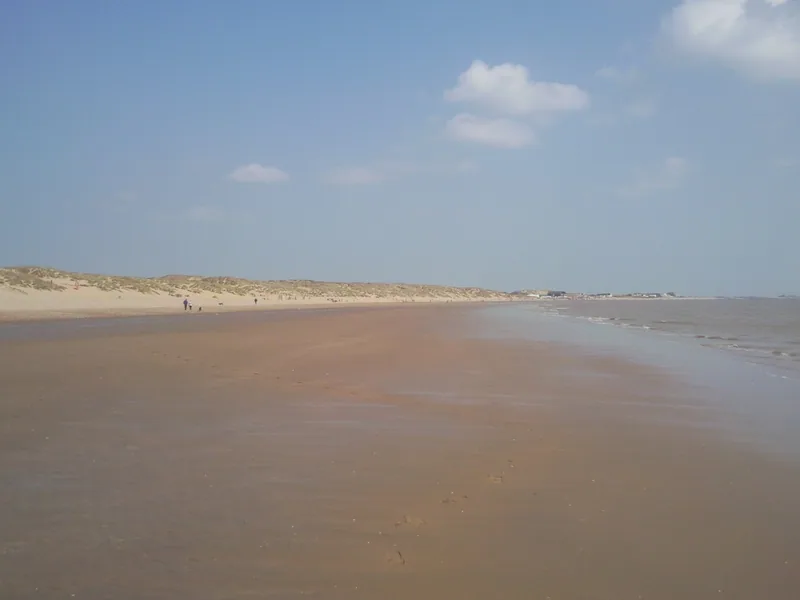
Camber is a long stretch of pale sand backed by dunes, looking east across Rye Harbour and west towards the cliffs of Hastings. The dunes are a protected habitat with more than 250 species of plants and animals, including marram grass, sea buckthorn and sea rocket, so stay on the marked paths through them.
The beach is zoned, with separate areas for swimming, dogs, horse riding and extreme sports, and the signs at the entrances tell you which is which. Two flags matter: an orange flag means no inflatables because the wind is blowing offshore, and a red flag means bathing is not advised. Both are worth taking seriously on a beach this exposed.
Wear something on your feet in the water. Weever fish bury themselves in the sand at Camber and have spiny, venomous dorsal spines that cause a painful sting if you tread on one. The local tourist board says beach shoes are a must. The same page also warns that plastic pellets washed ashore in a spill and that some were still on the sand in 2026, which matters most if you have a dog or a small child.
Two more practical rules from the beach management. Free wristbands for children are available from the Coastal Office and beach patrol staff, so a lost child can be reunited quickly. And if you barbecue, use one raised on legs, never a disposable, and take it home with you. Our guide to travelling with a pet and our family guide cover the wider rules.
Rye Harbour, Camber Castle and the nature reserve
Between the town and the sea lies Rye Harbour Nature Reserve, a flat landscape of shingle, lagoons and reed beds that holds, by its own count, more than 4,355 species of plants and animals, around 300 of them rare or endangered. It is free to walk and has a discovery centre.
Camber Castle, one of Henry VIII's coastal forts, stands isolated in the middle of the reserve, a walk of about an hour and a half from Rye across the levels. It is not open every day, so check before you set out. This is the best part of the trip for anyone who likes birds, big skies and empty ground.
A day that works, and one that does not
The version that works: fast train out around nine, Rye on foot until lunch, bus to Camber for the afternoon, bus back and an early evening train. The version that does not: arriving at midday in August, queueing for the bus, and discovering that everything in Rye shuts at five.
In winter the calculation changes. The tower closes at 3.30pm, the East Street museum is shut altogether, and the beach is bracing rather than pleasant. Winter is still a good time to come if you want Rye to yourself, but plan a short day. Our guide to the British weather by month sets out what to expect.
Nearby, and the alternatives
A couple of miles east of Camber is Dungeness, a vast shingle headland with a nuclear power station, fishermen's huts and one end of the Romney, Hythe and Dymchurch miniature railway. It is one of the strangest landscapes in England and worth a detour if you have a car.
For a comparison, the Seven Sisters cliffs give you chalk instead of sand further west, Dover adds a castle, and Margate offers sand plus an art gallery on the Kent side. Lewes and Arundel are the inland Sussex equivalents with castles, and Brighton is the big, loud option an hour from Victoria. The full list is in our overview of day trips from London.
Frequently asked questions
How do you get from London to Rye?
The quickest route is a high-speed train from London St Pancras to Ashford International, then the Marshlink line to Rye, taking about 1 hour 6 minutes in total. Slower routes via London Bridge or Victoria take around two and a half hours with two changes.
How do you get from Rye to Camber Sands?
By Stagecoach bus from Rye town centre, or by taxi. Camber has no railway station and is about three miles from Rye. Check the current bus timetable before you travel, as summer and winter services differ.
Is Camber Sands safe for swimming?
The beach is zoned and patrolled in season, with flags at the entrances. An orange flag means no inflatables because of an offshore wind and a red flag means bathing is not advised. Wear beach shoes, because weever fish bury themselves in the sand and sting painfully if trodden on.
How much does Ypres Tower cost?
£5.00 for an adult, and children under 16 go free when accompanied by an adult. It opens daily except Christmas Day, from 10.30am to 5pm between 30 March and 31 October and from 10.30am to 3.30pm through the winter, with last admission 30 minutes before closing.
Can you visit Rye and Camber Sands in one day from London?
Yes, if you take a fast morning train and use the afternoon for the beach. Allow about two hours for Rye on foot and the rest of the day at Camber. In July and August the access roads to the beach are congested, so aim for early morning or late afternoon.
Sources
- Rye Castle Museum - Opening hours and admission (checked September 2026)
- 1066 Country - Camber and Camber Sands (checked September 2026)
- 1066 Country - Camber beach safety (checked September 2026)
- 1066 Country - Rye (checked September 2026)
- National Rail Enquiries - London St Pancras to Rye, times and fares (checked September 2026)