
Salisbury is a Wiltshire cathedral city about 1 hour 25 minutes from London Waterloo. The cathedral has the tallest church spire in the country, one of only four surviving 1215 Magna Carta documents, and a ticket that lasts a whole year. It is also the town you pass through to reach Stonehenge by public transport.
Most visitors treat Salisbury as a transfer point. That is a mistake, or at least an incomplete plan: the cathedral and its Close deserve half a day on their own, and the city is compact enough to add to a stone circle without a car.
Our guide to visiting Stonehenge from London covers the stones, the bus timetable and the entry prices for the monument. This page is about Salisbury itself: what a cathedral ticket buys you, how the tower climb works, and what else sits inside the Close.
Salisbury Cathedral: prices and times
- Adult admission
- £12.50 booked in advance, £14.50 on the day
- Young person, 12 to 16
- £8.50 in advance, £9.50 on the day. Under-12s free
- Student, 17 and over with ID
- £9.50 in advance, £10.50 on the day
- Ticket validity
- One year of free return visits for the same group. Keep the original ticket
- Opening
- Monday to Saturday 9.30am to 5pm, last entry slot 4.15pm; Sunday 12.30pm to 4pm, last slot 3pm
- Magna Carta in the Chapter House
- 10am to 5pm Monday to Saturday; 1pm to 4pm Sunday
- Tower Tour
- £25 adult in advance, including day admission. 332 steps, 90 to 105 minutes
- Train from Waterloo
- 1 hour 23 to 1 hour 30, direct
What a cathedral ticket actually gets you
The headline figures are straightforward: £12.50 for an adult in advance, £14.50 if you pay when you arrive, £9.50 or £10.50 for a student aged 17 and over, and £8.50 or £9.50 for a young person aged 12 to 16. Children under 12 go free. Residents of the SP1 to SP5 postcodes get in free with proof of address, and so do Friends of the cathedral.
Two things make this better value than it looks. First, the ticket covers both the cathedral and the Chapter House where the Magna Carta is displayed, not two separate charges. Second, it is valid for a year: you can come back as often as you like with the same group, free, as long as you bring the original ticket, printed or on a phone.
Entry is by timed slot every 15 minutes, but the cathedral is relaxed about it and says arriving a little before or after your slot is fine, as long as you are inside between first entry and last admission. One practical limit: tickets are released only a month ahead, so a date further out will not yet appear in the booking system.
Book online and you also get the cheaper price and a guaranteed slot. The £2 saved per adult is small, but a couple visiting saves £4 and knows the cathedral is not closed for an event that day. National Art Pass holders get a discount on walk-up tickets instead.
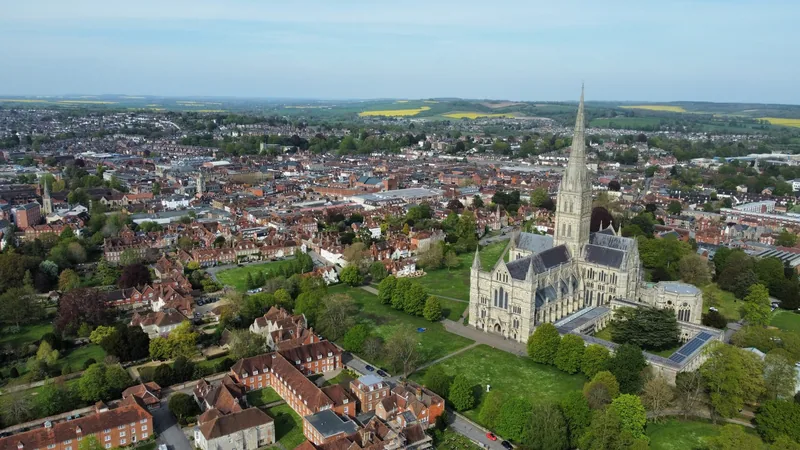
Photo: Tomaszp · CC BY-SA 4.0 · Wikimedia Commons · resized
The free tours are the best part, and they run to a timetable
Everything in this section is included with the admission ticket, and most visitors walk straight past it.
The cathedral has more than 250 volunteer guides and offers floor tours daily on request, subject to someone being free. Ask at the desk when you arrive rather than assuming there is nothing on. If no guide is available there are free family guide maps and a trail for younger children.
The clock demonstration is the one to time your arrival around. The cathedral keeps a mechanical clock made in 1386 or earlier, mounted in an iron frame and built with no dial at all, because its only job was to strike a bell to call the priests to prayer. It is wound every day and the cathedral says it has ticked over five billion times. A member of staff releases the mechanism and lets it strike:
| Free tour or demonstration | When | Where |
|---|---|---|
| Medieval clock demonstration | Monday to Friday after prayers at 11.05am; Saturdays at 10.30am | North Nave Aisle |
| Stained glass window tour, about an hour | Mondays at noon, subject to availability | Meet at the west end, no booking |
| Cathedral floor tours | Daily on request, subject to a guide being free | Ask at the welcome desk |
A "Meet the Stonemasons" session also runs at times but was not operating when we checked in September 2026. Check the cathedral's what's on calendar for the date you are coming.
The Tower Tour: 332 steps, and who should not do it
The separate Tower Tour takes small groups up spiral staircases into the roof spaces and out to the base of the spire, 68 metres above the ground. It costs £25 for an adult booked online, £21 for a full-time student with ID and £18 for a child aged 7 to 16, and the price includes day admission to the cathedral and Magna Carta.
Tours run several times a day, every day, and last roughly 90 to 105 minutes. They are popular and often full, and walk-up places are neither guaranteed nor sold at the advance price, so book this first and build the rest of your day around the time you are given.
There are 332 steps and many of the stone stairways are narrow with no handrail. The cathedral asks anyone with mobility problems or a health condition to think carefully before booking, and sets firm limits: nobody under 7 or under 1.2 metres tall, each child aged 7 to 10 with their own adult, and at least one adult per five children aged 11 to 17. Our page on accessible travel explains how to ask the right questions in advance.
If you enjoy this sort of climb, the dome stairs at St Paul's Cathedral are the London equivalent, and rather busier.
Magna Carta, and why this copy matters
The Chapter House holds one of the four surviving originals of the charter sealed by King John at Runnymede in 1215, the document that first set out the principle that the king was not above the law. Salisbury's is generally considered the best preserved of the four.
It is a small, brown, densely written sheet of parchment, and it is worth reading the interpretation around it before you look at the document itself. If constitutional history interests you, our guide to tours of the Houses of Parliament covers where those ideas ended up.
The Chapter House keeps shorter hours than the cathedral: 10am to 5pm Monday to Saturday, and only 1pm to 4pm on Sunday. If Magna Carta is your reason for coming, do not arrive at 4.30pm.
The Close: four more museums inside one wall
Salisbury's Cathedral Close covers more than 80 acres and is the largest in Britain, a walled precinct of lawns and Georgian houses with gates that still shut at night. It is free to walk into and is a good place for a picnic, with the Bell Tower Tea Rooms selling takeaway snacks if you have not brought one.
Several separate attractions sit inside the wall. The Salisbury Museum holds the archaeology of the surrounding landscape, which is the natural companion to a Stonehenge visit. Arundells was the home of the former prime minister Edward Heath. Mompesson House is a Queen Anne town house, and The Rifles Berkshire and Wiltshire Museum covers the county regiments. Each has its own admission and its own opening days.
The cathedral's own eating places keep to the visiting day: the Refectory Restaurant opens Monday to Saturday from 9.30am to 4.45pm and the Bell Tower Tea Rooms from 10am, both closing earlier on Sundays.
Old Sarum: where the city used to be
Two miles north of the modern city stands Old Sarum, the huge Iron Age hillfort that became a Norman castle and the site of the first Salisbury cathedral, abandoned in the thirteenth century when the whole settlement moved down to the water meadows.
It is run by English Heritage, which takes 15 per cent off if you book online before midnight on the day ahead of your visit. Members go free. The site is exposed earthworks and foundations rather than standing buildings, so it rewards a clear day and good shoes more than it rewards a guidebook.
The useful part for a day trip is that the tour bus out to the stones calls at Old Sarum on its way back into the city, which makes the hillfort easy to add without a second journey.
What the train costs, and the ticket to watch for
Direct services leave from London Waterloo throughout the day. On the dates we checked in October 2026, a Super Off-Peak Return was £45.00, an Anytime Day Return £54.70, and a Semi Flex Return, which books you onto a specific outward train but allows a month to come back, was £47.50. Advance singles started at £12.20.
Two Advance singles are therefore far cheaper than any walk-up return if you can fix both trains. Our guide to UK train tickets explains the rules, a railcard takes a third off, and our station guide covers Waterloo.
Stones, cathedral or both?
A Salisbury-only day
- Cathedral, Magna Carta and a Tower Tour without rushing
- Time for the Close and the Salisbury Museum
- No bus timetable to work around
- Works in winter, when the Stonehenge bus thins out
Adding Stonehenge
- Adds a bus each way and about three hours
- The cathedral becomes a rushed hour
- The last afternoon bus back from the stones is early in winter
- Better as two trips, or one night in Salisbury
If you would rather have a second city than a stone circle, Bath is a straightforward train ride onward from Salisbury, Winchester is half an hour closer to London on the same line out of Waterloo, and Portsmouth is the naval alternative. Staying a night out here is also cheaper than a London hotel, as our guide to staying outside London explains.
Check the forecast before you commit, because a good part of any Salisbury day is spent outdoors in the Close or on the hillfort; our guide to the weather month by month covers what to expect. The wider choice is set out in our guide to day trips out of the capital.
Frequently asked questions
How much does Salisbury Cathedral cost?
£12.50 for an adult booked in advance or £14.50 on the day, £9.50 or £10.50 for a student aged 17 and over, and £8.50 or £9.50 for a young person aged 12 to 16. Children under 12 go free. The ticket includes the Chapter House and Magna Carta and is valid for a year.
Is Salisbury Cathedral's ticket really valid for 12 months?
Yes. General admission tickets allow free return visits for the same group for a year from the date of purchase, as long as you bring the original ticket. Some special events during the year are excluded.
How hard is the Salisbury Cathedral Tower Tour?
You climb 332 steps in stages to the base of the spire, 68 metres up, over about 90 to 105 minutes. Many stairways are narrow with no handrail. It is not suitable for children under 7 or anyone under 1.2 metres tall, and a reasonable level of fitness is needed.
Can you see Magna Carta at Salisbury for free?
No, it is inside the Chapter House and covered by the cathedral admission ticket rather than sold separately. Residents of the SP1 to SP5 postcodes and Friends of the cathedral get in free, and children under 12 are free with a paying adult.
Can you visit Salisbury and Stonehenge in one day?
Yes, using the tour bus that leaves from the station forecourt, but the cathedral then gets about an hour. Through the colder months the final departure towards the stones is in the early afternoon, so check the timetable before deciding which half of the day to give to which.
Sources
- Salisbury Cathedral - Your visit: opening times and ticket prices (checked September 2026)
- Salisbury Cathedral - Tower Tours, prices and restrictions (checked September 2026)
- Salisbury Cathedral - Free tours and demonstrations (checked September 2026)
- Salisbury Cathedral - Salisbury and Stonehenge, and the Close (checked September 2026)
- English Heritage - Old Sarum prices and opening times (checked September 2026)
- National Rail Enquiries - London Waterloo to Salisbury, times and fares (checked September 2026)