
Israeli cooking in London is mostly found in Soho, Fitzrovia and Golders Green, and the three dishes to know are sabich, malawach and the hummus plate. It is not the same food as Lebanese cooking even where the dish names match: the hummus is warmer and looser, the salads are chopped smaller, and the whole table is built round bread rather than rice. The awkward part of this page is that three of the best-known Israeli and eastern Mediterranean restaurants in central London currently hold a food hygiene rating of 2, and we will not name them.
Our guide to cheap eating in London covers the counter end of this food, which is where most of the value is, and Middle Eastern food on the Edgware Road covers the Lebanese comparison in its own right. This page is about what makes the Israeli plate different and where to eat it.
Three dishes and what they are
- Sabich
- A pitta stuffed with fried aubergine, hard-boiled egg, chopped salad, tahini, amba (pickled mango sauce) and hot sauce. Iraqi-Jewish in origin, eaten for breakfast in Israel, and messier than a falafel wrap
- Malawach
- A Yemenite flaky pan-fried flatbread, laminated like a paratha, served with grated tomato, hard-boiled egg and a hot relish called schug. Rich, and a meal in itself
- The hummus plate
- Warm, loose hummus in a shallow bowl with a well in the middle, filled with whole chickpeas, oil and paprika or with minced lamb. Eaten with bread, not as a dip beside other things
- Also worth knowing
- Shakshuka, eggs poached in spiced tomato; msabaha, coarse whole-chickpea hummus; laffa, the large soft flatbread; amba, the sour mango condiment that divides opinion
- Price level
- Our estimate, September 2026: £8 to £14 for a filled pitta at a counter, £35 to £60 a head for a full meal at a central restaurant
How it differs from the Lebanese table
The dish names overlap and the two cuisines share a region, but the eating experience is not the same, and the differences are practical rather than academic.
| Lebanese | Israeli | |
|---|---|---|
| Hummus | Firm, cool, smooth, spread on a plate as one of a dozen mezze | Warm, loose, sometimes soupy, served on its own as the meal with bread and pickles |
| Salad | Tabbouleh and fattoush, herb-led, dressed with lemon and oil | Chopped salad, cut very fine, cucumber and tomato, almost undressed |
| Bread | Thin flatbread, replaced through the meal | Pitta for stuffing, laffa for wrapping, or malawach and other fried breads as dishes |
| Condiments | Garlic sauce, pickles, chilli paste | Tahini as a sauce rather than a dip, schug, amba, pickled cabbage |
| Structure | Cold mezze, hot mezze, then the grill | Fewer and larger dishes, often one plate each plus bread and salad to share |
The single most useful distinction is tahini. In a Lebanese restaurant tahini is inside the hummus and inside the baba ganoush. In an Israeli one it is also a sauce in its own right, thinned with lemon and iced water until it pours, and it goes over everything from roast cauliflower to a sabich. If a menu offers a plate of vegetables with tahini, that is the dish to test the kitchen with.
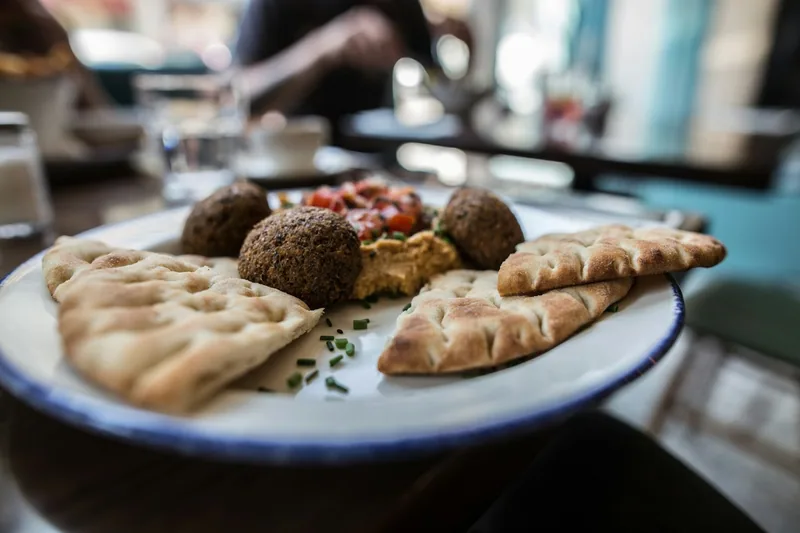
Where to eat it: the addresses we checked
Every business below was looked up on the Food Standards Agency register in September 2026, and the rating and inspection date are printed because on this subject they matter more than usual.
The Barbary, 16 Neal's Yard, WC2H. Rating 5, inspected 14 July 2026, which is the freshest inspection of any restaurant on this page. A counter-only room seating about two dozen people round a horseshoe bar with the grill in the middle, cooking across the whole southern Mediterranean rather than Israel alone. Its second site, The Barbary Notting Hill at 112 Westbourne Grove, W2, holds rating 5, inspected 28 November 2024.
Kapara, Ilona Rose House, Manette Street, W1D. Rating 5, inspected 8 July 2026. A large basement room behind Charing Cross Road, loud, late and a long way from the austere hummus-counter version of this food.
Miznon, 8-12 Broadwick Street, W1F. Rating 5, inspected 21 August 2024. A Tel Aviv pitta shop transplanted whole to Soho: things stuffed into bread, shouted orders, nowhere much to sit. There is a second branch at 14 Elgin Crescent, W11, rating 5, inspected 13 March 2025.
Honey & Co, 47 Lamb's Conduit Street, WC1N. Rating 5, inspected 5 March 2024. A small Bloomsbury restaurant on the pedestrianised street covered in our page on Lamb's Conduit Street. Note the age of that inspection: Camden has not been back in two and a half years.
Delamina, 56-58 Marylebone Lane, W1U. Rating 4, inspected 23 October 2025, on the lane covered in our page on Marylebone Lane. Delamina East, at 151-153 Commercial Street, E1, holds rating 5, inspected 19 February 2026.
Berber & Q, Acton Mews, E8. Rating 5, inspected 20 March 2025, a railway-arch grill in Haggerston; its Shawarma Bar at 46 Exmouth Market, EC1, holds rating 4, inspected 3 July 2026. North African and Levantine rather than strictly Israeli, but the same family of cooking.
Pita, 102 Golders Green Road, NW11. Rating 5, inspected 14 July 2026. The reason to go north, and the cheapest proper version of this food on the page.
Three well-known central restaurants in this category hold a rating of 2, and we are leaving them out. Two out of five means the regulator has told the business that improvement is necessary. The three are on Rupert Street in Soho, on Store Street in Bloomsbury and on Tavistock Street in Covent Garden, and all three appear regularly in London restaurant writing; the most recent of the three inspections was in May 2026. We will not send an international visitor to a restaurant the regulator has marked down, whatever else is said about the cooking. Check any address yourself at ratings.food.gov.uk.
One further note. Two sibling businesses under the same name can hold very different ratings: one of the three above shares its name with two other London sites that hold 4 and 5. The rating belongs to the address.
Golders Green, and why it is a different trip
Golders Green Road is where London's Jewish food actually lives, and it is a different proposition from Soho: a working high street of bakeries, butchers, falafel counters and grocers serving a resident community rather than a restaurant scene serving visitors. Prices are lower, portions are larger, and nothing is styled.
The distinction to hold onto is between Israeli and kosher. They are not the same thing. Israeli cooking is a national cuisine and most of the central London restaurants named above are not kosher. Kosher food follows Jewish dietary law, is certified, and in London is concentrated in Golders Green, Hendon, Edgware and Stamford Hill. A kosher restaurant will say so, will not serve meat and dairy together, and will be shut from Friday afternoon until Saturday night.
That closure is the practical point for a visitor. If you are planning a Saturday trip to Golders Green or Stamford Hill for food, most of what you came for will be closed, and Sunday is the busy day instead. Our guide to opening hours in London covers the other days that catch people out.
Ordering well at a counter
The counter version of this food is where the value is, and there is a way to do it.
- Choose the bread first. Pitta is a pocket and holds less; laffa is a sheet you roll and holds a great deal more. If you are hungry, laffa.
- Say yes to pickles and no to everything at once. A counter will load a wrap with six sauces if you let it. Two is better: tahini plus one hot sauce.
- Ask what amba is before you accept it. Pickled green mango, sour and sulphurous, and it is the flavour people either seek out or cannot get past. Have it on the side the first time.
- Sabich needs eating immediately. The aubergine and egg go soggy inside ten minutes, so this is not a wrap to carry across town.
- Hummus is a lunch, not a starter. A full hummus plate with bread and pickles is a meal for one person, and ordering it alongside a main is ordering two lunches.
The cheapest good meal in this cuisine is a shared breakfast. Shakshuka with bread, a chopped salad and a plate of hummus between two people, at a counter rather than a restaurant, comes to our estimated £20 to £28 for two in September 2026 and is more food than either of you will finish. The same dishes at dinner in a central restaurant cost three times that.
Vegetarians, vegans and the tahini advantage
This is one of the best cuisines in London for people who do not eat meat, and not as an afterthought. Hummus, msabaha, falafel, sabich, roast cauliflower or aubergine with tahini, shakshuka, chopped salads and most of the pickles are all vegetarian by design, and several are vegan.
The two things to watch are labneh and yoghurt, which appear in salads and sauces without always being flagged, and the stock in a stewed dish. Tahini itself is sesame, so anyone with a sesame allergy should be careful across the entire menu rather than dish by dish: in this kitchen sesame is not an ingredient in one item, it is the default sauce. Allergen information must be provided on request in England, and our page on asking the right questions in a London restaurant applies here too.
Where this food sits in a London day
The Soho and Covent Garden addresses are all within ten minutes of the theatres, which makes this a useful pre-show cuisine: counters are quick and the sit-down rooms are small enough to get you out on time. Our page on eating before a West End show covers the timing.
For a full afternoon, the Bloomsbury and Marylebone addresses combine with museums: Lamb's Conduit Street is eight minutes from the British Museum, which our guide to eating near the British Museum covers in detail, and Marylebone Lane is five minutes from Oxford Street. For the market version, Exmouth Market and its stalls put the same food next to a dozen other cuisines at lunchtime.
Frequently asked questions
What is sabich?
A pitta filled with fried aubergine, hard-boiled egg, finely chopped salad, tahini, amba and hot sauce. It came to Israel with Iraqi Jewish immigrants and is eaten there as a breakfast or a street lunch. Eat it within minutes of it being made, because the aubergine and egg soften quickly.
How is Israeli hummus different from Lebanese hummus?
It is served warm and much looser, often in a shallow bowl with a well of whole chickpeas, oil and paprika in the middle, and it is treated as a meal with bread and pickles rather than as one dip among a dozen mezze. Lebanese hummus is firmer, cooler and smoother.
Where can I eat Israeli food in London?
Soho, Fitzrovia and Covent Garden for the restaurant version, and Golders Green Road for the everyday one. The addresses we checked and can recommend include The Barbary in Neal's Yard, Kapara off Charing Cross Road, Miznon on Broadwick Street, Honey & Co on Lamb's Conduit Street, Delamina on Marylebone Lane and Pita on Golders Green Road.
Is Israeli food in London kosher?
Usually not. Israeli cooking is a national cuisine; kosher food follows Jewish dietary law and is certified. Most of the central London restaurants serving Israeli food are not kosher. Certified kosher restaurants are concentrated in Golders Green, Hendon, Edgware and Stamford Hill, and they close from Friday afternoon to Saturday night.
Is Israeli food good for vegetarians?
Very. Hummus, falafel, sabich, shakshuka, chopped salads and roast vegetables with tahini are all vegetarian by design and several are vegan. The two things to check are hidden yoghurt or labneh, and, for anyone with a sesame allergy, the fact that tahini is the default sauce across the whole menu rather than an ingredient in one dish.
Sources
- Food Standards Agency - Food hygiene ratings for The Barbary, 16 Neal's Yard WC2H 9DP and 112 Westbourne Grove W2 5RU; Kapara, Ilona Rose House, Manette Street W1D 4AL; Miznon, 8-12 Broadwick Street W1F 8HW and 14 Elgin Crescent W11 2HZ; Honey & Co, 47 Lamb's Conduit Street WC1N 3NG; Delamina, 56-58 Marylebone Lane W1U 2NX and Delamina East, 151-153 Commercial Street E1 6BJ; Berber & Q, Acton Mews E8 4EA and 46 Exmouth Market EC1; Pita, 102 Golders Green Road NW11 8HB (checked September 2026)
- Food Standards Agency - What a food hygiene rating of 2 means (checked September 2026)
- GOV.UK - Food allergen labelling and information requirements, relevant to sesame and tahini (checked September 2026)