
Goan and Keralan cooking are the two south-west coastal kitchens of India, and neither is Punjabi, which is what almost every curry house in Britain serves. Goan food is Portuguese-influenced, sharp with vinegar, and includes pork. Keralan food is built on coconut, curry leaf and black pepper, and includes beef. Expect to pay £9 to £16 for a main course in the places that actually cook it.
They are not the same cuisine and they are not interchangeable. Goa is a small former Portuguese territory; Kerala is a long state down the Malabar coast with Hindu, Christian and Muslim kitchens that cook differently from each other. What they share is fish, coconut, rice in several forms and no cream-and-almond sauces at all.
Our guide to Indian food in London covers the regional map and the Keralan cooking on Green Street; our page on Sri Lankan and Tamil food covers the island next door, which is a third thing again. This page is about the two coastal kitchens, what to order in each, and where the Goan cluster in Wembley actually is - because nobody writes about it.
Goan and Keralan: the short version
- Order in a Goan place
- Pork vindaloo (the real one), sorpotel, chicken cafreal, prawn balchão, and bebinca to finish.
- Order in a Keralan place
- Fish curry, appam, beef fry, a Malabar parotta, and payasam.
- Typical main
- £9 to £16 (our estimate from menus read in September 2026).
- Goan cluster
- High Road, Wembley HA0, roughly numbers 519 to 537.
- Keralan clusters
- Hounslow High Street; High Street North, East Ham; Leytonstone; West Ealing.
- Zone 1
- Almost nothing. This is an outer-London journey and worth it.
Goan food, and the vindaloo misunderstanding
The word vindaloo in a British curry house means the hottest thing on the menu. In Goa it means something else entirely. It comes from the Portuguese carne de vinha d'alhos, meat in wine and garlic, which became pork marinated in palm vinegar with garlic, dried red chilli and warm spices, cooked until the fat goes soft. It is sour before it is hot. If you have only ever had the curry-house version, the real one is a genuine surprise.
The rest of the Goan menu is equally particular:
- Sorpotel (or sarapatel): pork, and traditionally pork liver and heart, in a thick dark vinegar-and-chilli gravy, made a day ahead and better on the second day. The definitive Goan Catholic dish.
- Cafreal: chicken marinated in a green paste of coriander, green chilli, garlic and vinegar, then griddled. African in origin, via Portuguese Mozambique.
- Xacuti (pronounced roughly sha-koo-tee): a complex roasted-coconut and spice gravy, usually with chicken or lamb.
- Balchão: prawns or fish in a dense, almost pickled tomato and vinegar paste, served in small quantities.
- Recheado: a whole fish, usually mackerel or pomfret, slit and stuffed with red masala, then fried.
- Choris pao: spiced Goan pork sausage in a bread roll, the local street sandwich.
- Bebinca: a layered coconut and egg-yolk cake, baked one layer at a time, dense and sweet.
Goan food is the one Indian regional cuisine where pork is central. That is a legacy of four and a half centuries of Portuguese rule and a large Catholic population. If a "Goan" menu has no pork on it at all, it is a Punjabi kitchen using the word.
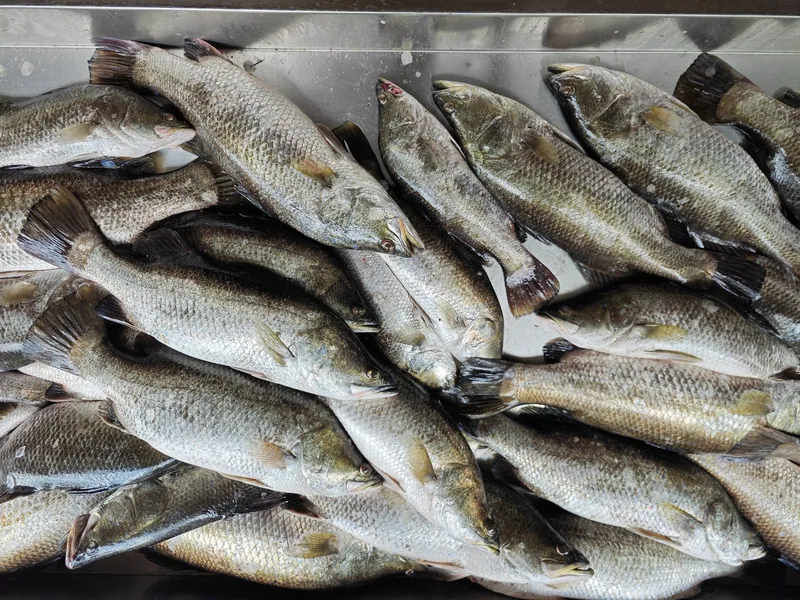
Photo: Jan J George · CC BY-SA 4.0 · Wikimedia Commons · resized
The Wembley Goan cluster, which almost nobody writes about
Wembley is known for Gujarati vegetarian food on Ealing Road. Half a mile away, on High Road in HA0, there is a run of Goan businesses within about a hundred metres of each other, and this is the densest Goan eating in London.
| Place | Address | Rating | Inspected |
|---|---|---|---|
| Lucky 13 Goan Treats | Unit 1, 537 High Road, Wembley HA0 | 5 | 12 May 2026 |
| Jishal Goan Restaurant | 535 High Road, Wembley HA0 | 4 | 7 March 2025 |
| Goan Spice | Units 4-5, 519 High Road, Wembley HA0 | 4 | 27 February 2026 |
| Goan Spice | 321 Harrow Road, Wembley HA9 | 4 | 24 June 2025 |
Three of those four sit on the same stretch of pavement, which means you can eat a starter in one and a main in another if you want to compare. The High Road here is just over twenty minutes on foot from Wembley Central, or a short bus ride; our Wembley guide covers the area, including the stadium and Ealing Road.
Hounslow has the other Goan concentration. Goan Street Food at Unit 4, 34 High Street was rated 4 in April 2026, and V Goan Foodies at Unit 12, 255 High Street was rated 4 in October 2025. In Southall, Valanka Goan Snacks Corner in the Palace Shopping Centre was rated 4 in January 2026, and a snacks corner is exactly the right format for choris pao and rissois.
Keralan food, and the four kinds of rice
Keralan cooking does more with rice than any other Indian regional cuisine, and the confusion at the table is usually about which rice thing to order with which curry.
- Appam: a bowl-shaped fermented rice and coconut pancake, lacy at the rim, spongy in the middle. The default partner for a soupy curry. Two per person.
- Puttu: steamed cylinders of ground rice layered with grated coconut, crumbly and almost dry. Eaten with kadala curry (black chickpeas) at breakfast, or with fish.
- Idiyappam: string hoppers - pressed rice noodles steamed into nests. Soft, neutral, good with stew.
- Malabar parotta: not rice at all but a layered, flaky wheat flatbread, slapped and folded, and the thing to order with beef fry. You will hear it being made.
On top of those: meen moilee, a mild coconut-milk fish curry with turmeric and green chilli; karimeen pollichathu, fish coated in masala and baked in a banana leaf; kappa, boiled and mashed tapioca served with a fiery fish curry; avial, mixed vegetables in coconut and yoghurt; and thalassery biryani, the Malabar Muslim biryani made with short-grain kaima rice rather than basmati, which tastes and looks different from a Hyderabadi one.
To finish, payasam: a thin milk or coconut-milk pudding with vermicelli, rice or lentils, served warm. And to drink, sulaimani, black tea with lime and sometimes mint, which is what a Malabar tea shop pours all day.
Where to eat Keralan food
| Place | Address | Rating | Inspected |
|---|---|---|---|
| Kerala Street | 108B High Street, Hounslow TW3 | 5 | 30 March 2026 |
| Rasa South Indian Restaurant | 55 Stoke Newington Church Street N16 | 5 | 15 January 2025 |
| Karama Restaurant | 3 Leeland Road, West Ealing W13 | 4 | 24 April 2026 |
| Spices of Malabar | 505 High Road, Leytonstone E11 | 4 | 30 September 2025 |
| Taste of Kerala | 305 London Road, Croydon CR0 | 4 | 5 September 2025 |
| Malabar Hut | 231 High Street North, East Ham E6 | 3 | 14 November 2025 |
The Stoke Newington one is the oldest and best known Keralan restaurant in London and the only one on this list that a first-time visitor is likely to have heard of; it is strictly vegetarian, which is one honest Keralan tradition rather than the whole of it. Our guide to Dalston and Stoke Newington covers the street it is on, and our page on vegan and vegetarian London explains why south Indian menus need no special arrangements.
West Ealing is sixteen minutes from Tottenham Court Road on the Elizabeth line, which is the single biggest change to eating in outer west London in a decade. Hounslow is slower than people expect: about forty minutes from Bond Street on the Piccadilly line. Our Hounslow guide and our Ealing guide cover both.
There is very little of either cuisine in Zone 1, and the famous central exception is outside our window. One well-regarded Keralan and coastal restaurant near Buckingham Gate had not been inspected since February 2023 when we checked in September 2026, so we do not name it. Treat this as an outer-London journey and plan two hours.
Beef, pork and why these menus look different
Visitors who assume Indian restaurants never serve beef or pork are generalising from Punjabi Hindu and Sikh cooking. Kerala has large Christian and Muslim populations and beef is ordinary there; Goa's Catholic population eats pork as a matter of course. The consequence at the table is that a Keralan menu may offer beef fry alongside fish, and a Goan menu will lead with pork.
Where halal matters, ask. Many Keralan Muslim restaurants - the thalassery biryani places in particular - are halal, and Goan Catholic kitchens generally are not. Our page on halal food in London explains what a restaurant is and is not required to prove.
What it costs, and how to order for two
Our estimate from menus read in September 2026: starters £5 to £8, main course £9 to £16, appam or parotta £1.50 to £3 each, rice £3 to £5, dessert £4 to £6. Two people ordering one fish curry, one meat dish, four appam and a vegetable side should land between £38 and £50 before service. That is more than a Punjabi curry house and less than a central Indian restaurant; our guide to cheap eats in London has the comparison.
Order fewer main courses and more breads than you think. Both cuisines are built round soaking up a thin sauce, so two curries and six pieces of bread between two people beats three curries and rice. Our page on Brick Lane and the British curry house explains why the standard British ordering pattern does not suit either of these kitchens, and Pakistani food in London covers the grill-house tradition at the other end of the country.
Frequently asked questions
What is the difference between Goan and Keralan food?
Goan food is Portuguese-influenced: vinegar, garlic, dried red chilli, and pork as a central meat, with dishes such as sorpotel, cafreal and the original vindaloo. Keralan food is built on coconut milk, curry leaves, mustard seed and black pepper, with fish, beef and four different rice preparations. They are 500 miles apart and cook nothing the same way.
Is vindaloo really the hottest curry?
Not in Goa. The name comes from the Portuguese for meat in wine and garlic, and the original is pork marinated in palm vinegar with garlic and dried chilli - sour first, hot second. The fiercely hot British curry-house vindaloo is a separate invention that borrowed the word.
Where is the best Goan food in London?
On High Road in Wembley HA0, where three Goan businesses trade within about a hundred metres between numbers 519 and 537. All three were rated 4 or 5 at their most recent hygiene inspection. Hounslow High Street and the Palace Shopping Centre in Southall have the other Goan counters.
What should I order with a Keralan fish curry?
Appam, the bowl-shaped fermented rice pancake, two per person. It is soft in the middle and lacy at the edge and exists precisely to be torn and dipped. If appam is not available, idiyappam or plain rice; save the flaky Malabar parotta for a dry dish such as beef fry.
Can you eat Goan or Keralan food in central London?
Barely. Both traditions live in outer London - Wembley, Hounslow, East Ham, Leytonstone, West Ealing - and the central exceptions are few and expensive. The Elizabeth line has made Hounslow and West Ealing about half an hour from Bond Street, which is the practical answer.
Sources
- Food Standards Agency - food hygiene ratings register, every business named on this page, searched by name and by address (checked September 2026)
- GOV.UK - the Food Hygiene Rating Scheme and what each rating means (checked September 2026)
- Transport for London - the Elizabeth line, for journeys to Hounslow and West Ealing (checked September 2026)
- Office for National Statistics - Ethnic group, England and Wales, Census 2021 (checked September 2026)