
The Visitor Oyster card is a blue smartcard that TfL posts to your home before your trip, already loaded with as much credit as you choose to put on it. It costs £10.50 plus postage, the fee is never returned, and what you are buying is convenience rather than cheaper travel. Order one if you want your transport settled before you land, if you are travelling with a child aged 11 to 15, or if you come back to London often enough to use the same card again.
Here is the idea in plain terms. It is the tourist edition of the Oyster card Londoners have carried for twenty years. You pick an amount of credit, pay for the card online, and it arrives in the post ready to touch on a yellow reader at the first barrier you meet. TfL sells it on exactly that: your card is ready to go as soon as you arrive, with no queuing at stations.
On price there is nothing to weigh up. Every method of paying charges an adult the same fare and the same daily ceiling, so a Visitor Oyster card cannot make a journey cheaper than a bank card would. If that is the question you came with, our comparison of Oyster against contactless answers it properly, with the caps, the bank charges and the routes where one of them fails. This page is about the card itself: ordering it, filling it, using it up and deciding whether to keep it.
The Visitor Oyster card: key facts
- Price
- £10.50 plus postage (card fee not refunded)
- Credit you can pre-load
- £10, £15, £20, £25, £30, £35, £40 or £50
- TfL's suggestion
- £15 for two days, £30 for four days
- Where to buy
- TfL Visitor Shop online, or listed sellers outside London
- Ready to use
- Yes, on arrival; nothing to activate
- Credit expiry
- Never expires
- Can it be registered?
- No, so a lost card means the credit is gone
What arrives in the envelope
You are buying a piece of plastic with a chip in it and a balance already sitting on it. There is no code to redeem, no app to install and no counter to visit when you land. Whatever you chose at the checkout, from £10 up to £50, is on the card when it reaches you, and it stays there until you spend it.
Postage and delivery time are set when you order, and they depend on where you live. This is the one part of the purchase that can go wrong, so order weeks rather than days before you fly. TfL does not publish a promised delivery window that applies everywhere, and a card that arrives after you have left is £10.50 spent on nothing.
The card is anonymous. It is not registered to your name, it cannot be registered later, and TfL will not replace it or refund the balance if it is lost or stolen. Treat it like cash in your pocket rather than like a bank card, and do not load a large sum onto it just because the shop offers you £50.
The extras are a list of offers and discounts at restaurants, shops, galleries and entertainment venues, plus a cheaper fare on the London Cable Car, where pay as you go is up to 26% below the paper single price. The list changes, so read the current one on TfL's Visitor Oyster page before you decide. Offers only count as savings if they send you somewhere you were going anyway.
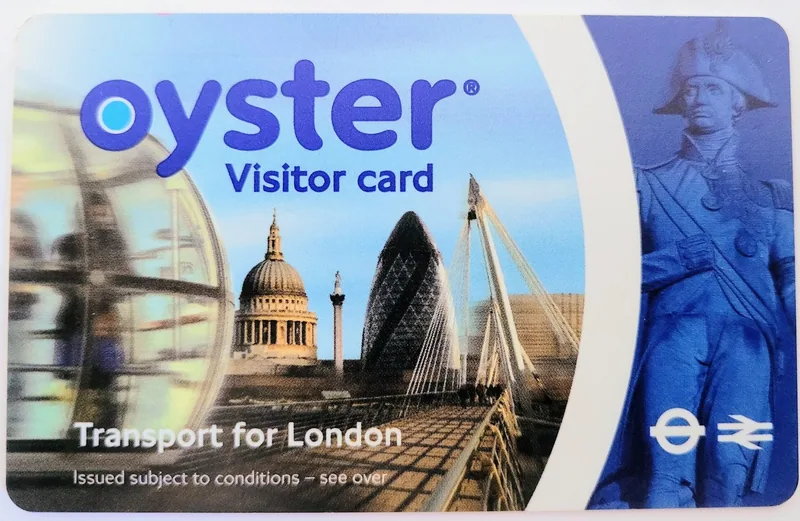
Photo: MightyEagleGER · CC BY-SA 4.0 · Wikimedia Commons · resized
Ordering one before you fly
The main route is the TfL Visitor Shop, which delivers to a home address in most countries. If you have left it too late for the post, a handful of places on the way into London sell the card over a counter:
- Gatwick Airport: the Information Centre, the Gatwick Express ticket office, terminal desks and the Southern ticket office
- Stansted Airport: the Information Centre and the Stansted Express and National Express ticket offices
- On board Eurostar trains heading to London
- VisitBritain, The London Pass and a number of overseas agents
Buying at an airport counter has a catch that catches people out at Stansted in particular. The card is sold in the terminal, but Oyster of any kind is refused on the trains between Stansted and London, so the card you have just paid for will not open the barrier you are standing next to. Our Stansted guide sets out the ways in. At Gatwick the picture is different: the card works on Southern and Thameslink services from the airport into central London, so you can start using it straight away.
Buying at Stansted does not get you onto the Stansted Express. The card on sale in the terminal will not open the ticket barriers for the train to Liverpool Street. Pay for that journey with a contactless card or buy a ticket, then start using the Visitor Oyster card in London.
Buying a card once you are already here
You cannot buy the Visitor version in London. TfL is blunt about it, and the listed sellers are all outside the city for that reason. What you can buy, at more or less any station, is the standard Oyster card, which costs the same £10.50 and charges exactly the same fares.
It is sold at every Tube station, at most Overground and Elizabeth line stations, at the DLR station serving London City Airport, at more than 4,000 Oyster Ticket Stops, which are ordinary newsagents and corner shops with a blue sign in the window, at TfL Visitor Centres, at the Tramlink Shop in Croydon and at Victoria Coach Station. The Your Service Centre desk in Gatwick's South Terminal check-in area sells them too. TfL's online shop will post a standard Oyster card only to a UK address, which is why the Visitor version exists at all.
The trade is straightforward. Buying on arrival costs you a few minutes at a ticket machine and loses you the pre-loaded credit and the offers list. In exchange you get a card you can register to your own name, which means TfL can cancel it and move the balance to a new one if it goes missing. For a long stay, or for anyone nervous about carrying credit around, that is worth more than the offers.
| Visitor Oyster card | Standard Oyster card | |
|---|---|---|
| What you pay | £10.50 plus postage | £10.50 |
| Bought | At home, or from an agent outside the city | Here, at stations and shops |
| Credit on arrival | £10 to £50, chosen by you | None until you load it |
| Registration | Impossible | Free, through a TfL account |
| Reclaiming a balance | Telephone or post | Machine up to £10, otherwise online |
| Offers at venues | Included | None |
| Young Visitor discount | Added by staff | Added by staff |
The fee, the "deposit", and what comes back
The £10.50 is a fee, not a deposit. Guides written a few years ago describe money returned when you hand the card in; that arrangement ended for cards issued from 4 September 2022, and the Visitor version has never worked any other way. Plan on the £10.50 being spent.
Credit is different. Anything you have not used is still yours, and you have three choices: leave it on the card for next time, lend the card to somebody who is coming, or ask for the money back. For this card the refund is arranged by telephone or by post rather than at a station machine, which is slow enough that small balances are rarely worth claiming. The page on Oyster refunds and deposits gives the telephone number, the postal address and the rules for each type of card.
How much credit to load
TfL suggests £15 of credit for a two-day visit and £30 for four days. That is a sensible starting point for someone staying in Zones 1 and 2 who makes a few journeys a day.
To check it against your own plans, work from the daily ceiling. An adult in Zones 1-2 pays at most £8.90 in one day however much they ride, and a single bus or tram fare is £1.75, rising to £1.85 on 1 November 2026. Four very busy days in central London therefore cost no more than £35.60, and most visitors spend well under that because they walk more than they expect to. If your plans reach Greenwich, Kew, Wimbledon or Heathrow the ceiling is higher, and our explanation of London's travel zones lists what each one costs.
Err on the low side. Topping up in London takes two minutes and happens at almost every station, while getting an over-generous balance back out of the card is the slowest part of the whole product.
Topping up in London
When the balance runs low you can add more at Tube, Overground, DLR, Elizabeth line and most National Rail stations, at any of the Oyster Ticket Stops, and at Visitor Centres. Station machines take cards and cash; the shops generally want a small minimum. There is no maximum you need to worry about on a short trip.
Two places cannot top you up, and both catch visitors on a day out. There is none at the river piers, so check the balance before you head for a Thames Clippers boat, and none at the cable car terminals either. Neither of those fares counts towards your daily ceiling, so they come straight off the card at full price.
Buses are more forgiving. An empty card is allowed one final bus journey, after which it will not work again until you put money on it. Handy if you misjudge it on your last day, but not something to plan around.
Check the balance before your last long ride. Rest the card on the yellow pad of any ticket machine and the screen shows what is left, in a couple of seconds, for nothing. Doing that on the morning you leave tells you whether to top up for the airport run or simply put the card away for another trip.
Who the card actually suits
The bank is the thing to check first. If your own card carries a fixed charge on every payment made abroad, a card paid for once can work out cheaper over a long stay, and our guide to what a foreign card costs on the network explains how to find out what yours does.
Good reasons to buy one
- Every payment you make abroad costs you a fixed bank charge
- You would rather land with transport already sorted than queue at a machine
- A child aged 11 to 15 is coming with you
- A fixed balance is how you prefer to keep a holiday budget under control
- You return to London regularly and will use the same card again
Reasons to skip it
- £10.50 plus postage that never comes back to you
- It has to arrive before you fly, and delivery times vary by country
- No registration, so losing it means losing the balance
- Getting the last few pounds back needs a telephone call or a stamp
The Young Visitor discount for children aged 11 to 15
This is the strongest reason a family should own one. Children of that age get no reduction at all on a bank card, so the half-price rate exists only on plastic that TfL can write it onto.
Station staff add the discount at most Tube stations and at Visitor Centres, and they need to see the child, so take them with you to the ticket hall rather than going alone. It lasts up to 14 days and halves both the fare and the daily ceiling: £4.45 a day in Zones 1-2 instead of £8.90. Younger children need nothing at all, since under-11s ride free on buses and trams, and free on rail services in London alongside an adult who is paying. Ages and limits for every band are set out on our page about children's fares in London.
For a teenager, the card fee pays for itself in about three days. The Young Visitor discount saves £4.45 a day against the adult Zones 1-2 cap. Over three busy days that is £13.35, more than the £10.50 card fee, so families with an 11-15-year-old should buy Oyster for that child even if the adults use contactless.
Keeping it: next trip, a friend, or the drawer
The balance does not run out with time. That single rule makes the card worth more at the end of a holiday than most people assume, and it is why we would think twice before claiming £3.20 back by post.
If you come to London every couple of years, keep it. The fee has already been paid, so the second trip costs you nothing but the credit, and the card works the day you arrive. You can also hand it to family or friends who are visiting, provided only one person travels on it at a time. A card holding nothing but travel credit can be passed around like that; one with a season ticket or a discount written onto it cannot.
As a souvenir it is a modest thing, but an honest one. The design belongs to visitors rather than commuters, keeping it costs nothing extra because the fee is not coming back either way, and it takes up less room than most of what ends up in a suitcase. Our list of London souvenirs worth buying covers the things people actually use at home. If you know you are not coming back and the balance is large, claim the refund instead: the only question is whether the sum justifies a telephone call.
Our verdict
The Visitor Oyster card is a well-made product that solves a narrow problem. For an adult with a fee-free contactless card it adds £10.50 and a postal delivery to a journey that would have cost the same anyway. We would buy one for a child aged 11 to 15, for anyone whose bank charges a flat amount for each foreign payment, for a traveller who wants the transport budget fixed in advance, and for regular visitors who will reuse it. Everyone else can tap the card they already carry, as our first-timer's guide to London also suggests. Our guide to what a London trip costs sets the transport figure beside hotels, food and sights.
Frequently asked questions
Is the Visitor Oyster card cheaper than contactless?
No. The fares and daily ceilings are identical, and the Visitor Oyster card adds £10.50 plus postage on top. It only comes out ahead if your bank takes a flat charge from every foreign payment, or if you add the Young Visitor discount for a child aged 11 to 15.
Can I buy a Visitor Oyster card at Heathrow or in central London?
No. TfL says it cannot be bought in London. Order it from the TfL Visitor Shop before you travel, or buy it from listed sellers at Gatwick, at Stansted, on board Eurostar trains to London or from overseas agents. In London you can buy a standard Oyster card instead, for the same £10.50.
How much credit should I put on a Visitor Oyster card?
TfL suggests £15 for a two-day visit and £30 for four days. The adult daily cap for Zones 1-2 is £8.90, so a very busy four days in central London costs at most £35.60. You can top up at stations, Oyster Ticket Stops and Visitor Centres.
Does the credit on a Visitor Oyster card expire?
No. The balance sits there until you spend it, so it will still be waiting when you come back, and you can lend the card to somebody else in the meantime. If you would rather have the money, what is left is refunded by telephone or post, though the card fee is not.
Is a Visitor Oyster card better than a standard Oyster card bought in London?
They cost the same and charge the same fares. The Visitor version saves you a stop at a ticket machine when you land and adds a list of offers; the standard version can be registered, which protects the balance if you lose it. Choose the visitor one for convenience and the standard one for security.
Sources
- Transport for London - Visitor Oyster card (checked September 2026)
- Transport for London - Where to buy tickets and Oyster (checked September 2026)
- Transport for London - Pay as you go (checked September 2026)
- Transport for London - Apply for unused credit or ticket refund (checked September 2026)
- Transport for London - Fare capping (checked September 2026)
- London Stansted Airport - By train (checked September 2026)