
The London souvenirs most worth your money are the ones that are useful, light and genuinely connected to the city: good tea, books, prints and design pieces from museum shops, and crafts bought from the people who made them at London's markets. The cheap plastic trinkets sold near the big sights are rarely good value, so spend a little more on fewer, better things.
A good souvenir does three jobs. It reminds you of the trip, it is something you (or the person you give it to) will actually use or display, and it survives the journey home. Many of the best options cost no more than the mass-produced alternatives; they are just sold in different places.
This guide is organised by type of souvenir, with honest notes on price and quality, where to look, and what to check before you pack. No single shop has the best of everything, and most of the ideas below can be found in several places across the city.
| Souvenir | Where to look | Packing note |
|---|---|---|
| Tea and biscuits | Tea specialists, department store food halls, supermarkets | Loose tea and tea bags are easy to pack; tins protect biscuits |
| Books, maps and prints | Independent and chain bookshops, museum shops | Heavy, so buy near the end of the trip |
| Design and homeware | Museum and gallery shops, department stores | Wrap ceramics in clothing |
| Handmade crafts and jewellery | Weekend and daily markets | Ask the maker to wrap fragile items |
| Jam, honey, marmalade, gin | Food halls, markets, supermarkets | Count as liquids: put them in hold luggage |
| Themed gifts (Harry Potter, football, royal) | Official shops at stations, stadiums and palaces | Check it is official merchandise |
Tea, biscuits and other things to eat
Tea is the classic London gift, and it is easy to do well. The simplest route is a supermarket: British tea brands are sold in every large supermarket at everyday prices, and a box of a strong breakfast blend makes a practical present for tea drinkers at home. It will cost a fraction of a decorated gift tin sold near a tourist attraction.
If you want something more special, visit a specialist tea shop or a department store food hall. Twinings has sold tea from the same building at 216 Strand for more than 300 years, according to the company, and the shop now has a sampling bar where staff brew several teas to taste. Fortnum & Mason on Piccadilly is one of London's best-known luxury food stores, with its own tea blends, biscuits and preserves in distinctive packaging. Both are popular, so expect to pay for the name and the presentation as much as for the tea.
Other food gifts that travel well include shortbread and other biscuits in tins, British chocolate, and marmalade or jam. If afternoon tea is part of your trip, our guide to afternoon tea in London can double as a shopping list, since many tea rooms also sell their blends.
Jam, honey and marmalade count as liquids at airport security. GOV.UK lists jam, honey and syrups among the items covered by the liquid rules, and at most UK airports containers over 100ml are not allowed through security in hand luggage. Some airports allow up to 2 litres, but the rules depend on the airport, so the safe choice is to pack jars in your checked bag.
Books, maps and London stories
Books are among the best souvenirs you can buy in London. The city has a long tradition of bookselling, and a novel set in London, a history of the neighbourhood you stayed in, or a beautifully illustrated guide makes a lasting reminder of the trip. Children's books featuring London characters are especially popular gifts.
Look for editions you cannot easily find at home: British cover designs, signed copies (some bookshops keep a signed-copy table), or local history titles from small publishers. Our guide to London's best bookshops covers the big stores and the independents.
Old maps and prints are another good option. Reproduction maps of historic London and prints of famous views are sold in museum shops, and original antique prints turn up on market stalls. For original items, buy from a trader who can tell you the date and origin, and expect prices to reflect age and condition.
Museum and gallery shops
London's big museum shops are some of the best places in the city to buy souvenirs. The quality is high, the designs are often based on objects in the collections, and the money you spend helps support the museum. Because most national museums are free to enter, you can visit the shop even if you only have half an hour. Our list of London's free museums shows which ones do not charge for entry.
Each shop has its own character. The British Museum shop is strong on replicas and gifts inspired by ancient objects in its collection. The V&A in South Kensington is the place for textiles, ceramics, jewellery and design books. The National Gallery, the Tate galleries and the National Portrait Gallery sell prints, postcards and art books, while the Natural History Museum and the Science Museum are good for children's gifts.
The London Transport Museum shop in Covent Garden is worth a separate mention. Its gifts built around the Underground map, the Tube roundel and the patterned seat fabric of London's buses and trains are some of the most recognisable London designs you can take home.
Postcards and prints from gallery shops are the best-value art souvenirs. A postcard of a famous painting costs very little, weighs almost nothing and can be framed at home. Large prints come in tubes that fit in a suitcase, so you can bring back a real piece of the collection without a big bill.
Handmade crafts from London's markets
For something one of a kind, go to a market where the makers sell their own work. You pay more than for a factory-made trinket, but you get something made in small numbers, often in London, and you can ask the person behind the stall how it was made.
- Greenwich Market has arts and crafts stalls on most days, and antiques and collectables on Tuesdays, Thursdays and Fridays.
- Old Spitalfields Market and the Brick Lane markets in the East End mix independent designers, vintage and food.
- Columbia Road on a Sunday morning is known for its flowers, and the small independent shops along the street are worth a browse for gifts.
- Portobello Road is best for antiques and old silver, which can make light, meaningful gifts.
Good buys at markets include jewellery, prints and illustrations of London, small ceramics, knitwear and leather goods. Many traders accept cards, but carry a little cash in case one does not.
Design, fabric and department store gifts
London's department stores are good for gifts with a British identity. Liberty is famous for its printed fabrics, and small items such as scarves, notebooks and wash bags in Liberty prints make light, recognisable presents. Other stores have food halls, own-brand ranges and seasonal gift shops. Our guide to Liberty, Selfridges and the other department stores compares them.
For independent British labels, stationery and homeware, the smaller streets around Covent Garden and Seven Dials are easier to browse than Oxford Street. Look for items that are designed or made in the UK and say so on the label, rather than generic goods with a London logo printed on them.
Themed souvenirs: Harry Potter, football and royal gifts
Some visitors want a souvenir tied to one particular interest, and here the rule is simple: buy from the official shop.
Harry Potter fans usually head to the Harry Potter Shop at King's Cross station, next to the Platform 9¾ photo spot. The shop is open Monday to Saturday from 8am to 10pm and on Sundays from 9am to 8pm. Staff photos at the trolley are for sale, but the shop says you are welcome to take your own photos too. For more places connected to the films, see our guide to Harry Potter locations in London.
Football shirts and scarves are best bought from the clubs' own stadium shops or official websites, where you know the product is genuine. Our guide to Premier League football in London lists the clubs and their grounds.
For royal souvenirs, look in the shops at the palaces and historic sites themselves, such as the Tower of London, rather than in general gift shops. Buying on site means the design is linked to what you have just seen, and the money goes to the organisation that looks after the building.
The souvenirs to skip
Not everything sold as a London souvenir is worth buying. Be selective with:
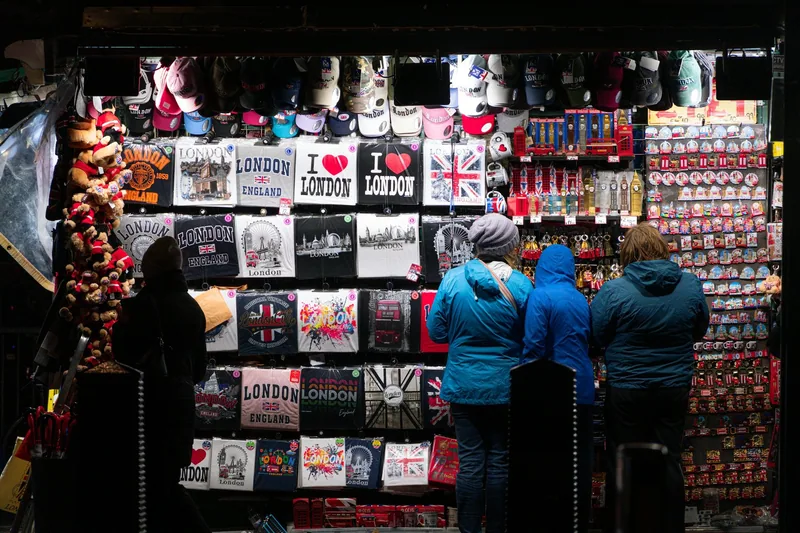
- Cheap plastic trinkets such as mini phone boxes, guardsmen figures and snow globes from stalls and gift shops near the busiest sights. They are often poorly made and are sold in the same form all over the centre. If you want one, compare a few shops, because prices for identical items vary.
- Printed T-shirts and hoodies with generic slogans. Check the label and the fabric; a museum shop or an independent designer will usually give you better quality for a similar price.
- Fake designer goods. Counterfeit bags, watches and perfume are sometimes offered by street sellers. GOV.UK lists counterfeit goods among the consumer problems you can report, and bringing fakes home can also break your own country's customs rules.
- "Souvenir" versions of everyday food in expensive gift packaging. The same brands are often on supermarket shelves at a much lower price.
Compare trinket prices away from Westminster and Leicester Square. The gift shops closest to the busiest sights rely on passing trade and have little reason to compete on price. If a mass-produced souvenir is what you want, check a couple of shops a few streets away first, or choose a museum shop where you know the quality.
Getting your souvenirs home
Before you buy, think about how you will carry things. Books and ceramics add weight fast, and airline baggage allowances are strict. A folding bag in your luggage helps, and wrapping fragile items in clothing is still the best protection.
Liquids need the most care. As well as jam and honey, drinks such as gin and whisky, and cosmetics such as perfumes and creams, are covered by the liquid rules at airport security. GOV.UK advises packing liquids in your checked bag where possible, and the rules at your departure airport and any connecting airport can differ, so check them before you travel.
Finally, check what your own country allows in. Many countries restrict meat and dairy products, and many have limits on alcohol and on the total value of goods you can bring back without paying tax. There is no VAT refund on souvenirs bought in London; our guide to tax-free shopping in the UK explains why.
When to shop for souvenirs
Leave souvenir shopping until the last day or two of your trip, so you are not carrying purchases around the city.
Watch out for Sundays. In England, large shops (over 280 square metres) may open for only six continuous hours between 10am and 6pm, so department stores and big chains close earlier than on other days. Large shops also cannot open on Easter Day or Christmas Day. Our page on bank holidays and opening hours lists the dates to plan around.
Airport shops are convenient for last-minute gifts, but they are not tax-free on general goods, so compare prices with the high street before buying.
Frequently asked questions
What is the best souvenir to bring back from London?
Good tea, a book or print from a museum shop, or a handmade item from a market are among the best choices. They are connected to London, useful or decorative, and usually better value than mass-produced trinkets from gift shops near the sights.
Where can I buy cheap souvenirs in London?
Supermarkets are the cheapest places for British tea, biscuits and chocolate. Museum shops sell postcards and small prints at low prices. For trinkets, compare a few shops away from the busiest sights, because identical items can be cheaper there.
Can I take jam or gin home in my hand luggage?
Only in small containers at most UK airports. GOV.UK counts jam, honey and drinks as liquids, and most airports do not allow containers over 100ml through security. Pack larger jars and bottles in your checked luggage instead.
Do I get the VAT back on souvenirs bought in London?
No. The VAT refund scheme for visitors ended in Great Britain on 1 January 2021. The price you pay in the shop is the final price, unless the shop delivers the goods directly to an address outside the UK.
Are museum shops in London worth visiting?
Yes. They are among the best places for well-designed gifts linked to the collections, and the money helps support the museums. Most national museums are free to enter, so you can visit the shop without buying a ticket.
Sources
- GOV.UK - Hand luggage restrictions: liquids (checked September 2026)
- GOV.UK - Tax-free shopping (checked September 2026)
- GOV.UK - Consumer rights (checked September 2026)
- legislation.gov.uk - Sunday Trading Act 1994, Schedule 1 (checked September 2026)
- GOV.UK - Bringing goods into Great Britain: tax and duty-free allowances (checked September 2026)