
Tickets to sit in the audience of a British television or radio recording are free. You apply online for a specific show, and if you are lucky you receive an e-ticket by email. But for most shows a ticket is not a seat: the organisers send out more tickets than there are places, because not everyone turns up, and admission on the night is first come, first served.
The BBC's own ticket unit, BBC Shows and Tours, describes itself as the largest provider of free television and radio tickets in the UK, and it is the place to start. Other broadcasters and production companies hand out their audience tickets through specialist audience companies, which work the same way and are also free. Whichever route you use, nobody should ever charge you for a studio ticket, and a ticket offered for sale is a ticket you will probably not be allowed to use, because most are issued in the applicant's name. For London's other free entertainment, our guide to free live music in London covers the concerts that need no ticket at all.
Studio audience tickets at a glance
- Cost
- Free, always
- BBC shows
- Apply through BBC Shows and Tours at bbc.co.uk/showsandtours
- Other channels
- Through audience ticket companies appointed by each production; the show's own page says which
- How allocated
- First come, first served, or a random draw for the most popular shows
- When tickets arrive
- BBC: usually from about three weeks before the recording, by text message and email
- Entry guaranteed?
- Usually not. Tickets are over-allocated; Strictly Come Dancing is a stated exception
- ID
- Original, in-date photo ID for everyone aged 18 or over; the name must match the ticket
- Transferable?
- No, not to another person or another date
How to apply for a BBC recording
BBC Shows and Tours lists every recording it is currently handing out tickets for, across London, Salford, Glasgow, Cardiff, Belfast and elsewhere. You can filter the list by nation, and each show has its own page with the dates, the venue, the allocation method and any rules for that show. In November 2026 the London listings included Radio 4 comedy at Broadcasting House, a Newsnight special, and the Radio 3 In Tune Christmas programme in the Radio Theatre.
You fill in an application form for the show and the date you want. There are two ways the tickets are then given out, and the show's page tells you which applies:
- First come, first served. Applications are processed in the order they arrive until the tickets run out. Most radio recordings and smaller television shows work this way, so applying on the day a show is listed matters.
- Random draw. For very popular shows the BBC accepts applications until a published closing time and then draws the winners. Applying early gives you no advantage, and for Strictly Come Dancing you may apply for only one pair of tickets.
If you are successful, the BBC tells you by text message and sends the e-tickets by email. If not, you stay on a waiting list in case anyone cancels. Some shows hold back a share of tickets for people who live locally, and the BBC may offer last-minute returns to local applicants because they can come at short notice. Joining the BBC's mailing list is the most reliable way to hear when new recordings open. The mechanics of ballots in general, and how they differ from queues, are explained in our page on how event ballots work.
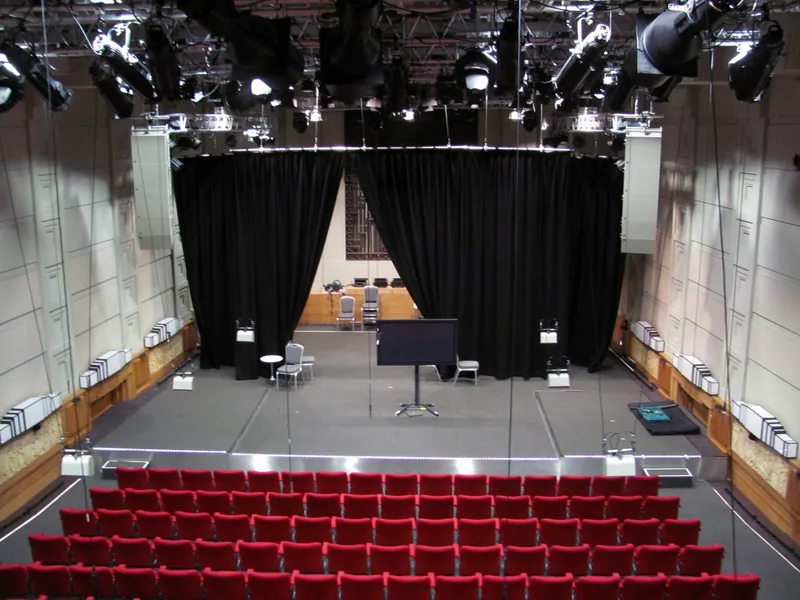
Photo: Michal Bělka · CC BY-SA 4.0 · Wikimedia Commons · resized
Why a ticket is not a seat
This is the part that catches visitors out. The BBC's own show pages say it plainly: because not everyone who asks for tickets uses them, it sends out more tickets than there are places to make sure it has a full house. It adds that it does its best to get the numbers right, but occasionally has to disappoint people.
In practice that means the people at the front of the queue get in, and the people at the back may be turned away even though their ticket is valid. The independent audience companies used by other channels work on the same principle, for the same reason: a half-empty studio looks bad on screen and sounds worse on the radio.
The BBC's one published exception is Strictly Come Dancing. Because, in its words, it knows how far people travel to see the show, anyone successful in the Strictly random draw is guaranteed admission. Do not assume any other show works this way unless its page says so.
Do not build a trip around a studio ticket. If you are in London for a few days only, treat a recording as a bonus rather than a plan. A valid ticket can still end with you on the pavement, and your ticket cannot be moved to another date if the timing goes wrong.
On the day: queues, ID and security
Your ticket gives a validation time, which is when the staff start checking tickets and ID, and a doors time, which is when the audience goes into the studio. Queueing is usually outside, so dress for the weather. In very bad weather the BBC sometimes starts validation early to get people out of the rain.
The BBC asks people not to arrive much earlier than the validation time, and says that queueing early will not guarantee admission or a particular seat. That said, admission is first come, first served once validation starts, so arriving at the validation time rather than at the doors time is what gives you the best chance.
Everyone aged 18 or over needs original, in-date photo ID from the BBC's approved list. Copies and expired documents are refused, and the name on the lead ticket must match the lead booker's ID. The named ticket holder must attend and bring their guests in with them; a guest cannot go in alone. Under-18s do not need ID, but where a show admits children, proof of age may be asked for.
At Broadcasting House the audience is let in only through the Portland Place entrance, not the revolving doors on the piazza, and goes through airport-style security with a metal detector. One bag of A4 size or smaller is allowed per person; backpacks, laptop bags, travel cases and large tote bags are refused, and so are folding bikes and scooters. If you are coming straight from a hotel check-out with luggage, that rules you out, so see our page on left luggage in London first.
How long it really takes, and what you cannot do inside
A recording is not a broadcast. A half-hour radio comedy or a television panel show usually takes much longer to record than it does to air, because there is a warm-up before it starts, pauses while cameras and sets are adjusted, and retakes when something goes wrong. Add the queue and validation beforehand, and in our observation (November 2026) you should allow the whole evening, typically two to three hours from validation to leaving, for a programme that lasts thirty minutes on air.
Once you are inside, the rules are strict and mostly common sense. Expect to be told to switch your phone off and put it away, because a ringing phone ruins a take, and do not film or record on your own device unless the staff say you may. You may be able to leave after validation to buy food or drink if time and the venue allow, but the BBC says anyone back after the doors time will not be admitted. Once the recording starts, assume you are staying until it ends. If a medical condition means you need food or drink, or need to keep your phone on to monitor something such as blood glucose, the BBC asks you to say so when you apply.
Each show sets its own minimum age, which is printed on its application page. Comedy and late-evening shows are often for adults only or for older teenagers, and a family with younger children should check before applying rather than at the door.
Where the recordings are, and the journey home
Many London recordings take place in a handful of buildings. Knowing where yours is matters, because some are in central London and some are well outside it, and recordings often finish late.
| Venue | What is recorded there | Getting there and back |
|---|---|---|
| Broadcasting House, Portland Place | BBC radio comedy, panel shows and concerts in the Radio Theatre; some news programmes | Oxford Circus, a few minutes' walk. Central, with plenty of late trains and buses |
| Television Centre, White City | Studio television for several channels; the BBC sold the building and the studios are still working | White City (Central line) or Wood Lane. Ten to twenty minutes from the West End |
| Maida Vale studios | BBC orchestral and music sessions; the BBC is building replacement studios at East Bank in Stratford | Warwick Avenue or Maida Vale (Bakerloo line) |
| Elstree Studios, Borehamwood | Large entertainment shows, including Strictly Come Dancing | Thameslink from St Pancras to Elstree & Borehamwood, which the BBC puts at 20 minutes, then a ten-minute walk |
| Pinewood and other studios outside London | Some large entertainment and drama productions | Check transport before you apply; late public transport can be thin |
The venue is always printed on the show's page and on the ticket, and it can change between series. If a recording outside London ends at 10pm or later, check your last train before you go: our pages on catching the last train back and first and last trains from the London termini explain the timings. The building on Wood Lane is covered in our guide to Shepherd's Bush and White City, and the BBC's future music home in our page on East Bank and Stratford Cross.
Recordings for other channels
ITV, Channel 4, Channel 5, Sky and the streaming services do not run a single public ticket office like the BBC's. Their audience tickets are usually handled by audience ticket companies appointed by the production company, and the same company may hand out tickets for shows on several channels. The fastest way to find the right one is to search for the show's name with "audience tickets", and then check that the page you land on is from the production or its named ticket company rather than a reseller.
The rules on these sites are very similar: free tickets, registration, an application for a specific date, over-allocation, ID on the door and no guarantee of entry. Some ask you to register in advance, and some tell you your application has succeeded only a few days before the recording. Read each company's terms rather than assuming they match the BBC's.
A standby queue can work when you have no ticket. Some productions let people without tickets wait at the end of the queue in case there is room once ticket holders are in. Whether a show allows this is decided by its producers and is not guaranteed; the show page or the ticket company will say if it is offered.
The Proms, tours and other BBC tickets
The BBC Proms are a different system altogether. They are concerts at the Royal Albert Hall and elsewhere, broadcast on Radio 3, and seats are sold rather than given away, with £8 standing places on the day in 2026. Our guide to the BBC Proms explains how that works. The BBC Symphony Orchestra's other concerts, and the orchestra's studio sessions, are listed separately; our page on classical music in London covers the venues.
BBC Shows and Tours also runs tours of some BBC buildings, booked separately from the free show tickets and with their own rules. For live comedy without the cameras, our guide to London's comedy clubs lists the small rooms where well-known comedians try out new material. If it is the places you have seen on screen that you are after, London on screen sends you to locations you can visit.
Frequently asked questions
Are TV and radio audience tickets really free?
Yes. BBC tickets and those from the established audience ticket companies cost nothing. If anyone asks you to pay for a studio audience ticket, walk away: most tickets are issued in the applicant's name and must match their photo ID, so a bought ticket would probably be refused at the door.
Does having a ticket guarantee entry to a recording?
For most shows, no. The BBC says it sends out more tickets than there are places because not everyone uses them, so admission is first come, first served and some ticket holders are turned away. Strictly Come Dancing is the BBC's stated exception, with guaranteed admission for draw winners.
Can tourists apply for BBC audience tickets?
The BBC's pages do not exclude visitors from abroad. You need an email address, a phone that can receive the confirmation text, and original photo ID on the day. Some shows hold back tickets for local applicants, and tickets cannot be moved to another date, so apply only for dates you are sure of.
What ID do I need for a BBC recording?
Everyone aged 18 or over needs original, in-date photo ID from the BBC's approved list, and the lead booker's name must match the ticket. Photocopies and expired documents are not accepted. Children under 18 do not need ID, but proof of age may be requested.
How long does a TV recording take?
Much longer than the programme. Allow for the queue and ticket validation, a warm-up, and retakes during the recording itself. In our observation two to three hours from validation to leaving is typical for a half-hour programme, and you cannot normally leave part-way through.
Sources
- BBC Shows and Tours - Join us in the audience for one of our shows (checked November 2026)
- BBC Shows and Tours - How are tickets distributed? (checked November 2026)
- BBC Shows and Tours - In Tune Christmas Special 2026 (Broadcasting House entry, security and over-allocation) (checked November 2026)
- BBC Shows and Tours - Strictly Come Dancing 2026 (guaranteed entry) (checked November 2026)
- BBC Shows and Tours - What should I expect when queueing? (checked November 2026)
- BBC Shows and Tours - Can I leave the venue after my tickets have been validated? (checked November 2026)
- BBC Shows and Tours - What ID should I bring with me on the day? (checked November 2026)
- BBC Shows and Tours - Accessibility at BBC shows (checked November 2026)