
Bonfire Night, also called Guy Fawkes Night, is the evening around 5 November when Britain lights bonfires and lets off fireworks to remember a failed plot to blow up Parliament in 1605. In London the big public displays are ticketed and often held on the nearest weekend: in 2026, both Battersea Park and Alexandra Palace hold theirs on Saturday 7 and Sunday 8 November, not on 5 November itself.
For visitors, Bonfire Night is one of the most enjoyable British traditions to join. There is no religious or official ceremony to follow: people simply wrap up warm, stand in a park in the dark, eat hot food and watch the sky. Over several evenings in early November you will hear and see fireworks all over the city, from large organised shows to small displays in back gardens.
It is not a public holiday, and shops, offices and transport run as normal. This guide explains the story behind the night, where to see the main displays in 2026, how tickets work and what to know about safety and the law.
Bonfire Night 2026 at a glance
- 5 November 2026
- A Thursday; a normal working day
- Battersea Park Fireworks
- Saturday 7 and Sunday 8 November; advance tickets only
- Alexandra Palace Fireworks & Drone Festival
- Saturday 7 and Sunday 8 November; gates 4pm; from £11.50
- Private fireworks
- Allowed until midnight on Bonfire Night (the usual limit is 11pm)
- What to bring
- Warm, waterproof clothing and shoes for wet grass
The Gunpowder Plot and Guy Fawkes
In 1605 a small group of Catholic conspirators, led by Robert Catesby, planned to kill the Protestant King James I by blowing up the House of Lords during the State Opening of Parliament. They rented a cellar beneath the Lords chamber and filled it with barrels of gunpowder. Guy Fawkes, a soldier with experience of explosives, was given the job of guarding the gunpowder and lighting the fuse.
The plot was betrayed. An anonymous letter warned a Catholic lord to stay away from Parliament, and the authorities searched the building. Around midnight on the night of 4 to 5 November, Fawkes was found in the cellar with the gunpowder and arrested. He was taken to the Tower of London for questioning, and he and the other surviving plotters were later tried and executed.
When the news spread that the king had survived, Londoners lit bonfires to celebrate. Parliament then passed a law making 5 November a day of public thanksgiving, and the custom of bonfires and, later, fireworks lasted long after that law was repealed in the 19th century. The old rhyme "Remember, remember the fifth of November" is still taught to children.
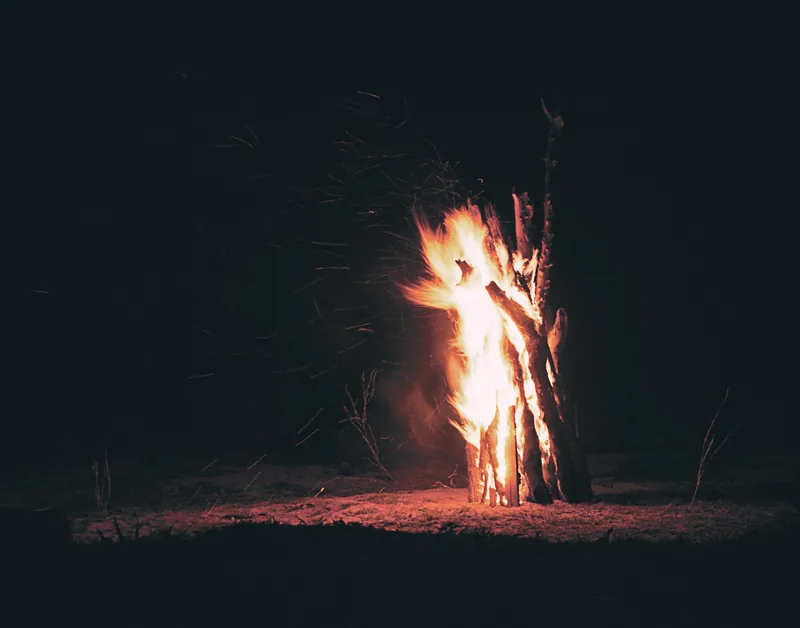
Why Guy Fawkes is burned on the bonfire
The tradition of burning a "guy", a home-made figure of Guy Fawkes stuffed with newspaper or straw and dressed in old clothes, grew out of the anniversary celebrations. In the past, children carried their guy around the streets asking for "a penny for the guy" to buy fireworks. You will rarely see that today, but some community bonfires still have a guy on top.
The plot is also remembered in Parliament. Before each State Opening, the Yeomen of the Guard carry out a ceremonial search of the cellars of the Palace of Westminster, a reminder of 1605. To see the building Fawkes tried to destroy, read our guide to tours of the Houses of Parliament, where overseas visitors can book guided tours on Saturdays and on more days during parliamentary recess.
A good day to visit Westminster is the day before your display. Explore Westminster and walk past the Houses of Parliament and the Elizabeth Tower in daylight, then watch the fireworks the next evening. The story of the plot makes much more sense once you have stood outside the building it was meant to destroy.
Battersea Park Fireworks, 7 and 8 November 2026
Battersea Park, on the south bank of the Thames opposite Chelsea, holds one of London's best-known displays, organised for Wandsworth Council. The two nights are different shows with different soundtracks, according to the organisers.
| Battersea Park 2026 | Saturday 7 November | Sunday 8 November |
|---|---|---|
| Gates open | 6pm | 4.30pm |
| Gates close (no entry after) | 8pm | 6.30pm |
| Fireworks (estimated start) | 8.30pm | 7pm |
| Event ends | 11pm | 9.30pm |
Tickets must be bought in advance through the official ticketing partner, Kaboodle, and cannot be bought at the gate. They are non-refundable and non-transferable, and the organisers do not run a resale list or a waiting list for sold-out dates. The adult price (16+) rises in stages as tickets sell: £10.60 (super early bird), £13.10 (early bird), £16.70 (general), £15.90 (late release) and £18.10 (final release), as listed by the organisers. Youth tickets (5-15) cost £11.50, and under-5s go free but still need a ticket. For a family of two adults on general admission and two children aged 5-15, that comes to £56.40.
The terms of entry are strict: bag checks, no re-entry once you leave, no food, glass or alcohol brought in, no sparklers, and no animals except registered assistance dogs. Every under-18 must be with an adult, with a maximum of four under-18s per adult. Food and drink stalls on site take cards only, not cash.
There is no parking in the park apart from very limited disabled parking. The nearest rail stations are Battersea Park and Queenstown Road, with Victoria and Clapham Junction also within reach. By Tube, use Battersea Power Station on the Northern line or Victoria. Buses 19, 170, 319 and 345 pass the park. The organisers suggest entering by Albert Gate if you come from Clapham Junction, as it should be quieter than Sun Gate.
Alexandra Palace Fireworks & Drone Festival, 7 and 8 November 2026
Alexandra Palace, known to Londoners as "Ally Pally", sits on a hill in north London with a wide view over the city, which makes it a spectacular backdrop for fireworks. Its event, now renamed the Fireworks & Drone Festival, combines fireworks with a show of lit drones.
In 2026 the two days have different characters. Saturday 7 November is the full festival, with a headline DJ set, a German beer festival, funfair rides and street food. Sunday 8 November is aimed at families, with an earlier display and entertainment for children. Both days include a giant bonfire, marshmallow toasting, ice skating and funfair rides. Gates open at 4pm and tickets start from £11.50; check exact display times and full prices on the official Alexandra Palace festival page.
Getting there: Alexandra Palace has its own railway station at the Wood Green entrance to the park, with Great Northern trains from Moorgate (via Highbury & Islington) and from King's Cross. The nearest Underground station is Wood Green on the Piccadilly line, and the W3 bus runs from Finsbury Park to the palace. The palace stands on a hill, so allow time for the walk up and wear sturdy shoes.
Battersea Park suits you if
- you want a central location close to Victoria and Chelsea
- you prefer a flat park and several nearby stations
- you want to know the exact fireworks times in advance
Alexandra Palace suits you if
- you want a full evening with a bonfire, fair rides and skating
- you like the idea of fireworks over a view of the whole city
- you don't mind a longer trip to north London and an uphill walk
Other displays around London
Many borough councils, schools, sports clubs and local parks run their own displays in the days around 5 November. Some are free, many ask for a small ticket price or donation, and dates change from year to year, so check your local council's website or the website of the park. Smaller displays are often better for young children: shorter, less crowded and easier to leave.
If you are in London a week later, the Lord Mayor's Show is another free autumn spectacle, a large procession through the City of London. In 2026 it takes place on Saturday 14 November and sets off from Mansion House at 11am. Our guide to London in November lists what else is on that month.
Fireworks and the law in England
If you are staying with friends or in a rented house and want to join in with your own fireworks, the rules on GOV.UK are clear:
- You cannot buy "adult" fireworks (categories 2 and 3) if you are under 18.
- Registered sellers can sell fireworks for private use from 15 October to 10 November, from 26 to 31 December and for three days before Diwali and Chinese New Year. At other times only licensed shops can sell them.
- You must not set off fireworks between 11pm and 7am, except on Bonfire Night (until midnight) and on New Year's Eve, Diwali and Chinese New Year (until 1am).
- You must not set off or throw fireworks, including sparklers, in the street or other public places.
- Your local council may have extra rules.
The next big night for fireworks is 31 December, when the official display on the Thames is ticket-only; see our guide to New Year's Eve in London. Breaking the fireworks law can lead to an on-the-spot fine of £90, and illegal selling or use can bring an unlimited fine and up to six months in prison. In practice a ticketed public display is the safer and simpler choice for a visitor.
Do not light fireworks in a London park or street. Setting off fireworks in a public place is against the law, and a crowded city is no place for them. GOV.UK points to RoSPA and the Health and Safety Executive for firework safety advice if you do use them in a private garden.
How to enjoy the evening
Dress for a cold, damp night. Early November in London is often chilly and wet, the ground in parks is usually muddy, and you will stand still for a long time. Wear waterproof shoes, warm layers, a hat and gloves. Our guide to London weather by season has more packing advice.
Arrive early. Gates close before the display at Battersea, and queues for bag checks build up in the last hour. Agree a meeting point with your group in case you are separated, and keep your phone and wallet in a zipped pocket; our advice on staying safe in London covers crowds and pickpockets.
Think about children and pets. Fireworks are loud; ear defenders help small children, and the Sunday or earlier displays suit families better. Pets are not allowed at the big displays. Our guide to London with children has more ideas for family days out.
Plan the journey home. Thousands of people leave at the same time, so either leave a few minutes before the end or wait in the park until the crowd thins. Pay as you go with contactless or Oyster works on the Tube, buses and most rail services within London; see our guide to Oyster and contactless fares.
Frequently asked questions
When is Bonfire Night in London in 2026?
Bonfire Night falls on Thursday 5 November 2026, but London's biggest displays are held at the weekend. Battersea Park and Alexandra Palace both hold their fireworks on Saturday 7 and Sunday 8 November 2026. Smaller local displays may be on other dates.
Do I need tickets for the Battersea Park fireworks?
Yes. Tickets must be bought in advance through the organisers' ticketing partner and cannot be bought at the gate. Adult prices in 2026 range from £10.60 to £18.10 depending on when you book, youth tickets cost £11.50 and under-5s go free with a ticket.
Why do the British celebrate Guy Fawkes Night?
It marks the failure of the Gunpowder Plot of 1605, when Guy Fawkes and other conspirators tried to blow up Parliament and kill King James I. People lit bonfires to celebrate the king's survival, and the tradition has continued for over four centuries.
Is Bonfire Night a public holiday in the UK?
No. Bonfire Night is not a bank holiday, and shops, offices, museums and public transport run as normal. Most people celebrate in the evening, and many public displays are held on the nearest weekend.
How late can fireworks be set off on Bonfire Night?
On Bonfire Night, the law in England allows fireworks until midnight instead of the usual 11pm cut-off. On New Year's Eve, Diwali and Chinese New Year the limit is 1am. Fireworks must never be set off in the street or other public places.
Sources
- Battersea Park Fireworks - Information, tickets and timings (checked September 2026)
- Alexandra Palace - Fireworks & Drone Festival (checked September 2026)
- Alexandra Palace - How to get here (checked September 2026)
- GOV.UK - Fireworks: the law (checked September 2026)
- The Lord Mayor's Show - official website (checked September 2026)
- UK Parliament - Visiting and tours (checked September 2026)