
London has more full-time symphony orchestras than any other city in the world, five major concert halls within half an hour of each other, and a weekday circuit of church recitals where a professional musician plays for an hour and you pay a few pounds or nothing at all. The hard part is not finding a concert. It is knowing which room suits the music you want to hear, and when to book.
This page assumes you already know the names. Our guide to London's live music venues introduces the halls; what follows is the practical layer on top: which orchestra plays where, how far ahead each place sells out, what a cheap seat sounds like from the back, and the free daytime music that almost no visitor finds. For ballet and opera specifically, see our guide to the house on Bow Street.
A note on money before anything else. Orchestral tickets in London start at around £10 to £15 in most halls, a good stalls seat is typically £40 to £70, and the very cheapest music in the city is free. Prices vary by concert, so treat every figure here as a starting point and check the hall's own site for your date.
Choosing a hall
- Big symphonic repertoire, film scores, choral spectaculars
- Royal Albert Hall, South Kensington
- Orchestral concerts with clear, dry acoustics
- Barbican Hall, City of London
- Orchestras plus contemporary, folk and jazz in one building
- Southbank Centre, South Bank
- Chamber music, piano recitals and song
- Wigmore Hall, Marylebone
- Mid-sized orchestral concerts in Chelsea
- Cadogan Hall, Sloane Terrace
- Cheapest professional music
- City church lunchtime recitals and free choral evensong
The five halls and the jobs they do
Each of London's main halls has a size and a sound, and they are not interchangeable. Under its dome, the Royal Albert Hall seats thousands and handles scale: a Mahler symphony, a film with live orchestra, a massed choir. The building itself is part of the evening, and our guide to the hall and how to visit it covers tours and the layout of the tiers. Every summer it also hosts the Proms, which is a season rather than a venue and works by its own rules.
Barbican Hall is the opposite: a rectangular room with a comparatively dry acoustic that flatters clarity over grandeur, which is why it suits dense twentieth-century scores and concert performances of opera. It sits inside a large arts centre, so you can make an evening of it without leaving the building, as our guide to the Barbican explains.
The Southbank Centre is three halls in one complex, from a large orchestral room down to a small recital space, and its programme mixes symphony concerts with contemporary and non-classical music. Wigmore Hall in Marylebone is a single small room built for two or three musicians and a piano, and there is no bad seat in it.
The fifth, often forgotten, is Cadogan Hall in Chelsea: a converted church of about nine hundred seats that hosts full orchestral seasons. Its 2026/27 programme includes a Royal Philharmonic Orchestra season and an international orchestral series, and because it is off the main tourist track, seats for good concerts are often still available when the bigger halls have sold out.
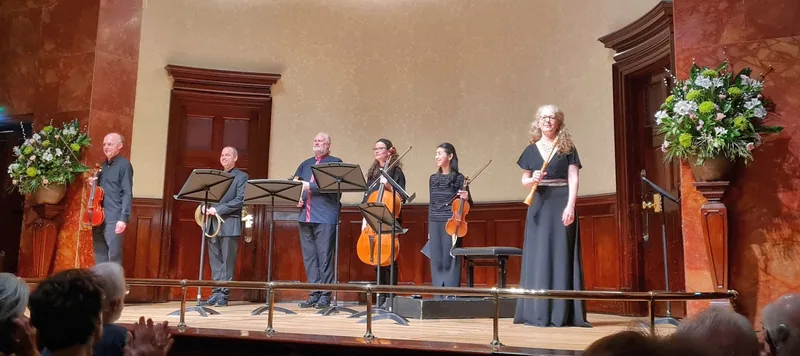
Photo: Derbrauni · CC BY 4.0 · Wikimedia Commons · resized
Which orchestra plays where, and why it matters
London's orchestras are not tied to a single building the way they are in Vienna or Amsterdam. Several are resident at one hall but also play elsewhere in the city, in film studios and on tour. The practical consequence for a visitor is that you should search by orchestra as well as by hall. If you want a specific ensemble and the obvious venue shows nothing that week, they may well be playing across town.
It also means that the ticket price for the same orchestra can differ by venue. A programme that costs £60 in one hall's stalls may appear at £25 in a smaller room a fortnight later, with the same conductor and soloist. Checking two or three sites before booking is worth ten minutes.
When tickets go on sale, and how far ahead to plan
Most halls publish a season in the spring for the following autumn to summer, open priority booking to members and supporters first, then release the rest to the general public a few weeks later. That gap is why famous soloists and visiting orchestras can look sold out months ahead.
Ordinary weeknight concerts are a different matter. For a standard orchestral programme on a Tuesday or Wednesday you can often book a fortnight ahead, and sometimes on the day. The concerts that genuinely sell out are the ones with a celebrity conductor, a well-known soloist, a visiting foreign orchestra, or a very popular piece such as a Beethoven symphony or Carmina Burana.
Watch the booking mechanics too. Cadogan Hall, for example, charges £4.50 per transaction for telephone bookings and cannot post tickets to addresses outside the United Kingdom, holding them at the box office instead; its box office is open Monday to Friday from 12 noon to 6pm. Details like that are easy to miss and awkward on the night.
Check the view from your seat before you pay. Cadogan Hall's seating plans let you click any seat and see a photograph of the stage from it, and several other London halls now publish something similar. For a hall you do not know, this is more useful than the price band, especially in side seats and under balcony overhangs.
The City church circuit: an hour of music for the price of a sandwich
On weekday lunchtimes, a network of churches in and around the City of London puts on 45 to 60 minute recitals: a solo pianist, a string quartet, an organ programme, a singer with accompanist. Many of the performers are young professionals or conservatoire postgraduates, and the standard is high. Entry is usually free with a retiring collection, or a few pounds.
The circuit works on a weekly rhythm rather than a timetable you can memorise. St Bride's on Fleet Street, the journalists' church, runs its own lunchtime recital series; St Mary-le-Bow on Cheapside runs recitals and a Thursday evening programme, though be careful with its timetable: the 13:05 slot the church publishes on Wednesdays is the Eucharist, not a concert, and the recital dates are listed separately. Other City churches have their own days. The reliable method is to pick a weekday, look at two or three church websites that morning, and walk to whichever has something on.
Practical warnings. These are working churches, so a recital can be moved or cancelled for a funeral or a special service. The buildings are stone and often unheated between October and March, so take a coat. Seating is on wooden pews or stacking chairs, and there is rarely a cloakroom.
Choral evensong: the best free hour in London
Sung evensong is a short choral service, usually 45 minutes to an hour, in which a professional or scholarship choir sings psalms, canticles and an anthem. There is no ticket, no charge and no requirement to be religious, and at the cathedrals the choirs are among the best in the country.
St Paul's Cathedral states that all of its regular services are free of charge, which includes the sung services, and that you may also come in to pray in St Dunstan's chapel without paying the sightseeing admission. Some special services and concerts there are ticketed, so check the cathedral's calendar for your date. Westminster Abbey works the same way: sightseeing is paid, worship is not.
Two things to understand. You are attending a service, not a concert, so arrive a few minutes early, sit where the stewards put you, stay to the end and do not applaud. And choirs take holidays: in school holiday weeks the cathedral choir may be replaced by a visiting choir, or the service may be said rather than sung. The cathedral's own service schedule says which.
Conservatoire concerts: professional standard, pay what you can
London's music colleges give hundreds of public concerts a year, and they are the most underused cheap tickets in the city. On Prince Consort Road, in South Kensington, the Royal College of Music applies a pay-what-you-can model to many events: you choose a price between £2 and £15, and there is a free option. Other events there start from £6.50, with a £1.50 ticket fee included in the displayed price of paid tickets. Booking is online and capped at ten tickets per transaction.
The college also programmes lunchtime recitals away from its own building, including at churches in the West End, so a free or near-free concert may be nearer your hotel than you expect. The other conservatoires run comparable schemes. What you get is a student orchestra with a professional conductor, or a postgraduate soloist about to begin an international career, in a good hall, for the price of a coffee.
A couple can hear a full orchestra for under £20. Between conservatoire pay-what-you-can concerts, City church recitals and free evensong, two people can fill an entire week with live classical music and spend less than one pair of stalls seats would cost. Our round-up of what costs nothing in London has more in the same spirit, and our guide to free live music covers the non-classical side.
Where to sit when you are paying less
In a large hall, the cheapest seats are usually behind or beside the orchestra, or high up at the back. Each has a trade-off worth understanding.
- Choir or behind-orchestra seats face the conductor and let you watch the whole ensemble. Balance is odd: brass and percussion are loud, strings are thin, and a solo singer will be facing away from you. Excellent for a symphony, poor for a concerto or an art-song recital.
- The top tier usually has the most even sound in the building, because you are hearing the room rather than one section. The drawback is distance and, in some halls, a steep rake that people with vertigo dislike.
- Side seats in the stalls are cheap for a reason: the piano lid, a harp or a soloist's back can block the view, and the sound arrives unevenly.
- Under a balcony overhang is the one to avoid. The ceiling cuts off the upper harmonics and everything sounds muffled, whatever the price band says.
What happens in the room
The conventions are simple once someone explains them. Applaud when the leader of the orchestra comes on, again for the conductor and soloist, and then at the end of the whole piece rather than between movements. If you are not sure whether a piece has finished, watch the conductor's hands: the applause starts when they drop.
Latecomers are not admitted until a break in the music, which in a symphony can mean 20 minutes in the foyer, so allow for the queue at the doors. There is no dress code at any London hall. Phones should be off, not silent, because the screen light carries in a dark auditorium. Most concerts have one interval of about 20 minutes, and bars take pre-orders so you are not queuing for the whole break.
Timings, seasons and getting home
Evening concerts in London usually start at 19:00 or 19:30 and finish between 21:15 and 22:15. That is comfortably inside normal Tube hours from all five halls, but check your last train if you are staying outside Zone 2. If you have booked an early concert after a full day, the 16:00 to 19:00 peak is the worst time to cross the centre; see our notes on travelling outside the rush.
Seasonally, the concert year runs from September to July, with a quiet stretch in August when the Proms dominate and the other halls programme lightly. The busiest weeks for choral music are the run-up to Christmas and Holy Week. January is the easiest month to get good seats at short notice, which is one of the few advantages of visiting then, as our guide to January in London explains.
Frequently asked questions
What is the cheapest way to hear classical music in London?
Free choral evensong at the cathedrals and the big parish churches, which needs no ticket, and weekday lunchtime recitals in City churches, which are usually free with a collection or a few pounds. Conservatoire concerts add a third option, with pay-what-you-can pricing that starts at £2 and includes a free choice.
Do I need to book classical concerts in London in advance?
For a famous soloist, a visiting foreign orchestra or a very popular work, book as soon as the season opens, usually several months ahead. For an ordinary weeknight orchestral concert you can often book a fortnight before, and sometimes on the day. Lunchtime recitals rarely need booking at all.
Which London concert hall has the best acoustics?
It depends on the music. Wigmore Hall is widely considered the finest room in London for chamber music and song. Barbican Hall suits complex orchestral scores because its sound is clear rather than reverberant. The Royal Albert Hall is the one for large-scale works where sheer size is part of the effect.
Can I go to choral evensong without being religious?
Yes. Anyone may attend, nothing is charged, and no one asks about your beliefs. You are in a service rather than a concert, so arrive a few minutes early, follow the order of service, stay until the end and do not applaud. Check the cathedral's schedule, as choirs do not sing every day.
What should I wear to a classical concert in London?
Whatever you are comfortable in. No London concert hall has a dress code. Some people dress up for a first night or a gala, but jeans and a jumper are entirely normal, particularly in the upper tiers and at lunchtime recitals.
Sources
- Royal College of Music - Ticketing and Box Office (checked September 2026)
- Royal College of Music - What's on (checked September 2026)
- Cadogan Hall - Booking information (checked September 2026)
- Cadogan Hall - What's on 2026/27 (checked September 2026)
- St Paul's Cathedral - Choral Evensong and services (checked September 2026)
- St Bride's Church, Fleet Street - Music and lunchtime recitals (checked September 2026)
- St Mary-le-Bow - Services and recitals (checked September 2026)