
Wimbledon Common and Putney Heath form one continuous stretch of 1,140 acres of woodland, heath, ponds and sandy tracks in south-west London. It is free, open at all times, and it has a working windmill with a small free museum inside it. What it does not have is signposts, which is the single thing to prepare for.
Londoners tend to compare it with Hampstead Heath, and the comparison is fair in size but wrong in feel. The Heath is hilly, busy and full of people who came for a specific thing: a view, a pond, a house. The Commons are flatter, far emptier, and much more like actual countryside. On a weekday in February you can walk for an hour and pass six people, all of them with a dog.
Officially this is three places: Wimbledon Common, Putney Heath and Putney Lower Common. They are managed together by the Wimbledon and Putney Commons Conservators, a body created by Act of Parliament in 1871, and in practice you cannot tell where one ends and the next begins.
Wimbledon Common at a glance
- Entry
- Free, with no gates and no closing time
- Size
- 1,140 acres across Wimbledon Common, Putney Heath and Putney Lower Common
- Windmill Museum
- Sundays 11am to 5pm during British Summer Time, free. In 2026 the last Sunday is 25 October
- Managed by
- The Wimbledon and Putney Commons Conservators, under the Wimbledon and Putney Commons Act 1871
- Nearest stations
- Wimbledon, Putney, Southfields and East Putney, all with a walk or a bus at the far end
- Bring
- An offline map. There is very little signposting and the phone signal is patchy
The windmill, and the museum inside it
The windmill standing in the middle of the Common is the reason most first-time visitors come, and its story explains why the Common still exists.
In 1799 a local mill owner applied to enclose a piece of Wimbledon Common to build a windmill, on the grounds that residents were not satisfied with factory-made flour and wanted a mill of their own. He died before doing it. In 1816 a Roehampton carpenter, Charles March, applied instead, and the following year was granted a 99-year lease on a small plot at a rent of two shillings a year, on the explicit condition that he would "erect and keep up a public Corn Mill for the advantage and convenience of the neighbourhood".
March was a carpenter rather than a millwright, which may explain the mill's unusual hollow-post construction. The sails had a span of about 15 metres and drove the machinery down a vertical shaft inside the post.
The museum inside covers windmills and milling, local history and the Scouting movement, on two floors. It opened in 1976 using only the first floor; the ground floor was still the Wimbledon Common Rangers' accommodation until a Heritage Lottery grant allowed the museum to expand across both floors in 1999. One room has been kept as it would have looked in 1870, when the disused mill housed six families.
Visiting the Windmill Museum
- Open
- Sundays only, 11am to 5pm, during British Summer Time. The 2026 season ends on Sunday 25 October
- Admission
- Free. Donations by cash, card or online
- Winter
- Closed to walk-in visitors, but pre-arranged group and school tours run on weekdays all year
- Sails turning
- At 2pm on both days of selected weekends, roughly every five weeks, for 30 to 45 minutes depending on the wind
The sails only turn on about five weekends a year. A ranger releases the brake at 2pm on both the Saturday and the Sunday of those weekends, and the sails run for half an hour or so, less if there is no wind and the turning has to be done by hand. The dates are published on the museum's own home page each season, so check them if watching a windmill actually work is the point of your trip.
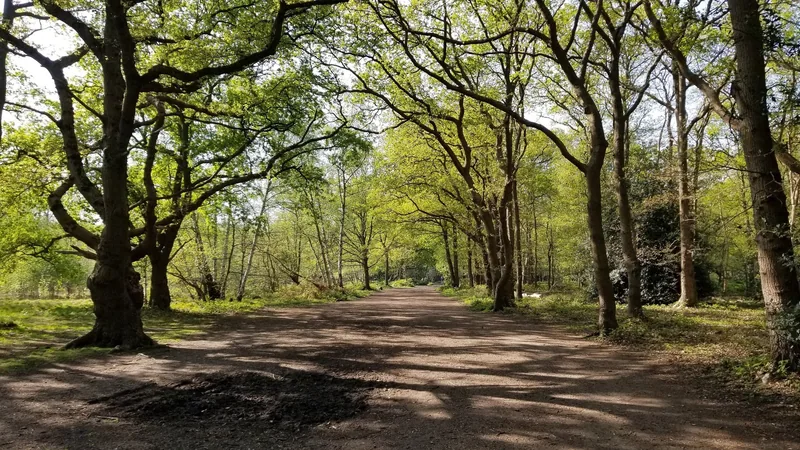
Photo: Karlunun · CC BY-SA 4.0 · Wikimedia Commons · resized
The Act of 1871, and why the Common is still here
The mill stopped grinding in 1864, when the Lord of the Manor, the 5th Earl Spencer, announced that he intended to enclose Wimbledon Common and build himself a new manor house on the site of the mill. Local opposition produced a legal battle that lasted six years.
It ended with the Wimbledon and Putney Commons Act of 1871, which handed the commons to the local community, along with the cost of maintaining them and an annuity payable to the Spencer family. That Act is why 1,140 acres of open land survive in a part of London where a house costs a fortune, and it is also why the Commons are run by Conservators rather than by a borough council.
The millers, the Marsh family, who had other mills in Kingston, agreed to sell but stripped out the stones and most of the machinery first, so that nobody could run the Wimbledon mill in competition with them. The mill was then converted into flats and its wooden upper storey rebuilt in brick, which is why it looks as it does today.
Horses, and sharing the tracks
The Commons are among the best places to ride a horse anywhere in London. A long network of sand rides runs across the heath, riding stables operate on the edge of the Common, and on a weekend morning you will meet horses regularly.
For walkers, three points of etiquette matter. Do not walk on the soft sand rides where a firm path runs alongside, because hoofprints and footprints ruin the surface for each other. Step aside and stand still when a horse passes, rather than walking on. And keep dogs close when horses are approaching, because a loose dog behind a horse is how riders get hurt.
The Conservators publish the byelaws, a map of the rides and the current rules for riding on their own website at wpcc.org.uk. Check it before riding rather than relying on any guide, including this one.
Where to start walking, and how not to get lost
This is the practical heart of the matter. The Commons have almost no signposting, the paths are numerous and largely unnamed, and the woodland is uniform enough that you cannot navigate by what you can see.
- The windmill car park is the usual starting point, in the middle of the Common. There is a café near it and it is the only obvious landmark in the interior.
- From Wimbledon Village, at the top of Wimbledon Hill Road, you walk straight on to the Common from the end of the high street. This is the easiest approach on foot from public transport.
- From Putney Heath, the northern end, you come in from the Tibbet's Corner side, which is the wildest and least visited part.
- Download an offline map before you set out. Mobile signal across the Commons is patchy, and the museum itself warns that the wi-fi around the common is weak.
- Pick an edge to aim for. If you are unsure, walking in one consistent direction will bring you to a road within about 25 minutes from almost anywhere.
- Buy a paper map. The small shop in the windmill's lobby sells maps of the Common alongside books on milling, local history and Scouting. On a Sunday in summer that is the cheapest insurance available.
The ground is sandy in places and heavy clay in others, which means puddles that do not drain. Proper shoes matter more here than in a formal park; our guide to what to pack for London and the month-by-month weather page will tell you what to expect.
Ponds, woodland and what lives there
There are several ponds scattered across the Commons, used by anglers, dog walkers and waterbirds. Swimming is not permitted in them, and they are not supervised; our guide to swimming ponds and lidos covers the places in London where outdoor swimming is provided for.
The habitat is a mixture of secondary woodland, scrub and remnant heathland, which is an increasingly rare thing in the London basin and is managed deliberately to keep it open. Expect woodpeckers, jays and a great deal of birdsong, and in the summer evenings, bats over the ponds.
Dogs are extremely welcome here and this is one of the great dog-walking landscapes of London, which is worth knowing whether you are bringing one or would rather avoid them.
Getting there
None of the stations is right beside the Common, which is part of why it stays quiet.
- Wimbledon (District line, National Rail, Tramlink) is the main one. From the station it is a steep 20-minute walk up Wimbledon Hill Road to the Village and the Common, or a short bus ride.
- Putney (National Rail) and East Putney (District line) serve the northern end, again with a walk or a bus up the hill.
- Southfields (District line), best known as the station for the tennis, is about 15 minutes from the eastern edge.
- By car, there are car parks on the Common, including the one by the windmill.
Our guide to the London Underground covers the District line and the zones, which matter because this is Zone 3.
What to combine it with
Wimbledon Village, at the top of the hill, is the natural other half of the day: a genuinely village-like high street of pubs and small shops, directly on the edge of the Common. The All England Club is a short walk from there, and our guide to the Wimbledon Queue and how to get tickets explains how to see the tennis if you are here in late June or early July.
For more open space, Richmond Park is three miles west across Roehampton and is the obvious next walk, with Bushy Park and Kew further along the same river. At the opposite corner of London, Epping Forest offers the same experience at seven times the size. All of them belong on the list in our guide to free things to do in London, and the Windmill Museum fits alongside the places in our round-up of London's best small museums.
Frequently asked questions
Is Wimbledon Common free?
Yes. There is no entry charge, no gate and no closing time across the whole 1,140 acres of Wimbledon Common, Putney Heath and Putney Lower Common. The Windmill Museum is also free, although donations are welcome.
When is the Wimbledon windmill open?
The Windmill Museum opens on Sundays from 11am to 5pm during British Summer Time. In 2026 the last Sunday of the season is 25 October. It is closed to walk-in visitors through the winter, although pre-arranged group and school tours can be booked on weekdays all year round.
Do the windmill sails turn?
On selected weekends, roughly every five weeks, a ranger releases the brake at 2pm on both Saturday and Sunday and the sails turn for 30 to 45 minutes, depending on the wind. If there is no wind the turning is done by hand and lasts less time. The dates are published on the museum's home page.
Can you get lost on Wimbledon Common?
Easily. There is very little signposting, the paths are numerous and mostly unnamed, and mobile signal is patchy. Download an offline map before you go. Walking in a single consistent direction will bring you out to a road within about 25 minutes from most points.
How do you get to Wimbledon Common by public transport?
Take the District line or a National Rail train to Wimbledon, then walk about 20 minutes up Wimbledon Hill Road to the Village, or take a bus up the hill. Putney and East Putney serve the northern end and Southfields the eastern edge. No station is directly on the Common.
Sources
- Wimbledon Windmill Museum - Opening hours, admission and sail turning dates (checked September 2026)
- Wimbledon Windmill Museum - The history of the mill and the 1871 Act (checked September 2026)
- Wimbledon and Putney Commons Conservators - the official managing body; consult it for the current byelaws, maps and riding rules
- Wimbledon Windmill Museum - Tours, visits and the museum shop (checked September 2026)