
Eurostar runs direct from London St Pancras to Brussels-Midi/Zuid in 1 hour 53 minutes, and Eurostar advertises one-way Standard fares from £39. You can leave London in the morning and be home the same night, which makes Brussels the easiest city outside Britain to see in a day. The catch is not the train: it is the 75 minutes you must spend at St Pancras before it leaves.
Brussels is the capital of Belgium and the working capital of the European Union. It is small, walkable and officially bilingual in French and Dutch, and almost everything a first-time visitor wants sits inside one square mile of the old lower town, about twenty-five minutes on foot from the station where the train puts you down.
Our guide to Eurostar from London covers the classes, the luggage rules and the border checks in full, and our Paris day trip page explains how a cross-Channel day is built. This page is about Brussels specifically: the times, what the fare does if you book late, and what one day actually buys.
London to Brussels at a glance
- From
- London St Pancras International, direct
- Journey time
- 1 hour 53 minutes (Eurostar, September 2026)
- Arrives at
- Brussels-Midi/Zuid, in the city
- Fare
- From £39 one way in Eurostar Standard, subject to availability
- Be at St Pancras
- 75 minutes before departure (Standard and Plus)
- Gates close
- 30 minutes before departure
- Currency
- Euro
- Time difference
- One hour ahead of London, all year
- Verdict
- Worth a full day. Worth a night if you want the museums
Is Brussels really closer than York?
Train to train, almost. The fastest London to York service takes 1 hour 46 minutes and most take 1 hour 54 to 2 hours 3 minutes, so at 1 hour 53 minutes Brussels sits in the middle of that range. Our York day trip page makes the comparison from the other side.
Door to door, though, York wins easily. For York you walk onto the platform a few minutes before departure. For Brussels, Eurostar asks Standard and Plus passengers to be at St Pancras 75 minutes ahead, because the UK exit check, the Belgian entry check and a security screening all happen in London before you board. Gates shut 30 minutes before the train goes, and 15 minutes before it for Eurostar Premier.
So budget three hours and ten minutes from arriving at St Pancras to stepping out in Brussels, plus the hour you lose to the time difference on paper. Come back, and the clock runs the other way, which is why the return leg always feels quicker than it is.
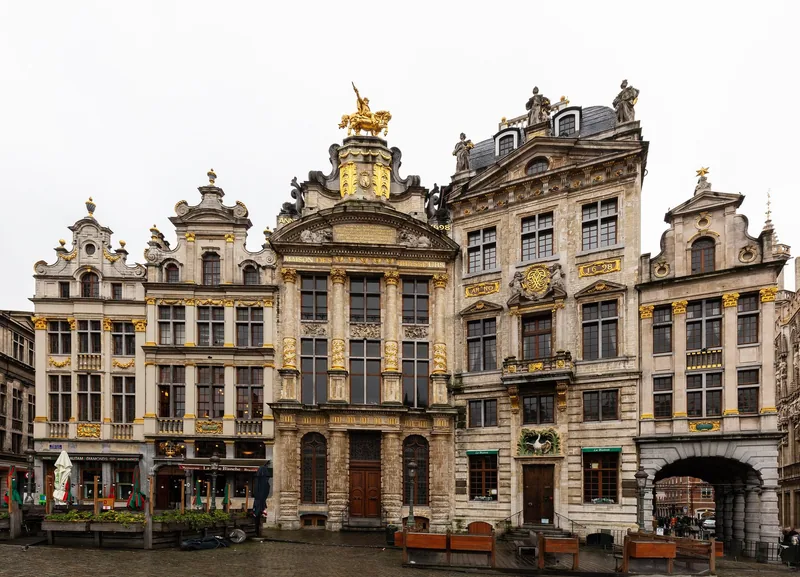
Photo: Diego Delso · CC BY-SA 4.0 · Wikimedia Commons · resized
What the fare does if you book late
Eurostar's lead-in fare is £39 one way in Standard, subject to availability, so a return bought early in both directions starts around £78 for an adult. That price is released well ahead and sells out first on the early morning and early evening trains, which are exactly the ones a day tripper needs.
Book a fortnight out and you will usually still find something. Book on the day and the fare can be several times the lead-in, because Eurostar prices like an airline rather than like a British train operator. There are no Advance and Off-Peak categories here, no railcard discounts and no walk-up fare to fall back on, which is the main way this trip differs from a day out to Canterbury or Cambridge.
A cheap Eurostar ticket is not a flexible one. Changing it is possible and refunding it mostly is not, and the deadlines are tight enough to matter on a day trip; our Eurostar guide has the current rules. Read them before you commit to a date, and see our list of what to book before you go for the rest of the trip.
Two people on one booking is cheaper than two bookings. Eurostar releases its lowest fares in limited numbers per train, and the system allocates them across a single booking before moving up a price band. Search for the number of travellers you actually are, not for one, and check the day either side: a Tuesday departure is regularly cheaper than a Friday one on the Brussels route.
Getting to the train, and the part people underestimate
Trains go from the Eurostar terminal on the upper floor of St Pancras, in at the southern end off Pancras Road. King's Cross is the next building along, and the shared Underground station hides that from people who have allowed exactly enough time. Our King's Cross and St Pancras station guide has the exits and the walking routes between the two, and our overview of London's main railway stations explains which station serves where.
Once you are through the ticket gates, passport control and security, you are in a sealed departure lounge with shops, food counters and a duty-free shop, and you cannot go back out. That is the argument for arriving hungry rather than early. The building itself is worth ten minutes: see our page on St Pancras as a building for what to look at while you wait.
By airline standards the baggage rules barely exist: no weigh-in, no queue to drop a bag, no liquids theatre. The exact allowance is in our Eurostar guide. If you are coming into London that morning and want your bags out of the way, our guide to left luggage at London's stations gives the station prices.
Papers: the UK side, the EU side and what is still coming
A passport, not an identity card, in both directions. Belgium applies the ordinary Schengen conditions, so the passport has to be recent enough and have enough life left in it, and the 90-day limit runs across the whole area rather than per country. The exact tests, and what the EU's Entry/Exit System now does to you at St Pancras rather than at Brussels-Midi, are set out on our Eurostar guide.
The half nobody plans for is the way back in. Most visitors who do not need a UK visa need an Electronic Travel Authorisation before they travel, and a day trip does not consume it: see how the ETA works in practice. If you hold a passport other than a British one, read your own government's advice as well as the EU pages below.
ETIAS had still not started when we checked. The EU's own page said only that it was scheduled for the last quarter of 2026, with no date announced. Buy nothing from any website offering one until the EU confirms the scheme has begun.
One day in Brussels: a shape that works
Brussels-Midi/Zuid is south-west of the centre. It is a big, plain interchange station with Métro, tram and bus connections, and you can walk out of it directly because the border formalities were all done in London.
The Grand-Place, the guild-hall square that is the reason most people come, is about twenty-five minutes on foot or a short Métro ride to the Bourse or De Brouckère. From there almost everything in the lower town is within ten minutes: the Galeries Royales Saint-Hubert, one of Europe's earliest covered shopping arcades; Manneken Pis, which is smaller than every photograph suggests; and the streets of the Îlot Sacré, where the restaurant touts are the most persistent in the city.
The upper town is a climb. The Royal Museums of Fine Arts of Belgium, the Musical Instruments Museum in the old Old England department store and the cathedral all sit on the ridge, and the Mont des Arts steps between the two levels give the standard view back over the rooftops. Check opening days and prices on each museum's own site before you set out: several Brussels museums close on Mondays, which is the day a day tripper is most likely to pick.
The Atomium and the comic-strip museum are the two things most often added and most often regretted on a single day. The Atomium is a tram ride out to Heysel and costs an hour of your day in travelling alone. If you want both, that is your argument for staying the night.
Money, language and the small frictions
Belgium uses the euro, so this is one of the few day trips from London where you need a second currency. Card payment is normal and contactless is widely accepted, but Belgian card terminals sometimes refuse foreign cards on public transport machines, so carry some cash for a tram ticket. Our page on changing money in London covers where not to do it.
Brussels is bilingual, and street signs carry both French and Dutch names for the same place: Brussels-Midi and Brussel-Zuid are one station, Grand-Place and Grote Markt one square. English is widely spoken in the centre. Tipping is not expected in the way it is in the United States, and service is included in restaurant prices.
One thing to know before you eat: the terraces around the Grand-Place and along the Rue des Bouchers are the most expensive and the least good food in the city, and staff will physically approach you to bring you in. Walk two streets further out in any direction.
Eurostar, coach or plane
| Option | Time each way | What it costs | Best for |
|---|---|---|---|
| Eurostar, direct | 1 h 53 min, plus 75 min at St Pancras | From £39 one way | A day trip, or any trip where the centre is the destination |
| Coach from Victoria | Around 8 to 10 hours | The cheapest of the three | Overnight travel on a small budget |
| Flight | About 1 hour in the air | Varies; add two airport transfers | Almost never, for Brussels |
For Brussels the train wins more comfortably than it does for anywhere else on the Eurostar network, because the flight is short enough that the airport time swallows the saving entirely. Our guide to coaches from London to Europe has the coach detail, including what now happens at the border.
If Brussels appeals but a day feels tight, the two obvious alternatives are on the same network. Lille is half an hour closer and the cheapest Eurostar day out; Amsterdam is more than twice as far and is a weekend rather than a day. Our full list of day trips from London puts all of them next to the British options.
Frequently asked questions
How long does the Eurostar take from London to Brussels?
One hour 53 minutes, direct from London St Pancras International to Brussels-Midi/Zuid, with no change. Add 75 minutes at St Pancras for the ticket, passport and security checks, which all happen in London, and the whole journey is a little over three hours from the station door.
Can you do Brussels as a day trip from London?
Yes, comfortably. A morning train and an early evening return give you most of a working day in the city, which is enough for the Grand-Place, the arcades, the upper town and a long lunch. It is not enough for the Atomium as well, so leave that for a second visit.
How much is a train ticket from London to Brussels?
A return bought well ahead starts at about £78 for an adult (September 2026), built from two £39 singles. There is nothing to be gained by waiting: fares only climb, no railcard applies, and there is no walk-up price.
Do I need a passport to go to Brussels by Eurostar?
Yes, a passport in both directions. An identity card is not accepted. British passport holders should check the Schengen passport-validity rules on gov.uk, and most visitors returning to Britain also need a UK Electronic Travel Authorisation, which costs £20 and lasts two years.
Which Brussels station does the Eurostar arrive at?
Brussels-Midi, also signed as Brussel-Zuid, south-west of the centre. Because all border checks are done in London, you walk straight off the train and out of the station. The Grand-Place is about 25 minutes on foot, or a short ride on the Métro or a tram.
Sources
- Eurostar - London to Brussels trains (checked September 2026)
- Eurostar - Check-in and recommended arrival times (checked September 2026)
- Eurostar - Luggage allowances (checked September 2026)
- GOV.UK - Belgium travel advice: entry requirements (checked September 2026)
- European Commission - The difference between EES and ETIAS (checked September 2026)
- GOV.UK - Apply for an Electronic Travel Authorisation (checked September 2026)
- National Rail Enquiries - London King's Cross to York, times and fares (checked September 2026)