
Four days in London is three days of famous sights plus one day that is entirely yours. The fourth day is where the trip stops looking like everybody else's, and there are four sensible ways to spend it: a small museum that only opens a few days a week, one neighbourhood on foot, a day out of the city, or a return to the museum you rushed.
We are not going to rebuild the first three days here. Our three-day itinerary already runs Westminster, the Tower, the City and one great museum in an order that works, and how many days you need in London explains why three is the floor for a first visit. Follow those for days one to three, then come back to this page.
The reason the fourth day needs its own plan is that it is the first day with slack in it. Nothing on it is compulsory. That freedom is exactly why people waste it, usually by going back to Oxford Street.
Which four days you actually have
Before you choose a route, look at the days of the week. A four-day trip almost always contains one awkward day, and it is better to know which one.
| Day | What it does to your plan |
|---|---|
| Monday | Many small museums are shut. Sir John Soane's Museum closes Monday and Tuesday; Hampton Court and Kensington Palace were both closed on Mondays and Tuesdays in the weeks we checked. The Brunel Museum is one of the few that opens. |
| Tuesday | Windsor Castle and the Royal Mews close every Tuesday and Wednesday. Keats House is shut. |
| Saturday | Best day for a market, worst for a big paid attraction. Weekend tickets cost more at Hampton Court and at London Zoo. |
| Sunday | Westminster Abbey does not admit sightseers. Large shops may open for six hours only, between 10am and 6pm. |
| Bank holiday | Transport runs a Sunday-ish service and every free museum is full. What closes on public holidays has the detail. |
The six-hour Sunday limit comes from the Sunday Trading Act and applies to shops over 280 square metres, which is most of the department stores. Some shop types are exempt, so do not assume everything shuts at six. Our guide to what closes on public holidays covers the bank holiday version, which is the harder one to plan around.
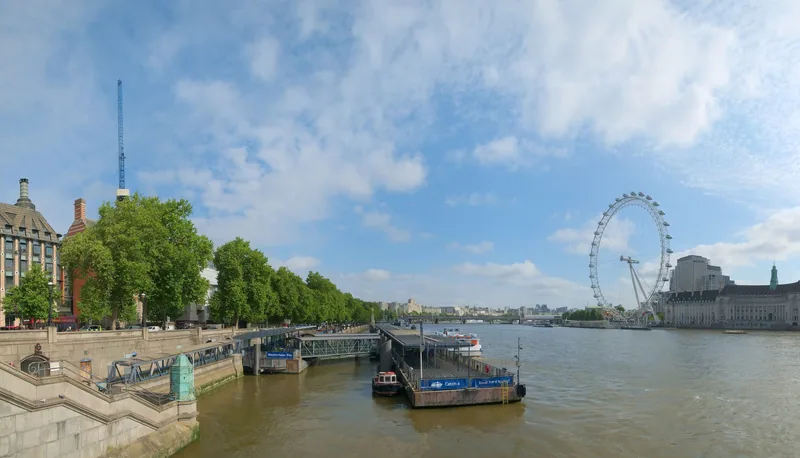
Photo: Domob · CC BY-SA 4.0 · Wikimedia Commons · resized
Fourth day, route one: the museums that open four days a week
This is the route we would take, and it is the one nobody plans on a three-day trip because there is no room for it. London has a layer of tiny museums with short opening weeks. On day four you finally have a morning to spend on one.
Two of them sit at opposite ends of the Windrush and Northern lines and suit different halves of a day. The Brunel Museum at Rotherhithe opens Friday to Monday, 10.30am to 3.30pm, with last entry at 3pm, and charges £10 for an adult with under-16s free. It takes about forty-five minutes, which is the point: it is a morning stop, not a day. Keats House in Hampstead opens Wednesday, Thursday, Friday and Sunday, 11am to 1pm and again from 2pm to 5pm, with an hour shut in the middle of the day that catches people out.
Look at those two lists together and you get the practical answer: Friday and Sunday are the only days both are open. If your fourth day is a Tuesday, neither is available and you should choose a different route.
Free and open on a Monday is a short list. Sir John Soane's Museum is free and needs no booking, but it opens Wednesday to Sunday. On a Monday the free national museums are your reliable option, and the small houses are not.
Pair one small museum with the neighbourhood around it rather than racing across town to a second. Rotherhithe gives you the river path and the Thames beside it; Keats House gives you the whole of Hampstead and the Heath above it.
Fourth day, route two: one neighbourhood, slowly
The three-day itinerary moves you through six or seven areas without stopping in any of them. Route two does the opposite: pick one place, arrive by ten, and stay until the light goes.
What makes this work is choosing somewhere with a market, a park and a pub within walking distance of each other, so you never need the Tube again until you go home. Hampstead, Greenwich, Richmond, Walthamstow and Peckham all pass that test. If you cannot decide between the two obvious ones, our comparison of Greenwich or Richmond for a day out picks a winner.
One warning. A slow neighbourhood day is the worst possible use of a Monday, because the independent shops, galleries and cafés that make these places interesting are the ones that close. Save it for a Thursday, Friday or Saturday.
Fourth day, route three: out of London, and when to refuse
On a four-day trip a day trip costs you a quarter of your London time, so the bar is higher than it would be on a week's visit. Our rule is simple: if the journey is more than about ninety minutes each way, do it on a five-day trip, not a four-day one.
That rule keeps Windsor, Oxford, Cambridge, Brighton, St Albans and Canterbury on the table and quietly removes Bath, York and Stonehenge from a four-day plan. The cheapest day trips from London has the fares, and Windsor in half a day is the compromise worth knowing about: a castle and a river town in a morning, back in London for the evening.
If you are already planning five days, the day trip belongs on day five instead, which is how our five-day itinerary orders it.
Fourth day, route four: go back to the museum you rushed
The most common regret we hear about a three-day trip is ninety minutes in the British Museum. Route four fixes it. You already know the building, the entrance and the bag rules, so a second visit starts at the gallery door rather than at the security queue.
Pick one wing and one hour, then stop. Our guide to how long to spend at the British Museum explains what each amount of time actually buys, and the same logic applies at the V&A and the Natural History Museum.
Better still, do it in the evening. Several national museums stay open one night a week, the rooms are emptier, and the day is then free for something outdoors. Museum late openings lists which museum on which night.
Building the four days in the right order
Order matters more on a short trip than on a long one, for two reasons. The first is jet lag: whatever you plan for the day you land will probably not happen, which is why we treat it separately in your arrival day in London. The second is the weather, which in London is not predictable four days ahead but is usually predictable two days ahead.
So: fix the indoor days, leave one day loose, and decide it the night before. A workable shape for a Thursday arrival looks like this.
- Thursday: land, get to the hotel, one walk and an early night.
- Friday: Westminster and the South Bank, ending with a museum Late.
- Saturday: the Tower and the City, with a market in the morning.
- Sunday: the loose day, chosen on Saturday evening from the four routes above.
Note what that shape avoids. It keeps the Tower off a Monday, when the City is at its busiest with commuters, and it puts the flexible day on the one morning when both small museums in route one are open.
What four days of transport costs
Four days on the Tube and buses is where the daily cap does its work. Pay as you go on the same card or phone and a Zone 1 to 2 day costs no more than £8.90 however many journeys you make; Zones 1 to 6, which you need for Kew, Richmond or Heathrow, caps at £16.30. Four capped days at the Zone 1 to 2 rate is £35.60 for an adult, against £44.70 for a 7 Day Travelcard, so for a four-day trip the cap wins.
Children under 11 travel free with a fare-paying adult, up to four children per adult, which changes the maths for families considerably. Our explanation of how contactless fare caps work covers the traps, including the one where using a phone in the morning and a plastic card in the evening breaks the cap.
One card, one person, all four days. Caps only add up if the same card or device touches in and out every time. An iPhone and an Apple Watch count as two different devices, and two people cannot share one card.
What to cut if the weather is bad
Route two and route three are the outdoor ones, and both collapse in heavy rain. Route one and route four are indoor by design, which is why we suggest keeping at least one of them unspent until the fourth morning. If all four days look wet, our page on how to avoid the crowds matters more than usual, because everyone else will be indoors with you.
Frequently asked questions
Is four days enough for London?
Four days is enough for the main sights plus one thing of your own choosing, which is a genuinely good trip. It is not enough for a day trip and a proper museum day and a neighbourhood, so you will have to pick one of the three. Five days is the point at which a day trip stops costing you something you wanted to do.
Should I use the fourth day for a day trip?
Only if the journey is under about ninety minutes each way. Windsor, Oxford, Cambridge, Brighton and Canterbury all qualify. Bath, York and Stonehenge take too much of a four-day trip, and we would move them to a five-day plan or leave them out.
Which day of the week is worst for a four-day London trip?
Monday, because the small independent museums and many historic houses are closed, and Tuesday if your plan includes Windsor Castle or the Royal Mews, which both shut on Tuesdays and Wednesdays. Free national museums open every day except a handful of dates around Christmas, so a Monday is not lost, just narrower.
Is a 7 Day Travelcard worth buying for four days?
No. Four days of the Zones 1 to 2 daily cap comes to £35.60, and a 7 Day Travelcard for the same zones is £44.70. You would need to be travelling on five separate days before the Travelcard started to make sense, and even then only if every day reached the cap.
Can I add a fifth day later if I like London?
Changing a flight usually costs more than the extra night, so decide before you book rather than after you arrive. If you are hesitating between four and five, the honest test is whether you want a day trip: that is the thing a fifth day buys and a fourth day does not.
Sources
- GOV.UK - UK bank holidays (checked September 2026)
- Legislation.gov.uk - Sunday Trading Act 1994, Schedule 1 (checked September 2026)
- Historic Royal Palaces - Hampton Court Palace opening times (checked September 2026)
- Royal Collection Trust - Windsor Castle visitor information (checked September 2026)
- Sir John Soane's Museum - Your visit (checked September 2026)
- Transport for London - Caps and Travelcard prices (checked September 2026)
- City of London - Visit Keats House (checked September 2026)