
The hour you arrive matters more than the month you visit. At almost every London attraction the first hour after opening and the last two hours before closing are noticeably quieter than the middle of the day, and the difference between a Tuesday in early October and a Saturday in half-term is larger than anything you can do about the place itself.
That gives you three levers, in order of usefulness: the hour, the day of the week, and the week of the year. Most visitors pull only the third one, and it is the weakest.
This page is about the pattern rather than the places. Where an attraction has its own quiet hours, we have put them on that attraction's page: the ship's are on our guide to HMS Belfast, and the market's are on our guide to Borough Market, which is a different problem because the crowd there is the point.
Lever one: the hour, and the two windows that work
The first window is opening time. Most of the big free museums open at 10am, and for the first thirty minutes the galleries are close to empty even in August, because coach groups and families arrive later. The V&A says plainly that it is typically quieter when it opens at 10.00 and again towards closing.
The second window is the last two hours, and it is the better one if you dislike early starts. The Science Museum's own guidance is that the museum is less busy and generally quieter from mid-afternoon on weekdays in term time. At the Tower of London, Historic Royal Palaces says the same thing: afternoons are quieter.
The catch is the last-admission time, which at paid attractions removes much of that second window before you get to it.
| Attraction | Closes | Last admission |
|---|---|---|
| Tower of London | 5.30pm (opens 9am Tue to Sat, 10am Sun and Mon) | 4.30pm; last free Yeoman Warder tour 3.15pm |
| Churchill War Rooms | 6pm | 5pm |
| Natural History Museum | 5.50pm | 5.30pm |
| Science Museum | 6pm | 5.15pm |
| Kew Gardens (September 2026) | 7pm, falling to 3.15pm from 12 November | One hour before closing |
| Tower Bridge | From 9.30am; check the official page, which gives two different closing times | Around an hour before closing |
So at the Tower, "late afternoon" means arriving by about 3pm if you want the Yeoman Warder tour, and by 4.30pm at the absolute latest. Our page on the Tower of London has the full timings, and the estimates of how long a visit takes vary from two hours to three depending on which Historic Royal Palaces page you read.
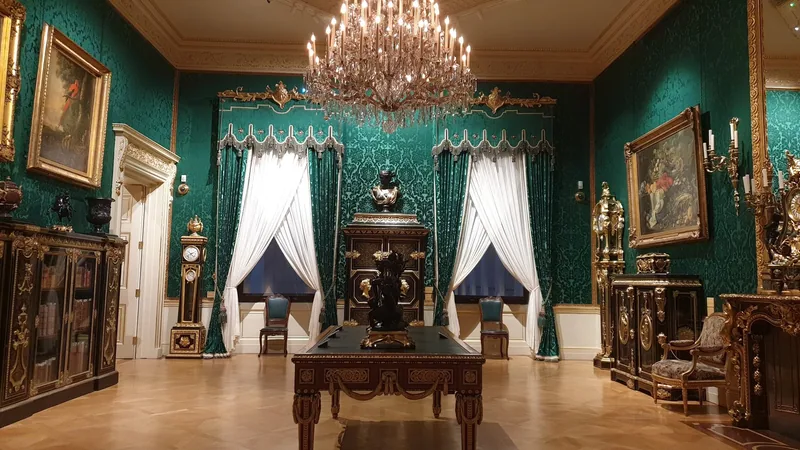
Photo: JRennocks · CC BY-SA 4.0 · Wikimedia Commons · resized
Lever two: the day, and the two-day rule
Weekends are busier than weekdays at nearly every attraction, and bank holiday weekends are busier again. That is obvious. The less obvious part is which weekdays.
Monday and Friday are already quieter than Tuesday to Thursday on the transport network, and the same is roughly true in the museums. Friday has a second advantage: several national museums stay open into the evening, and a Friday at 7pm in a gallery is a different experience from the same gallery at 2pm. Museum late openings lists which museum on which night.
One Friday to avoid: the V&A's Friday Late falls on the last Friday of the month and is deliberately crowded, with music playing. If you want the V&A quiet on a Friday evening, pick any other Friday.
A free ticket is not a queue pass everywhere. At the Natural History Museum a free timed ticket guarantees entry and skips the queue, and staff will fast-track anyone in your group with access requirements without asking for proof. At the British Museum there is no queue-jump ticket at all, so arriving early is the only lever.
Lever three: the week of the year
The worst weeks are the English school holidays, and the worst of those is the late-October half-term, because it falls in a month when the weather has already pushed everybody indoors. Easter and the second half of August are the other two.
There is no single national list of term dates. Each school and each council publishes its own, which is why holiday weeks in different London boroughs do not always line up. London in the school holidays explains the pattern and where to check a specific date.
The quietest weeks for a city break are the second half of January, February, early March, and the first two weeks of November before the Christmas lights go on. Our guide to London in autumn covers that November window, which combines small crowds with genuinely usable weather.
What to do instead at noon
The middle of the day is when the famous places are worst, and the useful response is not to wait but to move ten minutes sideways. Every crowded attraction in London has a near neighbour that almost nobody queues for.
| Instead of | Ten minutes away | Why it works |
|---|---|---|
| British Museum at 1pm | The Petrie Museum or the Grant Museum, both in Bloomsbury | University collections, free, and rarely more than a dozen people in the room |
| Madame Tussauds | The Wallace Collection, a ten-minute walk from Baker Street | Free, grand, and almost empty on a weekday |
| Tower of London at midday | All Hallows by the Tower, or the ruined churchyard at St Dunstan in the East | Both free, both a few minutes from the Tower's ticket queue |
| National Gallery at 2pm | The Courtauld Gallery at Somerset House | A small paid collection with a famous room and no scrum |
| Borough Market on a Saturday | Maltby Street and the Bermondsey markets | Ten minutes east, same food, a fraction of the people |
| The London Eye queue | Sky Garden, or one of the free roof terraces | Free, with a view over the river rather than along it |
Three of those are worth their own visit regardless: the Wallace Collection, the Petrie Museum of Egyptian and Sudanese Archaeology and the Courtauld Gallery. The other three are substitutions rather than equals, and we would not pretend otherwise.
St Dunstan in the East is the one to know about if you are near the Tower and losing patience: a bombed church turned into a small garden, open to the street, five minutes from the ticket office. The free alternatives to a paid viewing platform are set out in the best free viewpoints in London.
The bookings that actually save you time
Booking ahead helps at some places and does nothing at others, and the difference is worth knowing before you spend an evening on it.
- Worth booking: Sky Garden, where free tickets are released every Monday morning three weeks ahead for the whole of that week and go quickly. Walk-ins are possible if there is space, but not after 5pm on weekdays.
- Worth booking: the Science Museum, which is free but now asks visitors to pre-book a free ticket, and the Warner Bros. Studio Tour, where no tickets at all are sold on the day.
- Barely worth it: Tower Bridge, where booking gives no fast-track entry at all, by its own admission.
- Not possible: Sir John Soane's Museum, which is free, takes no advance bookings and has no timed slots. You queue or you come back.
Crowds you cannot outmanoeuvre
Some days are simply full, and the answer is to plan around them rather than through them. Marathon weekend closes a long list of central roads; Remembrance Sunday closes Whitehall; New Year's Eve at the river is ticket-only and has been for years.
The other unavoidable crowd is the commute. Peak fares run Monday to Friday from 6.30am to 9.30am and 4pm to 7pm, and the crowd peaks in a narrower window than the fare does. Half an hour earlier removes a large part of it, which our page on avoiding rush hour quantifies.
If you hit the daily cap, the peak surcharge stops mattering. Once you have reached £8.90 for Zones 1 to 2, a peak journey costs you nothing extra, so on a heavy sightseeing day the only reason to avoid rush hour is the crush.
A day built around the quiet hours
Putting the three levers together produces a shape rather than an itinerary: one big attraction at opening, the middle of the day outdoors or in a small museum, and a second big attraction in its last two hours or on a late evening.
That is roughly the opposite of the order most itineraries use, and it is why we suggest keeping one flexible day in any short trip. Our four-day itinerary is built that way.
Frequently asked questions
What is the quietest time to visit the Tower of London?
The afternoon, on Historic Royal Palaces' own advice, but arrive by about 3pm so you can still join the last free Yeoman Warder tour at 3.15pm. Last admission is 4.30pm and the Tower closes at 5.30pm, so a 4pm arrival leaves you rushing a site that needs two to three hours.
Which month is least crowded in London?
The second half of January and the whole of February are the emptiest, with early March close behind. The first fortnight of November is the best compromise between small crowds and daylight, because the Christmas season has not started and half-term is over.
Do free London museums get as crowded as paid ones?
Yes, and sometimes more so, because there is no ticket price limiting numbers. The Natural History Museum warns of queues at weekends and in school holidays. The difference is that a free museum costs you nothing to leave and come back to, so you can treat a busy hour as a reason to go elsewhere.
Is it better to book timed tickets or turn up early?
Turn up early where entry is free and untimed, because you cannot buy your way past the door. Book where the venue caps numbers, which means Sky Garden, the Science Museum and the Warner Bros. Studio Tour. Booking at Tower Bridge gains you nothing in the queue.
Are London attractions quieter in the rain?
Outdoor ones are, and indoor ones are considerably worse. A wet weekday sends everybody into the same six museums at the same time, so rain is the one condition in which the middle of the day at a big gallery is best avoided altogether.
Sources
- Victoria and Albert Museum - Access at V&A South Kensington, quieter times to visit (checked September 2026)
- Science Museum - Accessibility, quiet times (checked September 2026)
- Historic Royal Palaces - Tower of London opening times (checked September 2026)
- Natural History Museum - Access at South Kensington (checked September 2026)
- Sky Garden - Booking and ticket release (checked September 2026)
- Tower Bridge - Plan your visit (checked September 2026)
- Transport for London - Tube and rail fares and peak times (checked September 2026)
- GOV.UK - School term and holiday dates (checked September 2026)