
A London ghost tour is a guided walk of about ninety minutes through streets where unpleasant things happened, told by someone with a torch. There are two very different products sold under the same name: a history walk that treats hauntings as folklore, and a costumed performance with actors and jump scares. Neither will show you a ghost. Knowing which one you have booked is the whole trick.
Our guides to walking tours in London and Jack the Ripper walks cover the wider field and the single most-booked evening walk in the city. This page is about the ghost genre specifically: how to tell the good from the pantomime before you pay, and what two hours standing still in the City in January is actually like.
What to expect
- Length
- Usually 90 minutes to 2 hours, entirely outdoors
- Price
- Sold in the same band as other guided London walks; check each operator's page
- Group size
- Anything from 12 to 40. Above about 20, a guide needs amplification to be heard
- Season
- Year-round, busiest in the last two weeks of October
- Weather
- They run in the rain. Dress for standing still, not for walking
- Ghosts seen
- None, ever, on any of them
The two genres, and how to tell them apart
The history walk. The guide takes you through plague burials, executions, prison sites, body-snatching and the Victorian fashion for spiritualism, and treats the ghost stories as evidence of what Londoners feared rather than as claims about the afterlife. You come away knowing more about the city. These are usually the best two hours on offer and the ones that suit adults travelling without children.
The performance. A costumed actor, a script, sound effects, sometimes a planted accomplice who leaps out. The history is decoration. Done well it is genuinely good theatre and children love it; done badly it is a man in a cloak shouting on a pavement.
The listing usually tells you which you are buying, if you read it properly. History walks name their guide, mention sources or a qualification, and describe a route. Performances lead with adjectives, promise screams, and describe a character rather than a place. Neither is dishonest. They are just different evenings.
Ask one question before you book: who is the guide? A named guide with a Blue Badge or City of London qualification, or a stated background in history or theatre, is a good sign. A listing that names nobody is selling a format, and the person who turns up could be anyone the operator had free that night.
Four other things worth checking in the listing
- Where it ends. A walk that starts at Monument and ends at Smithfield leaves you a long way from where you left your coat. Good listings say.
- Group size. Twelve people hear everything. Forty people on a windy street hear the back of someone's head. If a cap is not stated, assume there is none.
- Whether headsets are used. For large groups they are the difference between a tour and a crowd.
- Whether it goes inside anything. Most do not. A walk that includes a pub stop or a church interior is worth more in December than one that does not.
Where the good routes go
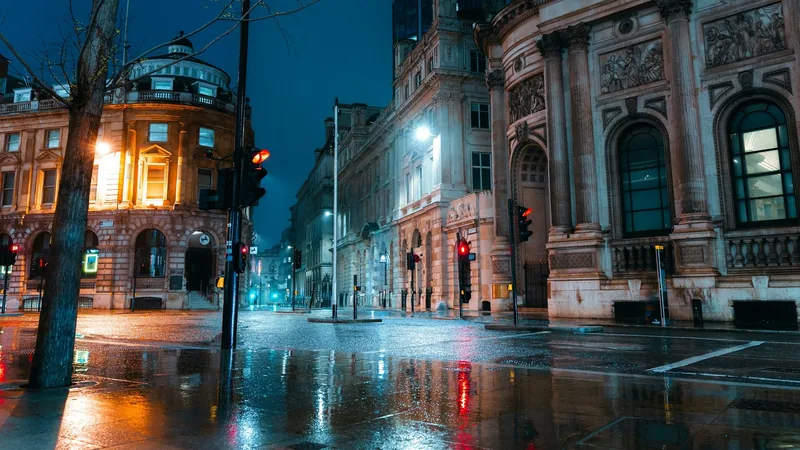
The City of London. The strongest territory, and the emptiest at night. Once the offices empty after about seven, the streets between Bank, Cornhill and St Paul's are genuinely deserted, which does more for the atmosphere than any actor. Smithfield, with its execution history and its night-working meat market, anchors most City routes. Our guide to the City of London explains why it empties so completely.
Covent Garden and Theatreland. Theatre ghosts are the most documented in London because theatre people write things down. Routes here take in the older playhouses and the streets behind them, and they are busy and well lit, which suits nervous visitors and children. See Covent Garden and our guide to West End theatre.
Clerkenwell and Smithfield. Prisons, plague pits, the Fleet river underground, medieval hospital grounds. The best history walks in London use this ground; Clerkenwell has the background.
Westminster and Whitehall. Executions, the old palace, the Abbey precincts. Well lit, flat, and the easiest route for anyone worried about footing.
Greenwich. Naval and maritime stories, the old hospital buildings and a dark park. A long way out for an evening walk unless you are staying nearby; our Greenwich guide has the transport.
The places that do not do ghost tours, and why
Highgate Cemetery is the one people ask about most. It is a working burial ground, it closes in the afternoon, and its published photography rules specifically forbid anything to do with ghosts, vampires or the undead. There are no ghost tours there and there will not be. Anyone selling you one is not taking you inside the cemetery.
The same applies to most churchyards and to the Tower of London, which closes in the late afternoon and runs its own evening events on its own terms rather than licensing outside ghost walks. Treat "access to" claims sceptically: if a tour genuinely enters a historic building at night, the listing will make a great deal of that, because it is expensive to arrange.
Be wary of anything sold as a paranormal investigation. Sessions that hand out electromagnetic meters, "spirit boxes" or dowsing rods are selling equipment theatre, not evidence. That is fine as entertainment if you know what you are buying. It is not fine at the price some of them charge, and it is not what a ghost walk is.
What a cold night in the City is actually like
This is the part most listings leave out. A ghost walk is not a brisk walk. You cover perhaps two kilometres in two hours, which means you spend most of it standing still on a pavement while someone talks. In December that is a different experience from a two-hour walk in daylight.
- Dress one layer warmer than you think. Standing still in a wind tunnel between office blocks is colder than walking. Gloves and a hat matter more than a heavy coat.
- Wear proper shoes. Cobbles, wet leaves, uneven yards.
- Eat first. Almost nothing in the City is open after seven, and the walk will not stop.
- Use the toilet before you start. There are almost no public toilets in the Square Mile after office hours.
- Take a small torch or use your phone. Some of the best corners are unlit.
Our list of what to pack for London covers the general case; for this specific evening, the rule is dress as if you were watching football, not as if you were sightseeing.
Halloween, and why to book early
The last fortnight of October is the peak. Tours that run with eight people in March sell out with forty in late October, prices rise, and extra departures are added at times that suit the operator rather than you. If you want a ghost walk on 30 or 31 October, book weeks ahead; our guide to London in October covers what else is happening.
The contrary advice is worth stating: a ghost walk in February is better. Smaller group, colder and darker streets, a guide who is not on their third departure of the evening, and no queue. If the date is flexible, go in the winter and skip Halloween entirely.
The free version, and the indoor alternative
You can walk the same streets yourself for nothing. The City after eight on a weekday evening is the emptiest central district in London, and a loop from St Paul's through Postman's Park, Smithfield, the lanes around Cornhill and down to the river needs no guide to be atmospheric. What you lose is the stories, which is the entire product, so this works better as a second visit than a first.
If what you actually want is to be frightened indoors and in the warm, the London Dungeon is the honest answer. It costs from £27 booked online or £35 on the day, its recommended age is 12 and over, under-5s are not admitted, and under-16s must be with an adult (September 2026). It is a theme-park attraction rather than a history lesson and it does not pretend otherwise.
For something genuinely unsettling and entirely factual, the Old Operating Theatre Museum shows surgery before anaesthetics, in the garret where it happened. It is open in the daytime and it will stay with you longer than most ghost walks.
Getting home afterwards
Ghost walks end between nine and half past ten, usually somewhere in the City or Westminster. On Friday and Saturday nights the Night Tube runs on the Central, Jubilee, Northern, Piccadilly and Victoria lines plus the Overground's Windrush line, which covers most central endings. On other nights the last trains go around midnight and the night bus network takes over.
Check where your walk finishes against your route home before you book. Ending at Smithfield on a Tuesday with a hotel in Kensington is a longer journey than it looks. Our guide to London at night has the wider picture.
Taking children
The performance-style walks are designed for family audiences and usually state a minimum age. History-led walks are not: they deal with executions, plague burials and child mortality in plain terms, and a bored nine-year-old on a cold pavement is nobody's good evening.
Our rule of thumb would be twelve and over for a history walk, eight and over for a theatrical one, and check the operator's stated age limit rather than guessing. If the goal is an evening the children will remember, an escape room is warm, indoors and better value, and a street art workshop gives them something to take home.
Frequently asked questions
Are London ghost tours scary?
Not in the sense of genuine fear. The theatrical ones aim for a jump or two and succeed with children; the history-led ones are unsettling rather than frightening, because the real material about plague, executions and Victorian burial practice is grim enough without effects.
How long is a typical ghost walk?
Ninety minutes to two hours, covering about two kilometres, almost all of it outdoors. Expect long periods standing still while the guide talks, which is why the cold matters more than the distance.
Do ghost tours run in the rain?
Almost always. Walking tours in London are rarely cancelled for weather, and refunds for rain are unusual. Check each operator's cancellation terms when you book, and bring a hood rather than an umbrella, since you will be standing in groups on narrow pavements.
Can you do a ghost tour of Highgate Cemetery?
No. Highgate Cemetery is a working burial ground that closes in the afternoon, and its own rules forbid photography connected with ghosts, vampires or the undead. Any tour claiming to take you into the cemetery after dark is not doing so.
Which area of London is best for a ghost walk?
The City of London, because it genuinely empties after office hours and has the deepest history of plague, execution and prison sites. Covent Garden and Clerkenwell are the other strong routes, the first for theatre ghosts and the second for Smithfield and the old prisons.
Sources
- The London Dungeon - tickets and prices (checked September 2026)
- The London Dungeon - age guidance and FAQs (checked September 2026)
- Highgate Cemetery - photography and filming rules (checked September 2026)
- Transport for London - Night Tube lines and times (checked September 2026)