
Traditional British food is simple, filling cooking built around meat, fish, potatoes, pastry and puddings: think fish and chips, pie and mash, a Sunday roast, a full English breakfast and sticky toffee pudding. London is one of the best places in Britain to try all of it, from old pie shops and chippies to pubs and grand dining rooms.
British food has a mixed reputation abroad, but much of that comes from bad hotel breakfasts and tired tourist menus. Done well, the classics are honest comfort food: crisp batter, rich gravy, buttery pastry and hot custard. None of it is complicated, and most of it is best eaten somewhere ordinary rather than somewhere expensive.
This guide explains the dishes worth trying, what the strange names mean, and where in London to eat them. We have separate, more detailed guides to the big four: fish and chips, the Sunday roast, the full English breakfast and afternoon tea.
British classics at a glance
- Try first
- Fish and chips, a pub pie, a Sunday roast, a full English, sticky toffee pudding
- Most London dish
- Pie and mash with liquor (parsley sauce), from an old East or South London pie shop
- Cheapest way in
- A chippy, a pie shop, a market stall or a pub lunch
- Book ahead for
- Sunday lunch in popular pubs, afternoon tea in hotels, historic restaurants
- Allergies
- Restaurants must be able to tell you about the 14 regulated allergens; ask staff
- Service charge
- Often added in sit-down restaurants; check the bill
What makes a dish "traditional British"
Most of the dishes on this page grew out of working-class and farmhouse cooking. They were designed to be cheap, warming and filling in a cold, damp climate, and they use what Britain produced: beef and lamb, root vegetables, wheat, dairy and fish from the North Sea. Spices arrived later, through trade and empire, which is why curry is now as British as a pork pie.
A few words cause confusion. Pudding can mean any dessert ("what's for pudding?"), but it is also a steamed savoury dish such as steak and kidney pudding, and black pudding is a sausage made with blood. Chips are thick fried potatoes (what Americans call fries, but fatter), while crisps are what Americans call chips. Gravy is a meat-based sauce, not a white sauce.
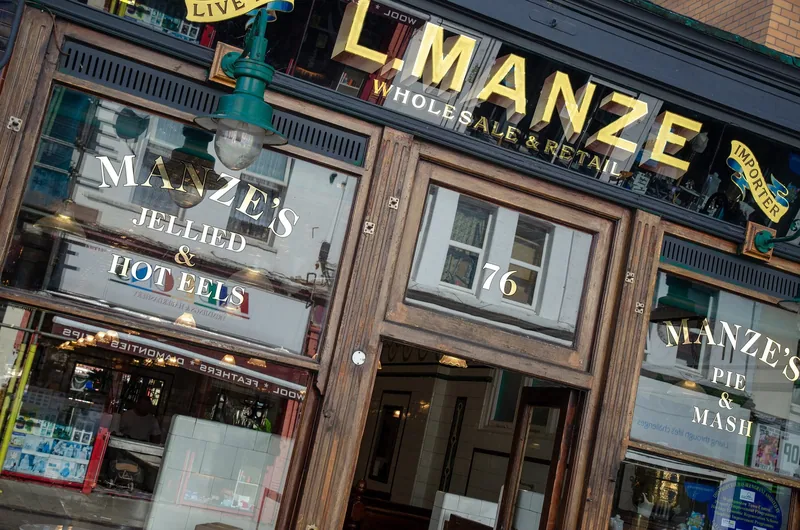
Photo: Alexis Nethercleft · CC BY-SA 4.0 · Wikimedia Commons · resized
Pie and mash: London's own working-class meal
If one dish belongs to London more than anywhere else, it is pie and mash. You get a minced beef pie in a short pastry case, a scoop of smooth mashed potato spread across the plate, and a ladle of "liquor", a thin green parsley sauce. Traditionalists add malt vinegar and a shake of pepper. Many shops also sell eels, either stewed and hot or jellied and cold, which was once the cheapest protein in the East End.
The old pie and mash shops are part of the attraction. Tiled walls, marble tables and wooden benches have changed little in a century. M. Manze on Tower Bridge Road in Bermondsey is one of the best known: according to the family business, the shop was first opened in the late 19th century by Robert Cooke and bought by his son-in-law Michele Manze in 1902, and the company's Peckham shop has been open since 1927. It is a short walk south of Tower Bridge, so you can combine it with a morning on the river. Other traditional pie shops survive in East and South London, and each has its loyal regulars.
Liquor in a pie shop contains no alcohol. In a pie shop the word simply means the parsley sauce. It is mild, a little salty and very green. If you are unsure, ask for it on the side.
Pie and mash is quick and inexpensive, but check the opening times on the shop's own website before you travel. Traditional pie shops often close earlier than restaurants, and some do not open every day.
Pies, puddings and pastry in pubs
Outside the pie shops, the pub is where most visitors meet British savoury pastry. A proper pub pie has pastry on all sides, not just a lid on a bowl of stew, and good kitchens say so on the menu. Common fillings include steak and ale, chicken and mushroom, and fish (usually in a creamy sauce under mashed potato, which makes it a fish pie rather than a pastry pie).
Other pub classics worth knowing:
- Shepherd's pie and cottage pie: minced meat in gravy topped with mashed potato and baked. Shepherd's pie uses lamb, cottage pie uses beef.
- Steak and kidney pudding: beef and kidney in gravy, steamed inside a suet pastry. Heavy, old-fashioned and excellent on a cold day.
- Bangers and mash: sausages with mashed potato and onion gravy. "Bangers" is an informal word for sausages.
- Scotch egg: a boiled egg wrapped in sausage meat, coated in breadcrumbs and fried. The best ones have a soft yolk.
- Ploughman's lunch: a cold plate of cheese (often Cheddar or Stilton), bread, pickle, apple and salad.
- Sausage roll: sausage meat in puff pastry, sold everywhere from bakeries to train stations.
For the setting as much as the food, our guide to London's historic pubs covers the old taverns in the City, Fleet Street and along the river. Pub kitchens vary hugely in quality, so a busy dining room is usually a better sign than old beams.
Roasts, grills and the historic dining rooms
The Sunday roast is Britain's great family meal: roast meat, roast potatoes, vegetables, Yorkshire pudding and gravy. Pubs serve it mainly on Sundays, and it is popular enough that you should book. Beef Wellington (beef fillet wrapped in pastry) and a mixed grill are other meaty classics you will see on more formal menus.
If you want to eat British food in a historic room, Rules in Maiden Lane, Covent Garden, says it was established by Thomas Rule in 1798 and describes itself as London's oldest restaurant. It specialises in classic British cooking in a dining room full of old paintings and cartoons. It is a special-occasion place with prices to match, so check the menu on the Rules website and book ahead. Several of London's grand hotels also serve traditional British menus, and our guide to the city's grand hotels covers them.
Fish and chips and other seaside food
Fish and chips is the one dish almost every visitor tries. The standard is cod or haddock in batter with thick chips, salt and malt vinegar, and often mushy peas. A "chippy" (fish and chip shop) sells it to take away, often with a few tables inside, and some are full sit-down restaurants.
Order at the counter, say whether you want it to eat in or take away, and do not be shy about asking what the fish of the day is. The full guide explains the extras such as curry sauce, pickled onions and battered sausage, and names several long-established places in central London.
Puddings: the sweet end of the meal
British desserts are where the cooking is at its most comforting. Many are served hot with custard, cream or ice cream, and portions are generous.
| Pudding | What it is | Usually served with |
|---|---|---|
| Sticky toffee pudding | Soft date sponge soaked in toffee sauce | Custard, cream or vanilla ice cream |
| Apple or fruit crumble | Stewed fruit under a crunchy topping of butter, flour and sugar | Hot custard |
| Bread and butter pudding | Buttered bread baked in egg custard, often with dried fruit | Cream |
| Spotted dick | Steamed suet sponge with currants (the name makes British children laugh too) | Custard |
| Treacle tart | Pastry filled with golden syrup and breadcrumbs | Clotted cream or ice cream |
| Trifle | Layers of sponge, fruit, jelly, custard and cream | Served cold, on its own |
| Eton mess | Broken meringue, strawberries and whipped cream | Served cold; best in summer |
Sticky toffee pudding is the one to try if you only have room for one. Many pubs make it well, and it appears on menus all year round.
Where to eat British food on a budget
You do not need to spend much. The cheapest good British meals in London come from pie shops, chippies, bakeries selling sausage rolls and pasties, and "caffs" (traditional cafés) serving fry-ups. A pub lunch on a weekday is usually cheaper and quieter than dinner.
Food markets are another easy way in. Borough Market near London Bridge has British cheese, pies, Scotch eggs and baked goods alongside food from all over the world, and our overview of London's food markets covers the rest. Leadenhall Market in the City is a covered Victorian market, and its public areas are open around the clock, although individual shop and pub hours vary. For more ways to eat well for little money, see our guide to cheap eats in London.
Weekday pub lunches beat Friday dinners on price and space. Many pubs serve the same pies and puddings at lunch as in the evening, but the room is calmer and you rarely need a booking. It is also a good way to try a historic pub without the after-work crowd.
Curry, the other national dish
Any honest list of British food has to include curry. South Asian cooking has shaped British eating for generations, and dishes such as chicken tikka masala and the Friday-night takeaway curry are part of everyday life across the country. In London, the best-known curry street is Brick Lane in the East End, although many locals would point you to other neighbourhoods too. Our guide to Brick Lane and London's curry scene explains where to go and what to order.
Allergies, dietary needs and hygiene ratings
Traditional British food relies heavily on wheat (pastry, batter, Yorkshire puddings), dairy, eggs and fish, so it can be hard work for some diets. Under UK food law, restaurants, cafés and takeaways must be able to tell you if a dish contains any of the 14 regulated allergens, which include cereals containing gluten, milk, eggs, fish, crustaceans, molluscs, peanuts, tree nuts, sesame, soya, mustard, celery, lupin and sulphites. The information may be on the menu, or there may be a notice telling you to ask staff. The Food Standards Agency's advice for consumers explains your rights.
If you avoid gluten or meat, read our guides to gluten-free eating in London and vegan and vegetarian London. Many pubs now offer a vegetarian pie or a nut roast, and some chippies have separate fryers for gluten-free batter on certain days.
Most food businesses in England are given a food hygiene rating from 5 (very good) to 0 (urgent improvement required) by the local council. Displaying the sticker is voluntary in England, but you can look up any restaurant on the Food Standards Agency ratings website.
Mention an allergy before you order, not when the plate arrives. Pie shops, chippies and pubs often share fryers, boards and ovens, so a dish without the allergen as an ingredient may still carry a risk. Tell staff clearly what you cannot eat and ask how the food is prepared.
Paying, tipping and ordering
In pubs you normally order food and drinks at the bar and pay there, and nobody expects a tip. In sit-down restaurants a service charge is often added to the bill, commonly around 12.5% in London restaurants; this is common practice, not a legal rule, and a service charge described as discretionary is optional. By law, employers must pass all tips and service charges to staff without deductions. Our guide to tipping in London goes through each situation.
Contactless card payment is accepted almost everywhere, from pie shops to market stalls, although a few small places still prefer cash. If you want to take British flavours home, tea, biscuits, marmalade and shortbread are easy to pack; our list of souvenirs worth buying has more ideas.
Frequently asked questions
What traditional British food should I try in London?
Start with fish and chips, a pub pie, a Sunday roast and a full English breakfast, then add a London speciality such as pie and mash with liquor. For dessert, try sticky toffee pudding or a fruit crumble with hot custard. Afternoon tea is worth doing once if your budget allows.
What is pie and mash with liquor?
It is a traditional London meal of a minced beef pie, mashed potato and a green parsley sauce called liquor. Despite the name, the sauce contains no alcohol. It is served in old pie and mash shops in East and South London, often alongside stewed or jellied eels.
Is British food expensive in London?
It does not have to be. Pie shops, chippies, market stalls, bakeries and weekday pub lunches are among the cheaper ways to eat in central London. Historic restaurants and hotel dining rooms cost much more, and sit-down restaurants often add a service charge, so check the bill before you pay.
Do London restaurants have to tell me about allergens?
Yes. Food businesses must be able to tell you if a dish contains any of the 14 regulated allergens, such as gluten, milk, eggs, nuts or fish. The information may be printed on the menu, or there may be a notice asking you to speak to staff. Always mention your allergy before ordering.
What is the difference between a pudding and a dessert?
In everyday British English "pudding" often just means dessert. It is also the name of some steamed dishes, both sweet (such as sticky toffee pudding) and savoury (such as steak and kidney pudding). Black pudding and Yorkshire pudding are savoury and eaten with a main meal.
Sources
- Food Standards Agency - Food allergy and intolerance advice for consumers (checked September 2026)
- Food Standards Agency - Food Hygiene Rating Scheme (checked September 2026)
- GOV.UK - Distributing tips fairly: statutory code of practice (checked September 2026)
- M. Manze - Pie and mash since 1902 (checked September 2026)
- Rules - London's oldest restaurant (checked September 2026)
- Leadenhall Market - Visit (checked September 2026)