
Tipping in London is modest and mostly optional. In restaurants a service charge, often around 12.5%, is frequently added to the bill, and if it is there you do not need to tip again. In pubs, cafés with counter service and most shops, nobody expects a tip.
Visitors from countries with a strong tipping culture often worry about getting this wrong, and visitors from countries without one worry about seeming rude. In London the stakes are low. Staff are paid at least the legal minimum wage, and tips are a thank-you for good service rather than the main part of anyone's pay.
The one thing that trips people up is the service charge: an amount a restaurant adds to your bill before it reaches you. Once you understand how it works, most of the rest is common sense. This guide explains the law on tips, then goes through restaurants, pubs, taxis, hotels and tours in turn.
Who to tip in London: a quick guide
- Restaurant with table service
- Check the bill; a service charge (often around 12.5%) may already be included
- Pub or bar, ordering at the counter
- No tip expected
- Café or takeaway
- No tip expected; a tip jar or card-machine option is optional
- Black cab
- Not expected; rounding up is a common courtesy
- Hotel staff
- Optional, for porters or special help
- Tour guides
- Optional on paid tours; expected on "pay what you like" walking tours
What the law says about tips and service charges
Since 1 October 2024, the Employment (Allocation of Tips) Act 2023 has required employers to pass on all tips, gratuities and service charges to their workers without deductions, apart from things like income tax. That includes service charges added automatically to the bill and voluntary ones, and the money must be shared out fairly under a statutory code of practice.
For visitors, this means that a tip or service charge you pay by card should reach the staff, not stay with the business. Before the law changed, that was not always guaranteed.
The official code of practice defines a service charge as "an amount added to the customer's bill before it is presented to the customer". It counts as a voluntary service charge when the restaurant makes clear that it is purely discretionary and that there is no obligation to pay it. The details are on GOV.UK's page on distributing tips fairly.
A revised version of the code, linked to the Employment Rights Act 2025, was published in June 2026 and then withdrawn for a new public consultation in July 2026. Until a new version is agreed, employers continue to follow the existing code.
Restaurants: reading the bill before you tip
In a restaurant with table service, look at the menu and the bill before deciding anything. Many London restaurants add a discretionary service charge, often around 12.5%. This is common practice, not a legal rule, and the percentage varies. It is usually printed on the menu and appears as a separate line on the bill, labelled something like "discretionary service charge" or "optional service".
If a service charge is on the bill, you do not need to add anything more. The card machine may still offer a tip option; you can simply skip it. Just make sure you do not pay twice by accident.
If there is no service charge and you were happy with the service, many people leave a tip of a similar size, either on the card machine or in cash. If you were not happy, a discretionary charge is optional: check the menu and the bill, and raise it politely with the manager. For restaurants where the bill is modest, such as our picks for cheap eats in London, a small tip or rounding up is plenty.
Look for the service line before you touch the card machine. Card machines in restaurants can show tip options of their own, even when a service charge is already on the bill. Read the itemised bill first. If "service" appears there, choose "no tip" on the machine and you have paid the normal amount.
Compulsory or voluntary: why it matters
Occasionally a charge is presented as compulsory, for example for large groups. GOV.UK explains that a compulsory charge is treated like wages rather than a tip when it is passed to staff, while a voluntary one is treated like a tip. The practical point for a diner is simpler: if the menu or the bill says the charge is discretionary or optional, it is up to you whether you pay it. If you are unsure, ask before you order.
Pubs and bars: no tip at the counter
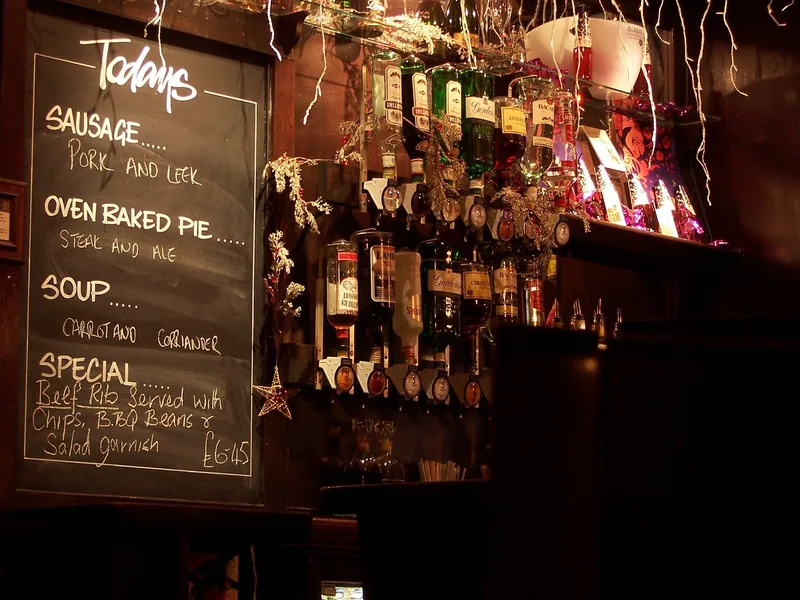
In a traditional pub you order and pay at the bar, and tipping is not expected. Nobody will think you rude for simply paying for your drinks. Some regulars say "and one for yourself" when buying a round, offering to pay for a drink for the bar staff; the staff may take the price of a drink as a small tip instead. This is a friendly gesture, not an obligation, and many locals never do it.
If a pub serves food at the table, it works like a restaurant, so check the bill for a service charge. Cocktail bars with table service may add a service charge too. Our guide to pub etiquette explains ordering at the bar, rounds and the other unwritten rules, and our list of historic London pubs is a good place to practise.
Cafés, coffee shops and takeaways
At a café or coffee shop where you order at the counter, no tip is expected. You will often see a tip jar, or the card machine may suggest a tip. Both are entirely optional. Leaving your coins in the jar is a kind gesture if the staff have been helpful, but you do not need to feel guilty about pressing "no tip".
Takeaway food, market stalls and fast-food restaurants work the same way. If you are exploring the stalls in one of London's food markets, you pay the price on the board and that is it.
Afternoon tea is usually served at the table in hotels and tea rooms, so treat it like a restaurant meal and check the bill. Our guide to afternoon tea in London covers where to go and what it costs.
Taxis, minicabs and ride-hailing apps
Tipping a black cab driver is not required. Many passengers round the fare up to the next pound or add a small amount, especially if the driver has helped with luggage, but the metered fare is all you owe. Every licensed black cab must accept contactless card payment, and TfL does not allow a surcharge for paying by card.
For app-based services and pre-booked minicabs, you pay the fare through the app or agree it in advance. Some apps offer an in-app tip after the journey, which is optional. Our comparison of black cabs, minicabs and Uber explains fares and how to book safely.
Hotels: porters, housekeeping and concierges
Hotel tipping is less common in London than in some other countries, and it is always optional. A few rules of thumb from our editorial team:
- Porters: a pound or two per bag is a kind gesture if someone carries your luggage to the room.
- Housekeeping: not expected, though some guests leave a small amount at the end of a longer stay.
- Concierge: nothing for directions or a restaurant tip; something if they have gone to real trouble, such as securing hard-to-find theatre tickets.
- Room service and hotel restaurants: check the bill, as a service charge is often included.
In the most formal hotels you may notice guests tipping more often. Our guide to London's grand hotels gives a feel for these places. In budget hotels and hostels, tipping is rare.
Tour guides, drivers and free walking tours
On a paid guided tour, including coach day trips and bus tours, a tip for the guide is optional. If the guide was knowledgeable and friendly, many people give a few pounds at the end. There is no fixed amount.
"Free" or "pay what you like" walking tours are different. They cost nothing to book, and the guides typically rely on what guests give at the end. On these tours, paying something is expected, and it is fair to give roughly what a paid tour of similar length would cost. Our guide to the best walking tours in London compares the options.
Keep a few pound coins for the end of a walking tour. Most guides can take card payments or offer a payment link, but not all do. A few £1 and £2 coins, or a £5 or £10 note, make it easy to thank a guide without anyone waiting for a phone to connect.
Hairdressers, spas and other services
At hairdressers, barbers and beauty salons, a small tip is appreciated but not expected. Some people round up the bill or leave around the same amount they would add in a restaurant. Spa and treatment bills sometimes include a service charge, so read them first.
Theatre staff, museum attendants and shop assistants are not tipped. Our guide to British etiquette for visitors covers the unwritten rules in these everyday situations.
Cash or card: how to leave a tip
You can tip by card almost everywhere. In restaurants, the card machine usually offers a tip screen, or you can ask the staff to add a specific amount before you pay. Since October 2024, employers must pass card tips to workers in full, apart from tax, so a card tip is as good as cash for the person who served you.
Cash is still welcome, particularly for porters, guides and drivers, and it is handy when a tip screen is not offered. For the notes and coins you will use, and how to avoid high card fees on a foreign card, see our guide to money in London. If you are working out a daily budget, our breakdown of London trip costs includes meals with service.
Frequently asked questions
Do you tip in London restaurants?
Often it is already done for you. Many London restaurants add a discretionary service charge, often around 12.5%, to the bill. If it is there, you do not need to tip again. If there is no service charge and you enjoyed the service, leaving a tip is a kind gesture but not required.
Is the service charge compulsory in London?
A discretionary or optional service charge is exactly that: optional. Check the menu and the bill for how the charge is described. If you have a problem with the service, raise it politely with the manager before you pay.
Do you tip at pubs in London?
No, not when you order at the bar. Tipping bar staff is not expected in British pubs. Some customers offer to buy the staff a drink as a gesture, but most people just pay for their own drinks and leave it at that.
Should I tip a London taxi driver?
It is not required. Many passengers round up the fare or add a little extra if the driver helped with luggage, but the metered fare is all you owe. All black cabs must take contactless payment with no card surcharge.
Do tips go to the staff in the UK?
Since 1 October 2024, the law requires employers to pass on all tips, gratuities and service charges to workers without deductions, apart from tax. This applies to card tips as well as cash, and the money must be shared out fairly.
Sources
- GOV.UK - Distributing tips fairly: statutory code of practice (checked September 2026)
- GOV.UK - Tips at work (checked September 2026)
- GOV.UK - Distributing tips fairly: revised statutory code of practice (checked September 2026)
- Transport for London - Taxi fares (checked September 2026)