
The Bermondsey Beer Mile is a run of brewery taprooms in the railway arches between London Bridge and South Bermondsey. It is not an organised route and there is no ticket: you simply walk from arch to arch. Saturday is the only day on which nearly everything is open, and several taprooms are shut on Mondays and Tuesdays altogether.
London had about a dozen breweries in 2005 and has well over a hundred now. Most of them are small, most sell beer from the building where it is made, and a lot of them are in railway arches, because arches are cheap, tall and already plumbed for drains.
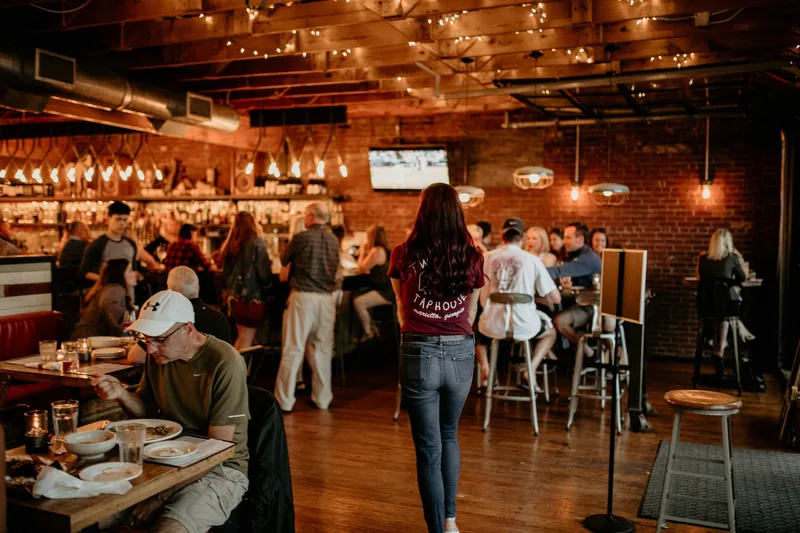
A taproom is not a pub. It usually has bare walls, benches, a short list of the brewery's own beers, and no kitchen. Food comes from a van outside or from the market up the road. If you want carpets, hand pumps and a fireplace, our guide to London's historic pubs is the right page.
The Bermondsey arches at a glance
- Where
- Druid Street, Enid Street, Stanworth Street and Dockley Road, SE1 and SE16
- Best day
- Saturday, from late morning. Friday afternoon and evening is the quieter alternative
- Worst day
- Monday and Tuesday: several taprooms do not open at all
- Walking distance end to end
- About 1.5 km, all flat, on pavements beside a viaduct
- Nearest stations
- Bermondsey (Jubilee line), London Bridge, South Bermondsey
- Typical price
- Taprooms sell in thirds, halves and two-thirds of a pint as well as pints
- Food
- Street-food vans at weekends; Maltby Street and Druid Street markets nearby
The Bermondsey arches, and where else to go
The densest run of taprooms in London sits under the railway arches between London Bridge and South Bermondsey, and most of them open on a Saturday and on very little else. Which ones open when, the order to walk them in and what an afternoon actually costs are all on our guide to the Bermondsey Beer Mile. This page is about the rest of the city: what craft beer means here, what a tour gets you, and the breweries worth a journey in other directions.
The breweries that are no longer there
Half the guides to the Beer Mile online are out of date, and following one will send you to closed shutters. Two examples worth knowing before you plan a route.
Partizan Brewing, for years one of the names people came for, now states on its own website that it was "born in London but now based in Leicestershire". Fourpure, which had one of the largest taprooms on the route, has gone from the arches; its old web address is now owned by an unrelated gambling site, which is a useful reminder that a live domain does not mean a live brewery.
The practical rule is simple: before you travel, open each taproom's own website, not a list, and look for opening hours dated this year. If the site has no hours at all, assume it is closed.
Thirds, halves and why you cannot order 400 millilitres
Draught beer in England and Wales may legally be sold only in a third of a pint, a half pint, two-thirds of a pint or multiples of a half pint. Two-thirds, often called a schooner, was added to the list in 2011 specifically because of stronger craft beers.
That is why a taproom board lists "1/3, 2/3, pint" and not a range of metric sizes, and it is genuinely useful. A modern IPA can be 6.5 or 7 per cent alcohol, which is nearly twice the strength of ordinary lager. Four pints of that is a great deal more alcohol than four pints of a session bitter.
Order thirds if you want to taste a lot; order a two-thirds if you have found something you like. Most taprooms also sell "takeaway": cans, bottles or a refillable container, so you can carry something back rather than drinking it there.
Alcohol strength on the Beer Mile is not the strength you are used to. Taprooms pour beers between about 3 per cent and 11 per cent, and the strong ones taste sweet rather than boozy. Check the ABV on the board for each beer, not just the first one, and remember you cannot drink alcohol or carry an open container on the Tube, buses or trains. Our page on alcohol laws in London covers that.
Brewery tours: what you actually get
Taprooms and tours are two different things, and most Bermondsey arches no longer have room to run a tour. Anspach & Hobday is a good illustration: the Druid Street arch is the taproom, but the brewery tours run at its Croydon site, Unit 11 Valley Point Industrial Estate on Beddington Farm Road, a short walk from Therapia Lane tram stop.
Those tours run about once a month, take roughly 90 minutes, start at 12:00 with arrival by 11:45, and finish with a tasting of four beers in the brewery's own taproom. The brewery operates a Challenge 25 policy, so bring photo identification if you look under 25, and children are not admitted to the brewery at all. Refunds are given up to 48 hours beforehand.
That shape is typical: once or twice a month, small groups, adults only, booked well ahead, somewhere on the edge of London rather than in the centre. If you want a walking tour with a guide instead, our guide to food tours in London covers the operators.
Craft beer away from Bermondsey
Bermondsey gets the attention, but it is not the only cluster, and the others are less crowded.
- Hackney Wick and London Fields. Breweries in canal-side warehouses, with more space and more food. See Hackney and London Fields.
- Walthamstow. A short, walkable set of taprooms in the Blackhorse Lane industrial area, at the northern end of the Victoria line. See Walthamstow.
- Tottenham and Enfield. Larger breweries with proper visitor centres, further out but better organised for tours.
- Croydon and the south. Where several inner-London breweries moved when arch rents rose.
Getting to all of these means the Underground or the Overground rather than walking, so check the last train before you settle in.
Cask, keg and what to ask for
You will meet two serving systems. Cask beer, the traditional British method, is unpressurised, served cool rather than cold, and pulled with a hand pump. Keg beer, which most craft breweries use, is carbonated, colder and comes from a tap on the wall.
Neither is better. Cask suits bitters, milds and English pale ales; keg suits lagers, hazy IPAs and stouts. Most taprooms are keg-only; most historic pubs have both.
If you are unsure what to order, ask for a taste. Taproom staff will normally pour a small sample of anything on the board, and unlike a busy pub they have time to talk about it. Our page on pub etiquette for visitors explains ordering, rounds and paying, which work differently here from most countries.
If you are not drinking alcohol, most taprooms now keep one or two alcohol-free beers, and some brew their own; see drinking without alcohol in London. And if spirits interest you more than beer, several London distilleries run visits, covered in our guide to gin distilleries and tours.
Frequently asked questions
What day should I walk the Bermondsey Beer Mile?
Saturday, starting late morning. It is the only day on which almost every taproom opens, and the street-food traders are there too. Friday afternoon and evening is the calmer alternative. Avoid Monday and Tuesday, when several taprooms do not open at all.
Is the Bermondsey Beer Mile free to walk?
Yes. There is no ticket, no organiser and no fixed route. You pay only for what you drink. Organised guided versions exist and charge for the guide, but nothing stops you doing it yourself with a map and each brewery's opening hours.
How long is the Bermondsey Beer Mile?
About 1.5 km from end to end along Druid Street, Enid Street, Stanworth Street and Dockley Road, all flat. Walking it takes twenty minutes. Doing it properly, with stops, takes an afternoon.
Can I take children to a London brewery taproom?
To many taprooms, yes, particularly early in the day at weekends, and several have outdoor tables. Brewery tours are a different matter: they take place in working production areas and are normally restricted to adults. Check each venue's policy in advance.
Why do London taprooms serve two-thirds of a pint?
Because the law allows it. Draught beer may be sold in a third of a pint, a half pint, two-thirds of a pint or multiples of a half pint, and two-thirds was added in 2011. It suits stronger craft beers, where a full pint of a 7 per cent IPA is a lot of alcohol.
Sources
- Anspach & Hobday - The Arch House opening times (checked September 2026)
- Anspach & Hobday - brewery tours, Croydon (checked September 2026)
- Southwark Brewing Company - opening hours (checked September 2026)
- Bianca Road Brew Co - taproom hours (checked September 2026)
- The Kernel Brewery - shop opening hours (checked September 2026)
- Partizan Brewing - now based in Leicestershire (checked September 2026)
- The Weights and Measures (Intoxicating Liquor) Order 1988, article 2 (checked September 2026)
- Specified Quantities Order 2011 - addition of two-thirds of a pint (checked September 2026)