
Pie and mash is a minced beef pie, a scoop of mashed potato and a ladle of green parsley sauce called liquor, eaten in a tiled shop with wooden benches for a few pounds. It is London's own working-class dish, it is nearly extinct, and the handful of eel and pie houses still trading are worth visiting before there are none left.
The shops began in the nineteenth century, when eels were caught in the Thames and sold cheaply in the East End, and pies were a way of using meat that would not stretch to a roast. By the 1950s there were scores of them. Today a couple of dozen survive across London and the south-east, and several have closed in the past few years.
Our survey of British dishes worth trying introduces it alongside the rest of the national repertoire. This page is about the shops themselves: which are still open, what liquor actually is, how to order, and whether the eels are worth trying.
Pie and mash at a glance
- What you order
- One pie, one or two scoops of mash, liquor. Say "one and one" or "two and two"
- Liquor
- Parsley sauce, pale green and thin, once made using the water in which eels had been stewed. Most shops now leave that out
- Eels
- Stewed hot, or jellied cold in their own set stock. Sold separately from the pie
- The vinegar
- Chilli vinegar on the table. A few drops on the liquor is how Londoners eat it
- Hours
- Most shops open late morning and close in the afternoon. Several shut on Sundays
- Price
- Among the cheapest cooked meals in London. Cash is still welcome in some shops
What liquor is, and what it is not
Liquor is not gravy and contains no alcohol, despite the name. Parsley, flour and water make a pale green sauce that is poured rather than spooned, and in the original recipe the water came from the eel pot, which gave it a faint savoury depth. Most surviving shops make it without eel stock now, which makes it vegetarian in some places and not in others, so ask if it matters.
It is meant to be poured generously over both the pie and the mash, not served on the side. The mash is applied to the plate with a knife in a characteristic smear rather than a scoop, which is a house style rather than carelessness. The chilli vinegar on the table is the third element and the one visitors skip: a few drops cut through the whole plate.
Order in numbers, not sentences. The traditional way to order is by counting pies and scoops of mash: "one and one" is one pie and one mash, "two and one" is two pies and one mash. Nobody will mind if you order in full sentences, but the shorthand is on the price board and it is why the board looks cryptic.
The eels: hot, cold, and whether to bother
Stewed eels are served hot in their cooking liquid, in pieces on the bone, with liquor. The flesh is firm, white and mild, closer to a meaty white fish than to anything oily, and most people who try it are surprised by how unremarkable it tastes. The bones are the main obstacle: eel has a central spine with fine bones radiating from it, and you eat around it.
Jellied eels are the same fish, boiled with spices and vinegar, then cooled so that the natural gelatin in the stock sets around them. They are eaten cold, out of a bowl, with vinegar and pepper. The taste is mild. The texture is the point of disagreement, and it is not for everyone.
Order a small bowl of jellied eels to share rather than a full portion each. If you like them you can order more; if you do not, you have lost very little. Vegetarians and anyone uneasy about the eels can eat pie, mash and liquor and ignore that half of the counter entirely.
The European eel is critically endangered. The Environment Agency reports that numbers returning to Europe's rivers have fallen by about 95 per cent since the 1980s, and fishing for eels in England and Wales is regulated and requires permission. If that matters to you, eat the pie and skip the eels; the shops sell far more pies than eels in any case, and no eel and pie house depends on your order.
Which shops are still open
This is the part that changes, so treat any list as a starting point and check before you travel. Several long-running shops have closed in recent years, and a website that has not been updated is not evidence that a shop is trading.
| Shop | Where | Nearest station |
|---|---|---|
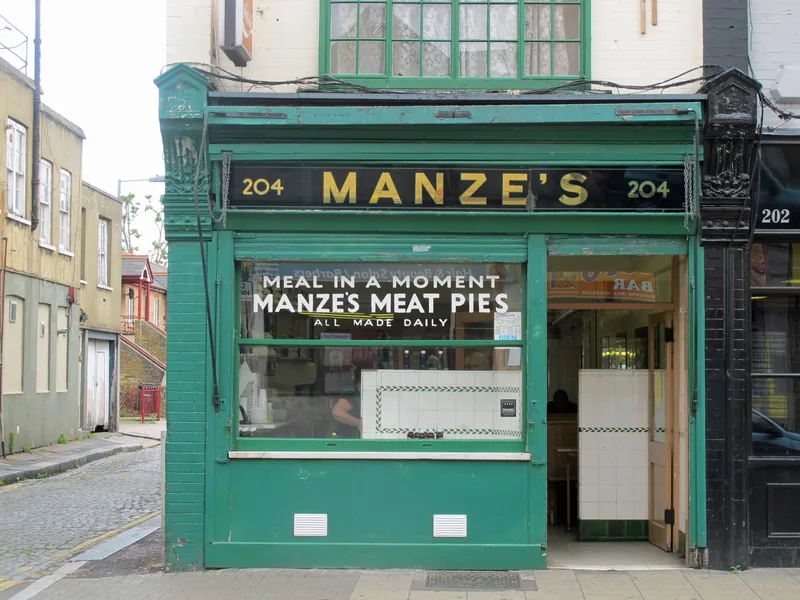
| M. Manze | 87 Tower Bridge Road, SE1 4TW, trading since 1902; also 105 Peckham High Street, SE15 5RS | Borough or London Bridge; Peckham Rye |
| Goddards at Greenwich | 22 King William Walk, Greenwich, SE10 9HU | Cutty Sark DLR, Greenwich |
| Arments | Walworth, south London | Elephant & Castle |
| Others | A small number survive in Hoxton, Bethnal Green, Bow and out into Essex and Kent | Varies |
The Tower Bridge Road shop is the easiest for a visitor. Walk south for a few minutes from Tower Bridge, through Bermondsey, and you reach a room with the original tiling, marble counters and wooden benches. Goddards is the easiest to combine with a day out, since it is a minute from Greenwich Market and the Cutty Sark.
Timing: the single thing that goes wrong
Eel and pie houses are not restaurants and do not keep restaurant hours. They open in the late morning, serve through lunch, and close in the middle of the afternoon when the pies run out. Several close on Sundays, some close on Mondays, and evening opening is rare and usually limited to one or two nights.
Plan to eat at around 12:30. Turning up at 17:00 expecting dinner is the commonest way to miss out, and a shop that lists an evening service on its website may only do it on particular days. Check the individual shop's own page for the week you are visiting.
Our page on Sundays, bank holidays and British opening hours explains the wider pattern of early closing, which catches out a great many visitors.
What it costs, and why that matters
A plate of pie, mash and liquor is one of the cheapest cooked meals available in central London, and that is not incidental: the dish exists because it was affordable. A family of four can eat in an eel and pie house for less than the price of two main courses in a pub, and that puts it high on the list in our page about eating cheaply in London.
Payment is by card almost everywhere now, though a few shops still prefer cash and some have a minimum for cards. For contactless limits and foreign card charges, see our page about paying for things in London. There is no table service and no service charge, so tipping does not arise.
What else is on the counter
Most shops now sell a chicken pie and a vegetarian or vegan pie alongside the beef, which would have been unthinkable thirty years ago and is the main reason some of them are still trading. Gravy is offered as an alternative to liquor in several shops, and purists have opinions about it.
Some sell pies to take away frozen, and the two shops with a mail-order business will send them across the country. That is a better souvenir than most things on the souvenir shelves, if you are going home to a kitchen.
For the other cheap traditional plate, see what we have written about a good fried fish supper, which is the dish most visitors try instead and which has a similar problem with tourist pricing in the centre. For the pub version of a pie, with a proper pastry lid and a pint, see historic pubs in London.
A short defence of the dish
Pie and mash is not going to appear on anybody's list of the world's great meals, and that is not the point of it. It is a surviving piece of working London, served in rooms that have not changed in a century, at prices set by a different economy, to customers who have often been coming for fifty years. The shops close when the families running them retire, and each closure is final.
If you want one meal in London that is not aimed at you, this is it. Go at lunchtime, order one and one, put vinegar on the liquor, and look at the tiles.
Our guides to Whitechapel and the East End and Hackney cover the areas where most of these shops used to be, and our salt beef and Jewish London page covers the other East End food tradition that is down to its last few survivors.
Frequently asked questions
What is liquor in pie and mash?
A thin green parsley sauce, thickened with flour, poured over the pie and the mash. It contains no alcohol despite the name. Traditionally it was made with the water in which eels had been stewed, but most surviving shops now make it without, so it is sometimes vegetarian and sometimes not. Ask if it matters.
Where can I eat pie and mash in London?
M. Manze has traded at 87 Tower Bridge Road since 1902 and also has a shop on Peckham High Street. Goddards at Greenwich is on King William Walk beside the market, and Arments is in Walworth. A small number of other shops survive in east London and beyond, but several have closed recently, so check before you travel.
What do jellied eels taste like?
Mild and faintly vinegary rather than fishy. The eel is boiled with spices and cooled, and the stock sets into a savoury jelly around it. The flavour surprises very few people; the cold, soft texture is what divides opinion. Order a small bowl to share before committing to a full portion.
Are the eel and pie houses open in the evening?
Mostly not. These are lunchtime shops that open in the late morning and close during the afternoon, often when the pies run out. Some close on Sundays or Mondays, and evening opening, where it exists at all, is usually limited to one or two nights a week. Aim for about 12:30.
Is it wrong to eat eels given their conservation status?
The European eel is classed as critically endangered, and the Environment Agency reports a fall of around 95 per cent in numbers returning to Europe's rivers since the 1980s. Fishing for eels in England and Wales is regulated and requires permission. Many visitors choose to order pie, mash and liquor and leave the eels alone.
Sources
- M. Manze - pie and mash, 87 Tower Bridge Road and Peckham High Street (checked September 2026)
- Goddards at Greenwich - 22 King William Walk, SE10 9HU (checked September 2026)
- Arments Pie & Mash, Walworth (checked September 2026)
- Environment Agency via GOV.UK - European eel decline and conservation status (checked September 2026)
- The Eels (England and Wales) Regulations 2009 (checked September 2026)
- GOV.UK - Eel and elver: apply for permission to catch by net or trap (checked September 2026)