
A wine bar in London is somewhere you can order a single glass of something good without buying a bottle, and usually eat something small with it. The best of them fall into three groups: the old cellars, the small-plate restaurants that are really wine bars, and the self-pour rooms where a machine dispenses measures and nobody hovers.
The city has drunk wine in cellars since the Port of London handled the trade, and several of the oldest bars are literally in the vaults under the streets. What changed in the last fifteen years is the middle category: small rooms where the wine list is longer than the food menu, most of the list is available by the glass, and the food exists to make the wine taste better.
The practical question for a visitor is how to find a good glass without a sommelier standing over the table. That is largely about knowing which kind of place you have walked into. If you want a view with the drink instead, our guide to rooftop bars covers those.
Wine by the glass in London
- Standard measures
- 125ml, 175ml and 250ml. A 125ml glass must be available and the bar must tell you so
- Typical price, 175ml
- About £8–£12 in a neighbourhood bar; £14–£20 in the West End and Mayfair (September 2026)
- Coravin and preservation pours
- Lets bars sell a glass from an expensive bottle; expect £15–£40 a glass
- Self-pour
- Vagabond offers a splash, a half glass or a full glass from more than 100 wines
- Corkage
- Some restaurants let you bring a bottle: Chez Bruce charges £25 at lunch and £50 at dinner per 75cl bottle
- Service charge
- Usually about 12.5 per cent, discretionary
The measure you are allowed to ask for
Every licensed premises in England and Wales must make a 125ml glass of still wine available, along with a half pint of beer and a 25ml or 35ml measure of gin, rum, vodka or whisky. Those measures have to be shown on a menu or price list, and if you order without specifying a size, staff must make you aware that the smaller ones exist.
In practice many bars quietly default to 175ml or 250ml, so say the number. A 125ml glass of a £70 bottle is often better value and better drinking than a 250ml glass of a £30 one, and asking for it is entirely normal.
The same rule is why a wine flight works: three 125ml glasses is half a bottle, which is a sensible amount for one person over an evening. Most serious wine bars will build you a flight on request even if the menu does not list one.
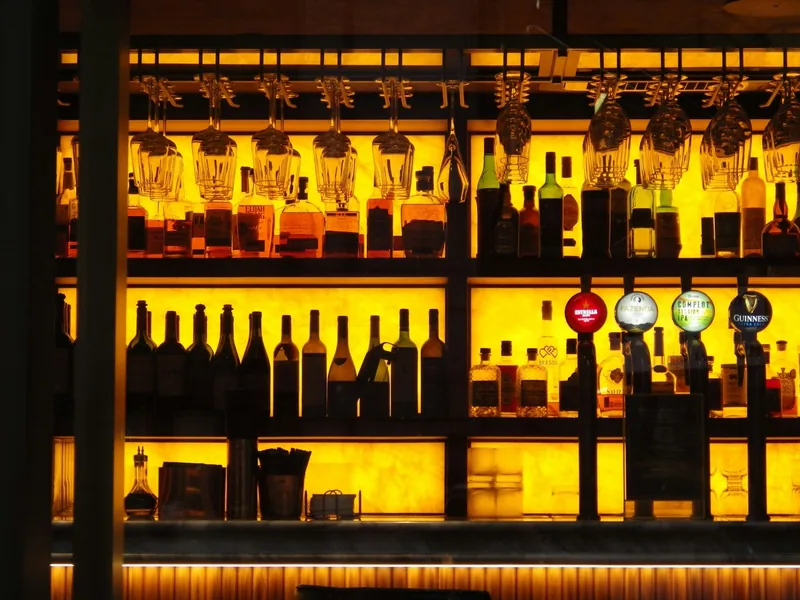
Gordon's: the old cellar
Gordon's Wine Bar at 47 Villiers Street, between Charing Cross and Embankment, has been trading for more than 135 years and says its motto has been "first come, first served" since 1890. The main room is a low, candlelit vaulted cellar with old barrels of sherry and port, newspaper cuttings stuck to the walls, and no electric light to speak of.
It does not take reservations for the cellar, though the covered outdoor area known as the Cage can now be booked. The way in is to arrive early, speak to a member of staff when you get there and wait. At six o'clock on a Friday the queue reaches the street; at five on a Tuesday you will walk in.
The food is deliberately simple: more than fifteen cheeses, charcuterie, sharing boards, with vegetarian and vegan options. It also runs guided wine tastings, which are bookable. The bar is two minutes from Charing Cross and four from Covent Garden, which makes it the obvious pre-theatre stop; our guide to West End theatre explains curtain times.
Cellar bars are hot, dark and hard to leave. Gordon's vaults have no windows and very little ventilation, and in summer the temperature at the back is noticeably higher than outside. If you are claustrophobic or travelling with someone who is, take a table in the covered outdoor area instead; the wine list is the same.
Small-plate wine bars: the modern London form
The second group looks like a restaurant and behaves like a bar. Noble Rot, which began as a wine magazine and now runs rooms in Bloomsbury, Soho and Mayfair, is the best-known example: a long list with a serious Burgundy and Loire section, food that changes constantly, and the option of sitting at the bar and eating one dish.
Sager + Wilde in east London works the same way, opening at 17:00 on weekdays and 14:00 at weekends and running to 01:00 on Friday and Saturday. St John keeps a wine bar at 6 Neal's Yard in Seven Dials, which is an unusually quiet corner given where it is.
Two rules make these places easy. First, you can almost always sit at the counter without booking, even when the tables are full; ask rather than assume. Second, the person pouring knows the list, and telling them what you usually drink and what you want to spend will get you something better than picking a familiar grape. The original Noble Rot is on Lamb's Conduit Street in Bloomsbury, a street worth walking for its own sake.
Self-pour: the machine on the wall
Vagabond built its bars around dispensing machines: you take a card, load it, and pour your own measures from more than a hundred bottles, choosing a splash, a half glass or a full glass. It also makes wine in London at its own urban winery, and it runs tastings and a pre-theatre menu.
The format suits three kinds of visitor particularly well. People who want to taste widely rather than drink a lot. Groups who cannot agree. And anyone who finds the ritual of a sommelier uncomfortable, because there is nobody watching what you choose.
The trade-off is that you are on your own: the machines tell you the price per measure but not much else, and the staff are there if you ask. Start with a splash of three wines rather than a full glass of one.
What to eat with it
London wine bars have converged on a short list of things that work with wine and need no kitchen brigade: cheese, cured meat, tinned fish, olives, bread and butter, and one or two hot dishes.
Cheese is where Britain is genuinely strong, and a good wine bar will have territorial British cheeses alongside French ones. Ask for them in order from mild to strong, and order fewer than you think: five cheeses for two people is plenty.
Oysters have become a standard wine-bar snack, and a dozen with a glass of Muscadet or Chablis is a whole small meal; our guide to seafood and oysters covers where they come from and what they cost. Italian wine bars work slightly differently, with an emphasis on cured meat and regional bottles, and our page on Italian food in London covers those.
Where the wine bars are
| Area | What you find | Typical price for a 175ml glass |
|---|---|---|
| Charing Cross and the Strand | Old cellars, no bookings, pre-theatre crowds | £9–£13 |
| Bloomsbury and Clerkenwell | Small-plate wine bars with serious lists | £10–£16 |
| Mayfair and St James's | Merchant-owned bars and hotel wine rooms | £14–£25 |
| Hackney, Dalston and Bethnal Green | Natural wine, later hours, no dress code | £8–£12 |
| Borough and Bermondsey | Arch bars and importers' tasting rooms | £8–£14 |
The most expensive glasses in London are in Mayfair and St James's, where several of the old wine merchants have bars attached to the shop. The cheapest serious drinking is in east London and around Islington, where natural wine bars open late and charge closer to shop prices.
Natural wine, and whether you will like it
A large share of new London wine bars specialise in what is loosely called natural wine: made with minimal intervention, little or no added sulphur, often unfiltered and sometimes cloudy. There is no legal definition of the term in Britain, which is worth knowing before you pay for it.
Some of it is superb and some of it tastes like cider. If you have not tried it, ask for a small pour of something described as "clean" or "classic" before committing to a bottle, and say if you dislike sour or funky flavours. A good bar will steer you; a bad one will tell you that you need to be more adventurous, which is a reason to drink elsewhere.
Conventional wine bars are not hard to find. The clue is the list: if every bottle is from a producer you have never heard of and the descriptions are about the grower rather than the grape, you are in a natural wine bar.
Ask the price of the by-the-glass pours before ordering a round in Mayfair. Bars that use preservation systems can sell single glasses from very expensive bottles, and those glasses often sit on the same list as the £12 ones without much visual difference. A round of four can reach three figures without anyone intending it.
Paying, tipping and the practical bits
A discretionary service charge of about 12.5 per cent is normally added to table bills. Paying it is your choice, and the employer is no longer allowed to keep any of it; see our page on tipping in London.
Most London wine bars are cashless or card-preferred, and contactless is universal. Our guide to money in London explains cards, caps and what to expect from a foreign bank.
On the law: 18 is the age at which you may buy a drink yourself, and the one exception below it lets an accompanying adult buy a 16- or 17-year-old wine, beer or cider to have alongside a meal at a table. Our page on alcohol laws in London has the detail. If you are not drinking, the better wine bars now keep two or three alcohol-free bottles rather than one dusty one; see drinking without alcohol in London. And if you would rather have something mixed, our guide to cocktail bars explains how those price themselves.
Frequently asked questions
Can I order a small glass of wine in a London bar?
Yes. A 125ml measure of still wine must be available in every licensed premises in England and Wales, it must be shown on the menu or price list, and staff must make you aware of it if you order without naming a size. Ask for it by the number.
How much is a glass of wine in London?
Roughly £8 to £12 for 175ml in a neighbourhood wine bar and £14 to £20 in the West End or Mayfair in September 2026, before a discretionary service charge. Glasses poured from expensive bottles using preservation systems can cost far more, so check the list.
Does Gordon's Wine Bar take bookings?
Not for the cellar, which has worked on a first come, first served basis since 1890. The covered outdoor area known as the Cage can now be reserved. To get a cellar table, arrive early, speak to staff on arrival and expect to wait at peak times.
What is a self-pour wine bar?
A bar where you load a card and pour your own measures from dispensing machines. Vagabond, which runs several in London, offers a splash, a half glass or a full glass from more than a hundred wines. It suits tasting widely rather than drinking a lot.
Can I bring my own bottle to a London restaurant?
Some allow it for a corkage fee. Chez Bruce, for example, charges £25 per 75cl bottle at lunch and £50 at dinner, with limits on how many bottles a table may bring. Always ask when booking; many restaurants do not permit it at all.
Sources
- Mandatory licensing conditions - availability of smaller measures (checked September 2026)
- Gordon's Wine Bar - history, seating and bookings (checked September 2026)
- Noble Rot - Bloomsbury, Soho and Mayfair (checked September 2026)
- Vagabond Wines - self-pour and urban winery (checked September 2026)
- Sager + Wilde - opening hours (checked September 2026)
- Chez Bruce - prices and corkage (checked September 2026)