
A cocktail in a good London bar costs between about £14 and £25 in September 2026, and the bill has extras that do not appear on the drinks list: a minimum spend per person per hour, a cover charge for live music, and a discretionary service charge. Knowing which of the three applies before you sit down is the difference between a pleasant evening and a surprise.
London has three broadly different kinds of cocktail bar, and they suit different evenings. Hotel bars are grand, comfortable, expensive and open early. Basement bars are dark, loud, cheaper and usually book out. Neighbourhood bars are where Londoners actually drink, and many take no bookings at all.
This page is about choosing between them and knowing what you will pay. For drinks with a view, our guide to rooftop bars in London covers the high places, which work by quite different rules.
What a round actually costs
- A cocktail
- About £14–£18 in a good independent bar; £22–£28 in a five-star hotel bar (September 2026)
- Minimum spend
- Common in basement bars. Nightjar in Shoreditch charges £15 per person per hour
- Live music cover charge
- Added to the bill on top of any minimum spend, and paid directly to the musicians
- Service charge
- Usually about 12.5 per cent, discretionary
- Two cocktails each for two people
- Roughly £65–£80 in an independent bar; £110 and up in a hotel bar
- Card authorisation
- Many bars pre-authorise a card when you book. That is not a deposit; it is charged only if you do not turn up
How to choose a bar in three questions
Instead of working from a list of names, answer these before you search.
Do you want to sit down, and for how long? Hotel bars will let you nurse one drink in an armchair for an hour. Basement bars usually give you a two-hour table and a minimum spend. Standing bars want you at the counter.
Do you want to talk? Many of the best-known London cocktail bars have live music from about 21:00, which makes conversation hard. If you are meeting someone you have not seen for years, go at 18:00 or choose a bar without a band.
How much do you want to spend? This is the one people get wrong. A hotel bar with a £24 cocktail and no minimum spend can be cheaper for two drinks than a basement bar with a £16 cocktail and a £15-an-hour minimum, if you stay two hours and order slowly.
Hotel bars: what you are paying for
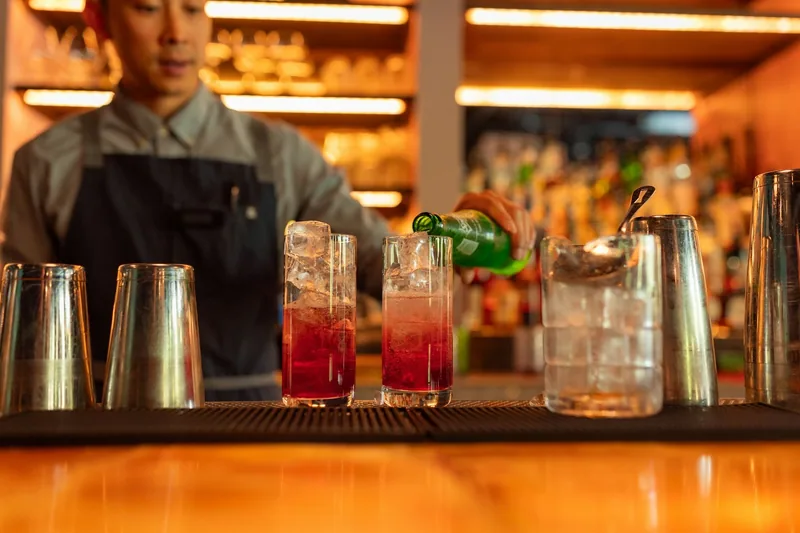
The American Bar at The Savoy opened in 1893 and is the oldest surviving cocktail bar in London. It is open Monday to Saturday from 12:00 to midnight and Sunday from 12:00 to 22:00, admits guests aged 14 and over, and has no formal dress code, though the hotel asks people to dress elegantly and bans sports jerseys. The Connaught Bar in Mayfair, with its martini trolley made up at the table, works in the same tradition.
At £22 to £28 a drink these are among the most expensive rounds in Britain. What the money buys is space, service, a seat you can keep, and ice and glassware of a standard you will not find elsewhere. It also buys a room where nobody will hurry you.
Three practical points. Hotel bars open in the early afternoon, so they are the easiest place in London to get a good cocktail at 16:00. Many take bookings only for parties above a certain size and hold the rest for walk-ins, which works in your favour on a weekday. And children are often allowed in the early evening, though policies differ by hotel: The Savoy's American Bar sets the limit at 14. Our guide to London's grand hotels covers the buildings themselves.
The cheapest seat in a five-star hotel is at the bar, at five o'clock. Arrive when the bar opens and before the evening rush, take a stool rather than a table, and you get the same bartender, the same drink and the same room for the price of one cocktail. Nobody will ask you to move.
Basement bars, minimum spends and cover charges
London's second tradition is the bar down a staircase with no sign. Nightjar in Shoreditch is the clearest example of how the economics work, because it publishes them.
Nightjar charges a minimum spend of £15 per person per hour. Live music starts at 21:00, and a separate cover charge is added to the bill on behalf of the band and paid directly to the musicians; the bar does not sell music tickets. It does not take bookings between 21:15 and 23:00 because demand during the music sets is too high to hold tables, and it keeps back a handful of tables for walk-ins. When you book, the bar authorises your card without taking a deposit and charges it only for a no-show or a cancellation made less than six hours ahead.
That combination — minimum spend, cover charge, card authorisation, no late bookings — is typical of the category, though the numbers differ. Read the booking page rather than assuming.
Accessibility is the other thing to check. Nightjar states that it is one floor below ground, has no lift and is not accessible to wheelchair users without assistance. A great many London basement bars are in the same position, because they are in Victorian cellars. Our guide to accessible London covers how to ask the right questions.
Neighbourhood bars and the no-booking rule
The third kind is a small room with twenty seats, a short menu and a rule that you cannot reserve. Tayēr + Elementary on Old Street built its reputation on exactly that, with a standing bar at the front and a seated room behind, and no bookings at all. It is temporarily closed after a fire in its building, which is a reminder to check a bar's own website or social media on the day.
The no-booking bars reward turning up early. Most fill between 19:30 and 20:30 on a Friday or Saturday; arrive at 18:00 and you will walk into almost any of them. Some keep a list and text you when a seat comes free, which means you can go and eat while you wait.
These bars cluster: Soho and the streets around Seven Dials, Shoreditch and Hoxton, and increasingly Peckham and Hackney. Our guides to Soho and Shoreditch describe the areas, and our page on London nightlife covers what else is happening after midnight.
Ordering when you do not know what you want
Modern London cocktail menus are hard to read on purpose: the drink is described by mood and by ingredients you have never heard of. There is a straightforward way through.
Tell the bartender three things: a spirit you like, whether you want it sour, sweet, bitter or refreshing, and roughly what you want to spend. A good bartender in London will then make you something off-menu, and will not be offended by the question. This is standard practice and costs no more.
If you want a classic, ask for it by name. A martini, a negroni, an old fashioned or a daiquiri will be made properly in any serious bar, and they are a reliable way of judging one. Specify how you want a martini: gin or vodka, wet or dry, olive or twist.
Ask what the bar is known for before you read the menu. Nearly every London cocktail bar has two or three house drinks it has served for years and makes better than anything else on the list. Bartenders will tell you which they are if you ask, and it is a far better question than "what is popular".
The bill, the service charge and paying
A discretionary service charge of around 12.5 per cent is normally added to a table bill in London, and less often at the bar. A law that took effect in October 2024 stops employers keeping any part of a tip or a service charge, so money left on the bill does reach the people who served you. It remains optional; our page on tipping in London explains the rules.
Cover charges for music are different and are collected for the band. They are not a service charge and are not optional if you stay for the set.
Almost every bar takes contactless. Many are entirely cashless. Running a tab usually means leaving a card behind the bar; this is normal and the card stays in a locked drawer, but check that you get it back before you leave, which is the most common way people lose a card on a night out.
Practicalities: age, dress, timing and getting home
- Age. You must be 18 to buy alcohol. Expect a Challenge 25 identity check; a passport or photocard driving licence is accepted, a photograph of one usually is not.
- Dress. Few London bars enforce a formal code, but most hotel bars ask for something smarter than shorts, trainers and sportswear. Dress codes are published on the bar's own site.
- Last orders. Bars in central London commonly close between midnight and 03:00. Outside the centre, many stop serving at 23:00.
- Getting home. The Night Tube runs on Friday and Saturday nights on five lines; night buses run every night. Our guide to London at night covers the rest.
If you want food afterwards, our page on late-night food lists what is open. If you would rather drink wine than cocktails, see wine bars in London; if you are not drinking alcohol, most serious cocktail bars now make proper alcohol-free drinks, covered in drinking without alcohol. For bars where the music is the point rather than the background, see jazz in London.
Frequently asked questions
How much is a cocktail in London?
About £14 to £18 in a good independent bar and £22 to £28 in a five-star hotel bar in September 2026. Add a discretionary service charge of around 12.5 per cent, and in some bars a minimum spend per person per hour and a cover charge for live music.
What is a minimum spend in a London bar?
A sum you must spend per person for each hour you occupy a table. Nightjar in Shoreditch, for example, sets it at £15 per person per hour. It is not an entry fee: anything you order counts towards it. Bars that use minimum spends publish them on their booking pages.
Do I need to book a cocktail bar in London?
For the well-known basement bars at weekends, yes, and often weeks ahead. Hotel bars usually keep most seats for walk-ins. Several highly regarded bars take no bookings at all, in which case arriving before 19:00 is the only reliable strategy.
Is there a dress code for London cocktail bars?
Rarely a strict one. The Savoy says it has no formal dress code but asks guests to dress elegantly and does not allow sports jerseys, which is typical of the grand hotel bars. Independent bars almost never have a code. Check the bar's own website if you are unsure.
Can children go into a London cocktail bar?
Sometimes, early in the evening. The American Bar at The Savoy admits guests aged 14 and over, for instance. Many bars are over-18 only after a certain hour, and no one under 18 may buy or be sold alcohol anywhere.
Sources
- The Savoy - American Bar opening hours, age limit and dress code (checked September 2026)
- Nightjar Shoreditch - minimum spend, cover charge, bookings and access (checked September 2026)
- Tayēr + Elementary - current status and no-bookings policy (checked September 2026)
- GOV.UK - Tips at work and service charges (checked September 2026)
- GOV.UK - Alcohol and young people: the law (checked September 2026)