
South Kensington is London's museum quarter: the Natural History Museum, the Science Museum and the V&A stand within a few minutes' walk of each other, all free to enter, with the Royal Albert Hall and Kensington Gardens just to the north. It is one of the easiest areas in London for a first visit, and one of the best for families and rainy days.
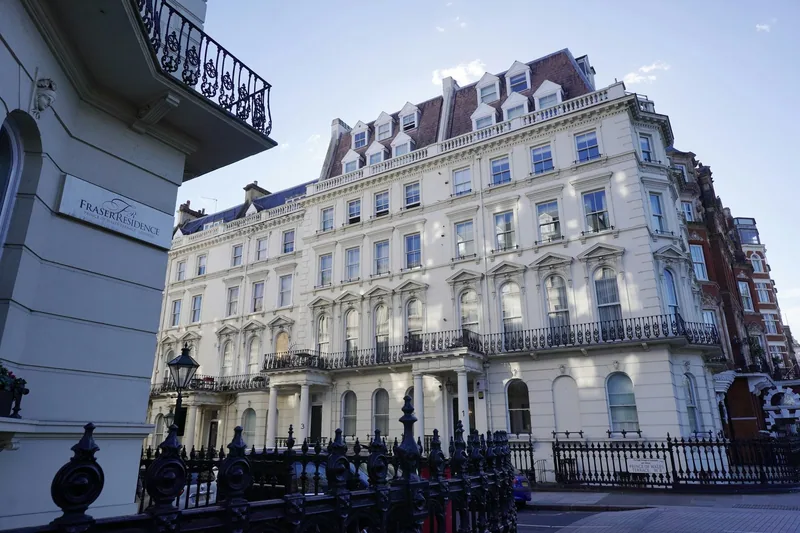
The area sits in the Royal Borough of Kensington and Chelsea, west of Knightsbridge and north of Chelsea. Its heart is a small grid of streets around South Kensington Tube station and Exhibition Road, the wide, partly pedestrianised road that runs from the station up to Hyde Park. Around it are white stucco terraces, garden squares, embassies, university buildings and a busy strip of cafés, bakeries and restaurants.
Most visitors come for the museums and leave by mid-afternoon. That is a pity, because the streets are pleasant to walk, the park is close and the evenings around the Royal Albert Hall have a real buzz on concert nights. This guide explains how the area fits together, what to do at each time of day and where the crowds (and the prices) catch people out.
South Kensington in brief
- Best for
- Museums, families, rainy days, classical music, park walks
- Main station
- South Kensington (Piccadilly, District and Circle lines), Zone 1
- Step-free alternative
- Knightsbridge (Piccadilly line), about 14 minutes' walk from the V&A
- Big three museums
- Natural History Museum, Science Museum, V&A: all free for the permanent galleries
- Time needed
- A full day for one or two museums plus a walk; two days if you want all three
- Quietest times
- Weekday mornings outside school holidays, and late afternoons
Albertopolis: how the museum quarter came about
The layout of South Kensington makes more sense once you know its origin. After the Great Exhibition of 1851 in Hyde Park, the profits were used to buy land just south of the park for museums, colleges and concert halls. Prince Albert, Queen Victoria's husband, drove the project, and the area was soon nicknamed "Albertopolis".
That plan explains why so many big institutions sit side by side: the three national museums, Imperial College, the Royal College of Music, the Royal College of Art and the Royal Albert Hall, which opened in 1871. The Albert Memorial, a gilded statue of the prince under a tall Gothic canopy, faces the hall from the edge of Kensington Gardens. Stand between the two and you see the whole idea in one view.
Today the area still feels academic and international. Many students live and study here, and several embassies and cultural institutes have their offices in the side streets. The French presence is especially visible, with a French school and French bakeries and bookshops near the station.
The three museums on Exhibition Road
The big three are the reason most people come, and each deserves at least half a day. General admission is free at all three; you pay only for special exhibitions and some extras. The details differ, so check the rules for each before you go.
| Museum | Best for | Hours (September 2026) | Booking |
|---|---|---|---|
| Natural History Museum | Dinosaurs, Hope the blue whale, the building itself | Daily 10:00-17:50, last entry 17:30 | Not required; a free ticket guarantees entry |
| Science Museum | Hands-on galleries, space, engineering | Daily 10:00-18:00, last entry 17:15 | Pre-book a free ticket |
| V&A South Kensington | Design, fashion, sculpture, the courtyard garden | Daily 10:00-17:45; Fridays to 22:00 | Not needed |
The Natural History Museum is the one children usually ask for first. Its Romanesque building, covered in carved animals and plants, is worth seeing even if you only walk into Hintze Hall to look up at Hope, the blue whale skeleton hanging from the ceiling. Queues form outside at weekends and in school holidays, so the free timed ticket is worth having. Note that the museum is closed on Friday 9 October 2026.
Next door, the Science Museum now asks everyone to pre-book a free ticket. The paid interactive gallery Wonderlab is the highlight for many families; day passes start from £13.50, and booking ahead is cheaper. An average visit lasts about two hours. The museum is closed all day on Wednesday 11 November 2026.
Across Cromwell Road, the Victoria and Albert Museum covers art and design from almost every period and culture. It is the calmest of the three, and its garden café is one of the nicest places in the area to sit down. Some galleries are closed for long renewals: the Fashion Gallery until autumn 2028, the South Asia Gallery until spring 2028 and the Korea Gallery until December 2026. On selected Fridays, usually near the end of the month, the V&A holds a Friday Late with music and talks.
Use the underground passage when it rains. From South Kensington station a long pedestrian tunnel runs north under Exhibition Road, with exits for the V&A, the Natural History Museum and the Science Museum. It is slower than walking along the street on a dry day, but on a wet one you arrive without an umbrella. Neither the station nor the tunnel suits wheelchair users; use Knightsbridge station, which has been step-free since April 2025.
A realistic plan for a day in the area
Trying to "do" all three museums in one day is the most common mistake here. Each is huge, the galleries are tiring, and by the third one most people are walking past things without seeing them. Pick one or two, and spend the rest of the day outdoors.
A good pattern is to be at the doors of the Natural History Museum or the Science Museum at 10:00, when crowds are thinnest. Leave around lunchtime, eat in the streets around the station, and spend the afternoon in the V&A or in Kensington Gardens. If you are travelling with children, the Diana Memorial Playground on the north side of Kensington Gardens is free and reopened on 5 August 2026 with a new pirate galleon (adults are admitted only if they are with a child aged 12 or under).
For a longer stay, our ideas for a wet day in London put South Kensington at the top of the list for good reason: you can spend a whole day under cover without paying an entry fee.
The Royal Albert Hall and evening life
The Royal Albert Hall is the great round concert hall at the top of Exhibition Road, facing Kensington Gardens. It hosts classical concerts, rock and pop shows, comedy, ballet, film screenings with live orchestra and, each summer, the BBC Proms (the 2026 season ran from 17 July to 12 September). Even if you do not go to a show, the red-brick exterior and the mosaic frieze around the top are worth a look.
The hall also runs guided tours of the building. Prices and times change through the year, so check the current tour programme on the Royal Albert Hall website before you plan around one.
After the museums close, South Kensington becomes quieter but not dead. The restaurants around the station stay busy with students and locals, and on concert nights the streets around the hall fill up in the hour before a performance. It is not a nightlife area, though: for late bars and clubs you will need to head east to the West End. Our guide to things to do in London after dark covers the better options.
Kensington Gardens, Hyde Park and the palace
Walk north from the museums and in ten minutes you are in Kensington Gardens, the western half of the great green space that continues east as Hyde Park. This is the area's back garden: flat, easy walking, lots of benches and plenty of space for children to run. Our full guide to Hyde Park and Kensington Gardens has a walking route and the main sights.
On the western side of the gardens stands Kensington Palace. Plan carefully if you want to go inside: the Queen's State Apartments are closed until spring 2027, and in the week checked for this guide the palace was closed on Mondays and Tuesdays. Until 8 November 2026 an adult ticket costs £24.70 (£27.20 with the optional donation), because it includes a special exhibition; from 11 November it drops to £19.00. The palace gardens are free.
If you would rather keep walking, the Serpentine lake, the Italian Gardens and the Princess Diana Memorial Fountain are all within the park. A loop from the Royal Albert Hall past the Albert Memorial, along the Serpentine and back through the gardens takes around an hour at an easy pace.
Eating near the museums without overpaying
The museum cafés are convenient but not cheap, and at lunchtime at weekends they can be crowded. The streets immediately around South Kensington station (Old Brompton Road, Thurloe Street, Bute Street and the station arcade) have a dense mix of sandwich shops, bakeries, Italian and French cafés, and mid-range restaurants. Prices are higher than in much of London, but you have more choice than inside the museums.
Bringing a picnic is completely normal here. On dry days families spread out on the grass in Kensington Gardens, and if you want to eat your own food inside a museum, ask at the information desk where that is allowed. A supermarket sandwich meal deal eaten on a park bench is how many locals do lunch. For more ideas on keeping costs down, see our guide to cheap places to eat in London.
For a treat, the grand hotels of Knightsbridge, a short walk east, serve formal afternoon tea. Book well ahead, especially at weekends.
Knightsbridge, Brompton Road and the shops
South Kensington merges into Knightsbridge to the east. Brompton Road runs from the V&A past the Brompton Oratory, a large Italianate Catholic church that is open to respectful visitors, to Harrods, the famous department store. The walk takes about fifteen minutes and is a natural way to end a museum day.
Shopping in South Kensington itself is more local: small boutiques, bookshops, delis and chemists. Serious fashion shopping is in Knightsbridge and on Sloane Street, which leads south towards Chelsea and the King's Road.
Getting to South Kensington and moving around
South Kensington station is served by three Tube lines: the Piccadilly line (direct from Piccadilly Circus, Leicester Square and Heathrow), and the District and Circle lines (direct from Westminster and Victoria). It is in Zone 1. With pay as you go, the daily cap for Zones 1-2 is £8.90, so a day of hopping around central London never costs more than that on the same card. Our guide to Oyster and contactless explains how capping works.
The station is not step-free, and it becomes very crowded at weekends and during school holidays, when whole families arrive at the same time. Gloucester Road station, one stop west, is about ten minutes' walk from the V&A and usually calmer. Knightsbridge on the Piccadilly line is the step-free choice.
Several bus routes run along Cromwell Road and Brompton Road, and buses are a good way to reach the area from the West End if you want to see the city on the way. Everything within South Kensington itself is walkable.
School holidays turn Exhibition Road into a queue. During UK half-term weeks, Easter and the summer holidays, the museums fill with school-age children, and the station, the tunnel and the pavements outside the museum doors become slow and congested. If your dates are flexible, visit on a weekday in term time, arrive at opening and leave the most popular galleries (dinosaurs at the Natural History Museum, Wonderlab at the Science Museum) until late afternoon.
Who South Kensington suits, and who might prefer elsewhere
Where the area shines
- Three world-class museums, free to enter, a few minutes apart
- Easy, safe-feeling streets and a huge park next door
- Good for children of all ages and for rainy days
- Direct Tube from Heathrow on the Piccadilly line
Where it falls short
- Expensive for food and hotels
- Very crowded at weekends and in school holidays
- Quiet in the evening unless there is a concert
- The main station is not step-free
As a place to stay, South Kensington is calm, well connected and popular with families, though hotel prices reflect the address. Our overview of the best areas to stay in London compares it with cheaper bases. If museums are your main interest, it is hard to beat; if you want nightlife, choose somewhere closer to Soho.
Frequently asked questions
Are the museums in South Kensington really free?
Yes. General admission to the Natural History Museum, the Science Museum and the V&A is free. You pay only for special exhibitions and a few extras such as the Science Museum's Wonderlab. The Science Museum asks you to pre-book a free ticket; the other two do not require booking.
Which Tube station is best for the Natural History Museum?
South Kensington, on the Piccadilly, District and Circle lines, is about five minutes' walk away, and a pedestrian tunnel links the station to the museums. It is not step-free, so wheelchair users and people with heavy buggies should use Knightsbridge station instead.
Can you visit all three museums in one day?
You can walk through all three, but you will not enjoy them properly. Each museum could fill a whole day. Most visitors get more from choosing one or two, starting at 10:00, and spending the rest of the day in Kensington Gardens or on a walk to Knightsbridge.
Is South Kensington a good place to stay?
It is a comfortable, well-connected base with direct Tube links to Heathrow, the West End and Westminster. It suits families and museum lovers. The downsides are high hotel and restaurant prices and a quiet evening scene compared with Soho or Covent Garden.
How far is the Royal Albert Hall from the museums?
It is at the top of Exhibition Road, roughly ten minutes' walk north of the Science Museum and the Natural History Museum. The route is flat, and it passes Imperial College and the Royal College of Music on the way.
Sources
- Natural History Museum - Visit (checked September 2026)
- Science Museum - Plan your visit (checked September 2026)
- V&A - Visit V&A South Kensington (checked September 2026)
- Historic Royal Palaces - Kensington Palace tickets and prices (checked September 2026)
- The Royal Parks - Diana Memorial Playground (checked September 2026)
- Transport for London - Capping (checked September 2026)