
Borough and Bermondsey are neighbouring districts on the south bank of the Thames, running from London Bridge east to Tower Bridge and beyond. Together they offer London's best-known food market, a medieval cathedral, the Shard, old riverside warehouses and some of the city's most enjoyable streets for eating and drinking.
Borough is the older, busier part, clustered around London Bridge station, Borough Market and Southwark Cathedral. For centuries this was the main road into London from the south, lined with coaching inns, prisons and markets. Bermondsey lies to the east and south-east. It was once an industrial area of tanneries, leather warehouses, food factories and docks, and many of those brick buildings have been turned into flats, restaurants, galleries and small businesses.
The two areas feel different. Borough is crowded, compact and full of visitors at weekends. Bermondsey is more residential and relaxed, with a village-like main street and quieter lanes between the warehouses. Both are within walking distance of the Tower of London across the river, and both are easy to combine with the riverside walk along the South Bank.
Borough and Bermondsey at a glance
- Where
- South bank of the Thames, from London Bridge east past Tower Bridge
- Highlights
- Borough Market, Southwark Cathedral, the Shard, HMS Belfast, Shad Thames, Bermondsey Street, Maltby Street Market
- Stations
- London Bridge (Northern and Jubilee lines, National Rail), Borough (Northern line), Bermondsey (Jubilee line)
- Fare zone
- Zone 1 (London Bridge and Borough)
- Best days
- Tuesday to Friday for Borough Market in comfort; Saturday for Maltby Street and the full buzz
- Best for
- Food lovers, walkers, anyone exploring the Tower Bridge area
Borough Market: when to go and what to expect
Borough Market is one of the oldest and best-known food markets in London. Under its Victorian iron roofs and the railway viaducts, traders sell cheese, bread, meat, fish, fruit and vegetables, and there are many stalls and counters for hot food to eat on the spot. Entry is free.
| Day | Regular opening hours |
|---|---|
| Monday | Closed |
| Tuesday to Friday | 10:00-17:00 |
| Saturday | 09:00-17:00 |
| Sunday | 10:00-16:00 |
Hours change around Christmas and on bank holidays, so check the market's visit page before you go. Lunchtime on Saturday is by far the busiest time, when the narrow passages can be packed. A weekday morning is much easier, and you can actually talk to the traders. Our detailed guide to Borough Market covers what to eat and how to get the most out of a visit.
Borough Market is shut on Mondays. Many visitors arrive on a Monday and find the market closed, although a few shops and cafés around the edges may be open. If Monday is your only day nearby, go to the Shard or HMS Belfast instead and come back for the market later in the week.
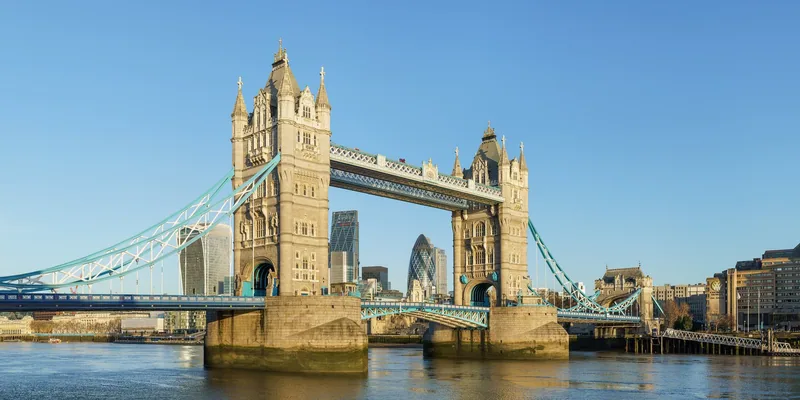
Photo: © User:Colin · CC BY-SA 4.0 · Wikimedia Commons · resized
Southwark Cathedral and the historic streets around it
Right next to Borough Market, Southwark Cathedral is one of the oldest churches in London. There has been a church on this site for more than a thousand years, and the present building is largely Gothic, with parts dating from the 13th century. It only became a cathedral in 1905. Inside, look for the memorial to William Shakespeare, who worked at the nearby Globe theatre, and the Harvard Chapel, named after John Harvard, the founder of Harvard University, who was baptised here.
The cathedral is open Monday to Saturday 09:00-18:00 and Sunday 08:30-17:00, although parts may close for services and events. It encourages photography outside services. Choral Evensong, a sung evening service, is free to attend and open to all, and it is a moving way to see the building at its best. Check the cathedral's visitor information for any charges and closures before you visit.
West of the cathedral, along Clink Street, you pass the ruined rose window of Winchester Palace, the medieval London home of the Bishops of Winchester, and a full-size replica of the Golden Hinde, the ship Sir Francis Drake sailed around the world. On Borough High Street, the George Inn is London's last surviving galleried coaching inn, now owned by the National Trust and still a working pub. It is one of the best stops on any tour of London's historic pubs.
The Shard and London Bridge
Above London Bridge station rises the Shard, the tallest building in the United Kingdom, a thin glass pyramid that you can see from almost everywhere in London. The paid viewing floors near the top are called The View from The Shard. Opening times vary by day; on 18 September 2026, for example, it opened 13:00-21:00. Last entry is one hour before closing, and you can stay until closing time. Ticket prices are shown only when you book, so check the official View from The Shard site. Our guide to the Shard helps you decide whether it is worth the money compared with the free viewpoints across the river.
London Bridge itself is a plain concrete bridge from the 1970s, not the famous towers people often expect; those belong to Tower Bridge, about 15 minutes' walk east. If the history of the crossings interests you, our walking guide to London's bridges explains how each one came to be.
HMS Belfast and the riverside towards Tower Bridge
From London Bridge, the riverside path continues east past Hay's Galleria, a covered former dock with shops and restaurants, to HMS Belfast, a Second World War cruiser moored in the Thames and run by the Imperial War Museums. You can explore the ship on several levels, from the bridge high above the deck to the engine rooms far below. An adult ticket costs £26.80, or £29.50 with a donation, and a child aged 5-15 pays £13.40 (prices from 2 September 2026). Under-5s go free. The ship is open daily 10:00-18:00, with last entry at 17:00, except 24-26 December.
The ladders between decks are steep and narrow, so the ship is not ideal for people with limited mobility or for very small children who need carrying. For a free alternative from the same organisation, see our guide to the Imperial War Museum in Lambeth.
Further east, Potters Fields Park is a small green space with the best close-up view of Tower Bridge and the Tower of London across the water. Next to it stands the round glass building that used to be City Hall. Tower Bridge is open to visitors daily from 09:30, with its high walkways, glass floors and Victorian engine rooms; see our Tower Bridge guide for tickets and bridge lift times.
Shad Thames and the old warehouse district
Walk under the southern end of Tower Bridge and you enter Shad Thames, a narrow cobbled street between tall Victorian warehouses. Iron walkways cross overhead between the buildings, once used to move goods from the riverside wharves to the stores behind. The warehouses stored tea, coffee, spices and other goods, and the street still has old painted names on the walls.
Today the buildings, including Butler's Wharf on the river, are flats, restaurants and offices, and the riverfront has a line of restaurants with views of Tower Bridge. It is one of the most atmospheric streets in London for photography, especially early in the morning or after rain, and it is much quieter than the riverside path. The Design Museum used to be here before moving to Kensington in 2016.
Cross Tower Bridge on foot for the Tower of London. From Shad Thames it is about 10 minutes' walk across Tower Bridge to the Tower. The bridge deck and pavements are free to use at any time; you only pay for the walkways and engine rooms. Combining the two sides makes a full day without any transport.
Bermondsey Street and Maltby Street Market
Bermondsey Street, running south from London Bridge station under the railway, is one of the most pleasant streets in south London. It has independent cafés, wine bars, restaurants, small galleries and the Fashion and Textile Museum, founded by the designer Zandra Rhodes. In the evenings and at weekend lunchtimes it is lively, but rarely as crowded as Borough. For good coffee nearby, see our guide to coffee in London.
A 10-minute walk east, under the railway arches of the Ropewalk off Maltby Street, is Maltby Street Market, a small street food market with a strong local following. It is open on Friday evenings 17:30-21:00, Saturdays 10:00-17:00 and Sundays 11:00-16:00, according to its website. It is narrow and busy on Saturdays, but smaller and friendlier than Borough Market. Some railway arches nearby house breweries and bars that open at weekends. Our round-up of London's food markets compares both markets with others across the city.
Bermondsey's history as a leather-making district lives on in street names such as Leathermarket Street and Tanner Street, and in the large Victorian leather market buildings that now house offices.
What the area is like at different times
On weekday mornings, London Bridge station is one of the busiest in the country, and the streets around it are full of commuters. By mid-morning Borough Market opens and the crowds shift to the food stalls. Lunchtimes, especially Saturday, are the peak.
Evenings are good for eating out. The pubs around Borough High Street fill with office workers after 17:30 on weekdays, and Bermondsey Street's restaurants are busy from about 19:00. After the market closes, the area around it becomes quieter, and the back streets under the railway viaducts can feel empty late at night. Most people find the area comfortable, but take normal care with bags and phones in the crowds, especially inside the market.
Strong points
- Excellent food, from market stalls to good restaurants
- Walking distance to the Tower of London, Tower Bridge and the South Bank
- Superb transport links at London Bridge
Weaker points
- Borough Market is very crowded at Saturday lunchtime
- Constant train noise near the railway viaducts
- Riverside restaurants at Tower Bridge charge for the view
Getting there and moving on
London Bridge station is the main hub, with the Northern and Jubilee lines and National Rail trains, including Thameslink services to Gatwick. Borough station, on the Northern line, is useful for the southern end of Borough High Street. Bermondsey station on the Jubilee line is closest to Maltby Street and the eastern part of Bermondsey. A pay-as-you-go journey within Zone 1 costs £3.10 at peak times and £3.00 off-peak with contactless or Oyster.
Uber Boat river buses call at London Bridge City pier (which is not step-free) and at Tower pier across the river, with services west to the London Eye and east to Greenwich; see our river bus guide for fares. On foot, the riverside path west takes you past the Globe and Tate Modern to the South Bank, and London Bridge leads north into the City of London. The Tower of London is just across Tower Bridge.
Frequently asked questions
What is the best day to visit Borough Market?
Tuesday to Friday mornings are the most comfortable, with far fewer crowds than at the weekend. Saturday has the fullest atmosphere but is very busy around lunchtime. The market is closed on Mondays and closes at 16:00 on Sundays.
Is Southwark Cathedral worth visiting?
Yes. It is one of London's oldest churches, with Gothic architecture, a memorial to Shakespeare and links to Harvard University, and it is right next to Borough Market. Free Choral Evensong is a good way to hear the choir and see the building at its best.
Where is Maltby Street Market and when is it open?
Maltby Street Market is on the Ropewalk, off Maltby Street in Bermondsey, about 10 minutes' walk from Tower Bridge. According to its website it opens on Friday evenings 17:30-21:00, Saturdays 10:00-17:00 and Sundays 11:00-16:00.
How far is Borough Market from the Tower of London?
About 20 to 25 minutes on foot, either along the riverside path and over Tower Bridge, or across London Bridge and through the City. By Tube, the walk is usually quicker than changing trains.
Is HMS Belfast suitable for children?
Older children usually love exploring the decks, but the steep ladders between levels make it hard with toddlers and pushchairs. Children aged 5-15 pay £13.40 (from September 2026), and under-5s go free with an adult.
Sources
- Borough Market - Plan your visit (checked September 2026)
- Southwark Cathedral - Visitor information (checked September 2026)
- Imperial War Museums - HMS Belfast tickets (checked September 2026)
- The View from The Shard - Opening times (checked September 2026)
- Maltby Street Market - Home page (checked September 2026)
- Tower Bridge - Plan your visit (checked September 2026)