
London runs later than most of Britain and earlier than most of southern Europe. Big shops trade six hours on a Sunday and choose which six; pubs have no national closing time, so each one keeps whatever hours its licence allows; museums shut at 5pm or 6pm but stop letting people in earlier than that; and kitchens in restaurants often close between lunch and dinner. This page is the clock.
The public holidays, the Christmas shutdown and the Easter rules are a separate subject, and our guide to bank holidays, Sundays and opening hours covers them. What Sunday in London actually feels like, and what to do with it, is in our guide to a Sunday in London.
This page answers a narrower question: on an ordinary day, what is open, from when, until when, and what stops you getting in even when the door is still open.
A normal London weekday
- Cafés and breakfast
- From about 7am; chains earlier near stations
- High-street shops
- 9am or 10am to 6pm or 7pm
- Big West End stores
- Often to 8pm or 9pm, later on Thursdays
- National museums
- 10am to 5pm or 6pm, last entry 30-45 minutes before
- Pubs
- From 11am or noon; most stop serving between 11pm and midnight
- Restaurant kitchens
- Lunch roughly noon to 3pm, dinner from 5.30pm or 6pm
- Banks
- Roughly 9.30am to 4.30pm, often closed at weekends
- First and last Tube
- About 5.30am to just after midnight
The Sunday six hours, and where the sign is
The Sunday Trading Act 1994 splits shops in England and Wales by floor area. A shop whose relevant sales area is over 280 square metres counts as large, and a large shop may trade on a Sunday for six unbroken hours, which have to sit inside the window between 10am and 6pm. Below that size, there is no restriction at all.
Each shop picks its own six hours, which is why nothing lines up. A department store may run 11.30am to 5.30pm; a big supermarket on the same street may run 11am to 5pm; the smaller branch of the same supermarket two doors down may open at 7am and close at 11pm, because it is under the size threshold.
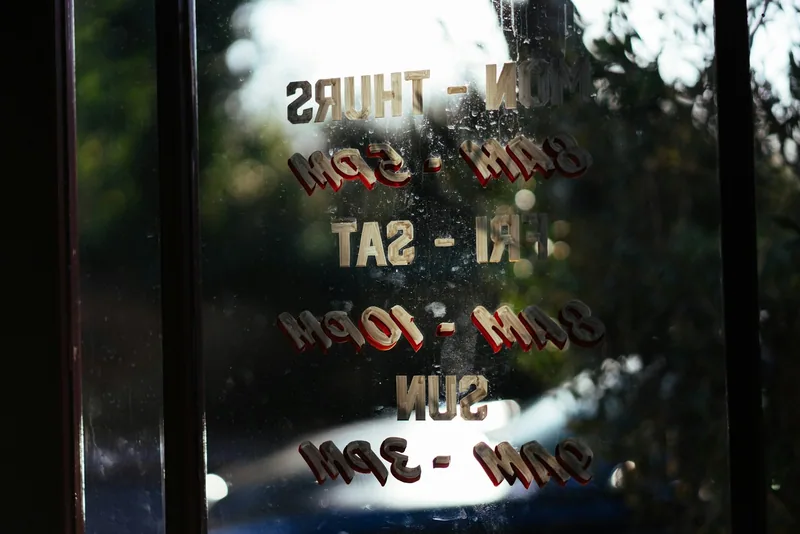
There is a reliable way to find out. The Act requires any large shop trading under the six-hour exemption to display a notice giving its Sunday opening hours, in a conspicuous position both inside and outside the shop. So the information is legally required to be in the window, and it is usually a small printed card by the door rather than on the main sign. Check it on Saturday if you are planning a Sunday.
The six hours include closing, not just entry. Large stores enforce the end of the window strictly, because trading past it is an offence for the occupier. Expect staff to start moving customers towards the tills 15 minutes before the stated closing time, and expect the doors to be locked on the minute. Arriving at 5.45pm for a 6pm close on a Sunday is not enough time.
The shops the rule does not touch
Schedule 1 of the Act lists the shop types that can open for as long as they like on a Sunday whatever their size. The list is oddly specific and unexpectedly useful to a visitor:
- Shops inside a railway station, and shops in the passenger areas of designated airports.
- Petrol filling stations and motorway service areas.
- Registered pharmacies, as long as they sell only medicines and medical or surgical appliances.
- Shops selling mainly alcohol, and shops selling mainly motor or cycle supplies.
- Farm shops selling mainly produce from that farm.
- Stands selling goods at an exhibition.
Two further gaps matter more than the list. The Act defines the sale of goods in a way that excludes meals, refreshments and alcohol consumed on the premises, and excludes takeaway meals prepared to order. Restaurants, cafés, pubs and takeaways therefore sit outside the six-hour rule entirely and set their own Sunday hours. And there is a separate exemption for shops occupied by people observing the Jewish Sabbath.
The railway station exemption is the one to remember. If you need something on a Sunday evening in central London, the shops inside the big terminus stations are open when the high street is shut.
Pubs: there is no closing time in law
Britain has no national closing hour. Since the Licensing Act 2003, the hours during which a pub, bar or club may sell alcohol are written into its individual premises licence, granted by the local council. Two pubs facing each other across a street can have completely different licences.
In practice, most London pubs sell until 11pm on weeknights, and many have a licence to midnight or 1am on Friday and Saturday. Central areas with late-licensed venues are the exception rather than the rule. You will hear last orders called about 20 minutes before the bar closes, followed by time; the gap afterwards is drinking-up time and is at the landlord's discretion, not a legal entitlement.
Pub kitchens close earlier than the bar, usually around 9pm and sometimes 8.30pm on a Sunday once the roasts run out. Our guide to pub etiquette for visitors explains ordering, and London at night covers what carries on afterwards.
Restaurants close in the middle of the day
This catches out visitors from countries where a kitchen runs continuously. Many London restaurants, particularly independent ones and pubs, serve lunch from about noon to 2.30pm or 3pm, then shut the kitchen and reopen at 5.30pm or 6pm. Between those times you can often still get a drink, but not a meal.
The places that do serve all afternoon are chains, cafés, pub chains with a continuous menu, and most Chinatown and Indian restaurants. Hotel restaurants usually stop breakfast at 10am on weekdays and 10.30am or 11am at weekends. Afternoon tea sittings run roughly from noon to 5pm and are almost always booked in advance.
Last orders for food is the phrase to check when you book: a restaurant that closes at 11pm may take its last food order at 9.45pm. If you are arriving late, our guide to late-night food in London lists what is still cooking. The vocabulary on the menu is in British food words explained.
Museums: the door and the last entry are different times
The big national museums open at 10am. Closing is 5pm, 5.45pm or 6pm depending on the institution, and every one of them stops admitting visitors before that. The Natural History Museum closes at 5.50pm with last entry at 5.30pm. The Science Museum closes at 6pm with last entry at 5.15pm. Churchill War Rooms closes at 6pm with last entry at 5pm. The Tower of London's last admission is 4.30pm.
Galleries inside a museum can also close before the building does. At the V&A in South Kensington the building runs to 5.45pm daily and to 10pm on Fridays, but some galleries shut at 5.45pm even on the late night. At the British Museum, a handful of rooms open only between 11am and 3pm.
Most of the great collections are free, which means the cost of arriving late is only your own time; our guide to free museums in London lists them. For the evenings, see museum late openings. Always check the museum's own site the week you go, because one-off closures for building work are common.
Two hours before closing is the real cut-off for a big museum. Last entry is not the only constraint: shops, cafés and paid exhibitions inside the building close earlier still, staff begin clearing galleries 15 to 20 minutes before the doors shut, and cloakrooms stop accepting bags well before that. If you arrive at the Natural History Museum at 4pm you will see one wing, not the museum.
Banks, post offices, pharmacies and doctors
Bank branches in London typically open around 9.30am and close at 4.30pm or 5pm, Monday to Friday, with some open on Saturday morning and very few on Sunday. Branch numbers have fallen sharply, so do not assume there is one nearby; cash machines are far more common, and most are free to use, as our guide to money in London explains.
Post Office counters are often inside a newsagent or supermarket and follow the host shop's hours, which can mean 8am to 6pm and Saturday mornings. Bureaux de change at stations and airports keep longer hours than banks.
Pharmacies generally run 9am to 6pm, and most close on Sunday. A small number are designated to open much longer, including some inside supermarkets, and NHS 111 or the NHS pharmacy finder will tell you which is open now. GP surgeries run roughly 8am to 6.30pm on weekdays. Urgent treatment centres and hospital emergency departments are the out-of-hours options, and our guide to healthcare for visitors explains which to use.
Supermarkets, markets and the 24-hour question
A handful of very large supermarkets in outer London trade around the clock on weekdays, but almost none do in the centre. What central London has instead is a dense network of small supermarket branches, typically open from 7am to 11pm seven days a week, which are under the Sunday size threshold and therefore keep the same hours all week. They cost more per item than the big stores and are open when you need them.
| Type of shop | Typical weekday | Typical Sunday |
|---|---|---|
| Small supermarket branch | 7am-11pm | Same |
| Large supermarket | 7am-10pm or later | Six hours, often 11am-5pm |
| Department store | 10am-8pm | Six hours, often 11.30am-6pm |
| Independent shop | 10am-6pm | Often closed |
| Station shop | Early to late | Exempt, so the same |
| Pharmacy | 9am-6pm | Usually closed |
Markets keep their own calendars, and several of London's best run on one day only. A market's opening hour is effectively its whole identity: arrive in the last hour and you get the discounts and none of the choice. Our guide to London's food markets lists the days. The big West End stores are covered in Liberty, Selfridges and London's department stores.
Transport hours and the 4.30am boundary
The first Tube trains run from about 5.30am on weekdays and a little later on Sundays; the last trains leave central London a little after midnight. On Friday and Saturday nights the Night Tube runs right through on five lines plus one Overground line, and night buses run every night. Our guides to first and last Tube trains and the Night Tube have the times.
One administrative hour is worth knowing. Transport for London's day runs from 4.30am to 4.29am, not midnight to midnight. Your daily fare cap, and a Day Travelcard, therefore cover journeys that start before 4.30am the following morning. A night out that ends at 3am is still, for fare purposes, the previous day.
The clocks move on the last Sunday in March and the last Sunday in October: forward an hour at 1am in March, back an hour at 2am in October. In 2026 those dates are 29 March and 25 October; in 2027, 28 March and 31 October. Night buses and Night Tube services run through the change, and a phone updates itself while a hotel alarm clock may not. Our guides to London in winter and what closes on public holidays cover what the shorter days do to a trip.
Frequently asked questions
Why do large shops in London close early on Sunday?
Because the Sunday Trading Act 1994 allows a shop with over 280 square metres of sales floor to trade for only six unbroken hours on a Sunday, and those hours must fall between 10am and 6pm. Each shop chooses its own six, so opening times vary from store to store even on the same street.
How do I find out a shop's Sunday hours before I go?
Check the shop's own website, or look at the door. The law requires a large shop trading under the six-hour exemption to display a notice of its Sunday hours in a conspicuous position inside and outside the shop, so the information is physically there even when the main sign only shows weekday times.
Are any shops open normally on a Sunday in London?
Yes. Shops under the size threshold have no restriction, which covers most small supermarkets, corner shops and independents. Shops inside railway stations, petrol stations, pharmacies selling only medicines, off-licences and farm shops are exempt whatever their size, and restaurants, cafés and takeaways fall outside the rule altogether.
What time do pubs close in London?
There is no national closing time. Each pub's hours are set by its own premises licence from the local council. Most London pubs stop serving between 11pm and midnight on weeknights, with later licences on Friday and Saturday. Kitchens usually close around 9pm, well before the bar does.
Do London museums really close at 6pm?
Most of the big ones close between 5pm and 6pm, and all of them stop admitting visitors before that, typically 30 to 45 minutes earlier. Several open late one evening a week. Allow at least two hours before closing time for a major museum, because cafés, shops and paid exhibitions shut earlier than the building.
Sources
- legislation.gov.uk - Sunday Trading Act 1994, Schedule 1 (restrictions, exemptions and the duty to display a notice) (checked September 2026)
- GOV.UK - Alcohol licensing (checked September 2026)
- Natural History Museum - Visit (checked September 2026)
- Science Museum - Plan your visit (checked September 2026)
- V&A South Kensington - Visit (checked September 2026)
- Transport for London - Capping and the 04:30 day boundary (checked September 2026)
- GOV.UK - When do the clocks change (checked September 2026)
- NHS - Find a pharmacy (checked September 2026)