
Order a pudding in Britain and you might get a hot dessert, a slice of blood sausage, or a savoury pastry filled with beef. Ask for chips and you get thick fried potatoes, not crisps. This page decodes the vocabulary on a British menu so that what arrives is what you meant.
The dishes themselves, and where to eat them, are covered in our guide to traditional British food in London. What follows is purely the language: the words that appear on menus, blackboards and supermarket shelves, and what each one actually refers to.
Most of these are not regional curiosities. They are the ordinary British names for ordinary things, and staff will use them without thinking. For the non-food vocabulary that catches visitors out, from ticket types to toilets, see our guide to British words and slang for visitors.
The words most likely to change your order
- Pudding
- Dessert in general, or one of several specific dishes, some of them savoury
- Chips
- Thick-cut fried potatoes
- Crisps
- Thin fried potato slices from a packet
- Biscuit
- A sweet hard baked item, closer to a cookie than to a scone
- Bap
- A soft bread roll
- Jacket potato
- A baked potato with a filling
- Gammon
- A thick cut of cured pork, served hot as a steak
- Squash
- Fruit cordial diluted with water
- White coffee
- Coffee with milk
- The bill
- What you ask for at the end of a meal
Pudding: one word, four meanings
This is the word that causes the most confusion, because it does four separate jobs.
- The dessert course. "What's for pudding?" simply means "what's for dessert?" On menus, the heading may say Puddings, Desserts or Sweets, and they mean the same thing.
- A specific steamed or baked sweet dish. Sticky toffee pudding, bread and butter pudding, rice pudding. These are individual dishes whose names happen to contain the word.
- A savoury dish with a suet crust. A steak and kidney pudding is a hot meat filling inside a steamed suet pastry, and it is a main course. It is not the same thing as a steak and kidney pie, which has a shortcrust or puff lid.
- A type of sausage. Black pudding is a blood sausage, sliced and fried, and turns up at breakfast. White pudding is a similar thing without the blood.
Then there is Yorkshire pudding, which is none of the above: a light baked batter that comes with roast beef. If you are handed one alongside your meat and gravy, that is correct and not a mistake. Our guide to the Sunday roast explains the whole plate.
Chips, crisps and everything fried
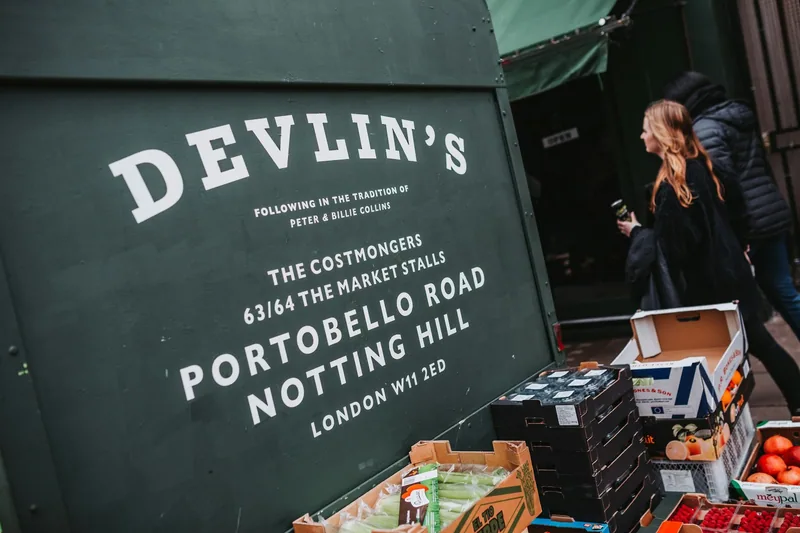
Chips are thick-cut fried potatoes, the kind that come with fish. Fries are the thin ones, and the word has become normal in burger places and chain restaurants. Skin-on fries and wedges are what they sound like. Crisps are the thin slices sold in a packet, which most of the English-speaking world calls chips, and they are a whole aisle in every supermarket.
A chippy or chip shop is a takeaway selling fried fish and chips. Order there and you will be asked whether you want salt and vinegar, which is the default seasoning and worth saying yes to at least once. Mushy peas are marrowfat peas cooked to a thick green purée and are a side dish, not a sauce. Curry sauce and gravy are both offered in chip shops and both are poured over. Our guide to fish and chips in London covers where to eat them.
A jacket potato is a whole baked potato split and filled, usually with cheese, beans or tuna; it is a cheap lunch and appears in cafés and market stalls. Hash browns are the fried potato item on a breakfast plate. Bubble and squeak is leftover potato and cabbage fried together.
Bread, and why the word changes every 50 miles
A bread roll has more names in Britain than any other food, and London has people from everywhere, so you will hear most of them. All of the following describe a small round loaf for making a sandwich: roll, bap, bun, cob, barm, batch, muffin and teacake. In London, roll and bap are the usual ones, and a bacon bap or bacon roll is a standard café breakfast.
Beyond that: a sarnie or butty is a sandwich. A toastie is a toasted sandwich, usually cheese. A crumpet is a soft round griddle cake full of holes, toasted and buttered. An English muffin is a flat yeasted roll, split and toasted, and is not the same as an American muffin, which in Britain is a large sweet cake. A scone is a plain or fruited baked round eaten with jam and cream at afternoon tea.
Biscuit means a small hard sweet baked item: digestives, custard creams, shortbread. It never means the soft American bread. Cookie exists too, and means a large soft chocolate-chip one. Flapjack in Britain is a chewy oat and syrup slice, not a pancake. The whole range is in our guide to London's bakeries and pastries.
Meat words that are not obvious
| Word | What arrives |
|---|---|
| Gammon | A thick slice of cured pork leg, served hot, often with egg and pineapple |
| Back bacon | The standard British bacon: a lean round eye of meat with a fatty tail, not crisp strips |
| Streaky bacon | The thin fatty kind familiar elsewhere |
| Banger | A sausage, informal. "Bangers and mash" is sausages with mashed potato |
| Mince | Ground meat, usually beef |
| Joint | A large piece of meat for roasting |
| Faggot | In a butcher's or a pub in Britain, a meatball of pork offal in gravy. The word has an entirely different and offensive meaning in other English-speaking countries, and is used here only for the dish |
| Haggis | Scottish: spiced sheep offal and oatmeal in a casing, served hot |
| Scotch egg | A hard-boiled egg wrapped in sausage meat and breadcrumbs, eaten cold |
| Pasty | A folded pastry case filled with meat and vegetables, eaten in the hand |
One London speciality needs its own word. Liquor, in a pie and mash shop, is a pale green parsley sauce, not alcohol. That, and jellied eels, are explained in our guide to pie and mash.
Ordering a drink
A cuppa is a cup of tea. Ask for "tea" in a café and you will get black tea with milk on request; if you want something else, say green tea or mint tea. Builder's tea is strong tea with milk. White coffee means coffee with milk and black coffee without; in a coffee shop you order by name instead, and our guide to coffee in London covers that.
Squash and cordial are concentrated fruit syrups diluted with water, common for children and free or very cheap in pubs. Lemonade in Britain is usually clear and fizzy, not cloudy. Still and sparkling describe bottled water, and if you would rather not pay for it, ask for tap water, which licensed premises must provide free; see tap water and refill points.
In a pub, beer comes in a pint or a half. A shandy is beer mixed with lemonade. Bitter, ale and lager are styles, and a pint of lager is the safest order if you are unsure. Cider in Britain is alcoholic by default. How to order and pay is in pub etiquette for visitors.
Breakfast vocabulary
A full English is the cooked breakfast: bacon, sausage, egg, beans, tomato, mushrooms and toast, with variations. A fry-up is the same thing, informally. Beans on a British breakfast plate always means baked beans in tomato sauce, served hot. A caff is a plain, cheap café serving exactly this.
Marmite is a dark, salty yeast spread that goes on toast very thinly; it is an acquired taste and even the manufacturer says so. Brown sauce is a tangy condiment eaten with breakfast, unrelated to gravy. Jam is what Americans call jelly, and British jelly is a wobbly fruit-flavoured dessert. Our guide to the full English breakfast has the detail.
"Eat in or take away?" is a question about tax, not seating. Cold takeaway food is zero-rated for VAT, while food eaten on the premises and hot takeaway food are standard-rated at 20 per cent. That is why the same sandwich can cost less if you take it with you, and why some cafés show two prices. If you are buying lunch for a park bench, say take away.
On the bill
You ask for the bill, not the check. A service charge may already have been added, usually described as discretionary; a cover charge is a per-person fee some restaurants apply; corkage is what you pay to drink wine you brought yourself. BYO means the restaurant lets you bring your own alcohol, which some small neighbourhood places do.
Starter is the first course, main the second. Set lunch and pre-theatre menu are fixed-price menus at fixed times and are the cheapest way to eat well in central London, as our guide to cheap eats explains. Nibbles are small things to pick at. A meal deal is a supermarket offer combining a sandwich, a snack and a drink for one price.
Takeaway is both the food and the shop. Eat in means at a table there. To go is understood but not the local phrase. If a member of staff says "are you finished with that?" they are asking to clear your plate.
Words on a label or a menu that describe how food was made
Home-made and freshly prepared are marketing terms with no fixed legal meaning. Free range, organic and the various protected-origin marks are regulated. Suet is hard fat, usually beef, used in pastry and steamed puddings. Dripping means rendered beef fat, which a handful of old-fashioned fryers still cook with. Rennet in cheese may be animal or microbial.
Those last three matter if you do not eat meat, because they appear in dishes that look vegetarian. Our guide to London for vegetarians lists the hidden ones and the questions to ask. For coeliac and gluten-free eating, see gluten-free eating in London.
The 14 regulated allergens must be declared by any restaurant, café or takeaway, and the hygiene rating of any food business can be looked up online. Both are covered in our main British food guide rather than repeated here.
"Ask at the counter" is a legal notice, not a brush-off. Many British menus carry a line telling you to ask staff about allergens instead of printing the information. That is a permitted way of meeting the law. Ask, and ask about preparation as well as ingredients, because shared fryers and boards are common in pubs and chip shops.
Regional words you will still hear in London
London draws people from everywhere in Britain, so a northern or Scottish word turns up behind a counter fairly often. Tea can mean the evening meal as well as the drink, depending on who is speaking. Dinner can mean lunch. Supper is a late or light evening meal, and "fish supper" in Scotland means fish and chips.
Chippy tea is a takeaway from the chip shop. Butty is a north-western word for a sandwich, piece a Scottish one. Bevvy is a drink. None of this needs learning; it just helps to know that if someone asks what you are having for your tea, they are probably asking about dinner.
If you would rather have all of this explained on the spot by someone who knows, a guided tasting walk does the job in an afternoon: our guide to food tours in London says which ones earn their price. For browsing at your own pace, Borough Market has most of these words printed on signs. And if you end up in a familiar-looking chain, London's chain restaurants explained tells you what each one actually serves.
Frequently asked questions
What is the difference between pudding and dessert in Britain?
In everyday speech they mean the same course at the end of a meal, and menus use both headings. The complication is that pudding is also the name of several specific dishes, some savoury, such as black pudding, Yorkshire pudding and steak and kidney pudding. Context and the menu section will tell you which is meant.
If I ask for chips, what will I get?
Thick-cut fried potatoes. What many visitors call chips are called crisps here, and are sold in packets. If you want the thin fried potatoes served with burgers, ask for fries, which is the normal word for them in British restaurants.
Why is the same sandwich cheaper to take away?
Because of VAT. Cold takeaway food is zero-rated, while food eaten on the premises and hot takeaway food carry VAT at 20 per cent. Cafés that charge two prices are passing that difference on, so saying "take away" can genuinely save you money on a cold lunch.
What does a British menu mean by "gravy"?
A hot savoury sauce made from meat juices, thickened, and poured over roast meat, sausages, pies or chips. It is not the same as the American breakfast gravy. Most restaurant and pub gravy is made with meat stock, so it is worth asking if you do not eat meat.
Is "faggot" really a food?
Yes. In British butchers and some traditional pubs it is a meatball of pork offal, usually served in onion gravy. The word has a very different and offensive meaning in other varieties of English, and in Britain it is used for the dish only. Seeing it on a menu is not a joke or an error.
Sources
- HMRC - Catering, takeaway food (VAT Notice 709/1) (checked September 2026)
- Food Standards Agency - Food allergy and intolerance advice for consumers (checked September 2026)
- Food Standards Agency - Food Hygiene Rating Scheme (checked September 2026)
- Food Standards Agency - Food hygiene ratings search (checked September 2026)
- Cambridge Dictionary - English (British usage entries) (checked September 2026)