
For nine days each September, hundreds of London buildings open their doors to anyone who wants to walk in. Everything is free. Most places need no booking at all. The 2026 festival, the 35th, ran from 12 to 20 September, and the 2027 dates had not been announced when we checked.
Open House is run by Open City, an architecture education charity, and it covers all 33 London boroughs. The list includes private houses, architects' own homes, town halls, engineering works, livery halls, places of worship, tower blocks, law courts and government buildings that are shut to the public for the other 356 days of the year.
The thing that surprises people is how informal it is. For most of the programme you turn up, possibly queue, and go in. There is no entrance fee, no donation expected, and often a volunteer or the building's own architect standing in the hall to answer questions.
Our guide to London in September covers the month. This page explains how the booking system actually works, how the ballot fits in, and how to build a day that does not consist entirely of queueing.
Open House Festival
- Organiser
- Open City, a registered charity (no. 1072104)
- Cost
- Free. The organisers state that everything in the festival is free to attend
- 2026 (held)
- Saturday 12 to Sunday 20 September 2026, the 35th edition
- Coverage
- Buildings and sites in all 33 London boroughs
- Programme published
- Mid-July (15 July in 2026)
- Ticketed bookings opened
- Midday, 19 August 2026, with a free account
- 2027
- Dates not announced as of September 2026
Free means free
This needs saying plainly because visitors assume there must be a catch. Open City's own wording is that absolutely everything in the Open House Festival is free to attend. There is no festival pass to buy, no booking fee on the ticketed events, and no suggested donation at the door.
Open City is a charity and does invite donations, and it sells memberships and runs paid tours at other times of the year. None of that is required to take part in the festival.
Drop-in or ticketed: the only distinction that matters
Every listing in the programme is one of two kinds, and planning a good day depends on knowing which is which.
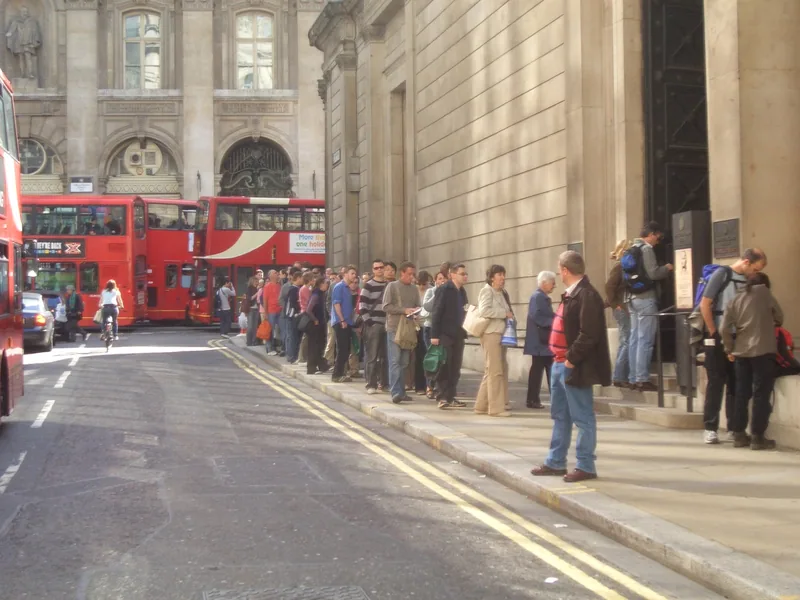
Drop-in listings need no booking. You arrive during the stated opening hours and go in. At popular buildings there will be a queue, sometimes a long one, and the building may stop admitting people before its advertised closing time if the queue is already longer than the remaining hours.
Ticketed listings have limited capacity and must be booked in advance through the festival website. This is usually because the building is small, because a guided tour is the only way to see it safely, or because the site has security requirements. You need a free account on the Open House Festival site to book.
The proportions matter. The ticketed listings are the minority, and they are the ones everybody talks about, which gives the impression that Open House is a lottery you have to win. It is not. The drop-in list is long enough to fill a weekend.
Build your day from drop-in listings and treat any ticket as a bonus. If you plan around bookings you will spend July refreshing a website and September running across London to make timed slots. If you plan around walk-ins in one area, you will see more buildings with less stress.
The ballot, and what it is actually for
Open House does run a ballot, but in 2026 it applied to exactly one building: 10 Downing Street, the Prime Minister's official residence.
That ballot opened on 15 July and closed at midday on 17 August. Entry was free. Successful applicants were contacted after the draw, and Open City's own advice was blunt: if you had not heard by the end of the day on 17 August, you had not been drawn.
Everything else in the festival is either drop-in or first-come booking. If you have read elsewhere that Open House works by ballot, that is a description of one extremely oversubscribed listing rather than of the festival.
The ballot's arrangements, including whether it runs at all, are set each year alongside the programme, so check the current year's listing rather than assuming.
The calendar to watch
Three dates drive everything, and in 2026 they fell like this.
| When | What happens |
|---|---|
| Mid-July (15 July 2026) | The full programme is published. The ballot for 10 Downing Street opens |
| Mid-August (17 August 2026, midday) | The ballot closes |
| Mid-August (19 August 2026, midday) | Booking opens for all ticketed listings. You need a free account first |
| September (12-20 in 2026) | The festival itself |
The practical advice for anyone determined to get a ticketed place: create the account in July, not on the morning bookings open. Work out in advance which two or three listings you actually want, note their exact names, and be at a computer at 11:55. The most sought-after tours go within minutes.
Cancellations are released back into the system in the weeks before the festival, so it is worth checking again in early September.
Planning a day that works
The single biggest mistake is geographic. Open House lists hundreds of buildings and the temptation is to pick the five most interesting ones, which will be in five different boroughs. You will then spend the day on the Tube.
Pick an area instead and take everything in it. The City of London is the densest concentration, with livery halls, churches, modern towers and Roman remains within a few streets of one another. Whitechapel and the East End, Southwark, Clerkenwell and Stratford all reward the same approach.
Weekday listings, where they exist, are far quieter than the weekend. Government and office buildings often open on a weekday only, because that is when they are staffed.
Walking between buildings is usually faster than any alternative in central London, as our guide to when walking beats the Tube explains, and a bike works even better across the City and the East End: see cycling in London for how the hire schemes work.
What kinds of building open
The programme is broader than a list of famous landmarks, and its strength is the ordinary buildings rather than the celebrated ones.
In a typical year you will find: private houses designed by their owners, often the most interesting listings of all; social housing estates opened by residents' associations; Victorian pumping stations and reservoirs; council chambers and town halls; synagogues, mosques, temples and churches; barristers' chambers and courtrooms; theatres backstage; and the offices of architecture practices, which open their own studios and are unusually good at explaining what you are looking at.
Several permanent London attractions also take part, which gives you a way of seeing them differently. Out of festival season, buildings such as the Barbican Centre, Guildhall, Battersea Power Station and Sir John Soane's Museum are open anyway, and our pages on them explain what you can see at any time of year.
Open City also organises walking tours and talks during the festival, which are listed alongside the buildings. Our overview of walking tours in London covers the year-round options.
Queues, and how to read them
The queue is the price of admission at the popular drop-in buildings, and it is worth being realistic about it.
Tall buildings with a view attract the longest queues by a wide margin, because everyone wants the same thing and the lifts are the bottleneck. If the building is a skyscraper, expect a wait measured in hours rather than minutes, and consider one of the free viewpoints open all year instead.
Private houses have short queues but small capacity, so they move slowly. Institutional buildings, town halls and places of worship usually have no queue at all.
The first hour after opening on a Saturday is the worst time everywhere. Late Sunday afternoon is the best, when most people have gone home and the volunteers have time to talk.
Ask the volunteer, not the leaflet. The people standing in these buildings are frequently the architect, the owner or someone who has worked there for thirty years. Open House is the one weekend when they expect to be asked questions, and it is what makes the festival worth doing at all.
Accessibility and children
The festival website has an accessibility filter that shows which facilities each building offers, which matters more here than at most events, because many of the buildings are historic and were never adapted.
Open City asks anyone with access questions to contact its access team by email rather than relying on the listing alone, and the address is published with the programme.
There is no minimum age unless an individual listing states one, and the site has a family-friendly filter. In practice, engineering sites, fire stations and anything with a vehicle in it work well with children; a barrister's chambers does not.
What is known about 2027
Nothing yet. Open City had not published 2027 dates as of September 2026. The festival has been held in September every year, but the exact dates are confirmed alongside the programme, usually in the summer.
If you are planning a September visit around it, the safe assumption is that the festival will happen and the precise days will be known by July. The same month brings Totally Thames, which runs through September on the river and is also largely free, so a September trip has two free festivals in it whichever weekend you choose. Our list of free things to do in London covers the rest of the year.
Frequently asked questions
When is Open House London in 2027?
Not yet announced. The festival is held in September each year, and in 2026 it ran from 12 to 20 September. Open City publishes the following year's dates with the programme, usually in the summer, on its Open House Festival pages.
Does Open House cost anything?
No. Open City states that everything in the Open House Festival is free to attend, including the ticketed tours and the walks. You need a free account on the festival website only to book the limited-capacity listings.
How does the Open House ballot work?
In 2026 a ballot applied to one building, 10 Downing Street. It opened when the programme was published in July and closed at midday in mid-August, entry was free, and successful applicants were contacted after the draw. Every other listing is either drop-in or booked first come, first served.
Can I just turn up at Open House buildings?
At most of them, yes. Drop-in listings need no booking at all; you arrive within the opening hours and queue if necessary. Only the limited-capacity listings require a ticket booked in advance, and they are a minority of the programme.
How many buildings can I see in a day?
Four to six is realistic if you stay in one area and choose buildings with short queues. Two, if you pick a tall building with a view. Plan geographically rather than by preference and you will see far more.
Sources
- Open City - Open House Festival (checked September 2026)
- Open City - Open House Festival visitor FAQs (checked September 2026)
- Open City - Open House Worldwide (checked September 2026)
- Open City - Contact and charity registration (checked September 2026)