
A London hostel gives you a bed in a shared dormitory, or a simple private room, for much less than most central hotels charge. Hostels suit solo travellers, friends on a budget and anyone who cares more about location than luxury, as long as you check the details before you book.
A hostel is a type of budget accommodation where guests share facilities. In a dormitory (usually called a "dorm") you rent one bed in a room with other travellers, often in bunk beds, and you share bathrooms along the corridor or inside the room. Most London hostels also have private rooms for two to four people, a lounge, a place to store luggage and, in many cases, a guest kitchen or a bar.
Hostels are not only for students. You will meet backpackers in their twenties, older travellers who like the social atmosphere, families who book a private room and groups who take a whole dorm between them. London has many hostels, from large modern buildings with hundreds of beds to small houses with a few rooms. This guide explains what to expect, where they are and how to judge a listing before you pay.
London hostels in brief
- Room types
- Mixed dorms, female-only dorms, private rooms (some with their own bathroom)
- Typical facilities
- Lockers, shared bathrooms, lounge, luggage room; often a kitchen, bar or café
- Main clusters
- King's Cross and Euston, Bloomsbury, Southwark and Borough, Shoreditch, Camden, Earl's Court and Kensington
- At check-in
- Photo ID; UK law requires every guest aged 16 or over to give their full name and nationality
- Best for
- Solo travellers, young adults, friends sharing, short city breaks
- Less good for
- Light sleepers, travellers who need a quiet workspace, some families with small children
What you actually get for your money in a London hostel
The basic product is a bed, a pillow and bedding. Most hostels in London include sheets in the price, but a few budget places charge extra for towels, and some ask you to make your own bed. Dorms vary a lot in size. Small dorms have four or six beds; large ones can have twelve or more. The bigger the room, the lower the price per bed, and the more people will be coming and going at night.
Bathrooms are the second big difference. An "en-suite dorm" has a shower and toilet inside the room, which is convenient but shared by everyone in it. Other dorms use bathrooms on the corridor. Check how many showers there are for how many beds, especially if you need to be out early: a queue at 07:30 is a common complaint in busy hostels.
Beyond that, London hostels fall into a few broad types:
- Large modern hostels with key-card entry, a reception open all day and night, a café or bar and many private rooms. They feel closer to a budget hotel.
- Party hostels built around a bar, with events most nights. Fun if that is what you want, tiring if you want to sleep.
- Small independent hostels in converted terraced houses. Often friendlier and quieter, but with narrow stairs, fewer bathrooms and sometimes no lift.
- Non-profit hostels, run by youth hostel associations and similar organisations, which tend to have simple, clean rooms and a mix of ages, including families.
Breakfast is sometimes included and sometimes sold separately. A guest kitchen is one of the most useful extras in an expensive city, because cooking even one meal a day makes a real difference to your budget.
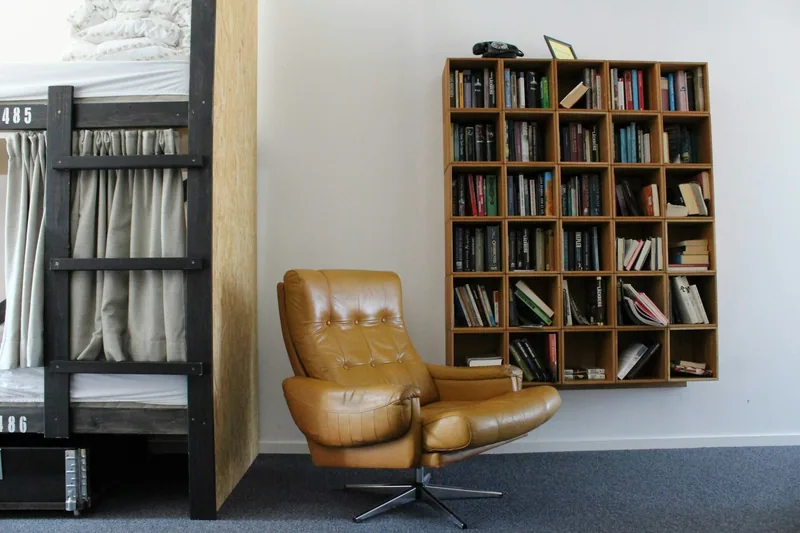
Dorm bed or private room: choosing the right option
For one person travelling alone, a dorm bed is usually the cheapest way to sleep in central London. For two people, the calculation changes. Two dorm beds can cost almost as much as a private room in the same hostel, and sometimes as much as a simple room in a budget hotel. Always compare the total for your group, not the price per bed.
| Option | Suits | Watch out for |
|---|---|---|
| Large mixed dorm (8+ beds) | Solo travellers on the tightest budget | Noise, lights at night, people arriving late or leaving early |
| Small dorm (4-6 beds) | Solo travellers who want some calm; friends who can book the whole room | Costs more per bed; check whether the bathroom is shared with the corridor |
| Female-only dorm | Women who prefer not to share with men | Fewer beds available, so it sells out earlier |
| Private room, shared bathroom | Couples and pairs of friends | Compare with budget hotels; bathroom may be down the corridor |
| Private room with en-suite | Couples, families, older travellers | Often priced close to a basic hotel room |
If you are unsure, read our guide to cheaper hotels in London and compare like with like: same dates, same area, total price including all fees. For some couples a small hotel room is better value; for groups of four, a whole dorm or a family room in a hostel often wins.
Who hostels suit, and the rules on age and ID
Hostels work well for people travelling alone, because the common areas make it easy to meet other travellers and join a walk or a pub evening. They also suit friends who want a central base for a weekend and care little about the room itself.
Age rules are set by each hostel, not by law, and they vary widely. Some hostels are for adults only, some set an upper age limit for dorms, and some welcome children in private rooms. Under-18s travelling without an adult are often not accepted. Read the house rules on the hostel's own website before booking, because a booking platform may not show them clearly.
Expect to show a passport or national ID card when you arrive. This is not just hostel policy. The Immigration (Hotel Records) Order 1972 applies to any hotel or other premises that provide sleeping accommodation for payment. It requires every guest aged 16 or over to give their full name and nationality on arrival, and many foreign nationals must also give their passport number and place of issue. The hostel must keep these records for at least 12 months.
Keep your passport handy at the hostel desk. Staff will ask for photo ID at check-in, and some hostels also want to see the card you booked with. Many ask for a refundable deposit for a key card or towel, so have a payment card ready and check how and when the deposit is returned.
Where London's hostels are, and what each area is like
You will find hostels all over London, but they cluster in a handful of areas. Location matters more than almost anything else, because a cheap bed in Zone 3 can cost you time and fares every day. Our overview of London's best areas to stay compares the districts in more detail.
- King's Cross, St Pancras and Euston. One of the biggest concentrations of hostels in the city, next to six Tube lines, the Eurostar and trains to the north. The streets right by the stations are busy and less pleasant at night, but the canal-side area of King's Cross just behind them is attractive and safe-feeling. See also our guide to staying near the big railway stations.
- Bloomsbury. Quiet streets, the British Museum and walking distance to the West End. Hostels here are often in older buildings. Our Bloomsbury neighbourhood guide explains the area.
- Southwark and Borough. South of the river near London Bridge, close to Borough Market, Tate Modern and the Thames path. Good for walking to the City and the South Bank. Read more about Borough and Bermondsey.
- Shoreditch and the East End. Bars, street art and late nights. Better for nightlife than for early sleepers. Our Shoreditch guide covers what to expect.
- Camden. Markets, live music and a young crowd, in Zone 2 on the Northern line. Lively at weekends; see our page on Camden Town.
- Earl's Court, Kensington and Paddington. Traditional backpacker areas in the west, with many small hostels in Victorian terraces, good for the museums of South Kensington and for the Piccadilly line or Elizabeth line to Heathrow.
Night transport is worth checking if you plan to go out. The Night Tube runs on Friday and Saturday nights on the Central, Jubilee, Northern, Piccadilly and Victoria lines, plus the Windrush line of the London Overground. On other nights you rely on night buses. A hostel near one of those lines is a real advantage; our Night Tube guide lists the details.
How to judge a hostel listing before you pay
Photos on booking sites are chosen to flatter. A few minutes of checking will tell you more than the pictures do.
- Find the exact address. Check it on a map and measure the walk to the nearest Tube station. "Central London" can mean anything from Covent Garden to Zone 3.
- Read the total price. UK consumer law requires traders to show the total price, including mandatory fees and taxes, from the start. If a charge appears only at the final payment step, treat that as a warning sign and compare elsewhere.
- Check what the bed price includes. Bedding, towels, breakfast, a locker, Wi-Fi and luggage storage may or may not be included.
- Count the beds and the bathrooms. A 16-bed dorm with one shower is a very different stay from a 4-bed room with its own bathroom.
- Look for a lift if you have a heavy suitcase or limited mobility. Many small London hostels have only stairs.
- Read recent reviews, especially the low ones, and look for repeated complaints about cleanliness, bedbugs, noise or security. One bad review is an opinion; five on the same subject is a pattern.
- Check the cancellation policy. Non-refundable rates are cheaper but lose you everything if your plans change.
- Book on the hostel's own site or a well-known platform, and never pay a "hostel" by bank transfer to a private account. Our guide to safe booking and accommodation scams explains the warning signs.
Staying safe in a shared dorm
Hostels in London are generally safe places to stay, but you are sharing a room with strangers, so basic care matters. Most thefts in hostels are opportunistic: a phone left charging on a bed, a wallet in a jacket on a hook, a laptop on a table in the lounge.
- Use the locker for your passport, cards, spare cash and electronics. Some lockers need your own padlock, so bring a small one.
- Charge your phone within reach. Many modern hostels have a socket and a light by each bunk. UK sockets take the three-pin plug, so bring an adapter.
- Keep a photo or copy of your passport separately, and know how to block your cards quickly.
- Choose a female-only dorm if you would feel more comfortable in one.
- Tell staff at once if something is wrong: a broken lock, an aggressive guest or a missing item. For a crime that is not an emergency, the police non-emergency number is 101; in an emergency, call 999.
The same street sense you would use anywhere applies outside too. Our guide to staying safe in London covers pickpockets, phone snatching and which areas feel rougher late at night.
A phone charging on an empty bunk is the easiest theft in any dorm. Keep it under your pillow or in the locker when you sleep, and never leave it on the bed while you shower. Travel insurance often requires you to report a theft to the police and get a reference number, so ask about that before you leave the hostel.
Sleep, noise and the social side of hostel life
The biggest downside of a dorm is sleep. People arrive from late flights, leave for early trains, switch on lights and rustle bags. Earplugs and an eye mask solve most of it. If you are a light sleeper, pick a smaller dorm, a hostel without a bar, or a private room.
Bottom bunks are easier to get in and out of and usually closer to a socket; top bunks are a little more private because people do not sit on them. Some hostels let you choose; most assign beds at check-in.
The social side is the reason many people choose hostels. Common rooms, kitchens and hostel bars make it easy to meet other travellers, and many hostels run pub evenings, quiz nights or group walks. There is no obligation to join in. A good hostel also has quiet areas where you can read or plan your next day.
Hostels for families, groups and older travellers
Families can use hostels, but only some of them. Look for hostels that advertise family rooms and accept children, and check whether children may use the bar and lounge areas. A private family room with its own bathroom can be cheaper than two hotel rooms. Our advice on where to stay with children compares the other options.
Groups of four to eight friends can often book a whole dorm, which gives you a private room at dorm prices. Book early for weekends and school holidays. Larger groups, such as school trips, normally need to contact the hostel directly, because group bookings come with different terms and deposits.
Older travellers are welcome in most hostels, and many choose private rooms for comfort while still enjoying the kitchen and the company. If a hostel's marketing is all about nightlife and cheap drinks, that tells you who it is aimed at.
Making the most of a small budget from a hostel base
The money you save on a bed goes further if the rest of the trip is planned with the same care. The guest kitchen is your best tool: buy breakfast and lunch at a supermarket and eat out once a day. For the meals you do buy, our list of good cheap places to eat helps.
Transport is the other daily cost. Pay-as-you-go on the Tube, with a contactless card or Oyster, is capped at £8.90 a day for Zones 1-2 in 2026, and a bus journey costs £1.75 (rising to £1.85 on 1 November 2026), with free changes between buses within an hour. The cap only works if you use the same card or device all day. Our explainer on Oyster, contactless and daily caps sets out the rules, and our wider guide to seeing London on a budget has more ideas, including the many museums that are free to enter.
Arriving early and leaving late
Hostel check-in is usually in the afternoon and check-out in the morning, so a long-haul flight or a late train home often leaves you with hours to fill. Most hostels have a luggage room where you can leave bags before check-in and after check-out, sometimes free and sometimes for a small fee. Some also let you use the lounge and showers after you have checked out. Ask when you book.
If your hostel has no storage, or you want to sightsee near a station on your last day, see our guide to left luggage in London, which lists the services at the main railway stations.
Frequently asked questions
Are hostels in London safe?
Most London hostels are safe, with key-card access, staffed reception and lockers. The main risk is petty theft inside shared rooms, so lock up your passport, cards and electronics, keep your phone with you at night and report any problem to staff straight away.
Is there an age limit for hostels in London?
There is no legal age limit, but each hostel sets its own rules. Some are adults-only, some limit dorms to certain ages, and many do not accept under-18s without an adult. Check the house rules on the hostel's own website before you book.
Do I need to show my passport at a London hostel?
Yes, expect to. UK law requires every guest aged 16 or over at paid accommodation to give their full name and nationality on arrival, and many foreign nationals must also give passport details. Hostels usually ask to see a passport or national ID card.
Is a hostel private room cheaper than a hotel?
Sometimes, but not always. A private room in a popular central hostel can cost about the same as a basic budget hotel room. Compare the total price for your dates and group size, including all fees, before deciding which is better value.
What should I bring to a hostel in London?
Bring a small padlock for the locker, earplugs, an eye mask, flip-flops for the shower, a UK plug adapter and a quick-drying towel if towels are not included. A copy of your passport kept separately is useful if anything goes missing.
Sources
- legislation.gov.uk - The Immigration (Hotel Records) Order 1972 (checked September 2026)
- Competition and Markets Authority - Providing clear and accurate information about prices: summary (checked September 2026)
- Transport for London - Night Tube (checked September 2026)
- Transport for London - Capping (checked September 2026)
- Transport for London - Bus and tram fares (checked September 2026)
- GOV.UK - Contact the police (checked September 2026)