
Colchester is 46 minutes from London Liverpool Street on a fast train, which makes it the quickest serious Roman site you can reach from the capital. It was Camulodunum, the first capital of Roman Britain, it was burnt to the ground by Boudica in AD 60, and the Norman keep at its centre stands on the foundations of the temple where the last defenders died.
The town sells itself as Britain's first city, which is a claim about the Roman colonia founded around AD 49 rather than about its modern status; Colchester was formally granted city status in 2022. Either way, the Roman evidence on the ground is better than anywhere else within an hour of London.
A day here divides into three: the castle and its vaults, the town walls and the Balkerne Gate, and whatever else you choose to add, from a free contemporary art gallery to the only known Roman chariot-racing circus in Britain.
Colchester at a glance
- Fastest train
- London Liverpool Street to Colchester, 46 minutes, no changes
- Off-Peak Day Return
- £44.80 (September 2026)
- Cheapest Advance single found
- £14.50
- Two stations
- Colchester, about a mile from the centre, and Colchester Town, in it
- Roman name
- Camulodunum, the fortress of the war god Camulos
- The walls
- About two-thirds still standing, the oldest town wall in Britain
- Firstsite gallery
- Free entry. Closed Mondays; Tuesday and Wednesday 10am to 5pm, Thursday to Saturday 10am to 10pm, Sunday 10am to 5pm
- Time needed
- Six hours on site covers the castle, the walls and one more thing
The trains, and which station to use
Greater Anglia runs fast trains from Liverpool Street along the main line to Norwich, and Colchester is the first significant stop. The quickest we found on a weekday in October 2026 took 46 minutes; most take between 46 minutes and an hour.
The catch is the station. Colchester station, sometimes still called Colchester North, is about a mile from the town centre and uphill on the way back. Colchester Town station is right in the middle, but it is on a branch and slower: about an hour and eleven minutes direct, or an hour or so with a change at Colchester itself.
Our advice is to take the fast train to Colchester, walk into town in twenty minutes or take a bus, and use Colchester Town on the way back if a departure happens to suit. The walk down North Hill is pleasant; the walk back up at the end of a long day is less so.
| Ticket from Liverpool Street | Price (September 2026) | Notes |
|---|---|---|
| Off-Peak Day Return | £44.80 | Flexible, any off-peak train the same day |
| Anytime Day Single | £39.30 | Peak travel, one way |
| Super Off-Peak Day Single | £36.50 | Greater Anglia only, tighter time restrictions |
| Advance single | From £14.50 | Tied to one named train, not refundable |
Two Advance singles will usually beat an Off-Peak Day Return by a wide margin if you can commit to specific trains, and our guide to buying British rail tickets explains what you give up in flexibility. A railcard takes a third off most off-peak fares; see which ones visitors can buy.
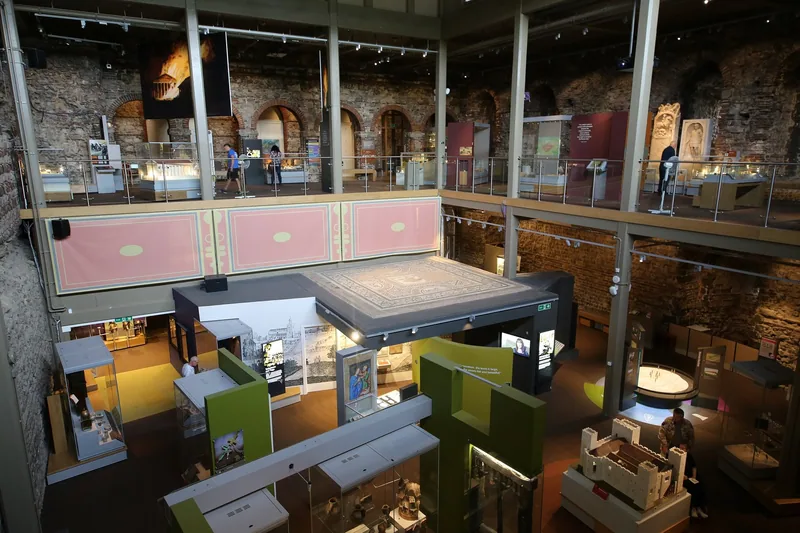
Photo: Geni · CC BY-SA 4.0 · Wikimedia Commons · resized
The castle, the temple underneath it and the vaults
Colchester Castle is a Norman keep, and it is the largest ever built in Europe, because it was raised on an enormous existing platform: the podium of the Temple of Claudius. That temple, paid for by taxes on the local population and built with British labour, was the focus of the resentment that fed Boudica's revolt.
When the Iceni and the Trinovantes attacked the undefended colonia in AD 60, the surviving inhabitants retreated into the temple, the largest building in the town. They held out for about two days before it was burnt and everyone inside was killed. The foundations are still there, and the museum runs guided tours down into the vaults every day.
The keep now houses Colchester's main museum, with the Roman collection as its core. We were unable to reach the museum's website when we checked in September 2026, so we have not verified the current admission price, the vault tour charge or the opening hours. Check colchester.cimuseums.org.uk before travelling, and ask at the desk on arrival about tour times, since the vault tours are usually booked on the day and are limited in size.
The vault tour is the reason to come, and it is not included in every ticket. Access to the temple foundations under the castle is by guided tour only, with tours running through the day and subject to availability. If that is what you have travelled for, ask about it the moment you arrive rather than after you have worked round the galleries.
Walking the Roman wall
Colchester's town wall was built after the Boudican destruction, and about two-thirds of it still stands, which makes it the earliest and best preserved in Britain. Walking the circuit is free, takes about ninety minutes with stops, and is the single best way to understand the shape of the Roman town.
The set piece is the Balkerne Gate, the original main entrance on the western side, and the largest surviving Roman gateway in Britain. It sits beside a Victorian water tower known locally as Jumbo, which makes it easy to find and impossible to photograph without it.
Beyond the walls, Roman Colchester had three theatres, more than any other town in Britain, and the only chariot-racing circus known on the island, identified in 2004 and now interpreted at the Roman Circus Visitor Centre south of the centre. Gosbecks Archaeological Park, in the south-west of the modern town, preserves the site of the pre-Roman royal centre of Cunobelin along with a Roman fort, theatre and temple complex. Both need a bus or a taxi.
What else is in the town
Firstsite is a contemporary art gallery in a long curved golden building near the castle, and entry to its exhibitions is always free, with charges only for the cinema and some events. It is closed on Mondays, opens 10am to 5pm on Tuesday and Wednesday and on Sunday, and stays open until 10pm from Thursday to Saturday, which is unusual outside London and useful if you are catching a late train.
Castle Park surrounds the keep and is the obvious place to eat a packed lunch. Hollytrees Museum, a Georgian townhouse on the park's edge, holds the social history collection. The Dutch Quarter, a grid of narrow streets north of the High Street, was settled by Flemish weavers in the 16th century and is the prettiest corner of the town.
Colchester Zoo and the Beth Chatto Gardens are both outside the town and both need a bus or taxi. The gardens, at Elmstead Market, are known for dry gardening and were made on what their creator called an impossible site, and they suit anyone who has already read our page on the great gardens of Kent and wants a less famous one.
A plan for the day
| Time | What to do |
|---|---|
| 9am | Leave Liverpool Street on a fast train |
| 10am | Walk down North Hill into the centre, looking at the Balkerne Gate on the way |
| 10.30am | Castle museum, asking about the vault tour as you arrive |
| 1pm | Lunch in the High Street or a picnic in Castle Park |
| 2pm | Walk the surviving line of the town wall, then the Dutch Quarter |
| 4pm | Firstsite, which is free and open late from Thursday to Saturday |
| 5.30pm | Train home from Colchester Town or Colchester |
Two stations, two different walks. Colchester station sits a mile north of the centre down a hill, so the outbound walk is easy and the return is not. Colchester Town station is a few minutes from the castle but has fewer and slower trains. Plan to arrive at one and leave from the other, and check the Colchester Town departures before committing.
How it compares with the other Roman day trips
St Albans is closer to London, 20 minutes from St Pancras, and has the Verulamium Museum, a Roman theatre and a long stretch of wall. Canterbury has Roman remains under a medieval and ecclesiastical city and is stronger on cathedrals than on Romans. Colchester beats both for the scale of what survives above ground and for the sheer drama of the Boudica story.
In London itself, the amphitheatre under Guildhall Yard, covered in our page on Guildhall and the Roman amphitheatre, and the collections of the London Museum are the equivalents, with the fragments of wall in the City filling in the rest. The Roman Britain galleries at the British Museum hold much of the best material found in Essex.
Beyond Colchester: the rest of Essex
The town is a junction rather than a dead end. Wivenhoe, a small riverside town with a quay, is ten minutes away by train. Mersea Island, known for oysters, is a bus ride south-east and cut off by the tide twice a day, which is worth checking before you go. Dedham Vale, the Constable country on the Suffolk border, starts at Manningtree, one stop further up the main line.
For the coast proper, our page on Southend and the Essex coast covers the other side of the county, reached from Fenchurch Street rather than Liverpool Street. Colchester also makes a reasonable stop if you are flying from Stansted, though the cross-country connection is slower than it looks on a map. The full list of options is on our days out from London page, and our guide to the London terminals explains how to reach Liverpool Street.
Practical points
Most of a Colchester day is outdoors and on your feet, so check what the weather is likely to do before you commit. The castle, Firstsite and Hollytrees between them give you enough indoor time to survive a wet afternoon, which is more than most Roman sites can offer.
The High Street has the usual chains plus independents in the side streets and the Dutch Quarter. Sunday is quieter than a Saturday and the trains are less frequent. Monday is the day to avoid if Firstsite is part of your plan, since it is closed.
Frequently asked questions
How long does the train from London to Colchester take?
The fastest Greater Anglia services from Liverpool Street take 46 minutes with no changes, and most take between 46 minutes and an hour. Colchester Town station, which is actually in the centre, takes about an hour and eleven minutes direct or around an hour with a change.
How much is a train ticket from London to Colchester?
An Off-Peak Day Return from Liverpool Street was £44.80 in September 2026, with an Anytime Day Single at £39.30 and a Super Off-Peak Day Single at £36.50. Advance singles started at £14.50 on specific trains, so two Advance tickets usually beat a flexible return.
Can you go inside the Roman temple at Colchester Castle?
You can go into the vaults built on the foundations of the Temple of Claudius, but only on a guided tour. Tours run daily inside the castle and places are limited, so ask about times as soon as you arrive. Check the museum's own website for the current tour charge.
Is Colchester really Britain's first city?
The claim refers to the Roman colonia founded around AD 49, which was the first capital of the province of Britannia. In modern terms Colchester was granted city status in 2022. Both statements are true; the marketing slogan simply refers to the older one.
What is there to do in Colchester besides the castle?
Walk the Roman wall and see the Balkerne Gate, which is free and takes about ninety minutes. Firstsite gallery has free exhibitions and stays open until 10pm from Thursday to Saturday. The Dutch Quarter, Hollytrees Museum and Castle Park fill the rest of a day, and the Roman Circus Visitor Centre is a short ride away.
Sources
- National Rail Enquiries - London Liverpool Street to Colchester, times and fares (checked September 2026)
- National Rail Enquiries - London Liverpool Street to Colchester Town, times and fares (checked September 2026)
- Visit Colchester - Roman Colchester (checked September 2026)
- Firstsite - Visit, opening hours and admission (checked September 2026)