
London's Chinatown is a small, busy grid of streets in Soho, between Leicester Square and Shaftesbury Avenue, full of Chinese restaurants, bakeries, supermarkets and dim sum parlours. It is free to walk around, easy to reach from anywhere in the West End, and one of the best places in central London for a filling meal that does not cost much.
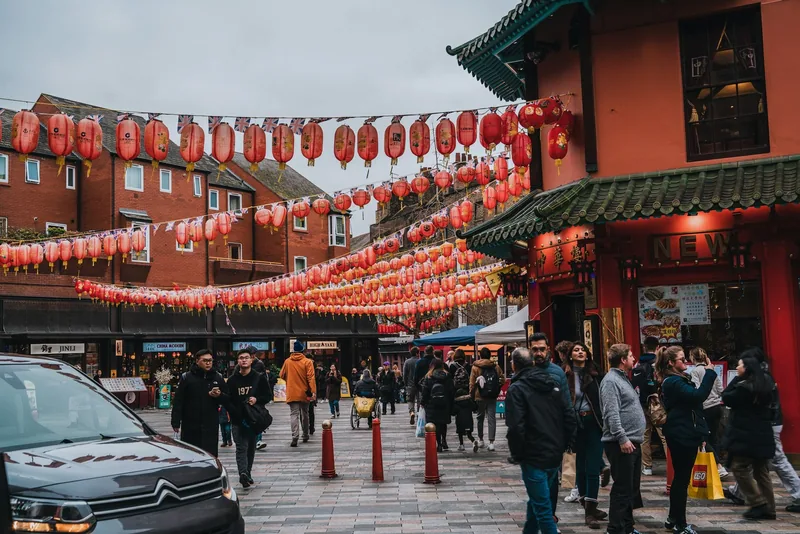
The heart of Chinatown is Gerrard Street, a pedestrian street hung with red lanterns and marked by ornamental gateways. Around it, Lisle Street, Macclesfield Street, Newport Place and parts of Wardour Street complete the area. You can walk from one end to the other in five minutes, but there is enough food here for many visits.
The area grew from the 1950s, when migrants mainly from Hong Kong opened restaurants and shops in what were then cheap Soho premises. Cantonese food still dominates, but today you will also find Sichuan, Hunan, northern Chinese, Taiwanese, Malaysian, Korean and Japanese restaurants. This guide explains the history, how dim sum and the other classic meals work, what to buy in the bakeries and when to see Chinese New Year.
Chinatown essentials
- Where
- Gerrard Street and surrounding streets, Soho, London W1
- Nearest stations
- Leicester Square (Piccadilly and Northern lines), Piccadilly Circus (Bakerloo and Piccadilly lines)
- Entry
- Free, open streets
- Best known for
- Cantonese roast meats, dim sum, noodle soups, egg tarts and buns
- Busiest times
- Weekend lunchtimes, pre-theatre evenings, Chinese New Year
- Chinese New Year 2027
- Lunar New Year falls on Saturday 6 February 2027; London's celebration date is not yet announced
From the docks of Limehouse to the streets of Soho
The present Chinatown is not London's first. According to the London Museum, Chinese sailors began working for British shipping companies from the late eighteenth century and stayed in the East End docklands between voyages. By the 1880s a small community in Limehouse had opened restaurants, laundries, hostels and grocery shops. Street names such as Ming Street, Pekin Street and Canton Street are reminders of it today.
That first Chinatown declined in the 1930s, when the economic depression hit shipping, and it was further broken up by slum clearance and by bombing in the Second World War. At the same time, a new Chinese community was growing in the West End. From the early 1950s entrepreneurs, largely from Hong Kong Island and the New Territories, opened businesses in and around Gerrard Street. By the 1970s the West End Chinatown was fully established.
In 1985 Westminster City Council officially named the area "Chinatown", and in the same year the London Chinatown Chinese Association launched London's official Chinese New Year celebrations. The pedestrian streets, lanterns and gateways you see today were added over the following decades. The area remains a working community as well as a tourist attraction, with Chinese-language services, associations and shops aimed at local families.
Gates, lanterns and other things to look for
Chinatown is at its best when you look up. Several ornamental gateways in traditional Chinese style mark the entrances to the area, decorated with painted beams, tiled roofs and Chinese characters. Red paper lanterns are strung across Gerrard Street, and they are replaced and multiplied around Chinese New Year. Street signs are in both English and Chinese.
Look in the restaurant windows as you walk. The glazed roast ducks, crispy pork belly and red-edged char siu (barbecued pork) hanging behind the glass show which places specialise in Cantonese roast meats. In the bakeries, trays of fresh egg tarts and buns come out through the day.
Chinatown sits right between Soho and Leicester Square. Our guide to Soho covers the streets to the north, and Covent Garden is five to ten minutes' walk to the east.
How dim sum works
Dim sum is the Cantonese tradition of small dishes, many steamed in bamboo baskets, eaten with tea. In Hong Kong it is a morning and lunchtime meal, and most London restaurants serve it mainly during the day. It is ideal for groups, because everyone shares, and it is one of the cheapest ways to try many different flavours.
In most Chinatown restaurants you are given a paper order sheet with the dishes listed in English and Chinese. You write the number of portions you want next to each dish and hand it to a waiter. The old trolleys that were pushed between tables are now rare. Dishes arrive as they are ready, not in courses.
- Har gau: steamed prawn dumplings with a thin, translucent wrapper.
- Siu mai: open-topped pork and prawn dumplings.
- Char siu bao: soft steamed or baked buns filled with barbecued pork.
- Cheung fun: slippery rice-noodle rolls with prawn, beef or pork, served with sweet soy sauce.
- Lo mai gai: sticky rice with chicken and mushroom, steamed in a lotus leaf.
- Custard or egg tarts: the usual sweet finish.
Tea is usually brought automatically and is often charged per person. If you want more hot water in the pot, leave the lid open or resting on the side, the traditional signal to the staff.
Order dim sum in two rounds. Tick a few dishes per person on the first sheet, see what arrives and how filling it is, then order a second round. Ordering everything at once is the most common way to overspend and end up with cold baskets on the table.
Roast meats, noodles and hotpot
Outside dim sum hours, the classic cheap meal in Chinatown is a plate of rice or noodles topped with roast meat: duck, crispy pork, char siu or soy chicken, often with a little pak choi or other greens. Wonton noodle soup, with prawn dumplings in a clear broth, is another quick meal. These are counter or canteen-style dishes, and service is fast rather than elaborate.
Over the last two decades, the food in Chinatown has become more varied. Sichuan restaurants serve dishes heavy with chilli and numbing Sichuan pepper, while other places specialise in hand-pulled noodles from northern China, hotpot (a pot of simmering broth in which you cook your own meat and vegetables at the table), or Malaysian and Singaporean dishes such as laksa. Some of the newer places have queues outside at weekends, which is a good sign but costs time.
Most restaurants are open from late morning until late evening, and the area is lively after dark. Chinatown is a natural stop on an evening out: see our guide to London at night for ideas.
Bakeries, bubble tea and mooncakes
Chinese bakeries are among the best-value stops in central London. Look for pineapple buns (sweet buns with a crackly sugar top, which contain no pineapple), egg tarts, custard buns, cocktail buns filled with coconut, and savoury buns filled with char siu or sausage. Many visitors buy a bag and eat them in a park or on the way to a museum.
Bubble tea shops, selling sweet milky or fruit teas with chewy tapioca pearls, have spread through the area, together with dessert cafés selling mango pancakes, sesame soup and shaved ice.
Around the Mid-Autumn Festival, bakeries and supermarkets fill with boxes of mooncakes: dense round pastries filled with lotus seed or red bean paste, sometimes with a salted egg yolk inside. In 2026 the festival falls on Friday 25 September, the fifteenth day of the eighth lunar month according to the Hong Kong Observatory calendar. A box of mooncakes makes an unusual gift to take home.
Chinese supermarkets and shopping
The large Chinese supermarkets on Gerrard Street and nearby sell ingredients from across East and Southeast Asia: soy sauces, noodles, rice, frozen dumplings, fresh vegetables such as gai lan and Chinese chives, tea, and snacks you will not find in a British supermarket. They are interesting to browse even if you do not cook.
If you plan to take food home, check your own country's import rules first, because many countries restrict meat, dairy and some plant products in travellers' luggage. Our guide to souvenirs worth buying suggests teas and snacks that travel well.
Chinese New Year in London
Chinese New Year, also called Lunar New Year or the Spring Festival, is the biggest event of the year in Chinatown. The celebrations in London grew from private gatherings among local businesses in the 1970s. Since 1985 the London Chinatown Chinese Association has organised the official celebrations, and in 2002 they expanded to Trafalgar Square for the first time.
The festival is usually held on a Sunday near the new year date. In 2026 the main celebration took place on Sunday 22 February in Chinatown and on Trafalgar Square, and it was free. Expect a parade, lion and dragon dances in the streets, stage performances in the square and very large crowds.
For 2027, Lunar New Year itself falls on Saturday 6 February, starting the Year of the Goat. The date of London's public celebration had not been announced in September 2026, so check the Mayor of London's events pages nearer the time. Our guide to London in February lists what else is on that month.
On festival day, eat early or book ahead. The streets of Chinatown become so crowded during the New Year celebrations that simply walking through can be slow, and restaurants fill quickly. Book a table, arrive before midday, or eat in a neighbouring area and come to Chinatown only for the parade and dances.
Fitting Chinatown into a day in the West End
Because it is so central, Chinatown works best as part of a wider day. The National Gallery on Trafalgar Square is about five minutes' walk south, so a dim sum lunch after a morning in the gallery is easy. Piccadilly Circus is just to the west.
Chinatown is also surrounded by theatres. Shaftesbury Avenue runs along its northern edge, and a quick meal here before a show is often cheaper and faster than the set menus of the restaurants closer to the theatres. See our guide to West End theatre for how to plan an evening.
Practical tips for eating in Chinatown
- Service charge: many sit-down restaurants add one to the bill. Check the menu and the bill, and do not tip twice.
- Payment: most restaurants take cards; a few smaller shops may prefer cash for small purchases.
- Hygiene: ratings from 5 to 0 are published on the Food Standards Agency's food hygiene ratings site. Businesses in England do not have to display them.
- Sharing: dishes are designed for sharing, and ordering one dish per person plus rice is usually enough.
Allergies and special diets
Chinese cooking uses several of the 14 allergens that businesses must declare under UK food law: soybeans, sesame, wheat (standard soy sauce is brewed with wheat), peanuts, fish, crustaceans such as prawns, and molluscs such as oyster sauce. Restaurants must be able to tell you which allergens are in a dish, either in writing or by telling you where the information is. Ask before ordering. Gluten-free diners should read our gluten-free guide, because soy sauce appears in many dishes that do not look as if they contain wheat.
Vegetarians will find tofu and vegetable dishes on every menu, but many sauces and stocks use meat, fish or oyster sauce, so ask. For more budget options across the city, see cheap eats in London.
Frequently asked questions
Where exactly is Chinatown in London?
Chinatown is in Soho, in the West End, centred on Gerrard Street between Leicester Square and Shaftesbury Avenue. The nearest Underground stations are Leicester Square, on the Piccadilly and Northern lines, and Piccadilly Circus, on the Bakerloo and Piccadilly lines. Both are a few minutes' walk away.
When is Chinese New Year in London in 2027?
Lunar New Year falls on Saturday 6 February 2027. London's public celebration is usually held on a Sunday around the new year date, but the 2027 date had not been announced in September 2026. Check the Mayor of London's events pages for the confirmed date.
What time is dim sum served in Chinatown?
Dim sum is traditionally a daytime meal, and most Chinatown restaurants serve it from late morning until the afternoon. Some serve it all day. Times vary between restaurants, so check the restaurant's own website before you go.
Is Chinatown London expensive?
No. It is one of the better-value places to eat in central London, especially for roast meat on rice, noodle soups, dim sum shared between several people and snacks from the bakeries. Newer, more fashionable restaurants and hotpot places cost more, and drinks and service charges add to any bill.
Is Chinatown worth visiting if I do not want to eat?
It is worth a short walk-through for the lanterns, gateways and shops, and it lies between several major sights. But most of its appeal is food, so the best way to enjoy it is to plan at least a snack from one of the bakeries.
Sources
- London Museum - Limehouse: London's first Chinatown (checked September 2026)
- London Museum - Lunar New Year in London: celebration, change and Chinatown (checked September 2026)
- Mayor of London - Lunar New Year Festival 2026 (checked September 2026)
- Hong Kong Observatory - Gregorian-Lunar calendar 2027 (checked September 2026)
- Hong Kong Observatory - Gregorian-Lunar calendar 2026 (checked September 2026)
- Food Standards Agency - Food allergy and intolerance advice for consumers (checked September 2026)