
Soho is the small grid of streets between Oxford Street, Regent Street, Charing Cross Road and Shaftesbury Avenue, and it is where central London goes to eat, drink and see a show. It is at its best from late afternoon into the evening, when the restaurants fill up and the theatres open, and it is noisy, crowded and not cheap.
Soho covers less than one square mile, and you can walk from one side to the other in about 15 minutes. It has no single big attraction. Instead it has hundreds of restaurants, bars, cafés and small shops packed into narrow 18th- and 19th-century streets, with the theatres of Shaftesbury Avenue on its southern edge and Chinatown just beyond.
For centuries Soho has been the place where London's outsiders settled: French Protestant refugees, Italian and Greek families, musicians, writers, film-makers, sex workers and the gay community. Much of that history is still visible if you know where to look. The area changes completely between 9am and midnight, so this guide explains what to expect at each time of day as well as where to go.
Soho at a glance
- Borders
- Oxford Street (north), Regent Street (west), Shaftesbury Avenue (south), Charing Cross Road (east)
- Stations
- Tottenham Court Road, Oxford Circus, Piccadilly Circus, Leicester Square
- Best for
- Dinner, pre-theatre meals, bars, jazz, comedy, record and fashion shopping
- Quietest
- Weekday mornings and Sunday mornings
- Busiest
- Thursday to Saturday evenings, especially after 9pm
From hunting ground to theatreland: how Soho grew
In the 16th century this was open royal hunting land, and the name is usually traced to "so-ho", an old hunting cry. Houses went up from the late 17th century, and many of the first residents were Huguenots, French Protestants who had fled persecution. From then on, Soho kept attracting newcomers who could not afford, or were not welcome in, the smarter streets of Mayfair to the west.
Several famous people passed through. The eight-year-old Mozart stayed on Frith Street in 1764-65, and Karl Marx lived with his family in poverty on Dean Street in the 1850s. In 1854 the doctor John Snow traced a deadly cholera outbreak to a public water pump on Broad Street (now Broadwick Street), work that helped prove cholera spread through water. A replica pump stands on the street today, next to a pub named after him.
In the 20th century Soho became the centre of London's film industry around Wardour Street, of its jazz clubs and coffee bars, and of 1960s fashion on Carnaby Street. It also had a large sex industry, which has shrunk to a handful of venues since the 1980s as rents rose. Today Soho is more polished and more expensive than it was a generation ago, and long-time residents often complain that it has lost some of its character, but it still feels different from the rest of the West End.
Soho through the day and night
Morning. Before about 10am Soho is surprisingly calm. Delivery lorries block the narrow streets, street cleaners wash away the night before, and people who work in the area's media and post-production companies queue for coffee. It is the best time to look at the architecture and the old shop fronts without being pushed along.
Afternoon. Shoppers spill in from Oxford Street and Regent Street, Carnaby Street fills up and the lunchtime cafés are busy. It is a pleasant time to browse the record shops and small boutiques.
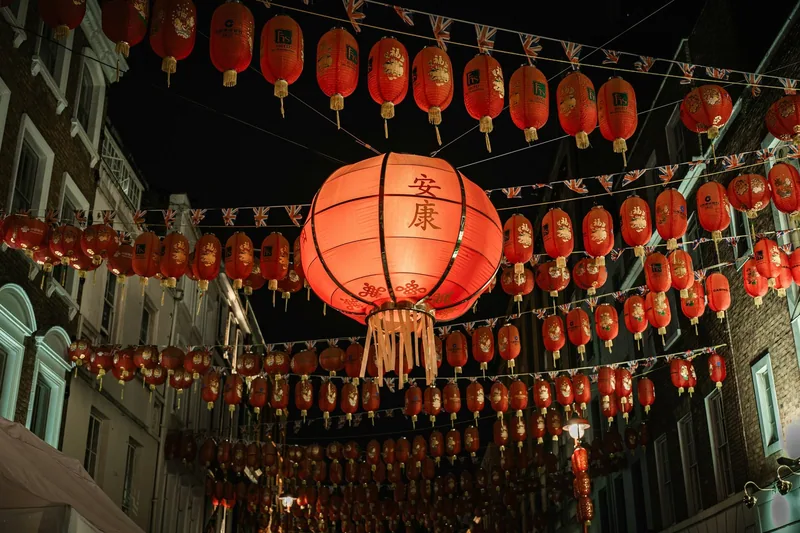
Early evening. From about 5pm the after-work drinkers stand on the pavements outside the pubs, and theatregoers look for a quick meal before an evening show. Restaurants that do not take bookings start to build queues by 6.30pm. This is Soho's most enjoyable time for many visitors: busy, cheerful and still easy to move around.
Late night. On Thursday, Friday and Saturday nights, Old Compton Street, Dean Street and Frith Street stay crowded until well after midnight. It is loud, some people are very drunk, and the streets can be dirty by the early hours. If you want a quiet evening, choose a weeknight, or eat in Soho and then move on.
Where and how to eat in Soho
Soho has the densest choice of restaurants in central London, from small Italian cafés to expensive tasting menus. Dean Street, Frith Street, Greek Street and Old Compton Street have the highest concentration; the streets west of Wardour Street, around Lexington Street and Kingly Court, a courtyard of restaurants just off Carnaby Street, tend to be a little calmer.
A few places have been here long enough to be part of Soho's story. Maison Bertaux, a French pâtisserie on Greek Street, has been making cakes in Soho since 1871, a reminder of the French families who once filled these streets. Across Shaftesbury Avenue, Gerrard Street and Lisle Street form London's Chinatown, which is the easiest place in the area to eat well for a moderate price.
Many of the most popular newer restaurants take few or no bookings. Arrive before 6pm or after 9pm, or be ready to leave your phone number and wait in a nearby bar until a table is free. Prices are high, and a discretionary service charge, often around 12.5%, is commonly added to the bill; this is common practice rather than a legal rule, so check the menu. For budget options nearby, see our guide to eating cheaply in London, and for a morning flat white our round-up of London's best coffee includes several Soho cafés.
Book pre-theatre dinners for 5.30pm, not 6.30pm. Most West End shows start at 7.30pm, and the whole of Soho seems to want a table at 6pm or 6.30pm. An earlier sitting gives you a calmer meal, and many restaurants offer set pre-theatre menus at that time.
Theatres, comedy and live music
The southern edge of Soho is Shaftesbury Avenue, the heart of London's theatreland, with several large theatres along it and the Palace Theatre at Cambridge Circus. Our guide to West End theatre explains how the shows, seats and prices work. On Leicester Square, a short walk south, The Official London Theatre Ticket Booth sells discounted same-day tickets from 10.30am to 6pm Monday to Saturday and 11am to 4pm on Sundays; our page on cheap theatre tickets covers that and other ways to save.
Inside Soho itself, Soho Theatre on Dean Street is known for stand-up comedy and new writing, with several shows each evening in small spaces. Other venues are listed in our guide to London's comedy clubs.
For music, Ronnie Scott's on Frith Street has been one of the world's best-known jazz clubs since the 1960s, and it is worth booking ahead for evening sets. It is one of several Soho venues in our round-up of live music in London.
Record shops, fashion and books
Berwick Street was once lined with independent record shops. Many have closed, but some well-established names survive: Reckless Records has bought and sold vinyl and CDs on Berwick Street since 1984, and Sister Ray, founded in 1989, is on the same street. Berwick Street also has a long-running street market. If second-hand music and clothes are your thing, our guide to vintage and second-hand shopping points you to more.
Carnaby Street, famous in the 1960s for its boutiques, is now a pedestrian street of fashion brands, with smaller independent shops in the streets around it. On its western edge, on Great Marlborough Street, stands Liberty, the mock-Tudor department store known for its fabrics; it is covered in our guide to London's department stores. North of Soho, Oxford Street has the big chain stores.
Charing Cross Road, on Soho's eastern edge, was traditionally London's bookshop street. Foyles, one of the largest bookshops in the city, is still there, along with a few second-hand dealers in the side streets. Our London bookshop guide covers the best of them.
LGBTQ+ Soho and Old Compton Street
Old Compton Street has been the centre of gay London for decades, and Soho still has the largest cluster of LGBTQ+ bars in the city. The rainbow flags, the busy pavement bars and the mixed crowd make it a welcoming place for most visitors, gay or not.
The street also carries a painful memory. On 30 April 1999 a nail bomb exploded in the Admiral Duncan pub on Old Compton Street, killing three people and injuring many more. The pub was repaired and reopened afterwards. For a wider picture of venues, events and Pride, see our LGBTQ+ guide to London.
Quiet corners: Soho Square and the side streets
Soho Square, at the northern end of Greek Street and Frith Street, is a small garden square with a statue of King Charles II and a little mock-Tudor hut in the middle. On a sunny weekday lunchtime it fills with office workers eating on the grass; early in the morning or on a Sunday you may have it almost to yourself.
The narrow lanes west of Wardour Street, such as Meard Street with its early 18th-century houses, and the quiet end of Lexington Street and Broadwick Street, show the older, more residential side of Soho. People still live here, above the shops and restaurants, so keep your voice down when you leave a bar late.
Safety and the downsides of a night out in Soho
Soho is not a dangerous area, but it is crowded, and crowded places attract thieves. Phone snatching is the most common problem in the West End: according to City Hall, mobile phone theft in London fell to around 71,391 cases in 2025, and police numbers in the West End have been doubled. Keep your phone in your hand close to your body or in a zipped pocket, especially near the kerb, where thieves on bikes operate. Our guide to staying safe in London covers common scams as well.
Other things to be aware of: late at night some bars have door staff and dress rules, pedicabs (cycle rickshaws) can charge very high prices, so agree the full price before you sit down, and street toilets are few, so use the facilities where you eat or drink.
Soho hotel rooms facing the street rarely sleep well on weekends. If you are staying in or next to Soho, ask for a room at the back or on a high floor. Bars close late, crowds leave in the early hours and street cleaning and deliveries begin not long after.
Soho suits
- Food lovers and people who like to eat out every night
- Theatregoers, jazz and comedy fans
- Night owls and LGBTQ+ travellers
- Anyone who likes to explore on foot without a fixed plan
Think twice if
- You are travelling with small children and want early, quiet nights
- You need a quiet hotel room
- You are looking for big museums or famous monuments
- Your budget is tight: meals and drinks cost more than average
Getting in and out of Soho
Four Tube stations surround Soho. Tottenham Court Road (Central and Northern lines and the Elizabeth line) is best for the north-east corner and Soho Square; Oxford Circus (Central, Victoria and Bakerloo) for Carnaby Street; Piccadilly Circus (Piccadilly and Bakerloo) for the south-west and Chinatown; and Leicester Square (Piccadilly and Northern) for the theatres. A Zone 1 Tube journey costs £3.10 at peak times and £3.00 off-peak with contactless or Oyster.
Soho itself is best on foot; the streets are narrow and traffic is slow. Late at night, the Night Tube runs on Friday and Saturday nights on the Central, Victoria, Northern, Piccadilly and Jubilee lines, and night buses leave from Oxford Street, Regent Street and Trafalgar Square. For ideas on how to spend an evening, see our guides to London nightlife and London after dark.
Soho runs straight into its neighbours. Cross Charing Cross Road and you are in Covent Garden within five minutes; cross Regent Street and you are in the far quieter, far richer streets of Mayfair.
Frequently asked questions
Is Soho safe at night?
Soho is generally safe and heavily policed, and it is busy until late, which helps. The main risks are pickpockets and phone snatchers in crowds, and drunken behaviour at weekends. Keep valuables out of sight and your phone away from the kerb.
What is Soho in London known for?
Soho is known for restaurants and bars, West End theatres, jazz clubs, record shops, its LGBTQ+ scene around Old Compton Street, and a long history as a home for immigrants, artists, musicians and London's film industry.
Is Soho a good place to stay?
It is excellent for nightlife and restaurants and very central, but hotels are expensive and street-facing rooms can be noisy, especially from Thursday to Saturday. Light sleepers and families usually prefer Marylebone, Bloomsbury or Covent Garden's quieter edges.
Which Tube station is best for Soho?
Tottenham Court Road is best for Soho Square and Old Compton Street, Oxford Circus for Carnaby Street, and Piccadilly Circus or Leicester Square for Chinatown and the theatres. Soho is small enough to walk across from any of them in about 15 minutes.
Do I need to book restaurants in Soho?
For popular places on Friday and Saturday evenings, yes, if they take bookings. Many newer restaurants accept only walk-ins, so arrive before 6pm or after 9pm, or put your name down and wait nearby for a text.
Sources
- Society of London Theatre - The Official London Theatre Ticket Booth (checked September 2026)
- Mayor of London - Crackdown on mobile phone theft (checked September 2026)
- Transport for London - Night Tube (checked September 2026)
- GOV.UK - Distributing tips fairly: statutory code of practice (checked September 2026)
- Reckless Records - About the shop (checked September 2026)
- Sister Ray - About Sister Ray (checked September 2026)
- Maison Bertaux - Greek Street, Soho (checked September 2026)