
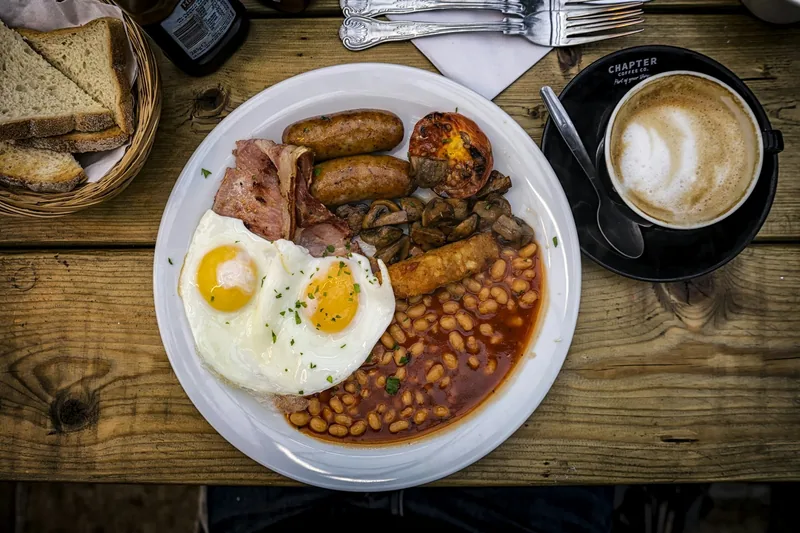
A full English breakfast is a large cooked plate of bacon, sausages, eggs, baked beans, tomatoes, mushrooms and toast, usually with tea or coffee. In London you can eat a good one in a traditional café for a modest price, or in a grand dining room for much more.
The full English, also called a fry-up, is the big weekend breakfast of British home cooking and the classic hotel breakfast. It is hearty rather than refined, and many people eat it late in the morning and skip lunch. Almost every café, many pubs and most hotels serve some version of it, so the challenge in London is not finding one but finding a good one.
This guide explains what should be on the plate, how the breakfast changes in Scotland, Wales and Northern Ireland, and where to look for a well-cooked version in London. It is one of several classics in our guide to traditional British food.
The full English in brief
- Also called
- A fry-up, a cooked breakfast, a "full English"
- Core items
- Bacon, sausage, egg, baked beans, tomato, mushrooms, toast
- Common extras
- Black pudding, hash browns, fried bread, bubble and squeak
- Where to eat
- Traditional cafés ("caffs"), pubs, hotel dining rooms, all-day brasseries
- Tipping
- Not expected when you order and pay at a café counter
- Vegetarian option
- Widely available, with vegetarian sausages and extra eggs or halloumi
What goes on the plate
There is no official recipe, and people argue happily about what belongs. Most cafés and hotels start from the same core and let you add or remove items. A standard plate looks like this:
| Item | What to expect |
|---|---|
| Bacon | British "back bacon": thicker, leaner rashers than the crispy streaky bacon common in North America |
| Sausages | Pork sausages, fried or grilled; the quality varies more than anything else on the plate |
| Eggs | Fried is standard; scrambled or poached are usually available if you ask |
| Baked beans | Haricot beans in a sweet tomato sauce, served hot |
| Tomato | Half a tomato, grilled or fried, or tinned tomatoes in cheaper places |
| Mushrooms | Fried in butter or oil |
| Toast or fried bread | Buttered toast is normal; fried bread (a slice fried in fat) is the old-school choice |
| Black pudding | A dark sausage made from pork blood, fat and oats or barley, sliced and fried |
| Hash browns | Fried grated potato; a newer addition that many cafés now include |
You will usually be asked how you want your eggs and whether you want tea or coffee. Tea comes with milk unless you say otherwise. Brown sauce (a tangy, spiced sauce) and tomato ketchup are the standard condiments, and choosing between them is a matter of personal loyalty.
Black pudding is blood sausage, and worth one bite. Many visitors avoid it once they learn what it is made of, but a good slice is crisp outside, soft inside and gently spiced. If you are unsure, order a plate with it and share. If you avoid blood products for religious or dietary reasons, ask for it to be left off.
The smaller variations
Bubble and squeak (fried leftover potato and cabbage) appears on some café menus. Kippers, which are smoked and grilled herring, are a traditional alternative to the meat plate, and some all-day restaurants still serve them. Eggs Benedict, avocado toast and pancakes are now common too, but they are not part of the full English.
How the breakfast changes around Britain
The English version is the best known, but each nation of the United Kingdom has its own cooked breakfast. In London you will mostly see the English plate, although Scottish and Irish items sometimes appear on café and pub menus.
- Full Scottish: often adds square (Lorne) sausage, tattie scones (flat potato cakes), haggis and sometimes oatcakes.
- Full Welsh: may include laverbread (a purée of seaweed, often fried with oatmeal) and cockles.
- Ulster fry (Northern Ireland): known for soda bread and potato bread, both fried.
- Full Irish (Ireland): usually includes white pudding as well as black pudding.
If you are travelling beyond London, these regional breakfasts are a good reason to eat in a local café rather than in your hotel.
The traditional London café, or "caff"
The classic place for a fry-up is the traditional café, often called a "caff" or a "greasy spoon". These are small, family-run places with Formica tables, steamed-up windows, mugs of strong tea and a menu board behind the counter. Some have been run by the same family for decades, and a few still have their original mid-20th-century interiors, which are now as much of a draw as the food.
How it works is simple. You usually order and pay at the counter, sit down, and the food is brought to you. Prices are much lower than in hotels or restaurants, and portions are large. Tipping is not expected at the counter, although a coin in a tip jar is appreciated. Our guide to tipping in London explains the difference between counter service and table service.
Caffs are found all over London, but they are more common away from the most touristy streets: near markets, around railway stations and in residential neighbourhoods. A good sign is a queue of local workers early in the morning. Our guide to cheap eats in London has more low-cost options.
A café fry-up can replace two meals. A full English eaten around 10:00 or 11:00 keeps most people going until the afternoon. On a sightseeing day that means one inexpensive café meal instead of breakfast plus a central London lunch, which can make a real difference to a family's budget.
Hotel breakfasts: included or extra
Many London hotels serve a full English at a breakfast buffet or cooked to order. Whether it is included varies widely. Budget hotels often sell breakfast as an extra, while some mid-range and luxury hotels include it only on certain rates. Check what your booking includes, because paying for breakfast at the hotel is often more expensive than eating in a café nearby.
Buffet breakfasts are convenient but can be disappointing: eggs and bacon that have sat under a heat lamp are a long way from a plate cooked to order. If your hotel breakfast is not included, try at least one café breakfast during your stay. Our guides to budget hotels and to the best areas to stay can help you choose a base with good cafés nearby.
Grander breakfasts in historic rooms
At the other end of the scale, some of London's grand restaurants and hotels serve breakfast in beautiful dining rooms. It is one of the more affordable ways to see a famous room, because breakfast usually costs less than dinner in the same place.
The Wolseley on Piccadilly, near Mayfair and St James's, has been serving all-day dining in a grand Art Deco room for more than two decades, and its breakfast menu includes a full English and grilled kippers. The Wolseley now has a second restaurant in the City of London. The Ritz welcomes non-residents to breakfast in its restaurant, with a full English on the menu; in September 2026 it listed a minimum spend of £55 per person and a last sitting for non-residents at 10:00, so book ahead and check its dress code. These are not the only choices: many hotels and brasseries in the West End serve a smart breakfast, so compare menus and prices on their own websites and book for weekends.
Breakfast in pubs and markets
Some pubs serve a cooked breakfast, especially at weekends and on days when football or rugby is shown early. Pub breakfasts vary a lot in quality. If you want to try one, our guide to pub etiquette explains how ordering at the bar works.
Food markets are another option. At Borough Market near London Bridge, stalls sell bacon sandwiches, sausage rolls and coffee from the morning, which is a good alternative if you want something quick rather than a full plate. The bacon sandwich (or "bacon butty") is a much-loved lighter breakfast: bacon in buttered bread or a soft roll, with ketchup or brown sauce.
Vegetarian, vegan, halal and gluten-free versions
A full English is heavy on pork and wheat, but most cafés and hotels now offer alternatives. A vegetarian breakfast usually replaces the bacon and sausage with vegetarian sausages, extra eggs, halloumi or avocado. Vegan versions use plant-based sausages and scrambled tofu. Our guide to vegan and vegetarian London lists more options.
Halal cafés serve full breakfasts with beef or chicken sausages and turkey or beef "bacon" instead of pork; see our guide to halal food in London. If you avoid gluten, ask about the sausages (many contain wheat) and the toast, and remember that items are often cooked on the same griddle. Food businesses must be able to tell you if a dish contains any of the 14 regulated allergens, so ask staff before you order.
Sausages and black pudding often hide gluten. Many British sausages and black puddings contain rusk, oats or barley. If you have coeliac disease or a wheat allergy, ask for a plate without them and check how the eggs and potatoes are cooked.
Paying, timing and ordering tips
Contactless card payment is accepted in most cafés, but a few small places still prefer cash or set a minimum card spend; our guide to money and payments in London has the details. Traditional cafés open early for workers and often close in the afternoon, so do not leave a fry-up until late in the day. Many are closed or keep shorter hours on Sundays and bank holidays; our page on opening hours in London explains the patterns.
If your day starts early with a big sight, a café breakfast nearby is a practical first stop; our one-day London itinerary shows how to fit meals around the main sights. For a good coffee rather than a mug of tea, see our guide to coffee in London.
Frequently asked questions
What is in a full English breakfast?
A standard full English includes bacon, sausages, eggs, baked beans, grilled tomato, mushrooms and toast. Many cafés also add black pudding and hash browns. It is usually served with tea or coffee, and you can normally choose how your eggs are cooked.
Where can I get a cheap full English breakfast in London?
Traditional cafés, often called caffs or greasy spoons, serve the best-value fry-ups. They are found near markets, stations and in residential streets rather than on the main tourist routes. You usually order and pay at the counter, and tipping is not expected.
Is a full English breakfast included in London hotels?
It depends on the hotel and the rate you book. Budget hotels often charge extra for breakfast, and some more expensive hotels include it only on certain rates. Check your booking, and compare the hotel price with a café nearby before you pay.
What is the difference between a full English and a full Scottish breakfast?
A full Scottish usually adds items such as square (Lorne) sausage, tattie scones and haggis, and sometimes oatcakes. A full Welsh may include laverbread and cockles, while an Ulster fry is known for fried soda bread and potato bread.
Can vegetarians eat a full English breakfast?
Yes. Most cafés and hotels offer a vegetarian version with vegetarian sausages, extra eggs, mushrooms, beans, tomatoes and toast, sometimes with halloumi or avocado. Vegan breakfasts with plant-based sausages and scrambled tofu are also widely available in London.
Sources
- The Wolseley - The Wolseley on Piccadilly (checked September 2026)
- The Ritz London - Breakfast at The Ritz (checked September 2026)
- Food Standards Agency - Food allergy and intolerance advice for consumers (checked September 2026)
- GOV.UK - Tips at work (checked September 2026)