
Dalston and Stoke Newington sit end to end along one long road in east London, about four kilometres north of the City. Dalston, at the south end, is where the late bars, the Turkish grills and the market are. Stoke Newington, 20 minutes' walk further north, is quieter, greener and built around a single village street and a Victorian cemetery that has been left to grow wild.
The road changes name as you go: Kingsland Road becomes Kingsland High Street at Dalston, then Stoke Newington Road, then Stoke Newington High Street. It is the old Roman route north out of London, and most of what a visitor wants is within a few minutes of it.
Neither area is a sight in the usual sense. You come here to eat, to drink late, or to walk in a cemetery full of ivy and foxes. It is a good half-day for a second or third visit to London, and an easy add-on if you are already in Shoreditch or Hackney.
The two areas compared
- Dalston is for
- Late bars, clubs, Turkish grills, Ridley Road Market, a 1915 cinema
- Stoke Newington is for
- Church Street shops, Clissold Park, Abney Park cemetery, slow lunches
- Dalston stations
- Dalston Junction (Windrush line), Dalston Kingsland (Mildmay line)
- Stoke Newington stations
- Stoke Newington and Rectory Road (Weaver line), or bus 73, 76, 149, 243
- Walking between them
- About 20-25 minutes straight up the main road
- Bus fare
- £1.75, rising to £1.85 on 1 November 2026
- Abney Park
- Free, open 8am until dusk, including Christmas Day
Getting here, and which station to use
Dalston has two stations about 200 metres apart, and they are not interchangeable. Dalston Junction is on the London Overground's Windrush line, which runs south through Shoreditch High Street, Whitechapel, Canada Water and on towards Croydon or Clapham Junction. Dalston Kingsland is on the Mildmay line, which runs east to west across north London between Stratford and Richmond or Clapham Junction. Check which one your journey actually needs, because walking between them with luggage is a nuisance.
Stoke Newington has its own National Rail station on the Weaver line, about 20 minutes from Liverpool Street. Rectory Road, one stop closer in, is handy for the south end of Church Street. Our page on the Overground and DLR explains the six renamed Overground lines and which parts of London each one reaches.
Buses are often simpler. The 149 and 243 run down Kingsland Road to Liverpool Street; the 73 goes to King's Cross and Oxford Street; the 76 goes to Waterloo. A single fare is £1.75, rising to £1.85 on 1 November 2026, and the Hopper fare lets you change buses free within an hour.
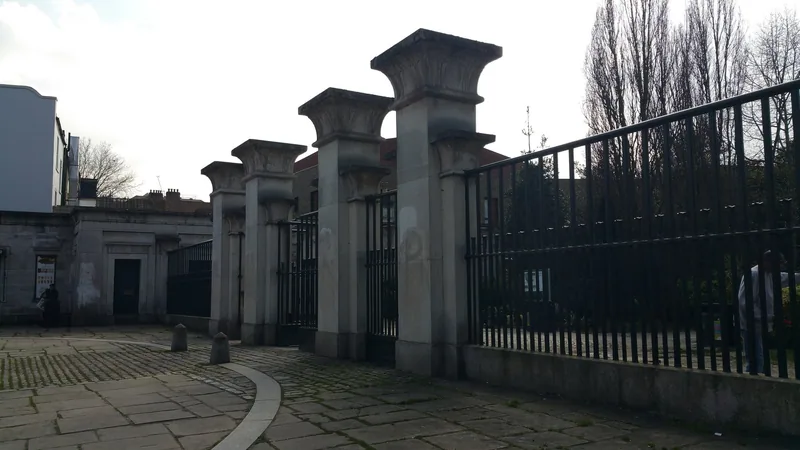
Photo: JRennocks · CC BY 4.0 · Wikimedia Commons · resized
Turkish food: what an ocakbaşı actually is
The stretch from Dalston up to Stoke Newington holds one of the largest concentrations of Turkish and Kurdish restaurants in Britain. Most of the well-known ones are ocakbaşı grills: a long charcoal pit set into a counter, with the cook working over it and diners sitting around the edge. The food is grilled meat and vegetables, flatbread straight off the fire, and salads, usually served without much ceremony.
Prices are moderate by London standards and portions are large. A mixed grill for two, with bread and salad, generally costs less than a main course each in a central restaurant, and many places are open until the small hours. Our guide to Turkish food in London names specific restaurants and explains the difference between an ocakbaşı, a pide place and a börek shop.
Further south on Kingsland Road, before you reach Dalston proper, is the run of Vietnamese restaurants that Londoners call the Pho Mile. It is covered in our guide to Vietnamese food on Kingsland Road, which is the place to start if that is what you came for.
Many Dalston grills do not serve alcohol, and most let you bring your own. Ask when you book or when you sit down. Off-licences on the same street sell beer and wine, and the corkage charge, where there is one, is usually a pound or two per person. It can halve the bill for a group.
Ridley Road Market
Ridley Road runs east off Kingsland High Street, next to Dalston Kingsland station. The market there is a food market for the people who live nearby rather than a visitor attraction: Caribbean and West African produce, Turkish groceries, fish, halal butchers, fabric and cheap household goods. It is busiest from late morning to mid-afternoon, Monday to Saturday, and it is at its fullest on Saturday.
Go for the produce and the noise, not for souvenirs. Cash is still useful, though most stalls now take cards. If you want flowers instead, Columbia Road is a 15-minute bus ride south and runs on Sunday mornings only.
Abney Park: a cemetery left to the foxes
Abney Park, on Stoke Newington High Street, is the reason many people make the trip north. It opened in 1840 as one of the large private cemeteries built to relieve London's overcrowded churchyards, and it was unusual from the start: non-denominational, open to dissenters and nonconformists, and laid out as an arboretum with trees planted in alphabetical order around the edge.
Burials largely stopped, the company failed, and the site was left. The result is a genuine woodland with 19th-century monuments inside it: leaning angels, ivy-covered chest tombs, the ruined Gothic chapel in the middle, and paths that disappear into bramble. Foxes and jays are common, and in spring it is full of birdsong.
It is free. The park opens at 8am and closes at dusk, which means a very short afternoon in December and a long evening in June, and it stays open on Christmas Day and New Year's Day. There are accessible toilets next to the café at the main entrance. The main paths are firm; the smaller ones are uneven and muddy after rain, so wear something you do not mind ruining. Check current times on Abney Park's own visiting page.
Abney Park closes at dusk, not at a fixed time. In late autumn that can mean the gates shut before 4.30pm. If you are combining the cemetery with lunch on Church Street, do the cemetery first in the winter months and eat afterwards.
Church Street and Clissold Park
Stoke Newington Church Street runs west from the High Street and is the centre of the quieter half of this guide. It is a single street of independent shops: bookshops, a cheesemonger, delicatessens, children's shops, a few good pubs and a run of cafés with pavement tables. Weekend brunch is a local institution and queues form. Our page on where to find good coffee in London covers the roasters that supply much of east London.
At the far end, Clissold Park is a proper neighbourhood park with a lake, a paddling pool in summer, an aviary, a small enclosure with deer, and an 18th-century house that holds a café. It is free, it is flat, and it is a good place to let children run while the adults recover.
Just off Church Street stands St Mary's Old Church, a small Tudor parish church, opposite the much larger Victorian church that replaced it. The pair make the point that Stoke Newington was a village long before London reached it.
Late nights in Dalston
Dalston has been one of the places Londoners go when central bars shut. The cluster around Kingsland High Street and Dalston Lane includes basement clubs, small live rooms and bars that keep serving well after midnight. Café OTO on Ashwin Street programmes experimental and improvised music most nights and is one of the more distinctive small venues in Europe; the Rio Cinema on Kingsland High Street is an art deco cinema that opened in 1915 and still runs as an independent.
Dress is casual almost everywhere. Queues form at the well-known clubs from about 11pm at weekends, and door staff will turn away large groups of men. Our overview of nightlife by area compares Dalston with Soho, Shoreditch and Brixton, and our page on free live music lists pubs that put bands on without a ticket.
Getting home is the thing to plan. Dalston has no Underground station, so the Night Tube does not help you directly, although the Windrush line runs a night service on Friday and Saturday nights from Dalston Junction. Otherwise it is night buses: the 149, 243 and N73 all run through the night towards Liverpool Street, King's Cross and the West End. Our guide to London's night buses explains how to read the N-prefixed routes.
How the two areas differ, and which to pick
| If you want | Go to | Best time |
|---|---|---|
| A charcoal grill and a late drink | Dalston | From 7pm, any night |
| A market with real produce | Ridley Road, Dalston | Saturday, late morning |
| A long walk among monuments and trees | Abney Park, Stoke Newington | Morning, especially in spring |
| Independent shops and a slow lunch | Church Street, Stoke Newington | Saturday or Sunday midday |
| A park with a lake and a café | Clissold Park | Any afternoon |
| A film in a 1915 cinema | Rio, Dalston | Evenings |
The most satisfying single day here starts in Stoke Newington, works south through the cemetery, and finishes with an early dinner in Dalston. That way you use the daylight on the part that needs it and arrive at the grills when they are at their best.
Staying here, and what else is nearby
There are hotels and short-let flats in both areas, and rooms cost noticeably less than in the centre. The trade-off is transport: no Tube, trains that stop earlier than the Underground, and a 25- to 35-minute journey into the West End. It suits returning visitors more than first-timers. Light sleepers should avoid rooms on Kingsland High Street at weekends.
Within a short bus ride you have the Museum of the Home at Hoxton, which is free, Islington to the west with its theatres and antiques, and Walthamstow to the north-east on the other side of the reservoirs. For a late meal after everything else has closed, see our list of late-night food, and for a different kind of evening, our guide to London after dark. Several east London breweries run taprooms within reach, listed in our page on craft beer and brewery taprooms.
Frequently asked questions
How far is it from Dalston to Stoke Newington?
About 1.5 kilometres, or a 20 to 25 minute walk straight up the main road. Buses 76, 149, 243 and 476 cover the same stretch in under 10 minutes outside rush hour, for a single fare of £1.75 (rising to £1.85 on 1 November 2026).
Is Abney Park cemetery free to visit?
Yes. There is no entry charge. The park opens at 8am and closes at dusk, so closing time changes through the year, and it stays open on Christmas Day and New Year's Day. Paths away from the main routes are uneven and often muddy.
Do I need to book a table at a Dalston Turkish restaurant?
Not usually on a weekday, when you can walk in and sit at the grill counter. On Friday and Saturday evenings the well-known places fill from about 8pm, so booking is worth it for a group of four or more.
How do I get back to central London from Dalston late at night?
The Windrush line runs a night service from Dalston Junction on Friday and Saturday nights. On other nights use the night buses: the 149 and 243 run to Liverpool Street and the N73 towards King's Cross and Oxford Street. A taxi to the City takes about 20 minutes.
Which station should I use for Stoke Newington Church Street?
Stoke Newington station on the Weaver line is about five minutes' walk from the eastern end of Church Street. Rectory Road is a similar distance from the south. Buses 73 and 476 stop on the High Street at the junction with Church Street.
Sources
- Abney Park - Visiting information and opening hours (checked September 2026)
- Transport for London - Bus and tram fares (checked September 2026)
- Transport for London - Night Tube and night services (checked September 2026)
- Mayor of London - MD3517, July 2026 fare changes (checked September 2026)
- Transport for London - Tube and rail maps (checked September 2026)