
In an emergency anywhere in London, call 999 for the police, an ambulance, the fire service or the coastguard. The call is free, and 112 works too. For problems that are not emergencies, call 101 to reach the police and 111 for urgent medical advice.
Knowing the right number saves time when you are stressed. The UK has one emergency number for every service, so you do not need to remember separate numbers for police and ambulance. It also has non-emergency lines for situations that are urgent to you but where nobody is in danger, such as a stolen wallet or a child with a fever at midnight.
This page lists the numbers a visitor may need, explains what happens when you call, and goes through the most common problems step by step: a crime, a lost passport, lost cards, things left on the Tube, a medical problem and trouble on the road.
| Number | What it is for | Cost |
|---|---|---|
| 999 | Police, ambulance, fire and coastguard emergencies | Free |
| 112 | The European emergency number; works in the UK exactly like 999 | Free |
| 101 | Police, when it is not an emergency | Free |
| 111 | NHS medical help when it is urgent but not life-threatening | Free |
| 105 | Power cuts, anywhere in the UK | Free |
| 0800 789 321 | Anti-terrorist hotline (use 999 for an immediate threat) | Free |
| 18000 | 999 through Relay UK, for deaf, hard-of-hearing or speech-impaired callers | - |
| 61016 (text) | British Transport Police, for trains and the Tube; call 0800 40 50 40 | - |
| 0343 222 1234 | TfL safety and crime line, 24 hours | Charges may apply |
| 0300 123 2040 | Report Fraud, for fraud and cyber crime | - |
| 116 123 | Samaritans, confidential listening service | - |
What happens when you call 999
When you dial 999 or 112, the call goes to a call handler who answers with "Emergency, which service?". Say which service you need: police, ambulance, fire or coastguard. If more than one is needed, start with the most urgent. The government explains that the caller's location is normally available automatically, so the call can be passed to the right local control room.
Once you are through, you will be asked where you are, what has happened and a phone number to call you back on. The NHS says the location can be a postcode or a landmark. Stay calm, answer the questions and do not hang up until you are told you can. If your situation changes, or you move, call again.
Save the postcode of your hotel in your phone. British addresses end in a postcode, such as SW1W 9TP, and it is the quickest way to tell a call handler where you are. When you are out, look for a street name sign, a shop name or a station, and read it out.
Call 999 when a life is at risk, someone is seriously hurt, a crime is happening now, or there is a fire. For a medical emergency, the NHS lists examples such as serious road accidents, strokes and heart attacks. A 999 call does not always mean an ambulance is sent; you may be told to make your own way to A&E or to go somewhere else.
Deaf, hard-of-hearing and speech-impaired people can reach 999 through Relay UK on 18000. There is also an emergency SMS service, but you must register first by texting "register" to 999 before you ever need it. Our guide to accessible London has more for disabled visitors.
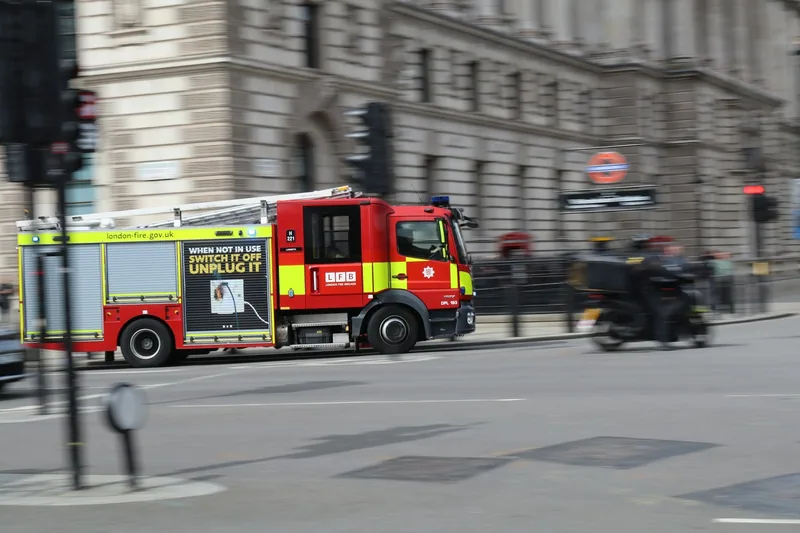
Non-emergency numbers: 101, 111 and 105
Many problems on holiday feel urgent but are not emergencies. Using the right line keeps 999 free for people in danger, and usually gets you the help you actually need.
- 101 is the police non-emergency number. Use it to report a crime that has already happened, such as a theft, or to give information. You can also report most crimes online.
- 111 is the NHS line for urgent medical help that is not life-threatening. It is also available online at 111.nhs.uk. Our guide to healthcare for visitors explains when to use a pharmacy, 111, an urgent treatment centre or A&E.
- 105 is the UK-wide number for power cuts. It is more useful if you are renting an apartment than in a hotel, where staff handle it.
Calls to 999, 101, 111 and 0800 numbers are free. If you want to use them on a foreign phone, check how roaming works on your plan before you travel; our guide to UK SIM cards and roaming covers the options.
Reporting a crime and getting a reference number
If you are the victim of a crime, report it even if you think the police will not find the thief. You will need a crime reference number for your insurer, your bank or your embassy. Here is where to report:
- Crime happening now, or someone in danger: call 999.
- Theft or other crime after the event, on the street: report online to the Metropolitan Police or call 101.
- On a train, the Tube, the Overground or the DLR: text the British Transport Police on 61016, or use TfL's online reporting tool, which directs your report to the right place.
- Fraud or online scams: report to Report Fraud, the national centre run by the City of London Police for England, Wales and Northern Ireland, online or on 0300 123 2040.
- A suspected terrorist threat: call 999 if it is immediate, or the anti-terrorist hotline on 0800 789 321.
Report quickly. TfL notes that CCTV images are only kept for a limited time, so a report made the same day has the best chance of being useful. Our guide to staying safe in London explains how to avoid the most common thefts in the first place.
If you lose your passport in London
A missing passport is the problem that can affect your journey home, so deal with it first. The steps below apply to visitors with a foreign passport.
- Search properly and ask. Check your hotel room safe, the hotel reception and the lost property office of any transport you used (see below).
- Report the theft or loss to the police. If it was stolen, report it online or on 101 and get a crime reference number.
- Contact your country's embassy, high commission or consulate. Only your own country can replace your passport or issue an emergency travel document. The government's London Diplomatic List gives addresses and contact details for every embassy and high commission in London.
- Tell your airline, Eurostar or ferry company which document you will travel on. If you are leaving by train, our guide to Eurostar from St Pancras explains the passport checks that happen before boarding.
The GOV.UK lost passport service is only for British passports. The government's online form to report a lost or stolen passport, which you may find in search results, is for British passport holders. Foreign visitors must contact their own embassy instead.
There is one more thing to think about for your next trip. A UK Electronic Travel Authorisation (ETA) is linked to the passport you applied with, and GOV.UK says you need to apply again if the details in your application change. If you get a new passport, check the rules on the official ETA page before you next travel to the UK. Our guide to UK entry requirements explains the ETA in full.
Lost or stolen bank cards, cash and phones
Block a lost or stolen bank card straight away by calling your bank or using its app. Keep your bank's international phone number written down somewhere separate from the card, because the number printed on the back is no help once the card is gone. If you used the same card for contactless fares on the Tube, you will need another card or an Oyster card to keep travelling.
If your phone is stolen, contact your mobile operator to block the SIM, change your important passwords from another device, and use the phone's tracking service to lock or erase it. Report the theft to get a reference number for your insurer.
For cash, most UK cash machines are free to use with UK cards, but foreign cards may be charged; a machine that charges must say so on screen and let you cancel. Our guide to money in London explains cards, cash and exchange.
Things left on the Tube, a bus or a black cab
TfL runs one lost property service for buses, the Tube, the DLR, the Overground, the Elizabeth line, black cabs, the Cable Car and Victoria Coach Station. You make an enquiry online, and TfL says reviewing it can take up to 15 days. It is worth knowing the rules before you need them:
- Items are kept for a maximum of three months (cash can be claimed for up to a year).
- There are no in-person visits. Found items are collected by appointment or sent by courier, and a fee is payable. For items found in a black cab, there is an extra fee based on the item's value, paid to the driver.
- Bank cards and Oyster cards are not kept, so block a lost card with your bank rather than waiting.
- If you lost something on a bus in the past three days, contact the bus operator first.
- Trams use a different service, called MissingX.
National Rail trains and stations, minicab firms and airports all run their own lost property services, so contact the company or place directly. Our guides to London's main railway stations and London's airports help you work out who that is. For taxis, note the details on your receipt; our guide to black cabs, minicabs and ride apps explains the difference between them.
Car accidents and breakdowns
If anyone is hurt in a road accident, or the road is blocked in a dangerous way, call 999. Otherwise, move to safety if you can, exchange names, addresses and insurance details with the other driver, and take photos. Contact your hire company or insurer as soon as possible, using the number on your rental agreement.
If you are planning to drive, read our guides to driving in the UK as a foreign driver and to hiring a car in London before you set off. Save the hire company's breakdown number in your phone on the day you collect the car.
When the Tube or trains stop running
Sometimes the thing that goes wrong is the transport itself: a closed line, a signal failure or a strike. Check TfL's live status page before you set off, and its strike page if you hear of industrial action. On 17 September 2026 the strike page listed no Tube strike.
Station staff can find you another route. Tube, Elizabeth line and London Overground stations are staffed while trains are running. If your line is closed, ask a member of staff; they can suggest another route, and you avoid guessing on an unfamiliar network.
Our guides to getting around during Tube strikes and to using the Underground explain the alternatives, from buses and the river to walking.
Frequently asked questions
What is the emergency number in London?
The emergency number is 999, for police, ambulance, fire and coastguard. The European number 112 also works in the UK and connects to the same service. Both are free from any phone, and the call handler will ask which service you need.
Does 911 work in the UK?
Do not rely on it. The UK's official emergency numbers are 999 and 112, and those are the numbers the government lists. If you are used to 911, save 999 in your phone before you travel so you do not waste time in an emergency.
What number do I call for non-emergency police in London?
Call 101, which is free, or report online. Use it for crimes that have already happened, such as a stolen phone or wallet, and to give information to the police. On trains and the Tube, you can also text the British Transport Police on 61016.
What should I do if I lose my passport in London?
Report it to the police, online or on 101, and get a crime reference number if it was stolen. Then contact your country's embassy or high commission in London, which can issue a replacement or an emergency travel document. The GOV.UK London Diplomatic List gives their contact details.
How do I find something I left on the London Underground?
Make an online enquiry with TfL Lost Property, which covers the Tube, buses, the DLR, the Overground, the Elizabeth line and black cabs. TfL says a review can take up to 15 days. Items are kept for up to three months, and collection is by appointment or courier for a fee.
Sources
- GOV.UK - 999 and 112: the UK's national emergency numbers (checked September 2026)
- GOV.UK - Contact the police (checked September 2026)
- GOV.UK - Call charges and phone numbers (checked September 2026)
- NHS - When to call 999 (checked September 2026)
- Transport for London - Lost property (checked September 2026)
- GOV.UK - Foreign embassies in the UK (London Diplomatic List) (checked September 2026)
- City of London Police - Report Fraud (checked September 2026)
- Relay UK - Contact 999 using Relay UK (checked September 2026)