
A penalty fare on any Transport for London service is £100, reduced to £50 if you pay within 21 days. On a National Rail train it is £100 plus the full single fare for the journey you were making, reduced to £50 plus that fare within 21 days. It is not a fine and not a criminal conviction; it is a charge for travelling without a valid ticket. Deliberate fare evasion is separate, is a criminal offence, and TfL prosecuted 19,614 people for it in 2023.
The reason this matters to a visitor is that several honest mistakes put you in the same position as somebody who meant to dodge the fare: a flat phone battery, an Oyster card on the wrong train, a ticket that stops one zone short. Below is what the two systems say, in their own words, and how to appeal if you were right.
What it costs, and who to pay
- TfL services (Tube, bus, tram, DLR, Overground, Elizabeth line)
- £100, reduced to £50 if paid within 21 days
- National Rail trains
- £100 plus the full single fare, reduced to £50 plus that fare within 21 days
- Deadline to appeal
- 21 days, in both systems
- Who collects a TfL penalty fare
- Independent Revenue Collection and Support (IRCAS)
- Who hears a TfL appeal
- The Appeal Service, independent of TfL
- Trams
- Paid to and appealed through Tram Operations Ltd at the Tramlink Shop, 5 Suffolk House, George Street, Croydon CR0 1PE
- Is it a criminal record?
- No. A penalty fare is a charge, not a prosecution
- When can your ticket be checked?
- Before, during and at the end of the journey
The two systems, and why the amounts differ
London has two penalty fare regimes running side by side, and which one applies depends on whose train you are on rather than where you are.
On TfL's own services the penalty fare is a flat £100, halved to £50 if you pay within 21 days. It went up from £80 in February 2024, when the Mayor approved bringing it into line with the national figure, and the increase was announced alongside body-worn video cameras becoming standard kit for frontline staff.
On a National Rail train the structure is different: £100 on top of the full single fare for the journey you intended to make, halved to £50 plus the fare within 21 days. National Rail's own definition is worth quoting: it is "an exceptional fare charged if you do not comply with the normal ticket purchasing rules without good reason. It is not a fine."
The Elizabeth line and the Overground are TfL services and use the TfL rules, even though National Rail sells tickets for them. Thameslink, Southern, Southeastern and the rest use the National Rail rules, including inside Zone 1.
Where the rules apply: yellow posters and Compulsory Ticket Areas
Penalty fares do not apply everywhere. On the National Rail network they apply if you start from a designated Penalty Fare station or are inside a Compulsory Ticket Area, and both must be signed with yellow warning posters at the entry points. If you have walked past a yellow poster, you are in one.
If you genuinely could not buy a ticket, because the office was shut and the machine was broken, National Rail's own guidance is that you buy one on board if that is possible, or at the first opportunity. Where a machine takes cards only and you want to pay cash, you take a Promise to Pay notice from the machine and exchange it for a ticket at the first opportunity. Keep it; it is the document that shows you tried.
Your ticket can be checked after you have arrived, not just on the train. National Rail says so explicitly: before, during and at the end of the journey. Barrier checks at the destination are the commonest place a wrong ticket is found, so do not throw anything away until you are on the street.
The honest mistakes that count as travelling without a valid fare
TfL's position is short and covers more ground than people expect: your ticket must cover your entire journey and all the zones you travel in, pay as you go must have enough credit for the whole journey, and if you are paying with a phone it must have enough battery to last the journey. Each of those is a way of being in the wrong with the best of intentions.
- A flat phone battery. If your phone dies between touching in and touching out, you have no way of completing the journey and no proof you started it properly.
- Not enough credit on an Oyster card. The gate may let you in on a low balance and the journey may then be incomplete at the other end.
- A ticket that stops short. A Travelcard for Zones 1-2 does not cover a trip to Zone 3, and the difference is not something you can settle at the barrier by explaining.
- Oyster on the Stansted Express. Oyster is not valid to or from Stansted Airport at all, although contactless is, as our guide to Stansted into central London explains.
- Travelling beyond the pay-as-you-go boundary. The area ends at Gatwick going south and at Shenfield going east, and the zone map shows where. A tap will not take you to Brighton or Southend.
- A railcard discount without the railcard. If a discount has been applied, the card has to be with you, including one loaded on to an Oyster card; see railcards worth buying as a visitor.
- A child who looks older than ten. Under-11s travel free on buses and trams without a card, but staff may ask, and the rules are in children's fares on London transport.
Carry a plastic contactless card as a backup to the phone, and use the same one for the whole trip so the journey history sits in one place; the argument for that is in how the contactless fare caps work and in Oyster or contactless. What the tickets themselves cover is in buying UK train tickets.
A maximum fare is not a penalty fare
This is the distinction that saves people the most worry. If you simply forget to touch out at the end of a pay-as-you-go journey, you are charged a maximum fare, automatically and without anybody speaking to you. It is an overcharge, not a penalty, there is no record of wrongdoing attached to it, and TfL will usually refund the difference if you ask. Our page on what happens if you forget to touch out has the amounts and the refund process.
A penalty fare is different: it is issued in person, by a member of staff, as a numbered notice, and it needs paying or appealing. If nobody stopped you and no notice was issued, you have not been given a penalty fare, whatever your bank statement looks like.
What actually happens if you are stopped
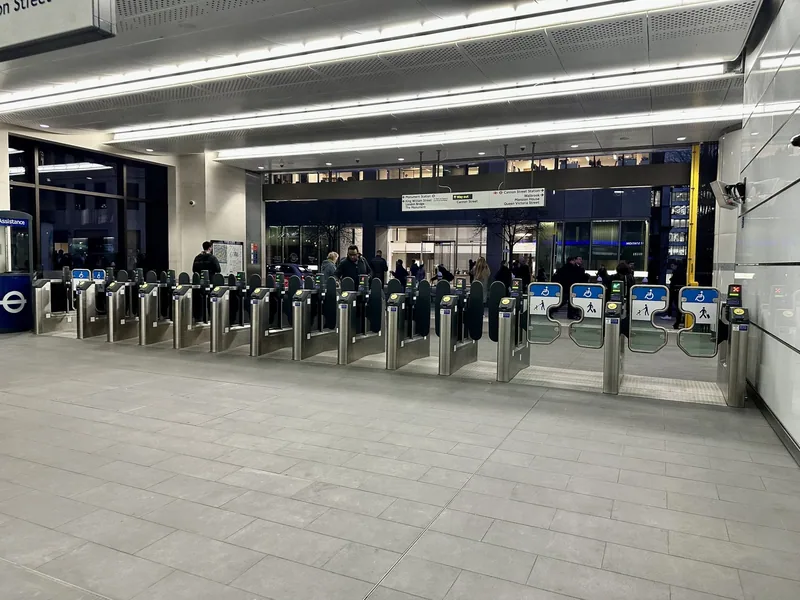
Revenue inspectors work in plain clothes as well as in uniform, usually in pairs, most often at the exit barriers of busy stations and at the front doors of buses. They will ask to see your ticket, or check the card you touched in with using a hand-held reader that shows your last journeys.
If the card shows a valid touch-in for the journey you are making, that is the end of it. If it does not, they take your name and address and issue a notice. Frontline TfL staff wear body-worn video, so the encounter is likely to be filmed.
On a National Rail train a Penalty Fares Collector may also ask you to leave at any station, not necessarily where you were going. To travel further you either stay on board and buy an Anytime single to any station up to the end of that train's route, on which no discount applies, or get off and buy a ticket for the rest of the journey, where discounts do. The second is usually cheaper.
Do not hand over cash to anybody checking tickets. A penalty fare is never settled on the spot in notes and coins. It is a notice with a reference number, paid afterwards to IRCAS online, by phone or by post, or paid to the train company for a National Rail penalty. Anyone asking you to pay them directly is not doing what the official process says, and our page on tourist scams in London covers the pattern.
How to appeal, and why appealing costs you nothing
Both systems give you 21 days, and both send appeals to a body that is not the operator.
TfL services. Appeal online within 21 days to the Appeal Service, or by post to its Portsmouth address. TfL asks for your journey start time and station, a daytime telephone number or email address, and a statement explaining why you could not produce a valid ticket. If the appeal succeeds, you pay nothing. If it fails, you are told what to do next; TfL's own appeals policy provides for the £50 rate to apply again for 21 days from the date of the rejection letter, after which it reverts to £100.
National Rail trains. Appeals go to an independent appeal panel, again within 21 days of the day after the penalty was charged, and the panel can allow longer. The important protection here is that an appeal stops the clock on the 21-day discount period until the outcome is decided, so you are not made to choose between appealing and paying the lower amount.
Trams. Croydon's trams are outside both processes. Penalty fares are paid to and appealed through Tram Operations Ltd by post at the Tramlink Shop in George Street, Croydon, again within 21 days. The tram network's fares and the touching-in rules that produce most of its disputes are in our guide to London's trams.
Include everything you have: the Promise to Pay notice, a photograph of a broken machine, a screenshot of your journey history. An appeal with evidence is a different document from an appeal with an explanation.
Fare evasion, which is a different thing entirely
A penalty fare is a charge. Deliberate fare evasion is a criminal offence, prosecuted in the magistrates' court, and it can result in a conviction and a much larger bill. TfL published figures showing 19,614 prosecutions for fare evasion in 2023, 56 per cent more than in 2022, and said it had investigated 421 people for habitual evasion accounting for more than 50,000 irregular journeys on the Underground.
The behaviour that leads there is not forgetting to tap. It is following somebody through a gate, using somebody else's discounted photocard, or systematically travelling without paying. We are not giving legal advice: if you receive a court summons rather than a penalty notice, take advice from a qualified source rather than from a travel guide.
None of this should make you nervous about using the system. Tap the same card in and out every time, keep it charged, and the subject never arises; the rest of the unwritten rules are in Tube etiquette.
Frequently asked questions
How much is a penalty fare in London?
£100 on Transport for London services, reduced to £50 if you pay within 21 days. On a National Rail train it is £100 plus the full single fare for your intended journey, reduced to £50 plus that fare within 21 days. Both are charges rather than fines, and neither is a criminal conviction.
Is a penalty fare a criminal record?
No. A penalty fare is an exceptional fare charged for travelling without complying with the ticket rules, and National Rail states plainly that it is not a fine. Deliberate fare evasion is a separate criminal offence which is prosecuted in court, and that is not what a penalty notice is.
What happens if my phone battery dies before I touch out?
TfL's rule is that a device used to pay must have enough battery to last the journey, so a dead phone leaves you unable to complete the journey and without proof you began it properly. You may be charged a maximum fare, or given a penalty fare if a member of staff stops you. Carrying a plastic card as a backup avoids the problem.
How do I appeal a penalty fare?
Within 21 days. For TfL services, appeal online to the Appeal Service with your journey start time and station, contact details and an explanation of why you had no valid ticket. For National Rail, appeal to the independent appeal panel; appealing stops the clock on the 21-day discount, so you do not lose the lower rate by challenging the notice.
Can a ticket inspector make me pay cash on the spot?
No. A penalty fare is issued as a notice with a reference number and paid afterwards, to IRCAS for a TfL penalty or to the train company for a National Rail one. If you could not buy a ticket because the office was closed and the machine broken, say so at the time and keep any Promise to Pay notice as evidence.
Sources
- Transport for London - Penalty fares and how to pay them (checked September 2026)
- Transport for London - Penalty fare appeals policy (PDF) (checked September 2026)
- Transport for London - penalty fare raised from £80 to £100, and 2023 prosecution figures (checked September 2026)
- National Rail - Penalty Fares (checked September 2026)
- The Railways (Penalty Fares) Regulations 2018 (checked September 2026)
- Department for Transport - independent appeals process and the 21-day clock (checked September 2026)