
Wanstead Flats is the flat southern end of Epping Forest: a wide plain of open grassland reaching almost into inner east London, free, unfenced, open at all hours, and a ten-minute walk from a station on the Elizabeth line. It is a Site of Special Scientific Interest, it has skylarks and meadow pipits in summer, and it has no toilets and nowhere to buy a cup of tea.
That last sentence is the one most guides leave out, and it decides how you plan the visit. The City of London Corporation, which runs the forest, says it on its own page for the Flats and suggests a comfort break in Wanstead before you come.
Our guide to Epping Forest covers the forest as a whole — where to start, the trails, the ancient trees and why it is still public land. This page is about the southern grassland specifically: the gates and car parks, the one accessible trail, the rules that are stricter than a park's, and whether it earns a journey out.
Wanstead Flats at a glance
- Managed by
- City of London Corporation, as Conservators of Epping Forest
- Entry
- Free, no gates, no closing time on foot
- Designation
- Site of Special Scientific Interest
- Nearest stations
- Forest Gate (Elizabeth line), Wanstead Park and Leytonstone High Road (Suffragette line) — all about 0.7 km. Leytonstone (Central line) is 1.8 km
- Buses
- 58 and 308 serve the Flats directly
- Car parks
- Jubilee Pond (E7 0EA) and Centre Road (E7 0EF), open 7am, closing 5pm since 2 November 2026 (checked November 2026)
- Parking charges
- £1.75 up to 1 hour, £3.00 up to 2 hours, £4.50 for 2-4 hours, £7.00 full day. Maximum stay 6 hours
- Toilets and refreshments
- None on site
- Accessible trail
- The Lime Trail, 0.5 km round Jubilee Pond, firm and level
Which gate, and how far it actually is
There are no gates. The Flats are open grassland crossed by roads, and you walk on from the pavement wherever you like. What varies is how long you spend on suburban streets first.
Forest Gate, on the Elizabeth line, is the closest: the City gives the nearest edge of the Flats as 0.4 miles, about 0.7 km. Transport for London's route to the Jubilee Pond car park runs up Woodgrange Road, along Woodford Road and then 678 metres up Dames Road, which forms the western boundary of the Flats, and comes to about 13 minutes in total. Wanstead Park and Leytonstone High Road, both on the Suffragette line, are the same distance from the western and northern edges. Leytonstone, on the Central line, is 1.8 km — more than a mile, and mostly along Dames Road.
If you are coming from central London, Leytonstone is 15 minutes from Liverpool Street on a direct Central line train and costs £3.30 off-peak, which makes it the fastest option even with the longer walk; our page on the Central line explains its branches. The Elizabeth line to Forest Gate puts you nearest the pond. Buses 58 and 308 stop on the Flats themselves, which our guide to London buses puts in context.
Do not scan a QR code to pay for parking in Epping Forest. The City of London states that it does not use QR codes for parking payment and that fraudulent ones have been found on forest signage. Payment is through the RingGo app or by phone using the car park's location code. Register the app before you travel, because mobile reception in the car parks is patchy and an unpaid session earns a £60 charge.
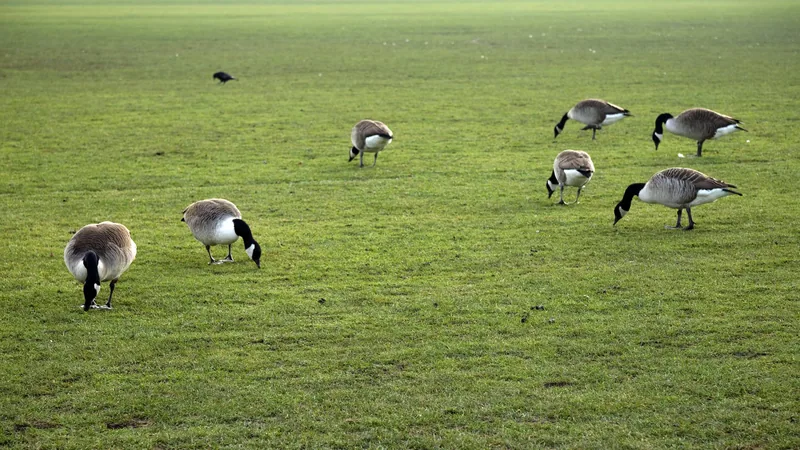
Photo: Acabashi · CC BY-SA 4.0 · Wikimedia Commons · resized
Jubilee Pond and the Lime Trail
Jubilee Pond, at the eastern end, is the one place on the Flats with a designed route round it. The Lime Trail circles the pond, is 0.5 km — 0.3 miles — long, and has a level, firm, non-slip surface with benches and wheelchair passing places at regular intervals.
Two details make it unusually well thought out. The interpretation panel at the start is in large print and positioned to be readable from a seated position. And there is a purpose-built platform at the water's edge, described by the City as suitable for fishing or simply for sitting by the water, reachable by wheelchair. The trail is most easily joined from the Jubilee Pond car park along a firm, level path.
The pond holds coot, mallard and moorhen and a good range of aquatic plants, and there is a pond-dipping platform for children. For the wider picture on getting round London's open spaces without steps, see our guide to accessible London.
The skylarks, and why the grass looks untidy
The Flats are a Site of Special Scientific Interest, and the reason is the grassland itself and the birds that nest in it. Skylarks and meadow pipits both breed here, on the ground, in open grass. That is the whole argument for the mowing regime, the ropes and signs that appear in spring, and the request to keep dogs under control.
A skylark nests in a scrape in the turf. A dog running loose through nesting grass in May does more damage in ten minutes than a month of footpaths. The birds are also the best reason to come between April and July: stand still in the middle of the open ground on a bright morning and the song comes from directly overhead, invisible, for minutes at a time. There is nowhere else this close to central London where that happens reliably.
Bush Wood, on the northern edge, is the wooded contrast: mature trees rather than grass, and a short walk from the Flats. Our page on the great trees of London explains what to look for in old forest timber.
The rules are forest rules, not park rules
Epping Forest has its own byelaws, made by the Conservators under the Epping Forest Acts of 1878 and 1880 and the City of London (Various Powers) Act 1977. They are enforceable law, and breaking them can be prosecuted. The ones visitors run into are these:
- No barbecues and no fires of any kind. This is absolute, and on dry grassland it is the most important rule here.
- Do not pick mushrooms or other fungi. Foraging that is tolerated elsewhere is a byelaw offence in Epping Forest.
- Do not remove anything — plants, animals, or historic, heritage and archaeological items. Collecting fallen wood is limited and narrowly defined.
- Keep pets under control and clean up after them, and leave gates as you find them.
One oddity worth knowing: the byelaws specifically exclude the enclosed part of the forest known as Wanstead Park, which is managed separately and is registered by Historic England at Grade II* as a designed landscape. It is a different place with different rules, half a mile north of the Flats.
Car parks, closing times and one to avoid at night
Walking on, the Flats never close. Driving is a different matter, and the times changed recently.
| Item | Detail |
|---|---|
| Opening | From 7am. Gates are opened manually by staff, so delays happen |
| Closing | 5pm since Monday 2 November 2026 (6.30pm from 15 September, 8pm before that) |
| Charges | £1.75 (1 hour), £3.00 (2 hours), £4.50 (2-4 hours), £7.00 (full day); annual pass £170 |
| Maximum stay | 6 hours, with no return within one hour |
| Free parking | Motorbikes, and Blue Badge holders who have registered the badge with the City |
| Penalty | £60, rising to £100 if unpaid after 14 days |
The City also warns that both the entrance and exit gates at Alexandra Lake car park are secured in the evening from Friday to Sunday, because of repeated anti-social behaviour, and that a car left there past closing time may be locked in until the following morning. If you are driving at a weekend, use Jubilee Pond or Centre Road instead.
Blue Badge parking is free, but only once you have registered. The City has installed number-plate cameras at several car parks, so the old system of simply displaying the badge no longer works on its own. Email a copy of the badge and your registration number within 24 hours of parking, once, and it then applies until the badge expires.
What not to expect
Trees are the thing it does not have. That surprises people who arrive expecting Epping's oaks and hornbeams and find a plain of mown grass with football pitches marked on it and tower blocks visible in three directions. It is not a mistake or a degraded remnant: open grazing land has been part of this forest for centuries, and the SSSI designation is for the grassland, not in spite of it.
It also has no infrastructure. No café, no visitor centre, no toilets, no playground. The nearest facilities are in Wanstead and Forest Gate. There is no lighting, so on foot the practical limit is dusk rather than a clock time — about 4.30pm in December and after 9pm in June.
And it is used, heavily, by the people who live around it: Sunday league football on the marked pitches, dog walkers at all hours, kite flyers when there is a wind. That is a feature if you want to see an ordinary London Sunday, and a drawback if you were hoping for solitude. For solitude, walk north into the forest proper.
Is it worth the journey?
Not as a destination in itself, if you have a short trip and a long list. Fifteen minutes from Liverpool Street buys you grassland, and grassland is the least remarkable thing London has.
It is worth the journey for three specific reasons. First, skylarks in late spring, which are genuinely hard to find inside a capital city. Second, the Lime Trail, which is one of the better fully accessible waterside circuits in London and free. Third, as the easiest possible first taste of Epping Forest: get off at Forest Gate, walk north across the Flats and into the woods, and within an hour you go from terraced streets to old forest without a car.
Combined with something else it makes a good half-day. Stratford and the Olympic Park are two stops away; Walthamstow and its market are a short ride north, with Walthamstow Wetlands beyond; and Ilford and Redbridge covers the area on the far side.
Runners should read our running routes in London for the parkrun that uses this ground. And since it costs nothing, it belongs on our list of free things to do in London.
If what you want is a big, wild, free open space with hills and views and a café, Hampstead Heath does the same job better on the other side of the city. The Flats' advantage is flatness, which is exactly what some visitors need.
Frequently asked questions
Are there toilets on Wanstead Flats?
No. The City of London states plainly that there are no toilet or refreshment facilities nearby and recommends a comfort break in Wanstead before your visit. The nearest public facilities are in Wanstead and around Forest Gate station.
Which station is closest to Wanstead Flats?
Forest Gate on the Elizabeth line, which the City gives as 0.4 miles, about 0.7 km, to the nearest edge of the Flats; reaching the Jubilee Pond car park takes about 13 minutes. Wanstead Park and Leytonstone High Road on the Suffragette line are a similar distance from other edges, and Leytonstone on the Central line is 1.8 km away but the fastest ride from central London.
Can you have a barbecue on Wanstead Flats?
No. The Epping Forest byelaws prohibit barbecues and fires of any kind anywhere in the forest, including the Flats, and breaking a byelaw can be prosecuted. On dry open grassland this is enforced seriously, whatever the shops are selling.
What time do the car parks close?
At 5pm since 2 November 2026, after 6.30pm from 15 September and 8pm before that. They open from 7am, gates are opened manually so there can be delays, and the maximum stay is six hours with no return within one hour. Avoid Alexandra Lake car park at weekends, where gates are locked in the evening.
Is Wanstead Flats the same as Wanstead Park?
No. Wanstead Flats is open forest grassland managed under the Epping Forest byelaws. Wanstead Park, half a mile north, is the enclosed remains of a lost eighteenth-century estate, registered by Historic England at Grade II*, and is specifically excluded from those byelaws.
Sources
- City of London Corporation - Wanstead Flats and Bush Wood: the Lime Trail, travel and car parks (checked September 2026)
- City of London Corporation - car parking at Epping Forest: times, charges and penalties (checked November 2026)
- City of London Corporation - Epping Forest byelaws (checked September 2026)
- GOV.UK - statutory guidelines on disposable barbecues (withdrawn 22 October 2026) (checked November 2026)
- Transport for London - Tube and rail fares (checked September 2026)