
Rainham Marshes is free. Every visitor — adult, child, student, carer, RSPB member or not — pays nothing to walk in, and the reserve is open seven days a week from 9am. It is 28 minutes by train from Fenchurch Street to Purfleet, then a signposted 15-minute walk along the river wall, and it is the largest piece of genuine marshland you can reach on a London commuter ticket.
What you get for that is a circuit of flat gravel path and raised boardwalk across wet grazing marsh, a two-storey visitor centre with binocular hire, a run of hides, and the Thames estuary widening out beside you. What you do not get is a park. There are cattle, ditches, reeds and sky, and the interest is almost entirely in what lives here.
That makes it a specialist day out with one broad exception: water voles. They are reliably visible here in a way they are almost nowhere else in the London area, and the RSPB names the two places to stand.
Rainham Marshes at a glance
- Entry
- Free for everyone, members and non-members alike
- Open
- Every day, 9am to 4.30pm when we checked in late September 2026; hides close at 4pm
- Address
- New Tank Hill Road, Purfleet, Thurrock RM19 1SZ
- Nearest station
- Purfleet, c2c line from London Fenchurch Street
- Journey
- 28 minutes by train, then about 15 minutes on foot
- Train fare
- £6.60 cheapest single, off-peak weekday morning (checked for 1 October 2026)
- Parking
- £3 for two hours, £5 all day, £15 per coach or minibus. Free for RSPB members and Blue Badge holders
- Dogs
- Not allowed on most of the reserve. Assistance dogs welcome everywhere
- Barbecues
- Banned at all times
Free entry, paid parking, and why that matters
The RSPB's charges page for Rainham lists every visitor category — adult, 16 to 24, under 5, child, student, carer — as free, for members and non-members. The only thing you pay for is the car park: £3 for up to two hours, £5 all day, free if you are an RSPB member or a Blue Badge holder.
Parking is paid through a phone app using location number 809101, by calling 0330 400 7275, or at the welcome desk inside the visitor centre. Mobile reception on the marsh edge is patchy, so pay before you walk away from the car.
The practical conclusion is simple: arrive by train and the whole day costs you the fare. That puts Rainham among the better entries in our list of free things to do in London, with the caveat that the fare is a National Rail fare rather than a Tube one.
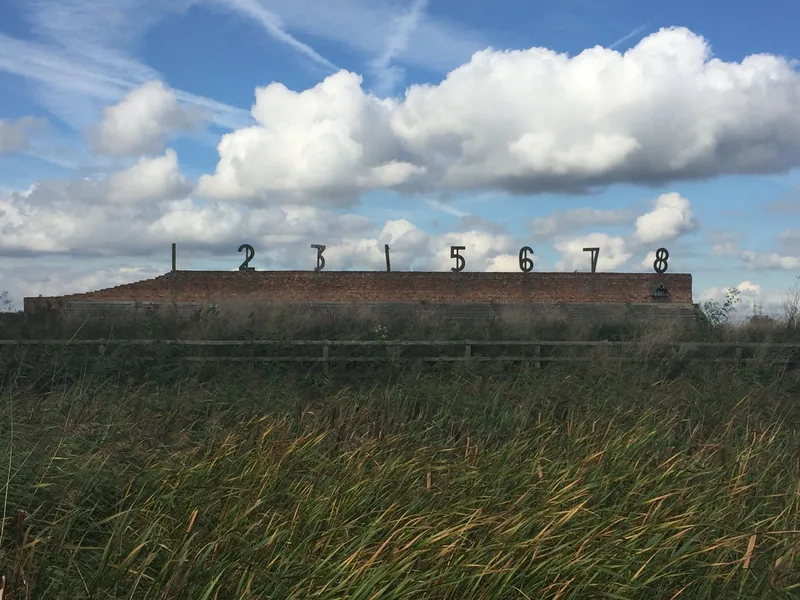
Photo: Marthuws · CC BY-SA 4.0 · Wikimedia Commons · resized
The train, the walk, and the signs to follow
Fenchurch Street to Purfleet takes 28 minutes with no changes. Checking a weekday off-peak morning for 1 October 2026, trains left at 10:24 and 10:53 — roughly every half-hour — and the cheapest single was £6.60. Purfleet is outside the Transport for London fare zones, so buy a ticket; the station has ticket machines, and the ticket office is closed at weekends.
From the station, the RSPB directs you along the riverside path, following the brown pedestrian signs, and gives the walk as 15 minutes; Transport for London's planner measures it at 14. Transport for London's planner breaks the route into two legs: about 460 metres along London Road from the station, then 600 metres on the signed Rainham to Purfleet Path past Harrisons Wharf, which brings you to the reserve off New Tank Hill Road. It is flat the whole way, and completely exposed, which is worth knowing in a westerly wind.
Purfleet station is step-free category B2, meaning some step-free access to all platforms, and there are no lifts. There is no sheltered waiting area and no seating on the platform, so do not plan to wait long for a return train in bad weather. Our guide to London's main railway stations covers Fenchurch Street at the London end, and buying UK train tickets explains the fare types.
You can walk in from one station and out from the other. The RSPB describes a well-signposted footpath along the river between Purfleet station and Rainham that passes the reserve. Arriving at Purfleet and leaving from Rainham turns the visit into a linear walk instead of an out-and-back, and Rainham is 23 minutes from Fenchurch Street.
The surface underfoot, and how long it takes
The trails are a mix of flat gravel paths and raised timber boardwalk, and they start at the visitor centre across a short section of non-slip metal grill with a short steep bit. After that there are no steps and no stiles.
A full circuit at a birdwatching pace, stopping at the hides, takes two to three hours. Walking it briskly without stopping takes about an hour and a quarter. There is no shortcut back: the loop is the loop, so allow the full time and check the closing hour before you set off round it.
The RSPB warns that not all parts of the reserve may be accessible depending on the weather, and advises checking with staff on arrival. After heavy rain the outer sections can be genuinely wet rather than merely damp. Our guide to accessible London covers the wider picture for wheelchair users; here the boardwalks are the accessible part and the gravel paths are the variable part.
The hides, and where the water voles are
Hides are spread round the circuit, and two names are the ones to remember. The RSPB's own sightings notes say water voles are visible from the Bus Stop and from Shooting Butts Hide — the Bus Stop being a shelter on the route, not a bus stop. Sit still by a ditch at either and wait; water voles are easier to hear than to see, and the give-away is a soft plop and a V of ripples.
Other hides look over the scrapes at Ken Barrett and Aveley, where the waders gather. Hides close half an hour before the rest of the reserve, at 4pm against 4.30pm, which catches people out on a short winter afternoon.
Work out your return train before you start the circuit. The reserve and the hides shut in the late afternoon, the walk back to Purfleet takes a quarter of an hour, and trains are roughly half-hourly rather than frequent. A missed connection at Purfleet means standing on an unsheltered platform.
What you will actually see, month by month
The RSPB manages the water levels and grazes cattle to keep a patchwork of wet grassland and shallow pools, which is what marsh birds need. The result is a reserve that changes completely with the season.
| Season | What the reserve is for | Look for |
|---|---|---|
| Spring | Breeding waders on the wet grassland | Lapwing, redshank, reed bunting nesting in the scrub |
| Summer | Dragonflies and specialist insects on the sandy patches | Marsh harrier and hobby overhead, water voles in the ditches |
| Autumn | Passage waders on the scrapes | Wood sandpiper, snipe, curlew, avocet |
| Winter | Wildfowl and hunting raptors | Wigeon, shoveler, gadwall, and short-eared owls over the rough grass |
The short-eared owls are the reason the unmanaged areas of tall grass and scrub are left alone, and they are the single best reason to come out here between November and February. They hunt in daylight, low and slow, which makes them the easiest owl to watch anywhere in Britain.
If wetland birds are the point of the trip and you want to compare, Walthamstow Wetlands is bigger and closer but is a working reservoir complex rather than marsh, the WWT London Wetland Centre in Barnes charges admission and is the most polished of the three, and Woodberry Wetlands is a one-hour version in Hackney.
Facilities, and what to bring
The visitor centre is on the first floor, reached by a long ramp from the car park beside four Blue Badge bays. The doors are heavy but power-assisted; inside it is level throughout with non-slip tiles, a lowered counter section and good lighting. Binoculars can be hired, and staff are on hand.
There are toilets on the ground floor and accessible toilets on both floors, with baby changing in the first-floor accessible toilet. There is a picnic area and you are welcome to bring food. Barbecues are banned at all times, which the RSPB states in blunt terms: they are a fire risk to people, wildlife and habitat.
Bring binoculars if you have them, boots rather than trainers, and a windproof layer whatever the forecast says — the marsh has no shelter at all. There are bike racks, and National Cycle Network route 13 runs past. Dogs are not permitted on most of the reserve; assistance dogs are welcome throughout.
Is it worth the trip out?
For anyone who likes birds, unreservedly yes: it is free, it is under an hour from the City door to door, and in winter it offers something — short-eared owls hunting over open marsh — that no park in London can. Water voles alone justify a spring or summer morning.
For a general visitor with three days in London, no. There is no café for a long lunch, no building to shelter in beyond the centre, no view except a flat one, and nothing here that reads as a sight. A family looking for a nature reserve that works without binoculars will do better at the ecology park behind the O2, which is small, free, closer and has a boardwalk children can loop in twenty minutes.
If you are already heading east, the trip combines well. The Thames Barrier is on the same side of the river further in, and the neighbouring boroughs are covered in our guides to Romford and Havering and Barking and Dagenham. For the larger network of river-valley open space north of here, see the Lee Valley Regional Park.
Frequently asked questions
Is RSPB Rainham Marshes free to visit?
Yes. The RSPB's charges page lists every visitor category as free for both members and non-members. The only charge is for the car park, at £3 for two hours or £5 all day, and that is waived for RSPB members and Blue Badge holders.
Which station do you use for Rainham Marshes?
Purfleet, on the c2c line from London Fenchurch Street, is the nearest. The train takes 28 minutes and the walk from the station to the visitor centre is about 15 minutes along the riverside path, following brown pedestrian signs. Rainham station sits at the other end of the same footpath.
Is the reserve open on Mondays?
Yes. When we read the RSPB's published calendar in late September 2026, the reserve, visitor centre, toilets and car park were open every day of the week from 9am to 4.30pm, with the hides closing at 4pm. Hours change seasonally, so check the reserve's opening-times page before a long journey.
Can you see water voles at Rainham Marshes?
Often, and the RSPB names where: the shelter known as the Bus Stop, and Shooting Butts Hide. Sit quietly beside a ditch and watch the water rather than the bank. Early morning and late afternoon in spring and summer are the best times.
Is there a café?
There is a visitor centre with a welcome desk and binocular hire, and a picnic area, but this is not a day out built around lunch. Bring food with you. Barbecues are prohibited anywhere on the reserve at any time.
Sources
- RSPB - Rainham Marshes nature reserve: habitat, facilities and parking (checked September 2026)
- RSPB - Rainham Marshes entrance charges (checked September 2026)
- RSPB - Rainham Marshes opening times (checked September 2026)
- RSPB - Rainham Marshes: getting here (checked September 2026)
- National Rail - Purfleet station facilities and step-free category (checked September 2026)
- Transport for London - Journey Planner, walking time from Purfleet station (checked September 2026)