
London is one of Europe's most open cities for LGBTQ+ visitors: same-sex couples can marry, sexual orientation and gender reassignment are protected under the Equality Act 2010, and the city has a long-standing queer scene centred on Soho and Vauxhall. Pride in London, usually in early summer, is the biggest event of the year; the 2027 date had not been announced in September 2026.
For most LGBTQ+ travellers, London feels relaxed. Same-sex couples hold hands on the street and check into hotels without comment, and staff in shops, restaurants and museums are used to every kind of visitor. The law backs this up: businesses that serve the public may not discriminate on the grounds of sexual orientation or gender reassignment.
This guide introduces the main neighbourhoods, the history behind them, what to expect at Pride, the rules that protect you, and what to do if something goes wrong. Bars and clubs open and close often, so we focus on areas and long-running institutions rather than lists of venues that may be out of date by the time you arrive.
LGBTQ+ London: key facts
- Legal protection
- Sexual orientation and gender reassignment are protected characteristics (Equality Act 2010)
- Same-sex marriage
- Legal in England and Wales since 2014
- Main areas
- Soho (Old Compton Street), Vauxhall, and parts of east London
- Pride in London 2026
- Saturday 4 July (past); 2027 date not yet announced
- LGBTQ+ museum
- Queer Britain, King's Cross (Wednesday to Sunday, 12:00-18:00)
- Report hate crime
- 999 in an emergency; otherwise 101 or online. On transport, text 61016
What the law says
The Equality Act 2010 lists nine "protected characteristics". They include sexual orientation, gender reassignment, and marriage and civil partnership. In practice, this means hotels, restaurants, shops, taxis and attractions may not refuse you a service or treat you worse because of who you are or who you are with.
Same-sex couples have been able to marry in England and Wales since 2014, and same-sex couples in a civil partnership can convert it into a marriage. Visitors should note that getting married or registering a civil partnership in the UK is not allowed on an ETA or as a standard visitor: GOV.UK says you need a Marriage Visitor visa. Our guide to UK entry requirements explains the ETA rules.
In April 2025 the UK Supreme Court ruled, in the case For Women Scotland v The Scottish Ministers, that "woman" and "sex" in the Equality Act refer to biological sex. The ruling affects how some single-sex services and spaces are run. Gender reassignment remains a protected characteristic under the Act. Trans and non-binary visitors who have questions about a specific venue, such as a gym or spa, are best to contact it before visiting.
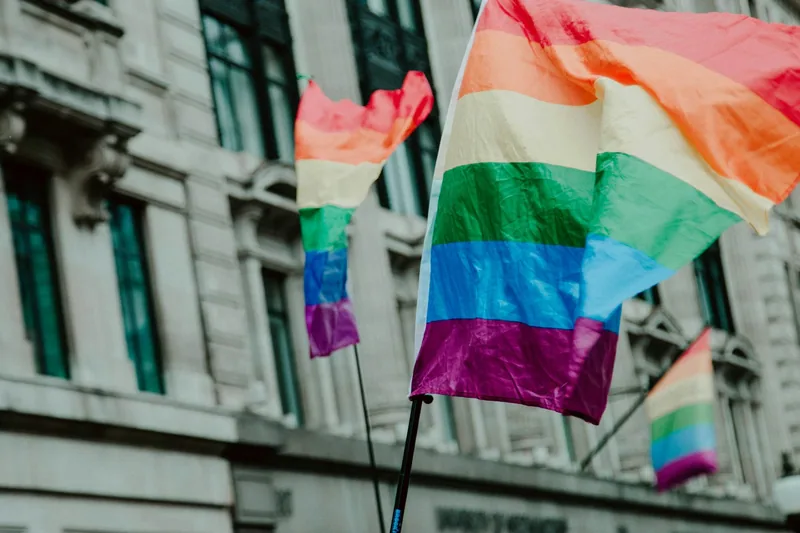
Soho: the historic centre of gay London
Soho, in the West End between Oxford Street and Leicester Square, has been at the heart of London's gay life for decades. Old Compton Street is the best-known strip, with bars, cafés and shops that spill onto the pavement on warm evenings. The mood is mixed and sociable, and many bars are as popular with straight friends and tourists as with the community.
Soho is compact, so you can walk between bars easily, and it is close to theatres, restaurants and Chinatown. It is at its busiest on Friday and Saturday nights and on Pride day. Our guide to Soho covers the rest of the neighbourhood, from food to music history.
Because Soho is so central, it combines well with a show. Pick a pre-theatre drink here and walk to one of the West End theatres nearby.
Vauxhall: late nights south of the river
Vauxhall, on the south bank of the Thames opposite Pimlico, is London's other long-established LGBTQ+ area. It is known for late-night clubs and for the Royal Vauxhall Tavern (RVT), a pub famous for cabaret, drag and club nights, which was running a full weekly programme when we checked in September 2026.
Vauxhall station is on the Victoria line, which runs all night on Friday and Saturday nights as part of the Night Tube, so getting back to central London after a late night is straightforward. See our guide to the Night Tube for the lines and times.
East London and beyond
Away from the two traditional centres, London's queer scene is spread widely. East London, including Shoreditch, Dalston and Hackney, has a younger, more alternative scene, with queer club nights often held in general venues on particular evenings rather than in dedicated gay bars. Our guide to Shoreditch introduces the area.
Many one-off club nights and events are listed only on social media and ticketing sites, so the best way to find current nights is to look them up in the week you are travelling. Our general guide to London nightlife explains how going out works in London, including door policies and closing times.
Queer club nights often move between venues. Many of London's LGBTQ+ nights run monthly or weekly in clubs that host other events on other nights. Check the promoter's page for the date and venue before you travel across town.
Pride in London
Pride in London is the city's biggest LGBTQ+ event, with a parade through the centre and stages and gatherings around the West End. It is organised by London LGBT Community Pride, trading as Pride in London. In 2026, the parade took place on Saturday 4 July, setting off from Hyde Park Corner at 12 noon, according to City Hall's event page.
For 2027, the organiser's website says Pride "will return in 2027" but gives no date yet. Keep an eye on prideinlondon.org before booking, and book accommodation early once the date is announced, as central hotels fill up and prices rise.
Pride in London puts real effort into access. In 2026 disabled visitors could register in advance for an access wristband giving entry to viewing platforms and facilities, and there was a free wheelchair-accessible shuttle bus to the parade access area. The organiser also works with the Nimbus Access Card scheme and lists Quiet Pride among its spaces. Registration for 2026 closed in late June, so check the accessibility page early in 2027. For weather and other events that month, see our guide to London in July.
Watching the Pride parade costs nothing. You do not need a ticket to stand along the route. Arrive early for a good view, bring water and sun cream, and expect the Tube stations near the route to be very crowded, and some may control entry.
A short history of LGBTQ+ London
London's openness today is relatively recent. Sex between men was a crime in England until the Sexual Offences Act 1967 partly decriminalised it for men over 21 in private. The age of consent was later equalised, and in the decades that followed a series of laws removed most legal differences.
The first Pride march in London took place in 1972, organised by activists from the Gay Liberation Front. In 1988 the government introduced Section 28, which banned local authorities from "promoting" homosexuality; it was repealed in England in 2003. Civil partnerships followed, and same-sex marriage became legal in England and Wales in 2014.
Much of this history happened in the streets you walk through as a visitor, from Soho's bars to the pubs of Vauxhall. If you would like a guide, ask tour operators whether they offer LGBTQ+ history walks; our guide to walking tours in London explains how to choose a good one.
Queer Britain and other places to learn more
Queer Britain describes itself as the national LGBTQ+ museum. It is at 2 Granary Square, King's Cross, a short walk from King's Cross station, and is open Wednesday to Sunday from 12:00 to 18:00 (closed Monday and Tuesday). Entry is by donation, on a "pay what you can" basis, including free entry for those who need it. The building has step-free access and fully accessible gender-neutral toilets.
The surrounding area, with its canal-side squares and restaurants, is a pleasant place to spend an afternoon; our guide to King's Cross has more. Queer Britain closes over the Christmas and New Year period, so check its opening dates if you visit in winter.
February is LGBT History Month in the UK, when museums, libraries and theatres often hold talks and special events. Check individual venues' programmes if you are visiting then.
Where to stay
You do not need to stay in a particular area; LGBTQ+ travellers are welcome in hotels across London. If nightlife is a priority, Soho, Covent Garden and the West End put you within walking distance of the main bars, while Pimlico and Victoria are close to Vauxhall. Remember that hotels are required by law not to discriminate, including when a same-sex couple books a double bed.
Our guide to the best areas to stay compares neighbourhoods by price and transport links.
Staying safe and reporting hate crime
London is generally safe for LGBTQ+ visitors, and most people will never experience a problem. Take the same care as anyone else on a night out: plan your route home, keep an eye on your drink and your phone, and use licensed taxis. Our guide to staying safe in London covers the basics.
GOV.UK says crimes committed against someone because of their sexual orientation or transgender identity are hate crimes and should be reported to the police. Hate crimes can include threatening behaviour, assault, harassment and online abuse. You can report online, call 101 if it is not an emergency, or call 999 if a crime is in progress or someone is in immediate danger. On TfL's network, you can also report hate crime by texting British Transport Police on 61016 or by speaking to staff. Our list of emergency numbers has all the contacts.
Report abuse on the Tube even if it feels minor. TfL says it wants to hear about any incident, and reports help the police identify repeat offenders. A text to 61016 with the line, direction and time is enough to start a report.
Practical tips for LGBTQ+ travellers
- Public affection is normal. Holding hands or kissing in public is unremarkable in central London, as it is for straight couples. Outside the city centre, use the same judgement you would anywhere.
- Sexual health services are free. Treatment for sexually transmitted infections is free to everyone in England, including visitors, at NHS sexual health clinics. See our guide to healthcare for visitors.
- Check venue policies. Some clubs have dress codes, themed nights or men-only or women-only nights. Read the listing before you go.
- Carry ID. Bars and clubs often check age, and many use "Challenge 25", asking for ID from anyone who looks under 25. The legal drinking age is 18.
Frequently asked questions
Is London safe for LGBTQ+ travellers?
Yes, London is generally a safe and welcoming city for LGBTQ+ visitors. Discrimination by businesses is illegal under the Equality Act 2010. As in any big city, take normal precautions at night, and report any hate crime to the police on 101, online or, in an emergency, on 999.
When is Pride in London 2027?
The date had not been announced in September 2026. The organiser's website says Pride "will return in 2027". In 2026 the parade was held on Saturday 4 July. Check prideinlondon.org for the 2027 date before booking travel.
Where is the gay area of London?
Soho in the West End, especially Old Compton Street, is the traditional centre of gay London. Vauxhall, south of the river, is known for late-night clubs and the Royal Vauxhall Tavern. East London, including Shoreditch and Dalston, has a more alternative queer scene.
Can same-sex couples get married in London as tourists?
Same-sex marriage is legal in England and Wales, but visitors cannot marry or register a civil partnership on an ETA or as a standard visitor. GOV.UK says you need a Marriage Visitor visa, and there are notice periods and documents to arrange in advance.
Is there an LGBTQ+ museum in London?
Yes. Queer Britain, the national LGBTQ+ museum, is at 2 Granary Square in King's Cross. It is open Wednesday to Sunday from 12:00 to 18:00, and entry is by donation on a pay-what-you-can basis.
Sources
- legislation.gov.uk - Equality Act 2010, section 4: the protected characteristics (checked September 2026)
- GOV.UK - Marriages and civil partnerships in England and Wales (checked September 2026)
- GOV.UK - Report hate crime (checked September 2026)
- UK Supreme Court - For Women Scotland Ltd v The Scottish Ministers (checked September 2026)
- Pride in London - Accessibility (checked September 2026)
- Mayor of London - Pride parade 2026 (checked September 2026)
- Queer Britain - Visit (checked September 2026)
- Transport for London - Safety and reporting hate crime on board (checked September 2026)