
Marylebone is a well-off residential district just north of Oxford Street, known for its village-like high street, independent shops, the free Wallace Collection and easy access to Regent's Park. It is calmer than Soho or Covent Garden, and a good area to walk, shop and stay.
The name is pronounced roughly "MAR-li-bun" or "MAR-le-bun", and even Londoners disagree about the details. It comes from a medieval church of St Mary built beside a small river, the Tyburn, which still runs underground. The winding line of Marylebone Lane follows the old course of that stream, which is why it bends through an otherwise regular grid of Georgian streets.
Marylebone stretches from Oxford Street in the south to Marylebone Road and Regent's Park in the north, and from Edgware Road in the west to Great Portland Street in the east. Most visitors know only its edges: the shops on Oxford Street and the queues outside Madame Tussauds on Marylebone Road. The best of it is in between, around Marylebone High Street, where it feels more like a prosperous small town than the centre of a capital city.
Marylebone at a glance
- Character
- Quiet, residential and prosperous, with independent shops and cafés
- Key places
- Marylebone High Street, the Wallace Collection, Regent's Park, Baker Street
- Stations
- Baker Street, Bond Street, Regent's Park, Great Portland Street, Marylebone
- Farmers' market
- Every Sunday, 10am-2pm
- Good for
- Couples, families, repeat visitors and anyone who wants a quieter base
Marylebone High Street and the village feel
Marylebone High Street runs north from near Wigmore Street towards Marylebone Road. It is not large, but it has a pleasant mix of independent shops, bakeries, cafés, homeware and fashion stores, with fewer of the big chains that dominate Oxford Street, five minutes to the south. Much of the land here belongs to a few old family estates, and they have deliberately chosen tenants to keep the street's character.
The best-known shop is Daunt Books, a bookshop in a long Edwardian room with oak galleries and a skylight, where travel guides and novels are arranged together by country. Even if you do not buy anything, it is a lovely space. Our guide to London's best bookshops includes it with others across the city.
Around the High Street, the side streets are worth exploring too. Moxon Street has La Fromagerie, a well-established cheese shop with a small café. Marylebone Lane, with its bends, has small restaurants and a few old pubs. Chiltern Street, to the west near Baker Street, has independent fashion and specialist shops in a row of red-brick buildings, and Paddington Street Gardens is a small public garden where local office workers eat lunch.
Sunday morning is Marylebone's best moment. The farmers' market runs every Sunday from 10am to 2pm on St Vincent Street, Aybrook Street and the top of Moxon Street, just behind the High Street. Come for breakfast, buy fruit or cheese for a picnic, and carry it to Regent's Park, about ten minutes' walk north.
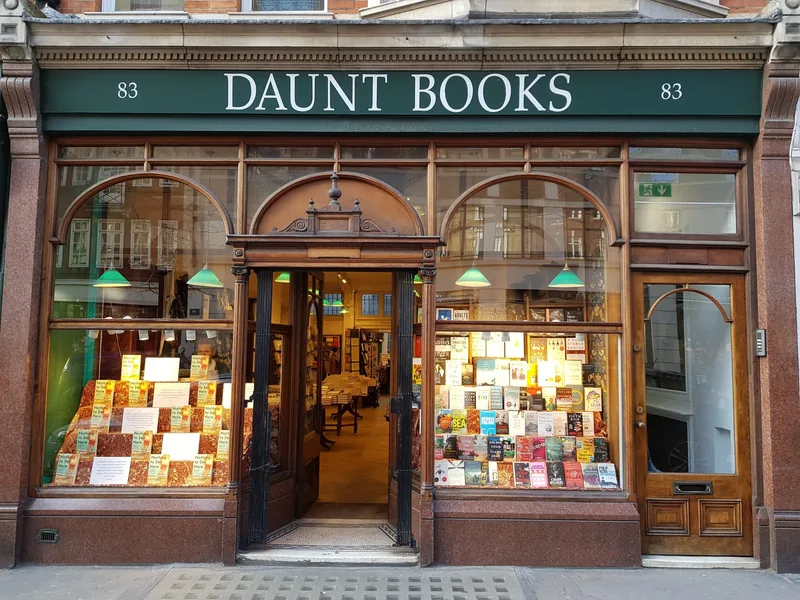
Photo: CVB · CC BY-SA 4.0 · Wikimedia Commons · resized
Food, markets and cafés
According to London Farmers' Markets, the Marylebone market is one of its flagship markets, with fruit and vegetables from farms outside London, meat and poultry, fish from fishermen and seasonal produce such as asparagus in spring and cherries in summer. It is a real market for local shoppers rather than a street-food event, so come with a bag and an appetite for good ingredients. Our round-up of London's food markets compares it with larger markets such as Borough.
Marylebone is a good area for breakfast, brunch and coffee, and the cafés on and around the High Street are busy on weekend mornings; see our guide to coffee in London for more. Restaurants are generally good but not cheap. In the evening the atmosphere is relaxed rather than lively: people eat out and go home, and most places close earlier than in Soho.
The Wallace Collection on Manchester Square
The Wallace Collection is one of London's finest art museums, and many visitors have never heard of it. It is housed in Hertford House, a large town house on quiet Manchester Square, and it displays the paintings, furniture, porcelain and armour collected by one family in the 18th and 19th centuries, left to the nation in 1897. Highlights include Frans Hals' The Laughing Cavalier, Fragonard's The Swing and one of the best collections of arms and armour in Britain.
Entry to the permanent collection is free, and the museum is open daily from 10am to 5pm, closing on 24, 25 and 26 December. Because the objects are shown in furnished rooms rather than bare galleries, it feels like visiting a very grand private house. It is rarely crowded, even when the big national museums are packed, which makes it a good choice on a rainy afternoon. If you enjoy museums of this size, our guide to London's best small museums suggests others.
Baker Street, Sherlock Holmes and Madame Tussauds
Baker Street runs north-south through the western half of Marylebone, and it is where most of the area's visitors are. Arthur Conan Doyle placed his detective Sherlock Holmes at 221B Baker Street, an address that did not exist when the stories were written. Today the Sherlock Holmes Museum, near the Regent's Park end of the street, recreates his rooms, and there is a statue of Holmes outside Baker Street station.
Baker Street station itself is historic: it was one of the stations on the Metropolitan Railway, the world's first underground railway, which opened in 1863. Some of the original platforms on the Circle and Hammersmith & City lines still show their Victorian brickwork.
Next to the station on Marylebone Road is Madame Tussauds, the waxworks museum. Its prices vary with demand, and booking online is cheaper than paying at the door; most visitors spend around one and a half to two hours inside. Opening times vary by day, so check them before you go.
Marylebone Road is the part of the area not to linger on. The road in front of Madame Tussauds and Baker Street station is a wide, noisy traffic route with heavy congestion and poor air, and the pavement outside the waxworks is often blocked by queues. Use the side streets to walk between Baker Street and the High Street, and cross Marylebone Road only at the crossings.
Regent's Park, the zoo and the Open Air Theatre
North of Marylebone Road lies Regent's Park, one of London's royal parks, laid out in the early 19th century by the architect John Nash and surrounded by his cream-painted terraces. Its pedestrian gates open at 5am. In summer the rose garden in Queen Mary's Gardens, with around 8,000 roses according to The Royal Parks, is one of the prettiest sights in London. There is a boating lake with pedalos and rowing boats for hire, and wide lawns for picnics.
At the northern edge of the park is ZSL London Zoo, which is a longer walk from Marylebone than most people expect, about 25 to 30 minutes from Baker Street. Across the park, Primrose Hill has one of the best free views of central London.
Regent's Park Open Air Theatre stages plays and musicals in the open air each summer. Its 2026 season ends in September, and the 2027 programme had not been announced when we checked in September 2026, so look at the theatre's website before planning a summer evening around it.
Music, churches and the medical quarter
Marylebone has an unexpected cultural side. Wigmore Hall, on Wigmore Street, is one of the world's best-known small concert halls for chamber music and song, with fine acoustics and an intimate atmosphere. The Royal Academy of Music is on Marylebone Road, opposite St Marylebone Parish Church, a large Georgian church with a columned portico. The church's gardens and its connections with the poets Robert Browning and Elizabeth Barrett, who married there in secret in 1846, give the corner a surprisingly peaceful feel next to the traffic.
East of the High Street, Harley Street and Wimpole Street are lined with private doctors' and dentists' practices. It has been London's best-known medical address since the 19th century, and the streets are grand, quiet and a little formal. They are not places to linger, but they are worth walking through for their architecture.
A walk through Marylebone
This is a relaxed walk of about two hours with stops, starting at Bond Street station and ending in Regent's Park.
- From Bond Street station, walk north up James Street and Mandeville Place, then turn left along Hinde Street to Manchester Square for the Wallace Collection (allow an hour inside).
- Walk back along Hinde Street and continue north on to Marylebone High Street, browsing the shops and stopping at Daunt Books.
- Turn left into Moxon Street for La Fromagerie and, on a Sunday, the farmers' market.
- Walk back to the northern end of the High Street and St Marylebone Parish Church.
- Cross Marylebone Road carefully at the lights and enter Regent's Park by York Gate, then walk on to Queen Mary's Gardens.
If you have energy left, continue north through the park and over Primrose Hill, or follow the Regent's Canal east towards Camden Town.
Shopping on the Oxford Street edge
Marylebone's southern boundary is Oxford Street, and some of its big stores technically sit in Marylebone. Selfridges, the most famous of them, is between Duke Street and Orchard Street, a few minutes' walk from the High Street; it is covered in our guide to London's department stores. St Christopher's Place, a narrow pedestrian lane off Oxford Street opposite Bond Street station, leads into a small square of cafés and shops and is a pleasant short cut north into Marylebone.
For luxury shopping, the Bond Street shops of Mayfair are just across Oxford Street to the south.
Staying in Marylebone: pros and drawbacks
Reasons to base yourself here
- Quiet streets and a residential feel, but still in Zone 1
- Regent's Park and the zoo within walking distance, which suits families
- Excellent transport: Baker Street, Bond Street and the Elizabeth line
- Good cafés, bakeries and restaurants for everyday meals
Reasons to look elsewhere
- Hotels and restaurants are expensive
- Little nightlife; evenings are calm and end early
- Few of the big sights apart from the Wallace Collection
- Rooms on Marylebone Road or Baker Street can be noisy
For families in particular, Marylebone is one of the most comfortable central bases in London; our guide to where to stay with children compares it with other areas.
Getting to and from Marylebone
Marylebone is very well connected. Baker Street is served by five Tube lines: the Bakerloo, Jubilee, Metropolitan, Circle and Hammersmith & City. Bond Street, at the southern edge, has the Central and Jubilee lines and the Elizabeth line, which runs directly to Heathrow Airport. Regent's Park station (Bakerloo) and Great Portland Street (Circle, Hammersmith & City and Metropolitan) serve the eastern side. A Zone 1 Tube journey costs £3.10 at peak times and £3.00 off-peak with contactless or Oyster.
Marylebone station, at the western end of the district, is a small, calm main-line terminus for Chiltern Railways trains to Oxford, Birmingham and the Chilterns. Trains to Oxford can take as little as 1 hour 12 minutes, which makes it a useful alternative to Paddington for an Oxford day trip. Our overview of London's main railway stations explains how Marylebone fits in with the rest. Lord's Cricket Ground is a short bus ride or a 20-minute walk north-west, and our guide to cricket at Lord's and The Oval covers match days and tours.
Frequently asked questions
How do you pronounce Marylebone?
Most Londoners say something close to "MAR-li-bun" or "MAR-le-bun", with the stress on the first syllable. You will also hear "MARRY-le-bone", which is understood everywhere, so do not worry about getting it exactly right when you ask for directions.
Is the Wallace Collection free?
Yes. Entry to the permanent collection at the Wallace Collection is free, and it is open every day from 10am to 5pm, except 24, 25 and 26 December. Some temporary exhibitions may charge, so check the museum's website for current shows.
When is Marylebone Farmers' Market?
The market runs every Sunday from 10am to 2pm, rain or shine, on St Vincent Street, Aybrook Street and the top of Moxon Street, just west of Marylebone High Street. It sells fresh produce, meat, fish and cheese from farms and producers.
Is Marylebone a good area to stay in London?
Yes, especially for families, couples and visitors who want a quiet, safe base close to the West End. It has excellent Tube links and Regent's Park on the doorstep. Accommodation is expensive, and there is little nightlife.
How far is Marylebone from Oxford Street?
Very close. Marylebone's southern edge is Oxford Street itself, and Marylebone High Street is about a five- to ten-minute walk north from Bond Street station or Oxford Circus, depending on where you start.
Sources
- The Wallace Collection - Visit (checked September 2026)
- London Farmers' Markets - Marylebone Farmers' Market (checked September 2026)
- The Royal Parks - The Regent's Park and Primrose Hill (checked September 2026)
- Regent's Park Open Air Theatre - What's on (checked September 2026)
- Madame Tussauds London - Plan your visit (checked September 2026)
- Chiltern Railways - London to Oxford by train (checked September 2026)
- Daunt Books - Our shops (checked September 2026)