
There are very few hotel beds within walking distance of Twickenham's rugby ground, so almost everyone who comes for a match sleeps in Richmond, in Kingston or in central London. Richmond is the best of the three for most visitors: twenty to twenty-seven minutes from Waterloo, three to five minutes from Twickenham by train, and the only one of them with a Tube station.
The ground is officially the Allianz Stadium, on Whitton Road, and it holds 82,000 people. The streets around it are ordinary suburban streets of houses, a parade of shops and a small high street, and they were never built to absorb a stadium crowd overnight. What Twickenham has instead is guest houses, a handful of small hotels, and pubs with rooms, spread thinly over a wide area.
This page is about where to sleep and what it costs. The journey itself, in both directions, is covered in detail in our guide to getting to Twickenham Stadium, and what there is to see along this stretch of the river is in our guide to Twickenham and the Richmond riverside.
The three places people actually stay
- Twickenham
- Zone 5. Walk to the ground in about 10 minutes. Fewest beds, and they go first
- Richmond
- Zone 4. District line, Mildmay line and South Western Railway. 3 to 5 minutes by train to Twickenham
- Kingston upon Thames
- Zone 6. National Rail only, on a slower loop. More beds, more shops, less atmosphere
- Cheapest fare into town
- Richmond to Waterloo by Tube, £3.60 off-peak (TfL fare data, September 2026)
- Dearest fare into town
- Kingston to Waterloo, £10.40 at peak on the default route
- When prices jump
- England match days, and the Wimbledon fortnight in late June and early July
Why almost nobody sleeps next to the ground
Twickenham is a residential suburb that happens to contain a national stadium. It has no exhibition centre, no arena district and no business park generating weekday demand, so there was never a commercial reason to build hotels there. The ground itself hosts a stadium hotel and the town has a scattering of small independent places and guest houses, and that is close to the whole supply.
The arithmetic follows from that. On the twelve or fifteen days a year when the stadium is full, the local rooms sell out months ahead and the rest of south-west London absorbs the overflow. On the other three hundred and fifty days, Twickenham is a quiet suburb where a room is easy to get and often good value, because there is nothing driving demand at all.
So: if you are here for a match, book the moment you have a ticket. If you are here for the river and the parks, leave it late and pay less. Our guide to when to book a London hotel has the general timing.
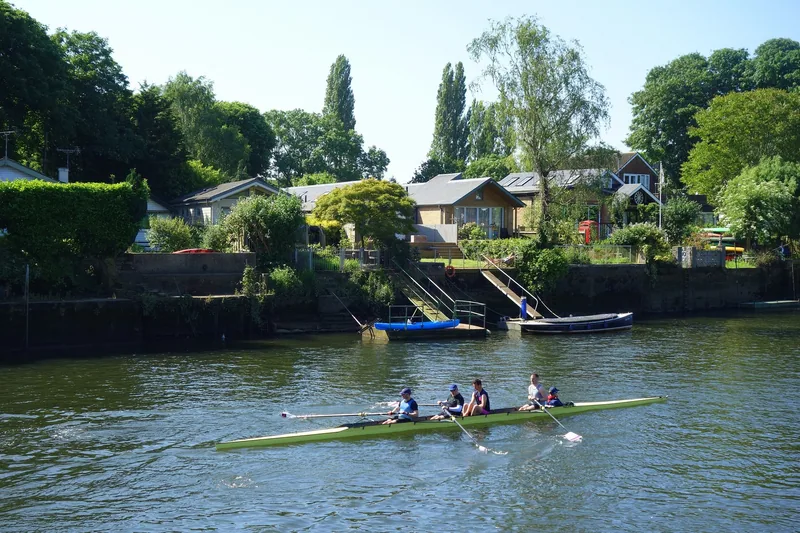
Richmond: the one we would choose
Richmond is a proper town with a park, a riverside, a theatre and about thirty minutes' worth of shops, and it is the only one of the three options that is on the Underground. That matters more than it sounds. A District line train from Richmond to Waterloo is charged as a Tube journey, so the pay-as-you-go single is £3.60 off-peak and £4.80 at peak, against £5.90 to £7.30 for the same journey on a South Western Railway train from the same station. Two people who take the Tube every day for four days save enough to buy dinner.
Richmond's hotel stock sits in three clusters: around the station and the top of George Street, along the river below Richmond Bridge, and up the hill towards the park in converted houses. The station cluster is the practical choice for a match, the riverside one is the pleasant one, and the hill is where the quietest rooms are.
| Station | To Waterloo | Off-peak single | Peak single |
|---|---|---|---|
| Richmond (District line) | 20 to 27 minutes | £3.60 | £4.80 |
| Richmond (South Western Railway) | 20 to 27 minutes | £5.90 | £6.90 to £7.30 |
| Twickenham | 24 to 33 minutes | £6.30 | £8.80 |
| Kingston | 31 to 39 minutes | £6.70 to £7.00 | £8.40 to £10.40 |
All four journey times above are from Transport for London's own journey planner for a weekday late morning, and the fares are from TfL's fare data, both read in September 2026. They are single fares. If you are making several journeys in a day the daily cap for Zones 1 to 5 is £15.30 and it covers everything, which is usually the number that decides a family's budget rather than the singles. The difference between Oyster and a bank card, and how the caps work, is in our guide to Oyster and contactless fares.
Richmond station has two sets of platforms and one set of gates. District line trains and South Western Railway trains leave from the same building, and your card is charged differently depending on which one you board. If you are counting pennies, take the Tube; if you are counting minutes on a match day, take whichever leaves first, because they arrive within a few minutes of each other.
Kingston: more rooms, a longer journey
Kingston upon Thames has the largest concentration of beds in this part of London, a big riverside, a covered shopping centre and a genuinely pleasant walk upstream. It is also the slowest of the three to reach the centre, because most trains run round the Kingston loop rather than straight in, and there is no Underground station at all.
Kingston makes sense in two cases. The first is a match day when Richmond is full or has doubled its prices. The second is a trip built around this part of the river rather than around central London: Hampton Court is a few minutes away, and our guide to Hampton Court Palace explains why a night nearby beats a day trip from town. Our guide to Kingston and Surbiton covers the town itself.
Getting from Kingston to the stadium on a match day means a train to Twickenham with a change, or a bus, and both fill up. Allow an hour door to door and you will be relaxed.
What a price band buys around here, and what moves it
These are our own estimates for September 2026, read across the usual booking channels rather than quoted from any one hotel, and they are for two adults sharing on an ordinary midweek night with no fixture. Treat them as the shape of the market, not a quotation. Any specific room has its own price on the day you look.
| Band (our estimate, September 2026) | What it buys near Twickenham |
|---|---|
| Under £90 | A guest-house room, often with a shared landing bathroom, in Twickenham, Whitton, Teddington or outer Kingston. Usually no lift, sometimes no breakfast |
| £90 to £140 | The bulk of the market: a small en suite double in a chain hotel in Kingston or on the edge of Richmond, or a room above a pub |
| £140 to £220 | Richmond proper, or the riverside. Larger rooms, a lift, a restaurant, and a walk to the Thames |
| Over £220 | Richmond Hill and the stadium's own hotel, and anything at all on the night of an England international |
Four things move these numbers, and only one of them is a season:
- A full stadium. An England international or a club final empties the local supply and lifts what is left, and the effect reaches Kingston and Hounslow. Our guide to rugby at Twickenham has the fixture pattern.
- The Wimbledon fortnight. The 2027 Championships run from 28 June to 11 July, and south-west London is where players, officials and spectators sleep. Richmond and Kingston are both inside that catchment.
- A concert at the ground. Stadium concerts are announced separately from the rugby calendar and catch people out, because a summer Saturday with no fixture can still be a sell-out night locally.
- School holidays and half terms, which raise family-room prices here as everywhere. Ordinary autumn and winter weekdays with none of the above are the cheap nights.
The walk back after the final whistle
This is the practical reason to think about where you sleep rather than only what it costs. When 82,000 people leave at the same time, the pavement to Twickenham station moves at the pace of the slowest person on it, and staff hold the platform in batches. The roads around the ground close for roughly two hours, which takes the nearest bus routes out of play in the direction you want to go.
If your room is in Twickenham or Whitton, you can simply walk to it, and on a winter evening that is worth a great deal. If your room is in Richmond, the train ride is three to five minutes once you are through the gates, and the queue is the whole cost. If your room is in Kingston, you are looking at a change of train at the worst possible moment of the evening.
A room you can walk back to is worth about forty minutes of queueing. On a match night that is the single best reason to pay more for Twickenham or Whitton rather than less for Kingston. Anyone who has stood on Whitton Road in November rain understands the trade immediately.
Noise, and which side of the building to ask for
Two things make noise in this part of London, and neither is nightlife. The first is the railway: Twickenham, St Margarets and Richmond all have houses close to the line, and a room at the back of a hotel may be the one facing it. The second is aircraft. Twickenham sits under the approach to Heathrow when aircraft are landing from the east, which they often are, and the first arrival of the morning can be as early as half past four.
Both are easy to ask about before you book and impossible to fix afterwards. Our guide to quiet hotels and street noise in London has the questions and the reasons behind them, including why a single-glazed sash window in a listed building cannot simply be replaced.
Staying in central London instead
For most visitors this is the right answer, and it is worth saying plainly. If you are in London for four days and going to one match, sleep in the centre and treat Twickenham as a day out. You get the museums, the theatres and the evening city, and you pay one extra train fare each way. Our comparison of the districts to base yourself in sets out the trade-offs by area.
The case for sleeping out here is narrower but real: a match with an evening kick-off, a family who want a park rather than a pavement, a golf or tennis trip, or a couple of days built around Richmond Park, Hampton Court and the riverside houses. Richmond Park's deer rut runs from September to November, and our Richmond Park guide explains the distances you must keep from the animals at that time of year.
Heathrow is also close in road terms, and its hotels are the overflow when everything nearer the ground has gone. The public-transport link is not direct, so check the journey before you commit; our guide to staying near Heathrow covers what those hotels are like and what the shuttles cost.
Five questions to ask before you pay
- Is the rate refundable, and until when? On a fixture weekend the flexible rate is worth its premium, for the reasons set out in our guide to booking a London hotel you can cancel.
- How far is the room from a station, on foot, in minutes? Ask for the walk, not the distance.
- Which side of the building does it face, and is there a railway or a main road on that side?
- Is breakfast served early enough for a morning departure, and is it included?
- If you are driving, is there parking, and does it stay usable on a match day when the surrounding roads close?
Making a weekend of it
Twickenham rewards a slow day. The riverside walk from Richmond Bridge upstream, the eighteenth-century villas, and the small island covered in our page on Eel Pie Island are all within a couple of miles of each other, and the stretch is flat throughout.
Eating is better in Richmond than in Twickenham, and our guide to where to eat in Richmond is the place to start. For a cheaper night than any hotel here offers, the sites in our guide to camping and caravanning near London are all within an hour of the centre by train, though none is near Twickenham.
Frequently asked questions
Are there hotels within walking distance of Twickenham Stadium?
A few. The ground has a hotel attached to it, and Twickenham town has small hotels, guest houses and pubs with rooms about ten minutes away on foot. The supply is small, so on a match weekend it sells out months ahead.
Is it better to stay in Richmond or in Twickenham for a rugby match?
Twickenham if you can get a room, because you can walk back after the match instead of queueing for a train. Richmond otherwise: it has far more rooms, more to do in the evening, a Tube station, and it is only three to five minutes from Twickenham by train.
How long does it take to get from Twickenham to central London?
Twickenham to Waterloo took between 24 and 33 minutes on Transport for London's journey planner for a weekday late morning in September 2026, depending on which train you catch. Some services run fast through Richmond and others stop everywhere, and the departure board does not make the difference obvious.
What does the train from Richmond to Waterloo cost?
£3.60 off-peak and £4.80 at peak on the District line, according to TfL's fare data in September 2026. The same journey on a South Western Railway train from the same station is charged as a National Rail fare and costs more, from £5.90 off-peak. A day of travel across Zones 1 to 5 is capped at £15.30.
Do hotel prices near Twickenham really rise on match days?
Yes, and further out than people expect. A full stadium of 82,000 removes the local supply and pushes demand into Richmond, Kingston, Hounslow and towards Heathrow. Book as soon as you have a ticket, and take a rate you can cancel if the fixture is still months away.
Sources
- Transport for London - Journey Planner API, Twickenham to Waterloo (checked September 2026)
- Transport for London - Single Fare Finder (checked September 2026)
- Transport for London - Pay as you go caps (checked September 2026)
- The Championships, Wimbledon - 2027 dates and public ballot (checked September 2026)
- The Royal Parks - Richmond Park visitor questions (checked September 2026)