
WWT London Wetland Centre is a 100-acre nature reserve of lakes, reedbeds and marsh in Barnes, in south-west London. An adult ticket booked online was £18.85 with Gift Aid or £17.10 without in September 2026, and it opens every day of the year except Christmas Day from 10am to 4.30pm, with last admission at 3.30pm.
It was made out of four disused Victorian reservoirs and opened in 2000, and it works on two levels. For anyone with binoculars it is one of the best places to watch birds inside the M25. For a family with young children it is a day of pond dipping, an adventure playground with a zip wire, two otters and a flock of Australian pelicans.
This page covers the practical side: the ticket types and which one you want, how to get there now that Hammersmith Bridge no longer carries cars, which of the six hides to sit in, and what is realistically visible in each season.
London Wetland Centre: the numbers
- Adult, booked online
- £18.85 with Gift Aid, £17.10 without (September 2026)
- Junior, 3 to 17
- £12.25 with Gift Aid, £11.12 without. Under-3s free
- Family, two adults and two children
- £52.95 with Gift Aid, £48.11 without
- Concession and young adult
- £17.10 with Gift Aid, £15.53 without. Carers assisting a disabled visitor go free
- On the day
- Full price. The 10% online saving closes at midnight the night before
- Hours
- 10am to 4.30pm, last admission 3.30pm, 364 days a year
- Address
- Queen Elizabeth Walk, Barnes, SW13 9WT
- Parking
- Free, but you must type your registration into a tablet at the admissions desk
The ticket maze, and how not to overpay
WWT quotes two prices for everything. The higher figure includes a voluntary Gift Aid donation, which lets the charity reclaim tax; the lower one does not. Both get you exactly the same visit. An adult pays £18.85 or £17.10, and a family of two adults and two children pays £52.95 or £48.11.
Booking online in advance saves 10% against the gate price, and that discount is available until midnight on the day before you come. After that you pay full price, whether you buy online on the morning or at the admissions desk. There is no time-slot system, so booking ahead is purely about money rather than availability.
Two further reductions are worth knowing. Groups of twelve or more get 15% off. Visitors receiving Universal Credit, Pension Credit or Employment and Support Allowance can buy reduced-price tickets in advance through the centre's website. Under-3s and carers accompanying a disabled visitor pay nothing.
Two adults and two children save nearly £22 by booking the family ticket without Gift Aid. Four individual online tickets without Gift Aid come to £56.44; the family ticket is £48.11. If you would rather the charity got the extra, the Gift Aid family price of £52.95 still beats four separate Gift Aid tickets at £62.20.
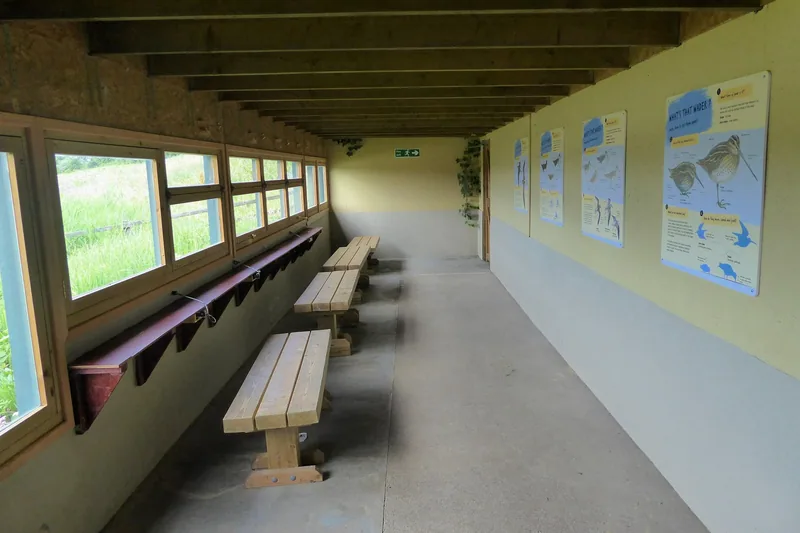
Photo: Ethan Doyle White · CC BY-SA 4.0 · Wikimedia Commons · resized
What you will actually see, season by season
Winter is the serious birdwatching season here. The skies fill with lapwing, wigeon, shoveler and teal, and bittern and water rail creep about in the reedbeds for anyone patient enough to wait for them. Bitterns are genuinely shy: the centre's own wildlife pages describe them as making an appearance for visitors with a little patience, and the daily sightings log records them in ones and twos rather than flocks.
Summer is better for everything else. Dragonflies and frogs in the ponds, water voles in the reeds (listen for the plop as one drops into the water), butterflies and lizards in the meadows, and wildflowers. Spring and autumn bring passage migrants: recent sightings have included wood sandpiper, wheatear, snipe, hobby and red kite.
The constants are the collection birds in Wetlands of the World, where American wood ducks, white-faced whistling ducks, Hawaiian geese and cranes live in a series of enclosures, and the two Asian short-clawed otters, who are the smallest of the thirteen otter species and the single biggest draw for children. Otter talks run daily at 11am and 2pm.
The six hides, and which to sit in
Six hides are dotted round the reserve, stocked with identification books, and there are hide scopes to use and binoculars to hire if you have not brought your own. The Peacock Tower is the one to aim for: three storeys, a wide view across the main lake, and a lift, which is unusual for a bird hide.
The Headley Hide has a volunteer on duty from 10am to 2pm daily, subject to availability, to help you work out what you are looking at. If you have never birdwatched before, start there rather than at the tower, because the difference between a decent hour and a frustrating one is almost entirely about identification.
The honest advice on hides is that they reward stillness. Twenty minutes sitting quietly in one produces more than an hour walking between all six. That is a difficult sell with restless children, which is why families tend to do the play areas first and the hides afterwards.
Getting there, and the Hammersmith Bridge problem
Barnes is awkward to reach, and that is the main reason the centre stays quiet. Hammersmith Bridge remains closed to motor traffic, so drivers coming from the north have to go round by Putney Bridge or Chiswick Bridge. On foot the crossing is a different story, and walking over from Hammersmith along the towpath takes about 25 minutes.
| Route | How it works |
|---|---|
| From Hammersmith (District, Circle, Piccadilly, Hammersmith & City) | Bus 209 or 533 to the Red Lion stop, about 150 metres from the entrance. Or walk the towpath in around 25 minutes |
| From Putney Bridge (District line) | Bus 378 to the Red Lion, or a 25-minute riverside walk |
| Barnes or Barnes Bridge station | South Western Railway from Waterloo, then about 20 minutes on foot. Barnes is step-free |
| Direct bus | The 378 between Putney Bridge and Mortlake, with some journeys running via the centre itself, roughly every 15 minutes |
| By bike | On Sustrans Route 4 along the Thames towpath. Eighteen secure bike cages; bring a D lock |
| By taxi from Barnes station | Around £10 |
The walk from Barnes station crosses a road without a crossing. WWT flags this itself and suggests a slightly longer route through Barnes village or across the common for anyone with mobility problems or small children. If you are pushing a buggy, take the longer way; our notes on getting around London with a pushchair cover the rest of the journey.
Driving is possible and parking is free, but the centre sits inside the Ultra Low Emission Zone, so check your vehicle against the rules in our guide to the Congestion Charge and ULEZ before setting off. There are eight accessible bays, four public electric charging points at 35p per kilowatt-hour, and an automatic number plate system, so your registration has to be entered at the admissions desk or you will be charged.
With children: what works and what does not
The play areas are the reason many London families buy membership. There is a zip wire in the Explore area and a wobbly bridge along the Wild Walk, plus pond dipping sessions and seasonal events. Pelican Creek holds the only flock of Australian pelicans in the United Kingdom and is the most reliable crowd-pleaser after the otters.
What does not work is treating this as a zoo. Most of the reserve is open water and reedbed seen from a distance, and a child expecting close-up animals will be bored within an hour. Plan roughly half play, half wildlife, and take the 11am otter talk as the hinge between them. Our wider advice on London with children and on visiting with a baby applies here as much as anywhere.
Dogs of any kind are not allowed, apart from trained assistance dogs, because the birds become distressed. You also cannot leave a dog in your car while you visit. If the family animal day out is the point of the trip, London Zoo or the Horniman's gardens and animal walk are the better choices.
Eating, and how long a visit takes
The café opens at 10am with last orders half an hour before the centre closes, and hot lunches are served from 11.30am to 3pm. Picnicking is easy enough on the grass in good weather. There is no other food within fifteen minutes' walk, so do not plan to pop out for lunch.
Two to three hours suits most visitors. Serious birdwatchers stay from opening to closing and still leave reluctantly. A family with two children under ten will generally get four hours out of it if the weather holds, and two if it does not, because very little of the site is under cover. On a wet day, the list in our guide to what to do in London when it rains is a better bet.
Access on a flat, open site
Paths are mostly level, there are benches throughout, and the three-storey Peacock Tower has a lift, which makes this one of the more usable nature reserves in the capital for wheelchair users. Mobility scooters and wheelchairs can be hired on site, and the centre publishes a detailed accessibility guide.
The weak points are the approach rather than the reserve itself. Barnes station is step-free, but the walk from it is twenty minutes and includes that uncontrolled crossing. Our page on visiting London with a disability sets out how to plan the journey, and step-free transport in London covers which stations you can actually use.
What else is nearby
Barnes itself is a village-like pocket of south-west London with a pond and a handful of pubs, covered in our guide to Hammersmith and Barnes. The stretch of river outside the centre is part of the Boat Race course each spring, and the towpath here is one of the better sections of the Thames Path.
Further out, Wimbledon Common and Putney Heath are about twenty minutes away by bus, and Richmond Park is the next big open space upriver. For a much smaller city nature reserve that does the same job on a fraction of the land, see our page on Camley Street Natural Park at King's Cross. And if you are visiting in the colder months, when the wildfowl numbers are at their highest, our January guide covers what else is happening.
Is it worth the fare and the ticket?
Worth it if
- You own binoculars and enjoy using them
- You are in London in winter, when the bird numbers peak
- You have children between about four and eleven
- You want somewhere quiet on a busy summer weekend
Skip it if
- You have three days in London and have not seen the centre yet
- You want guaranteed close-up animals; this is mostly middle distance
- It is raining, because there is very little shelter
- You are travelling with a dog
Frequently asked questions
How much does the London Wetland Centre cost?
An adult ticket bought online in advance was £18.85 including the voluntary Gift Aid donation, or £17.10 without it, in September 2026. Children aged 3 to 17 paid £12.25 or £11.12, and a family of two adults and two children £52.95 or £48.11. Tickets bought on the day cost full price. Check current prices at wwt.org.uk.
How do I get to the London Wetland Centre from central London?
The usual route is the District or Piccadilly line to Hammersmith, then bus 209 or 533 to the Red Lion stop on Castelnau, about 150 metres from the entrance. Alternatively take a South Western Railway train from Waterloo to Barnes and walk for about twenty minutes, or walk the towpath from Hammersmith in around 25 minutes.
Can you see otters at the London Wetland Centre?
Yes. The centre keeps Asian short-clawed otters, the smallest of the world's thirteen otter species, and they can be seen through the day swimming, grooming and foraging, or asleep in their holt. Keeper talks about them run every day at 11am and 2pm.
Are dogs allowed at the London Wetland Centre?
No, apart from trained assistance dogs, which must stay on a lead. The centre explains that other animals distress the birds, and asks visitors not to leave a dog in a car in the car park during a visit either.
How long do you need at the London Wetland Centre?
Between two and three hours covers the main routes, the otters and a couple of hides. Birdwatchers regularly spend a full day. Families with young children often stay about four hours in good weather, splitting the time between the adventure play areas and the reserve.
Sources
- WWT London Wetland Centre - Plan your visit, opening times and prices (checked September 2026)
- WWT London Wetland Centre - Directions (checked September 2026)
- WWT London Wetland Centre - Meet the animals (checked September 2026)
- WWT London Wetland Centre - Latest sightings (checked September 2026)