
Victoria is a transport hub with a neighbourhood attached: a mainline station, an Underground interchange, a coach station and several thousand hotel rooms, all within a few hundred metres. Pimlico is the quiet residential grid immediately south of it, a patchwork of white stucco terraces that ends at the river beside Tate Britain.
Most visitors pass through Victoria without ever walking five minutes in any direction, which is a reasonable decision on a first trip. The area has one national art gallery, one very large Byzantine-style cathedral, two big musical theatres and almost nothing else that would make a list of London sights.
What it does have is convenience. If you are heading to Gatwick, taking a coach out of the country, or staying in a cheap room close to Buckingham Palace, you will spend time here, and it is worth knowing how the pieces fit together. For the ceremonial London ten minutes' walk north, see Westminster.
Victoria and Pimlico at a glance
- Victoria station
- Victoria, District and Circle lines, plus National Rail to the south of England and Gatwick
- Pimlico station
- Victoria line only, no interchange, about 600 m from Tate Britain
- Coach station
- 164 Buckingham Palace Road, SW1W 9TP, about 300 m from the rail station
- Tate Britain
- Free, daily 10:00-18:00, no booking needed
- Westminster Cathedral
- Free to enter, open daily 07:30-19:00
- Gatwick by train
- Gatwick Express 30 minutes, twice an hour; Southern trains take a little longer
- Zone
- 1
How the Victoria interchange works
Three separate transport buildings sit close together and are easy to confuse. Victoria mainline station serves the south of England, with Southern and Southeastern services and the Gatwick Express. Victoria Underground station is beneath and beside it, on the Victoria, District and Circle lines. Victoria Coach Station is a five-minute walk down Buckingham Palace Road, in a separate 1932 art deco building, and is covered in our guide to coach travel from Victoria.
The Underground station is one of the busiest on the network, and the Victoria line platforms in particular get uncomfortably crowded between about 08:00 and 09:30 and again from 17:00 to 18:30. At peak times, station staff sometimes close the entrances briefly to control the flow. If you are carrying luggage, our page on luggage on the Tube is worth reading before you arrive.
For the rail terminals as a set, and which one serves which part of Britain, see London's main railway stations explained.
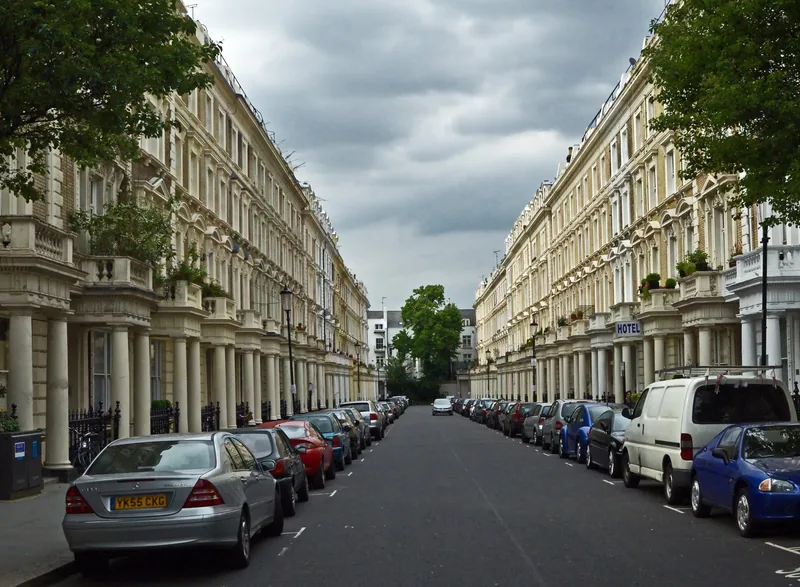
Photo: Ввласенко · CC BY 4.0 · Wikimedia Commons · resized
Getting to Gatwick from here
Victoria is the London end of the Gatwick Express, which runs non-stop to the airport's South Terminal twice an hour and takes 30 minutes. Paying with contactless or Oyster on the Gatwick Express costs £24.00, and that fare is not included in the daily cap or in a Travelcard, so it sits on top of whatever else you spend that day.
Southern trains cover the same route more slowly and for a great deal less. Touching in and out with contactless or Oyster between Victoria and Gatwick on a Southern service costs £10.70 outside the peak, against £19.20 inside it. Shifting a departure to mid-morning therefore knocks £8.50 a head off the fare, before you count what you save by not using the Express at all.
Contactless and Oyster are both valid between London and Gatwick, but not south of the airport, so a ticket to Brighton has to be bought separately. Our comparison of Gatwick Express, Thameslink and Southern and our page on getting from Gatwick into London work through the options with luggage and children.
Waiting until 09:30 can halve your Gatwick fare. A Southern train from Victoria costs £19.20 in the peak and £10.70 off-peak, while the Gatwick Express charges £24.00 at any hour and is excluded from the daily cap. For two people with time to spare, that is a saving of about £27 each way.
Left luggage, and the trap most people fall into
Two separate luggage stores sit a few hundred metres apart, with different operators and different hours, and people regularly walk to the wrong one. Inside the rail station, the Excess Baggage Company holds bags; Network Rail publishes weekday hours of 07:00 to 23:00 for it and no weekend times at all, so telephone 020 3468 4551 before relying on it for a Sunday.
TfL runs the other one itself, in the coach station opposite the ticket office. It takes bags from 08:00 to 22:00 on every day except Thursday, when it shuts at 20:00, and everything is screened on the way in. Charges are worked out per item and per band of time:
| Time stored | Price per item | Two suitcases |
|---|---|---|
| Up to 1 hour | £2.00 | £4.00 |
| 1 to 3 hours | £5.00 | £10.00 |
| 3 to 6 hours | £7.50 | £15.00 |
| 6 to 24 hours | £10.00 | £20.00 |
| Each extra day | £6.00 | £12.00 |
So a couple killing an afternoon before a night flight pays £15 for the pair. Our page on left luggage in London compares the station stores with the app-based options in shops and hotels.
Tate Britain
Tate Britain stands on Millbank, on the river between Vauxhall Bridge and Lambeth Bridge, about 600 metres from Pimlico station and 15 minutes' walk from Victoria. It is free, open daily from 10:00 to 18:00, and does not need booking. It holds the national collection of British art from the 16th century onwards, and the Turner bequest fills the Clore Gallery beside it.
It is consistently the least crowded of the big free London galleries, which is the main practical argument for coming. Our separate article on Tate Britain covers the collection room by room and the boat that runs along the river to Tate Modern.
One thing to clear up, because the names mislead people: the Victoria and Albert Museum is not in Victoria. The V&A is in South Kensington, four stops west on the District or Circle line, and is a separate journey.
Westminster Cathedral
Westminster Cathedral, on Victoria Street, is the mother church of the Catholic Church in England and Wales, and it is nothing like Westminster Abbey a few streets away. Built between 1895 and 1903 in a striped red brick and Portland stone Byzantine style, with a campanile 87 metres high, it looks as though it has been moved here from Ravenna.
Entry to the cathedral is free, and it is open daily from 07:30 to 19:00. The interior is deliberately unfinished: the lower walls are covered in coloured marble and mosaic, and the upper vaults are still bare, blackened brick, which gives the inside an unusual gloom. Eric Gill's carved Stations of the Cross line the nave.
A lift runs up the bell tower to a viewing gallery. There is a charge for it and the hours vary, so check at the desk or on the cathedral's website when you arrive. It is a genuine viewpoint over Westminster and the river, and it is almost never busy.
Pimlico: the stucco grid
Pimlico was laid out by the builder Thomas Cubitt from the 1830s on reclaimed marshland, and its long terraces of white stucco houses run in a grid down to the river. It is residential, quiet and largely free of shops, which is exactly why people who live in London like it and why visitors rarely walk into it.
Three things are worth finding. St George's Square is the only garden square in London that runs down to the Thames. Dolphin Square, a vast 1930s block of 1,200 flats with its own gardens, was for decades the address of choice for members of parliament. And the Churchill Gardens estate, built from 1946, was one of the most ambitious pieces of post-war public housing in Britain, heated for years by waste hot water piped under the river from Battersea Power Station.
Pimlico Road, at the western edge, is a short run of antique dealers, fabric houses and interior design shops that supply the decorators of west London. Nothing there is cheap. Our guide to antiques markets in London covers the places where you might actually buy something.
Pimlico station has no interchange, and that is its advantage. It is the only station on the Victoria line with no connection to another line, so it stays calm even at rush hour. If you are staying near Victoria and hate crowds, walking the extra eight minutes to Pimlico and boarding there is far more comfortable.
Theatres, and walking to the palace
Two large musical houses stand opposite the station: the Victoria Palace Theatre on Victoria Street and the Apollo Victoria on Wilton Road, a 1930 cinema converted to a theatre. Both take long-running musicals rather than plays. Our guide to West End theatre explains how seating, pricing and booking work, and what a restricted view actually means.
Buckingham Palace is a 10-minute walk from Victoria station up Buckingham Palace Road, and the Changing of the Guard happens at the front of it. The route to it runs along the back wall of the palace gardens, which is a dull walk; the nicer approach is through Green Park and St James's Park, adding five minutes.
Is Victoria a good base?
Reasons to stay here
- Zone 1, with three Tube lines and the airport train
- Walking distance to Buckingham Palace and Westminster
- Rooms are cheaper than in Mayfair or Covent Garden
- Coach station for onward travel to Europe or the regions
- Tate Britain and a free cathedral within 15 minutes
Reasons to look elsewhere
- The streets around the station are dull after dark
- Restaurants near the station are mostly chains
- Some budget hotels are much further out than their names suggest
- Heavy traffic and constant construction on Victoria Street
- Nothing to browse in the evening
Our page on staying near Victoria goes through the hotels and what "five minutes from Victoria" usually means in a listing. Across the river, Battersea and Nine Elms offers newer and often cheaper rooms one stop away, and Earl's Court and West Brompton is a similar trade-off to the west.
Frequently asked questions
Is Tate Britain free?
Yes. Entry to the permanent collection is free and you do not need to book, although paid exhibitions run alongside it. It opens daily from 10:00 to 18:00, and it is usually the quietest of London's big free galleries.
What is the cheapest way from Victoria to Gatwick?
A Southern train using contactless or Oyster costs £10.70 off-peak and £19.20 at peak times, against £24.00 on the Gatwick Express at any hour. The Gatwick Express is faster and non-stop but is excluded from daily caps and Travelcards.
Can I leave my bags at Victoria?
Yes, at two separate stores. The rail station store is run by the Excess Baggage Company; the coach station has its own, open Friday to Wednesday 08:00 to 22:00, charging from £2.00 for an hour to £10.00 for 24 hours per item.
Is Westminster Cathedral the same as Westminster Abbey?
No. The cathedral is the Catholic mother church, built between 1895 and 1903 in a Byzantine style on Victoria Street, and entry is free. The abbey is the medieval royal church next to Parliament, and it charges admission for sightseeing.
How far is Buckingham Palace from Victoria station?
About 800 metres, or 10 minutes on foot up Buckingham Palace Road. The pleasanter route adds five minutes by cutting through Green Park or St James's Park instead of following the garden wall.
Sources
- Tate - Visit Tate Britain (checked September 2026)
- Westminster Cathedral - Opening hours (checked September 2026)
- Transport for London - Victoria Coach Station facilities and left luggage (checked September 2026)
- Gatwick Airport - Trains to and from London (checked September 2026)
- Network Rail - London Victoria station facilities (checked September 2026)