
A single London bus fare is £1.75, and the front seat on the top deck is free. Several ordinary red bus routes run past more landmarks than a commercial tour bus, at street level rather than behind glass, and the Hopper fare means you can step off, look at something and catch the next one free within sixty minutes. This page takes three of them stop by stop, and adds three more that nobody mentions.
How to pay, where to press the bell and how the network fits together are covered in our guide to London buses and night buses. What follows assumes you know all that and want to know which bus to get on, in which direction, and what appears out of the window in what order.
One thing to be clear about first. These are working buses. Nobody narrates, nobody guides, and no seat is guaranteed; at rush hour you will be standing like everyone else. Travel between about 10:00 and 15:00 on a weekday, or early on a Sunday, and those two seats above the windscreen are usually yours.
What a sightseeing bus day costs
- Single fare
- £1.75, rising to £1.85 on 1 November 2026
- Hopper fare
- Change buses as often as you like in the sixty minutes after your first tap, still £1.75
- Daily bus and tram cap
- £5.25, rising to £5.55 on 1 November 2026
- How to pay
- Contactless card, phone or Oyster. No cash
- Children under 11
- Free, no card needed
- Best seat
- Front row, upper deck, on the left going east or north
- Best time
- Mid-morning to mid-afternoon, or Sunday
Route 15: Blackwall to Charing Cross
The best of them, and the one to ride if you only ride one. Board at the Tower of London and go west, because the route runs along the north bank through the City and finishes in the West End, which means the landmarks arrive in a rising sequence rather than falling away behind you.
From the Tower Hill stop the bus runs up the Minories, turns into Great Tower Street and crosses the top of the City: Monument, then the Bank junction with the Royal Exchange and the Bank of England on the right. It passes St Paul's Churchyard and stops directly beside St Paul's Cathedral, seen from an upstairs window at an angle no pedestrian ever gets.
Then down Ludgate Hill to Ludgate Circus, where the bus crosses Farringdon Street with a clear view back up to the dome. Fleet Street follows, with stops at Fetter Lane and Chancery Lane, and at the old Temple Bar boundary the Gothic front of the law courts fills the left-hand window. The bus curves round Aldwych past Australia House, runs the length of the Strand past the Savoy, and finishes at Charing Cross beside Trafalgar Square.
Thirty-five stops end to end from Blackwall, but the useful stretch is the 14 between Tower of London and Charing Cross, which takes 25 to 35 minutes depending on traffic. Eastbound, the route continues past Aldgate to Limehouse, Poplar and Blackwall, which is a good way to see the East End change into Docklands. Our guide to the Tower of London covers the obvious place to start.
Route 15 plus the Hopper fare is the cheapest guided-looking day in London. Touch in at Tower Hill, ride to St Paul's, get off, look, and board the next 15 within the hour at no extra charge. Do that twice and you have paid £1.75 for the Tower, the City, St Paul's and Trafalgar Square. Our guide to free things to do in London fills in the rest of the day.
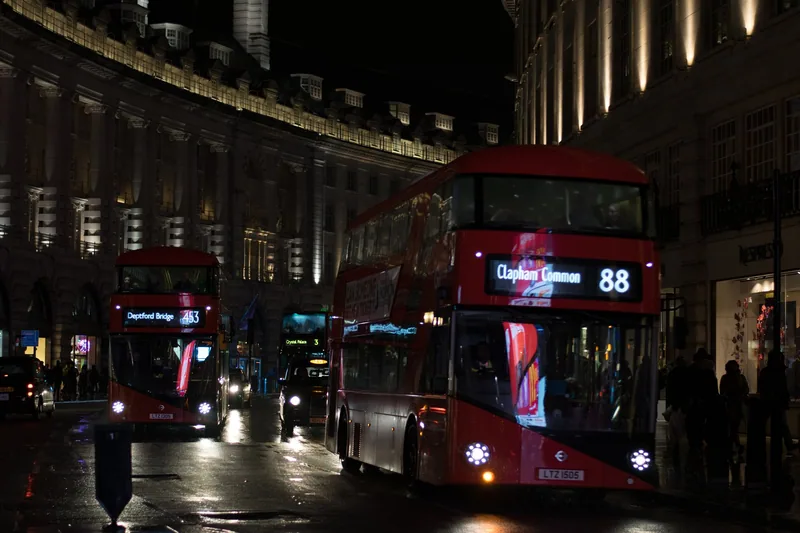
Photo: 0x010C · CC BY-SA 4.0 · Wikimedia Commons · resized
Route 11: Fulham Town Hall to Waterloo
The Westminster route, and the one that puts the most government and ceremonial London in front of you in the shortest time. Ride it eastbound.
The western half is residential Chelsea. From Fulham the bus comes along the King's Road past World's End, Beaufort Street and Old Church Street, past Chelsea Old Town Hall and Markham Street, and reaches Duke of York Square and Sloane Square. That stretch is the best look at Chelsea you will get without walking it.
From Sloane Square the route crosses Chelsea Bridge Road and Ebury Bridge Road to Victoria Coach Station and Victoria station. Then it turns down Victoria Street past the striped brick campanile of Westminster Cathedral and Westminster City Hall to St James's Park station, with the Broadway building on the corner.
The last five minutes are the reason to be on it. The bus stops at Westminster Abbey, runs into Parliament Square with the Palace of Westminster and the Elizabeth Tower on the right, and crosses Westminster Bridge, which gives the single best moving view in London: Parliament and the river on one side, County Hall and the London Eye ahead. It finishes at Waterloo.
Twenty-six stops end to end. The timetable allows 43 minutes, but Journey Planner returns anything from 29 minutes late at night to 53 in the middle of a weekday, so allow the best part of an hour by day. Reckon on 20 minutes for the Sloane Square to Waterloo section. Westbound is the same route in reverse but the bridge view arrives first and the rest is downhill in interest.
Route 24: Pimlico to Hampstead
The longest continuous sightseeing line in the set, and the only one that takes you from Parliament to the edge of Hampstead Heath without changing. Ride it northbound from Victoria.
It starts at Grosvenor Road by the river in Pimlico, comes up past St George's Square and Pimlico station, and reaches Victoria. From there it follows the same Victoria Street stretch as the 11, past Westminster Cathedral and St James's Park station, and stops at Westminster Abbey and Parliament Square.
Then it turns north up Whitehall. This is the section that matters: Horse Guards Parade on the left, the Cenotaph, Downing Street behind its gates, the Banqueting House, and out into Trafalgar Square. The bus continues to Leicester Square, Cambridge Circus in the middle of theatreland, Denmark Street, Tottenham Court Road, Goodge Street and Warren Street.
North of Euston it passes Mornington Crescent and runs up Camden High Street through Camden Town, stopping at Camden Town station and again by the market at Hartland Road. After that it climbs through Kentish Town's back streets, along Prince of Wales Road, Malden Road and Queen's Crescent, and finishes at the Royal Free Hospital in South End Green, five minutes' walk from Hampstead Heath.
Thirty-four stops northbound and thirty-nine southbound, and the end-to-end time depends entirely on the hour: about 35 minutes in the middle of the night, an hour in the morning peak, and 70 minutes or more late on a weekday morning. As a way to get from Westminster to the Heath it is slower than the Tube and considerably more interesting. Our page on route 24 has the times hour by hour.
Three more that nobody recommends
Route 148, Camberwell Green to White City. The park route. It does the Westminster and Victoria section like the others, then turns up past Hyde Park Corner and along Park Lane, with the Dorchester and the Hilton on the left and Hyde Park on the right. At Marble Arch it swings west along the Bayswater Road and runs the entire northern edge of the park, past Victoria Gate and Lancaster Gate, then through Queensway and Notting Hill Gate to Holland Park and Shepherd's Bush. Forty-five stops of almost continuous green and stucco.
Route 43, London Bridge to Friern Barnet. The northern hill route. Going north it leaves London Bridge bus station, crosses the river with Tower Bridge and the Shard behind you, runs past Monument and Fenchurch Street through the City, out via Old Street and Angel into Islington, up Upper Street past the Town Hall, then Highbury & Islington, Holloway and Archway. From Archway it climbs Highgate Hill past Waterlow Park to Highgate station and Highgate Wood, and on over Muswell Hill. Our guide to Highgate and Crouch End covers the top of the climb.
Route 12, Dulwich to Oxford Circus. The south London route, ridden northbound. From Dulwich it runs through Peckham Rye and Peckham, up Camberwell Road to Elephant & Castle, past St George's Circus and Lambeth North, along Lower Marsh, over Westminster Bridge with the same view as the 11, then up Whitehall past Horse Guards to Trafalgar Square, Haymarket, Piccadilly Circus and Oxford Circus. Thirty-seven stops, and the only one of these routes that shows you real south London on the way in.
The RV1 no longer exists. The riverside route between Covent Garden and Tower Gateway, which older guidebooks and blog posts still recommend as a sightseeing bus, was withdrawn and is not in Transport for London's route list. Do not go looking for it. The nearest equivalents today are route 15 along the north bank and the river bus itself, which is not covered by the bus cap.
How to ride one as a sightseeing trip
- Pick a direction and stick to it. Every route above is described in the direction that puts the landmarks in a rising sequence. The reverse is a different, worse trip.
- Board at the start of the interesting section, not at the terminus. Route 15 is 35 stops long and only 14 of them matter to a visitor.
- Go upstairs immediately. Those two seats above the windscreen are the whole point, and on a quiet bus nobody minds you moving forward once it empties.
- Use live arrivals. Every stop has a code; the TfL website and app will tell you when the next one is due, which saves standing in the rain.
- Touch in once, and keep the same card. Any number of further buses within sixty minutes ride on that first tap, and whatever you do the day stops at the £5.25 bus cap.
- Allow double the timetabled time in the centre. Buses in Zone 1 are slow, which as a sightseer is an advantage.
Bus or tour bus?
The commercial hop-on hop-off tours start at around £32 to £44 for an adult day ticket and give you recorded or live commentary, a fixed loop past the main sights, an open top in summer and a guaranteed seat. An ordinary bus gives you none of that and costs £1.75.
The honest split is this. If you want to be told what you are looking at, and to be able to get on and off all day at the sights themselves, pay for the tour; our guide to the hop-on hop-off operators says which one suits whom. If you already know roughly what the buildings are, or you are happy to look things up, the red buses do the same job for a twentieth of the price and take you through neighbourhoods the tour loops avoid.
Sightseeing passes are a separate calculation again, and a bus route costing £1.75 is one of the reasons they often fail to pay off; see is the London Pass worth it and our breakdown of what a day in London costs. For the view from above rather than along, the paid viewing platforms are the obvious alternative and Sky Garden is the free one.
What goes wrong
Roadworks and events divert routes at short notice, and a diverted bus will skip the stop you wanted. Buses are sometimes curtailed short of their terminus and everybody is asked to get off; if that happens, your Hopper fare covers boarding the next one. Route changes happen too, and the eastern ends of several central routes have been altered over the years, so a guidebook more than a few years old will send you the wrong way.
Wheelchair users have priority over the single wheelchair space and every bus has a ramp, but there is only one space per bus, so at busy times you may wait for the next one. Buggies must fold or move if a wheelchair user boards; our guide to getting around with a pushchair has the etiquette. There is no luggage rack, so a large suitcase on the top deck is a bad idea.
After midnight the network changes shape entirely, and several of these corridors are covered by N-prefixed night routes; see London night buses. And if you are crossing outer London rather than the centre, the buses to know are the express ones in our guide to the Superloop and outer London, while the renamed railway lines are explained in the Overground's six line names.
Frequently asked questions
Which ordinary red bus is best for seeing London?
Take the 15 heading west, boarding at the Tower and staying on to Charing Cross. Half an hour of that route covers the Tower, Monument, Bank, the dome of St Paul's, Ludgate Circus, the law courts, the Strand and Trafalgar Square, all for one £1.75 fare. For Westminster and Whitehall, the 11 and the 24 do the same job.
How much does it cost to ride London buses all day?
£5.25, the daily bus and tram cap, rising to £5.55 on 1 November 2026. A single journey is £1.75 and the Hopper fare allows unlimited changes within one hour of touching in for that same fare. Children under 11 travel free without any card.
Is the RV1 bus still running?
No. The riverside RV1 route is no longer in Transport for London's bus network, although it still appears in older guidebooks and travel articles recommending it for sightseeing. Route 15 along the north bank of the Thames is the closest surviving equivalent.
Where should I sit on a London bus for the best view?
Upstairs, in one of the two seats directly above the driver, where nothing blocks a full-height windscreen. Demand peaks on weekday mornings and again in the late afternoon, so aim for the middle of the day or a Sunday if you want to be sure of getting there.
Is a red bus better than a hop-on hop-off tour?
It depends on whether you want commentary. A tour ticket costs from about £32 and includes a recorded or live guide, a fixed sightseeing loop and a guaranteed seat. An ordinary bus costs £1.75 and gives you none of those, but covers much of the same ground and goes through parts of London the tour loops skip.
Sources
- Transport for London - Buses, routes and live arrivals (checked September 2026)
- Transport for London Unified API - Route 15 stop sequence (checked September 2026)
- Transport for London Unified API - Route 11 stop sequence (checked September 2026)
- Transport for London Unified API - Route 24 stop sequence (checked September 2026)
- Transport for London - Bus and tram fares and the Hopper fare (checked September 2026)
- Tootbus London - Tour prices (checked September 2026)
- Big Bus Tours London - Tour prices (checked September 2026)